Women's Robe and Nightgown
CN → US| HS Code | Tariff Rate | Origin | Destination | Doc |
|---|---|---|---|---|
| 6114200010 | 28.3% | CN | US | Official Doc |
| 6114200060 | 28.3% | CN | US | Official Doc |
| 6108310010 | 26.0% | CN | US | Official Doc |
| 6208210020 | 26.4% | CN | US | Official Doc |
| 6108320010 | 33.5% | CN | US | Official Doc |
| 6208220000 | 33.5% | CN | US | Official Doc |
Product Images
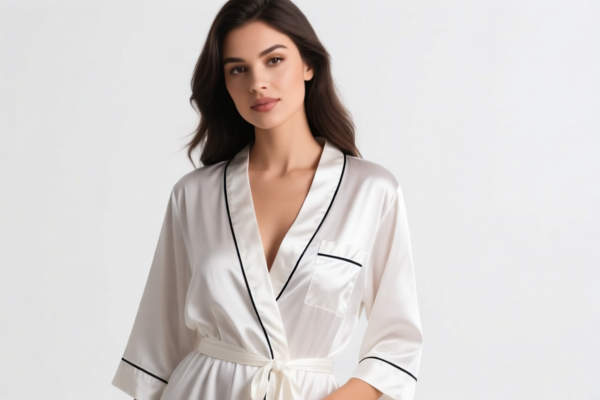
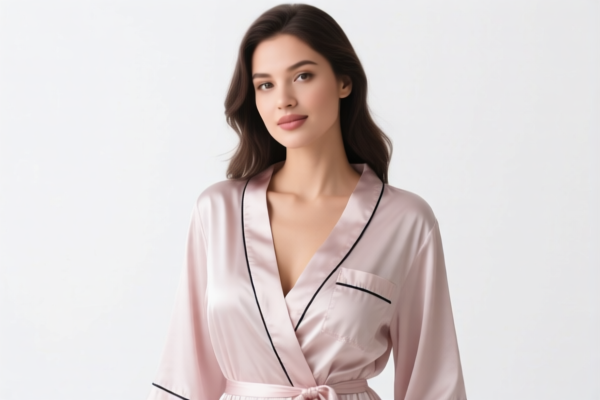
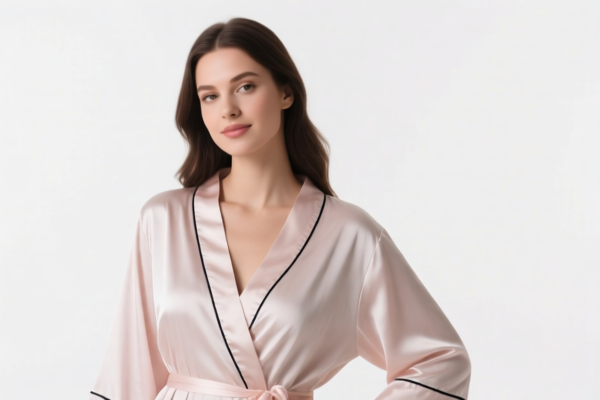
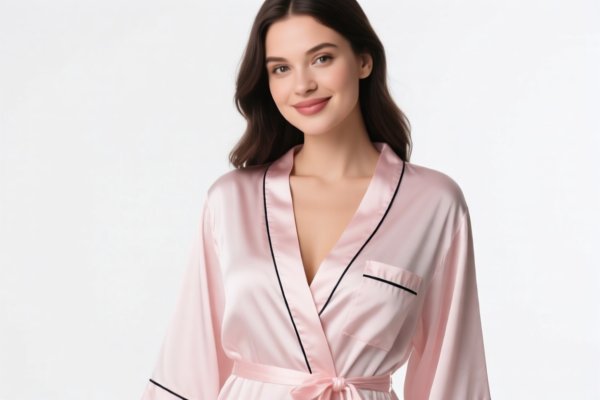
AI Analysis
👘 Women’s Robe & Nightgown (睡衣/浴袍)
🌐 HS Code Reference & Customs Clearance Guide | 2026 Latest Tariff Analysis | Professional Clearance Strategy
📌 I. Product Definition & Classification: What Exactly Are You Shipping?
Women’s robes and nightgowns are loose-fitting garments designed for sleep, lounging, or post-bathing relaxation. In international trade, they are strictly categorized based on material composition and knitting/weaving method.
Key Distinction Points:
- Knitted/Crocheted (61xx) Made from knitted fabrics (stretchy, common for cotton/polyester blends).
- Non-Knitted/Woven (62xx) Made from woven fabrics (less stretchy, common for silk, satin, or specific cotton weaves).
⚠️ Critical Warning:
- Misclassifying a knitted garment as woven (or vice versa) leads to significant duty differences.
- "Robe" vs. "Nightgown": US Customs (CBP) often groups them under specific subheadings for women's sleepwear, but material dictates the primary heading.
📦 II. HS Code Classification Details (Based on Provided Data)
The following codes are derived from the provided dataset, reflecting the most likely classifications for women’s sleepwear/robew based on common materials (Cotton/Polyester) and construction (Knitted).
| HS Code | Product Description & Logic | Material Assumption | Total Tax Rate |
|---|---|---|---|
6114.20.00.10 |
Other knitted/crocheted garments, women's. Logic: Matches form (women's garment) and general category. Broad fit for knitted robes/nightwear not specifically classified elsewhere. |
Cotton, Polyester, etc. | 28.3% |
6114.20.00.60 |
Other knitted/crocheted garments, women's. Logic: Matches form (women's/children's) and use (other sleepwear/loungewear). Non-specific knitted category. |
Cotton-based | 28.3% |
6108.31.00.10 |
Women's knitted/crocheted nightdresses and negligees. Logic: Direct match for women's sleepwear purpose and knitted form. Specific heading for nightwear. |
Cotton | 26.0% |
6208.21.00.20 |
Women's non-knitted nightdresses and negligees. Logic: Matches purpose (women's sleepwear). Note: This applies only if the garment is woven, not knitted. |
Cotton | 26.4% |
6108.32.00.10 |
Women's knitted/crocheted nightdresses and negligees, synthetic fibers. Logic: Matches purpose (sleepwear) and form. Specific to synthetic/man-made fibers (e.g., Polyester, Nylon). |
Synthetic Fibers | 33.5% |
🔍 Key Insight:
-6108.31.00.10and6108.32.00.10are the most precise for sleepwear/nightgowns.
-6114.x0.xxcodes are catch-alls for knitted garments that don't fit the specific "nightdress/negligee" definitions or are broader "other" garments.
-6208.21.00.20is only for woven items. If your robe is stretchy/knitted, do NOT use this code.
💰 III. 2026 Tariff Rate Breakdown (Including Surtaxes)
✅ Applicable Country: United States (US)
✅ Origin: China (CN)
✅ Effective Date: Includes surcharges effective post-2025.
🎯 1. 6108.31.00.10 & 6114.20.00.x0 (Most Common: Cotton/Poly Blend Knit)
| Item | Details |
|---|---|
| Base Duty | 10.8% (for 6114 series) / 8.5% (for 6108.31) |
| Section 301 Surtax | +7.5% |
| Section 122 Surtax | +10% |
| Total Effective Rate | 26.0% - 28.3% |
| Calculation | CIF Value × Total Rate |
| De Minimis Exemption | ❌ Not Eligible (Section 301 and 122 tariffs usually block de minimis relief for China-origin goods) |
📌 Explanation:
- The 7.5% is the standard Section 301 tariff on textiles/apparel from China.
- The 10% is an additional surcharge under Section 122 (often applied to specific import relief categories).
- Base rates vary slightly: Cotton knit sleepwear (6108.31) has a lower base (8.5%) than general knit apparel (6114, 10.8%).
🎯 2. 6108.32.00.10 (Synthetic Fiber Knit Sleepwear)
| Item | Details |
|---|---|
| Base Duty | 16.0% |
| Section 301 Surtax | +7.5% |
| Section 122 Surtax | +10% |
| Total Effective Rate | 33.5% |
| Calculation | CIF Value × 33.5% |
| De Minimis Exemption | ❌ Not Eligible |
📌 Explanation:
- Synthetic fibers (Polyester, etc.) often carry higher base duties (16.0%) compared to cotton (8.5-10.8%).
- This is the most expensive classification in the provided data.
🎯 3. 6208.21.00.20 (Woven Cotton Sleepwear)
| Item | Details |
|---|---|
| Base Duty | 8.9% |
| Section 301 Surtax | +7.5% |
| Section 122 Surtax | +10% |
| Total Effective Rate | 26.4% |
| Calculation | CIF Value × 26.4% |
| De Minimis Exemption | ❌ Not Eligible |
📌 Explanation:
- Woven garments (6208) have a moderate base rate (8.9%).
- Only use this if the garment is non-knitted (e.g., woven cotton pajamas or silk robes).
🛠️ IV. Customs Clearance Best Practices
✅ 1. Required Documentation
| Document | Mandatory? | Notes |
|---|---|---|
| Product Specification Sheet | ✔️ | Must clearly state: Knitted vs. Woven, Material Composition (% Cotton, % Polyester, etc.), Gender (Women's). |
| Lab Test Report | ✔️ | Fiber content verification is critical. Mislabeling material leads to misclassification. |
| Commercial Invoice | ✔️ | Describe as: "Women's Cotton Knitted Nightgown" or "Women's Synthetic Robe". Avoid vague terms like "Clothing". |
| Packing List | ✔️ | Detail units, weight, and dimensions. |
| Country of Origin Certificate | ✔️ | Required to determine eligibility for surtaxes. |
✅ 2. Classification Tips
| Scenario | Recommended HS Code | Risk if Misclassified |
|---|---|---|
| Cotton Knitted Nightgown | 6108.31.00.10 (26.0%) |
Misclassifying as 6114 (28.3%) → Overpaying by 2.3%. |
| Polyester Knitted Robe | 6108.32.00.10 (33.5%) |
Misclassifying as cotton (6108.31) → Underpaying → Penalty & Back Taxes. |
| Woven Cotton Pajama Set | 6208.21.00.20 (26.4%) |
Misclassifying as knitted → Possible duty difference, but structural mismatch may raise red flags. |
🔥 "Know Your Knit" Rule:
If the fabric stretches and loops, it's Knitted (61xx).
If the fabric is tight, interlaced threads, no stretch, it's Woven (62xx).
✅ 3. Common Pitfalls
❌ Pitfall 1: Calling it a "Gown" or "Dress" without specifying "Sleepwear/Nightgown".
👉 Result: May be classified under general women's dresses (6104 or 6204), which have different duty rates and may not be clearly identified as sleepwear, leading to additional scrutiny.
❌ Pitfall 2: Ignoring the "Section 122" surcharge.
👉 Result: The total tax is not just Base + Section 301. The +10% is significant. Ensure your cost model includes all three components.
❌ Pitfall 3: Assuming de minimis ($800) applies.
👉 Result: For China-origin textile/apparel items subject to Section 301 and 122, de minimis is often excluded. Plan for full duty payment even for small parcels.
🌍 V. Global Market Comparison (2026)
| Market | Recommended HS Code | Est. Total Tax | Notes |
|---|---|---|---|
| 🇺🇸 USA | 6108.31.00.10 / 6108.32.00.10 |
26.0% - 33.5% | High due to Section 301 + 122. |
| 🇨🇳 China | 6108.31.00 / 6108.32.00 |
Low/Moderate | Import duties on apparel are generally lower; no Section 301. |
| 🇪🇺 EU | 6108.31 / 6108.32 |
~12% | Standard MFN duty. No Section 301/122. |
| 🇬🇧 UK | 6108.31 / 6108.32 |
~12% | Post-Brexit tariffs similar to EU pre-Brexit rates. |
📌 Conclusion:
- The USA is the most challenging market for Chinese-origin women's sleepwear due to layered tariffs.
- Material selection (Cotton vs. Synthetic) significantly impacts duty cost (26% vs. 33.5%).
- Consider sourcing from Vietnam, India, or Turkey to potentially mitigate Section 301 tariffs (subject to current trade agreements).
📌 VI. Final Recommendation
- Verify Material: Conduct a lab test to confirm % Cotton vs. % Synthetic.
- Choose Correct Heading: Use
6108for sleepwear/nightgowns if they fit the definition; otherwise, use6114. - Calculate Landed Cost: Include Base Duty + 7.5% (Sec 301) + 10% (Sec 122).
- Documentation: Clearly state "Knitted/Woven" and "Sleepwear/Nightgown" on the commercial invoice to avoid CBP reclassification.
🎯 Pro Tip:
For high-value synthetic robes (6108.32.00.10), the 33.5% duty is steep. Consider if switching to a cotton blend (6108.31.00.10) or a woven fabric (6208.21.00.20) can reduce costs by 7-10%.
✨ Accurate Classification = Cost Savings & Smooth Clearance!
💼 Don't let hidden tariffs eat your margin!
Customer Reviews
About HS Code Classification
The Harmonized System (HS) is an internationally standardized nomenclature developed by the World Customs Organization (WCO) to classify traded products. Over 200 countries use the HS system as the basis for customs tariffs, trade statistics, and import/export regulations.
Each HS code follows a hierarchical structure:
- Chapter (2 digits) — Broad category of goods (e.g., Chapter 84: Machinery and Mechanical Appliances)
- Heading (4 digits) — More specific grouping within the chapter
- Subheading (6 digits) — Internationally standardized breakdown, used by all WCO member countries
- National subdivisions (8-10 digits) — Country-specific extensions for further classification, such as US HTSUS 10-digit codes
Correct HS code classification is essential for smooth customs clearance, accurate duty payment, and compliance with trade regulations. Misclassification can lead to customs delays, overpayment of duties, or penalties.
When importing from CN to US, the applicable tariff rates may include:
- Most-Favored-Nation (MFN) rate — The standard duty rate applied to WTO members
- General rate — Applied to countries without trade agreements
- Trade remedy duties — Additional tariffs such as Section 301 (anti-dumping), Section 232 (national security), or countervailing duties
The information provided on this page is for reference purposes only. For official classification, please consult with your local customs authority or a licensed customs broker.