Women's Socks
CN → US| HS Code | Tariff Rate | Origin | Destination | Doc |
|---|---|---|---|---|
| 6115966010 | 36.3% | CN | US | Official Doc |
| 6115940000 | 28.8% | CN | US | Official Doc |
| 6115309010 | 32.1% | CN | US | Official Doc |
| 6115309030 | 32.1% | CN | US | Official Doc |
| 6115959000 | 31.0% | CN | US | Official Doc |
Product Images
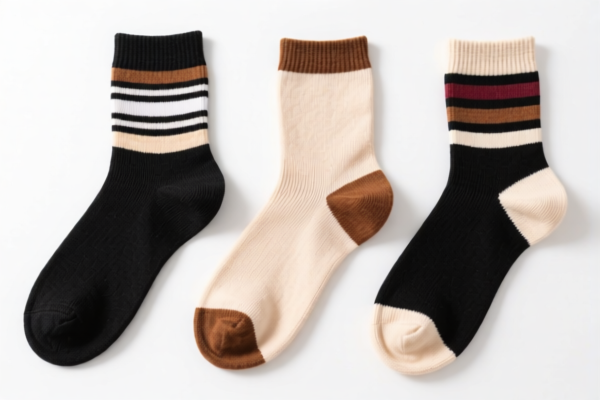
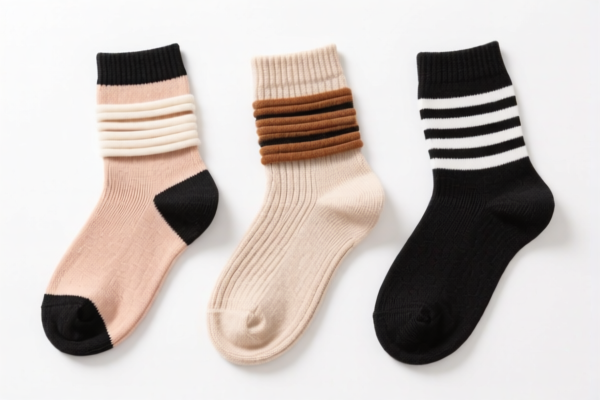
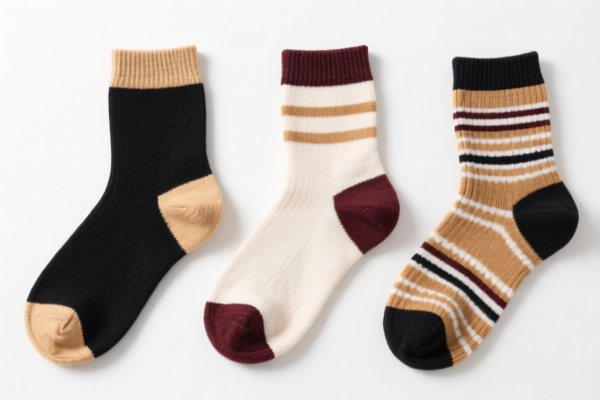
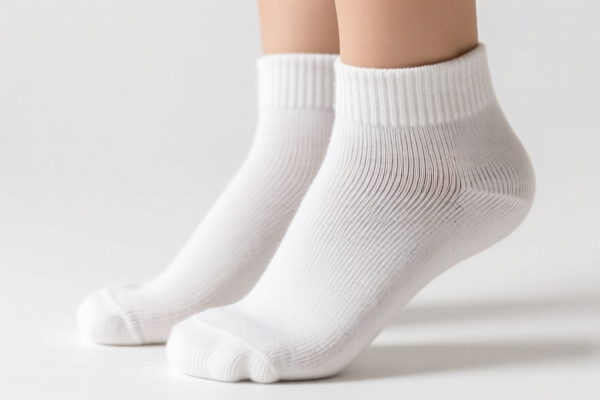
AI Analysis
🧦 Women's Socks: The Ultimate HS Code Guide & Customs Strategy (2026)
🌐 HS Code Reference & Customs Guide | 2026 Tariff Decoded | Professional Clearance Strategy
📌 I. Product Definition & Classification: Do You Really Know "Women's Socks"?
Women's socks are not just "fabric tubes." In international trade, they are highly sensitive to material composition and coverage length. Misclassification can lead to severe duty penalties, especially under current US trade measures (Section 301, Section 232, and the new "Section 122").
The Two Main Categories: * Textile Socks (Hosiery): Knitted, covering the foot and part of the leg (cotton, wool, synthetic fibers). This is where 99% of women's socks fall. * Specialty Socks: Non-knitted, or specific industrial/medical grades (often misclassified).
⚠️ Critical Distinction: * Material Matters: Cotton vs. Synthetic vs. Wool dictates the subheading. * Length Matters: Knee-high, ankle, or over-the-knee affects the specific sub-heading (e.g., 6115.30 vs. 6115.96). * Origin Penalty: All Chinese-origin socks are subject to a massive 25%+ surcharge stack.
📦 II. HS Code Classification Matrix (2026 Authorized Data)
Based on the latest authoritative dataset, here is the precise breakdown for Women's Socks. Do not guess—use the exact code matching your material.
| HS Code | Product Description (Summary) | Material Clue | Total Tax Rate (China Origin) | Key Tax Components |
|---|---|---|---|---|
| 6115.96.60.10 | General Women's Socks (Non-specific) | Unspecified, No Conflict | 36.3% | Base (18.8%) + Addl (7.5%) + Sec 122 (10%) |
| 6115.94.00.00 | General Hosiery (Sock Form) | Unspecified, No Conflict | 28.8% | Base (11.3%) + Addl (7.5%) + Sec 122 (10%) |
| 6115.30.90.10 | Women's Over-the-Knee Socks | Synthetic/Viscose (Inferred) | 32.1% | Base (14.6%) + Addl (7.5%) + Sec 122 (10%) |
| 6115.30.90.30 | Women's Over-the-Knee Socks | Fibers (Inferred) | 32.1% | Base (14.6%) + Addl (7.5%) + Sec 122 (10%) |
| 6115.95.90.00 | Cotton Women's Socks | 100% Cotton (Explicit Match) | 31.0% | Base (13.5%) + Addl (7.5%) + Sec 122 (10%) |
🔍 Deep Dive on Material Conflicts: * 6115.95.90.00 is your safest bet ONLY if the socks are explicitly Cotton. If the label says "95% Cotton, 5% Spandex," it might fall into 6115.96.60.10 or 6115.94.00.00 depending on the dominant fiber rule. * 6115.30.90.xx is strictly for Over-the-Knee styles. Ankle socks cannot use this code.
💰 III. 2026 Tariff Structure Breakdown (The "Stacked Tax" Trap)
✅ Applicable Market: United States (US) ✅ Origin: China (CN) ✅ Effective Date: Current Trade War Measures (2026 Context)
🎯 The "Three-Layer Cake" of Taxes
All codes above share a terrifying three-tier tax structure. You cannot pay just the "Base Rate."
| Tax Layer | Rate | Legal Basis | Description |
|---|---|---|---|
| 1. Base Tariff | 11.3% – 18.8% | HTSUS (Harmonized Tariff Schedule) | The standard Most-Favored-Nation (MFN) duty for hosiery. |
| 2. Section 301 Add'l | +7.5% | US Trade Act 301 | The standard "China Tariff" surcharge on textiles. |
| 3. Section 122 Tariff | +10.0% | Section 122 (New Trade Act) | CRITICAL: A new 10% punitive tax specifically targeting Chinese textiles and footwear introduced to restrict supply chains. |
| 🔴 TOTAL | 28.8% – 36.3% | N/A | This is the final cost before VAT/Freight. |
📌 Real-World Calculation Example: * Product: Cotton Women's Socks (
6115.95.90.00) * Value: $1,000 * Base Duty (13.5%): $135 * Sec 301 (7.5%): $75 * Sec 122 (10%): $100 * Total Tax: $310 (31.0% of value) * Result: Your profit margin is instantly cut by nearly a third before the goods even hit the shelf.
🛠️ IV. Clearance Operational Advice (实战避坑指南)
✅ 1. The "Golden Rule" of Documentation
Customs officers will reject vague descriptions like "Women's Socks." You must be hyper-specific.
| Document | Must Include | Why? |
|---|---|---|
| Commercial Invoice | Exact Material % (e.g., "60% Cotton, 35% Poly, 5% Spandex") | Determines if it's 6115.95 (Cotton) or 6115.96 (Other). |
| Product Label Photo | Clear shot of the "Made in China" tag + Material composition | Proof of origin and fiber content. |
| Pack List | No Mixed SKUs: Do not mix Cotton Socks with Synthetic Socks in one invoice. | Mixed shipments cause customs to re-classify the entire lot at the highest tax rate. |
| Tech Spec Sheet | Length description (Ankle, Crew, Knee-High) | Prevents error between 6115.30 (Knee-high) and 6115.9X (Others). |
✅ 2. The "Section 122" Trap
- The New Reality: Even if you have a free trade agreement for other goods, Textiles and Footwear are NOT exempt from the new Section 122 measures.
- Strategy: If your cost margin is thin (under 30%), do not ship from China. Consider re-routing through Vietnam or Mexico (though verify if the "de minimis" rules still apply to socks).
✅ 3. Classification Strategy Matrix
| Scenario | Correct Action | Risk if Wrong |
|---|---|---|
| Cotton Socks | Use 6115.95.90.00 |
If misclassified as "Synthetic" → Higher Base Tax (18.8% vs 13.5%) |
| Mixed Material | Use 6115.96.60.10 or 6115.94.00.00 |
If declared as "Cotton" falsely → Seizure + Fine for Fraud |
| Over-the-Knee | Use 6115.30.90.xx |
If declared as "Ankle Socks" → Audit Trigger (Length is a physical fact) |
| Sample Pack | Still declare full value | "De minimis" ($800) DOES NOT apply to Section 301/122 goods in many cases. |
🌍 V. Global Market Comparison (2026)
| Region | HS Code | Base Duty | Section 122/301? | Total Effective Tax | Verdict |
|---|---|---|---|---|---|
| 🇺🇸 USA | 6115.9X |
13.5% - 18.8% | ✅ YES (+17.5%) | 31% - 36.3% | 🚨 Extremely High |
| 🇪🇺 EU | 6115.9X |
14.8% | ❌ No (No Sec 301) | 14.8% | ✅ Moderate |
| 🇬🇧 UK | 6115.9X |
14.8% | ❌ No | 14.8% | ✅ Moderate |
| 🇨🇦 Canada | 6115.9X |
14.8% | ❌ No | 14.8% | ✅ Moderate |
📌 Conclusion: The US market is the most hostile for Chinese socks due to the stacking of Base + 301 + 122 tariffs. If you are exporting to the US, price your product at a +35% buffer or consider alternative sourcing.
📌 VI. Common Errors & "Blood-Lesson" Warnings
❌ Error 1: "Generic" Labeling * Action: "Women's Socks, Cotton Blend." * Consequence: Customs will assign the highest possible Base Tax (18.8%) and hold shipment for "Material Verification." * Fix: Write "65% Cotton, 35% Polyester."
❌ Error 2: Ignoring Section 122 * Action: Calculating tax as Base + 301 only. * Consequence: You are short 10% of the budget. You cannot clear the goods without paying the extra 10% on the spot. * Fix: Always add +10% to your landed cost calculation.
❌ Error 3: Mixed SKUs in One Invoice * Action: Invoice #001 has 50 pairs Cotton Socks and 50 pairs Nylon Socks. * Consequence: Customs may treat the whole shipment as the highest tax category or demand separate entry paperwork. * Fix: Split the shipment or create separate lines with distinct HS codes.
🎯 VII. Final Verdict: The Path to Profit
🎯 Golden Rule for 2026: "Cotton is King, Length is Queen, China is King of Cost!"
- Verify Material: If 100% Cotton →
6115.95.90.00(31.0% Total). - Verify Length: If Knee-High →
6115.30.90.xx(32.1% Total). - Verify Everything Else: Use
6115.96.60.10(36.3% Total) – The most expensive option. - Calculate Landed Cost:
(Price × 31%~36.3%)+ Freight.
🔥 Pro Tip: If your margin is less than 40%, do not ship socks from China to the US under current 2026 rules. The Section 122 tax is a silent profit killer.
📌 Action Item: 1. Check your Bill of Materials (BOM) for exact fiber percentages. 2. Measure the exact length of the socks. 3. Contact your freight forwarder to confirm Section 122 applicability for your specific HS Code. 4. Never guess the HS Code—use the matrix above.
✨ Smart Customs, Smart Business! 💰 Don't let the 36% tax tax eat your margins.
Customer Reviews
About HS Code Classification
The Harmonized System (HS) is an internationally standardized nomenclature developed by the World Customs Organization (WCO) to classify traded products. Over 200 countries use the HS system as the basis for customs tariffs, trade statistics, and import/export regulations.
Each HS code follows a hierarchical structure:
- Chapter (2 digits) — Broad category of goods (e.g., Chapter 84: Machinery and Mechanical Appliances)
- Heading (4 digits) — More specific grouping within the chapter
- Subheading (6 digits) — Internationally standardized breakdown, used by all WCO member countries
- National subdivisions (8-10 digits) — Country-specific extensions for further classification, such as US HTSUS 10-digit codes
Correct HS code classification is essential for smooth customs clearance, accurate duty payment, and compliance with trade regulations. Misclassification can lead to customs delays, overpayment of duties, or penalties.
When importing from CN to US, the applicable tariff rates may include:
- Most-Favored-Nation (MFN) rate — The standard duty rate applied to WTO members
- General rate — Applied to countries without trade agreements
- Trade remedy duties — Additional tariffs such as Section 301 (anti-dumping), Section 232 (national security), or countervailing duties
The information provided on this page is for reference purposes only. For official classification, please consult with your local customs authority or a licensed customs broker.