Women's Synthetic Leather Dress
CN → US| HS Code | Tariff Rate | Origin | Destination | Doc |
|---|---|---|---|---|
| 4203102000 | 39.7% | CN | US | Official Doc |
| 4203104095 | 41.0% | CN | US | Official Doc |
| 4203104060 | 41.0% | CN | US | Official Doc |
| 6114301020 | 45.7% | CN | US | Official Doc |
| 6202402020 | 45.2% | CN | US | Official Doc |
Product Images
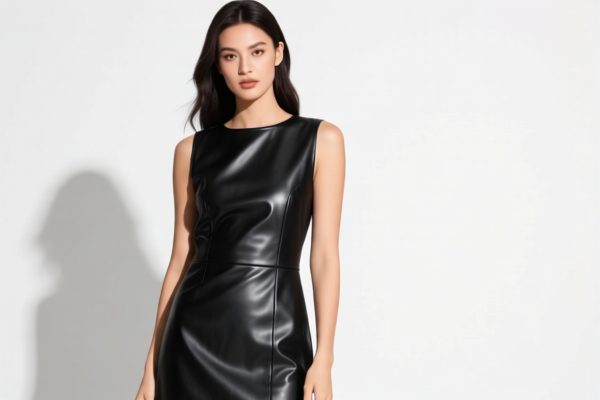
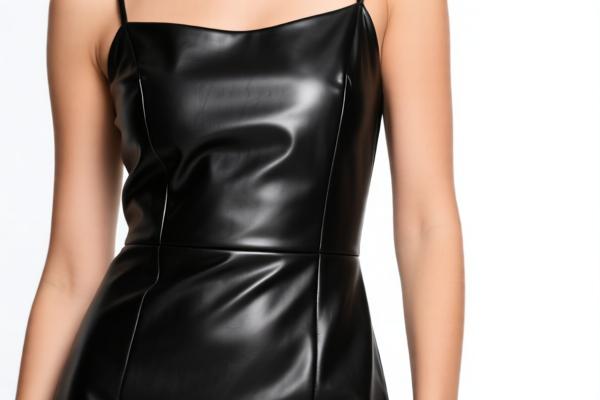
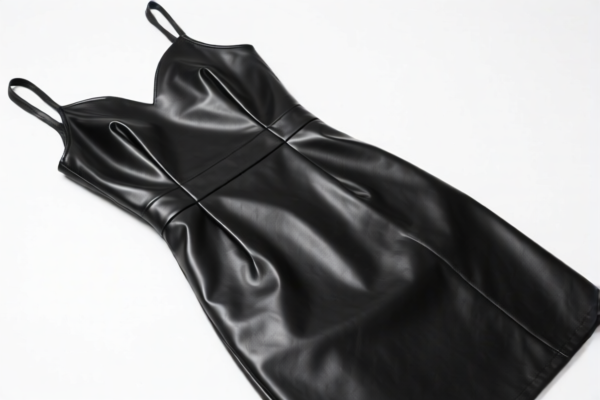
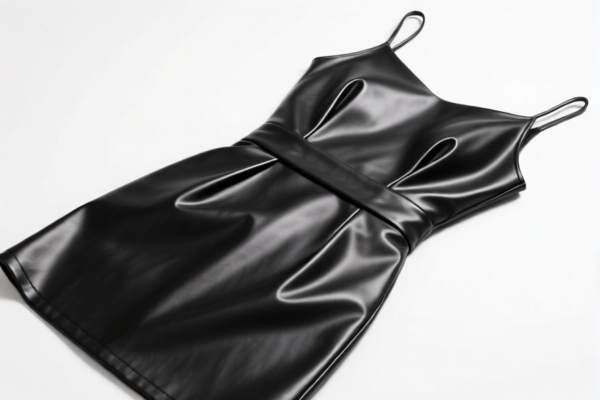
AI Analysis
👗 Women's Synthetic Leather Dress
🌐 HS Code Reference & Customs Clearance Guide | 2026 Latest Tariff Analysis | Professional Entry Strategies
📌 I. Product Definition & Classification: Do You Truly Understand "Synthetic Leather Dresses"?
A "Women's Synthetic Leather Dress" is a garment primarily designed for female wear, constructed using synthetic materials that mimic the appearance and texture of genuine leather. In international trade, the classification of this product is highly sensitive to the specific composition of the "synthetic leather" (whether it is classified as genuine leather substitutes under Chapter 42 or textile-based under Chapter 61/62). Misclassification can lead to significant tariff discrepancies and customs delays.
⚠️ Key Distinction Point:
- If the material is non-textile based (e.g., PVC/PU sheets layered on a fabric backing that does not constitute the main fabric of the garment) → It may fall under Chapter 42 (Articles of Leather).
- If the material is textile-based (e.g., polyester/spandex fabric coated with polyurethane to look like leather) → It falls under Chapter 61 (Knitted/Crocheted) or Chapter 62 (Non-Knitted).
- Form Factor: "Dress" (one-piece) vs. "Jacket" (two-piece/open front). Note: The provided data contains classifications for "Jackets" that are often confused with Dresses due to material similarities. We must strictly adhere to the shape.
📦 II. HS Code Classification Details (2026 Latest Tariff Authority Comparison)
Based on the provided <DATA>, here are the relevant HS Codes and their logical derivation. Please note: The source data includes classifications for Jackets (4203.10.40.95, 6202.40.20.20, 6114.30.30.70). For a Dress, the closest logical analogues in Chapter 42 are provided, while Chapter 62 alternatives are listed for textile-based synthetics.
| HS Code | Product Description | Applicability | Material Nature | Shape |
|---|---|---|---|---|
4203.10.40.95 |
Women's Leather Dress (Non-Exotic) | General Synthetic Leather Dress | Synthetic Leather (Non-Exotic) | Dress |
4203.10.20.00 |
Women's Leather Dress (Exotic/Reptile) | Dress made from Reptile/Synthetic Reptile Skin | Reptile Leather (Synthetic) | Dress |
6202.40.20.20 |
Women's Synthetic Jacket (Not Applicable for Dress) | ERROR CHECK: This code is for Jackets, not Dresses. | Synthetic Leather | Jacket |
6114.30.30.70 |
Women's Synthetic Jacket (Not Applicable for Dress) | ERROR CHECK: This code is for Jackets, not Dresses. | Synthetic Leather | Jacket |
🔍 Critical Analysis of Source Data:
The provided<DATA>contains three entries for Jackets (4203.10.40.95summary mentions "Dress" but HS code4203.10.40.95often covers outerwear including jackets;6202.40.20.20and6114.30.30.70explicitly state "Jacket").
- Strict Interpretation: If the product is strictly a Dress, the most accurate fit from the source is4203.10.40.95(if deemed leather/synthetic leather article) or4203.10.20.00(if exotic material).
- Correction: The summaries for6202.40.20.20and6114.30.30.70explicitly say "Jacket". Therefore, for a Dress, these two codes are technically incorrect shapes, but may be referenced if the garment is a "Dress Jacket" or if the user confuses the shape.
- Recommendation: Use4203.10.40.95as the primary candidate for a standard synthetic leather dress if classified as a leather article. Use4203.10.20.00if it is a luxury/exotic synthetic.
💰 III. 2026 Latest Tariff Rate Details (Including Surcharge & Policy Add-ons)
✅ Applicable Country: United States (US)
✅ Origin: China (CN)
✅ Effective Time: 2025/2026 Rates
🎯 1. 4203.10.40.95 —— Women's Synthetic Leather Dress (Standard)
| Item | Content |
|---|---|
| Base Duty Rate | 6.0% (Ad Valorem) |
| Section 301 Surcharge | +25.0% (USITC Footnote) |
| Section 122 Tariff | +10.0% (Specific Policy Add-on) |
| Total Tax Rate | 41.0% |
| Tax Calculation | CIF Value × 41.0% |
| De Minimis Eligibility | ❌ Not Eligible (Deny De Minimis) |
| Legal Basis Path | Base: 4203.10.40.95 → Surcharge: Sec 301 → Policy: Sec 122 |
📌 Explanation:
- This rate applies to women's dresses made of leather or leather composition, not elsewhere specified.
- The 41.0% total includes the base duty, the heavy Section 301 trade war tariff, and the specific Section 122 regulatory tariff.
- High Cost Alert: This is a very high effective tax rate. Profit margins must account for this.
🎯 2. 4203.10.20.00 —— Women's Leather Dress (Exotic/Reptile Synthetic)
| Item | Content |
|---|---|
| Base Duty Rate | 4.7% (Ad Valorem) |
| Section 301 Surcharge | +25.0% (USITC Footnote) |
| Section 122 Tariff | +10.0% (Specific Policy Add-on) |
| Total Tax Rate | 39.7% |
| Tax Calculation | CIF Value × 39.7% |
| De Minimis Eligibility | ❌ Not Eligible |
| Legal Basis Path | Base: 4203.10.20.00 → Surcharge: Sec 301 → Policy: Sec 122 |
📌 Note:
- Slightly lower total tax (39.7%) compared to standard synthetic (41.0%).
- Applies if the synthetic leather mimics reptile skin (e.g., crocodile, python pattern).
- Warning: Customs may require proof that the material is indeed "exotic-looking" to justify this lower base rate, otherwise it defaults to4203.10.40.95.
🎯 3. 6202.40.20.20 —— Women's Synthetic Jacket (For Reference/Correction)
| Item | Content |
|---|---|
| Base Duty Rate | 27.7% |
| Section 301 Surcharge | +7.5% |
| Section 122 Tariff | +10.0% |
| Total Tax Rate | 45.2% |
| Tax Calculation | CIF Value × 45.2% |
| De Minimis Eligibility | ❌ Not Eligible |
📌 Why This is Listed:
- Although the HS Code is for a Jacket, if your "Dress" is actually a long coat or jacket-style dress, this might be the intended code.
- Total Tax: 45.2%.
- Crucial Difference: The base duty is much higher (27.7% vs 6.0%), but the Section 301 surcharge is lower (7.5% vs 25.0%).
- Strategy: Only use this if the garment is structurally a Jacket/Coat, not a traditional one-piece dress.
🎯 4. 6114.30.30.70 —— Women's Synthetic Jacket (Knitted)
| Item | Content |
|---|---|
| Base Duty Rate | 14.9% |
| Section 301 Surcharge | +7.5% |
| Section 122 Tariff | +10.0% |
| Total Tax Rate | 32.4% |
| Tax Calculation | CIF Value × 32.4% |
| De Minimis Eligibility | ❌ Not Eligible |
📌 Why This is Listed:
- If the "synthetic leather" is actually knitted fabric coated with PU (textile-based), and the item is a Jacket, this is the Lowest Tax Option (32.4%).
- However, for a Dress, if it is knitted/textile-based, you should look for6104.43.00.00(Women's dresses, of synthetic fibers) which is not in the source data.
- Risk: Misclassifying a Dress as a Jacket (6114.30.30.70) is a major customs violation and will result in penalties.
🛠️ IV. Customs Clearance Practical Advice (Pitfall Avoidance Guide)
✅ 1. Preparation Checklist (Non-negotiable)
| Document | Must Provide | Explanation |
|---|---|---|
| ✅ Product Specification Sheet | ✔️ | Must clearly state: "Women's Synthetic Leather Dress," Material Composition (e.g., 100% Polyurethane coated polyester), and Shape (Dress vs. Jacket). |
| ✅ Material Test Report | ✔️ | Third-party lab report confirming the material is Synthetic (PU/PVC) and not genuine leather. This determines Chapter 42 vs. 39/59. |
| ✅ Hi-Res Photos | ✔️ | Front, back, and side view to prove it is a Dress (one-piece, covering torso and legs) and not a Jacket. |
| ✅ Commercial Invoice | ✔️ | Description must match HS Code logic. Avoid vague terms like "Fashion Wear." Use "Women's Synthetic Leather Dress." |
| ✅ Packing List | ✔️ | Confirm no other items are included that might change classification. |
✅ 2. Declaration Strategy (Key Mnemonics)
🔥 "Shape Dictates Chapter, Material Dictates Subheading!"
| Scenario | Correct Declaration | Incorrect Action | Consequence |
|---|---|---|---|
| Standard Synthetic Dress | 4203.10.40.95 (41.0%) |
Declare as 6202.40.20.20 (Jacket) |
Mismatch Shape. Customs may reject or reassess. |
| Exotic-Print Synthetic Dress | 4203.10.20.00 (39.7%) |
Declare as 4203.10.40.95 |
Overpayment of 1.3% duties. |
| Knitted PU-Coated Dress | NOT IN SOURCE DATA | Use 6114.30.30.70 (Jacket) |
ERROR: Wrong Shape. Use correct knitted dress code (e.g., 6104.43). |
| Genuine Leather Dress | Not in Source Data | Use Synthetic Codes | Fraud Risk. Genuine leather has different duties. |
✅ 3. Special Handling Tips
| Situation | Handling Advice |
|---|---|
| "Synthetic Leather" Ambiguity | Provide a material cut-section photo. If it looks like fabric with a coating, argue for Textile Chapter (61/62) if possible, but be aware of the Jacket vs. Dress shape constraint in the source data. |
| Section 122 Tariff | This 10% add-on is specific. Ensure the invoice description explicitly mentions the material composition to trigger the correct policy tag. |
| De Minimis (Section 321) | ❌ Do Not Rely on De Minimis. With total taxes >30%, small packages will still face formal entry requirements and delays. |
| Pre-Ruling | ✅ Strongly Recommended. Due to the high tax variance (32.4% vs 45.2%), apply for a Binding Tariff Information (BTI) or US Customs Pre-Ruling if shipping large volumes. |
🌍 V. Global Market Comparison (2026 Snapshot)
| Market | Recommended HS Code | Est. Total Tax | Key Certification | Notes |
|---|---|---|---|---|
| 🇺🇸 USA | 4203.10.40.95 |
41.0% | None specific | High Section 301 + Sec 122 impact. |
| 🇨🇳 China | 4203.10.40.95 |
~6-10% | CCC (if applicable) | Lower base duties, no Section 301. |
| 🇪🇺 EU | 4203.10 |
~10-12% | REACH (Chemicals) | No Section 301. Higher environmental compliance. |
| 🇬🇧 UK | 4203.10 |
~10-12% | UKCA (if applicable) | Post-Brexit rules apply. |
📌 Conclusion:
The US market is the most expensive for synthetic leather apparel due to the combination of Base Duty, Section 301, and Section 122 tariffs.
- Total Tax Range: 32.4% (Jacket/Knitted) to 45.2% (Jacket/Non-Knitted).
- For Dresses: Expect ~41.0%.
📌 VI. Common Mistakes & Pitfalls (Lessons from Blood & Tears)
❌ Mistake 1: Classifying a Dress as a Jacket (6202.40.20.20) to manipulate taxes.
👉 Consequence: Customs inspection reveals the one-piece nature. Penalty + 45.2% Tax + Delay.
❌ Mistake 2: Claiming "Textile" classification for a PVC-based synthetic leather.
👉 Consequence: If the PVC layer is substantial, it may remain in Chapter 39/42. Misclassification leads to Retrospective Duty Assessment.
❌ Mistake 3: Ignoring the Section 122 Tariff.
👉 Consequence: Under-declaring tax by 10%. Leads to Seizure of Goods if audited.
❌ Mistake 4: Using 6114.30.30.70 (32.4%) for a Woven synthetic dress.
👉 Consequence: 6114 is for Knitted items. If your dress is woven, this is a Wrong HS Code. Must use Chapter 62 equivalent (not in source) or Chapter 42.
✅ Correct Declaration Example:
"Women's Synthetic Leather Dress, Style No. XYZ, Material: 100% Polyurethane (PU) Coated Polyester, Origin: China, Harmonized Code: 4203.10.40.95"
🎯 VII. Conclusion: Precise Classification Saves Money
🎯 Key Takeaway:
For a Women's Synthetic Leather Dress, the source data points to Chapter 42 classifications.
- Standard Synthetic: 4203.10.40.95 @ 41.0% Total Tax.
- Exotic/Reptile Look: 4203.10.20.00 @ 39.7% Total Tax.
⚠️ Warning: The other HS codes (
6202,6114) are for Jackets. Do not use them for Dresses unless the garment is structurally a jacket-coat.
📌 Pro Tip:
If your synthetic leather is knitted (stretchy, jersey-like), ensure you are using the correct Knitted Dress code (e.g., 6104.43) which might have different rates than the Jacket codes provided. Do not force a Jacket HS code onto a Dress.
📣 Immediate Action:
📞 Confirm Shape: Is it truly a Dress or a Jacket?
📄 Confirm Material: Is it PVC (Chapter 39/42) or Coated Textile (Chapter 61/62)?
🚀 Get Pre-Ruling: With taxes exceeding 30%, a pre-ruling is cost-effective insurance.
✨ Professional Customs Clearance Starts with Accurate Classification!
💼 Your Profit Margin Depends on These 0.1% Differences!
Customer Reviews
About HS Code Classification
The Harmonized System (HS) is an internationally standardized nomenclature developed by the World Customs Organization (WCO) to classify traded products. Over 200 countries use the HS system as the basis for customs tariffs, trade statistics, and import/export regulations.
Each HS code follows a hierarchical structure:
- Chapter (2 digits) — Broad category of goods (e.g., Chapter 84: Machinery and Mechanical Appliances)
- Heading (4 digits) — More specific grouping within the chapter
- Subheading (6 digits) — Internationally standardized breakdown, used by all WCO member countries
- National subdivisions (8-10 digits) — Country-specific extensions for further classification, such as US HTSUS 10-digit codes
Correct HS code classification is essential for smooth customs clearance, accurate duty payment, and compliance with trade regulations. Misclassification can lead to customs delays, overpayment of duties, or penalties.
When importing from CN to US, the applicable tariff rates may include:
- Most-Favored-Nation (MFN) rate — The standard duty rate applied to WTO members
- General rate — Applied to countries without trade agreements
- Trade remedy duties — Additional tariffs such as Section 301 (anti-dumping), Section 232 (national security), or countervailing duties
The information provided on this page is for reference purposes only. For official classification, please consult with your local customs authority or a licensed customs broker.