Women's Top
CN → US| HS Code | Tariff Rate | Origin | Destination | Doc |
|---|---|---|---|---|
| 6104291050 | 0.0% | CN | US | Official Doc |
| 6114301020 | 45.7% | CN | US | Official Doc |
| 6104230036 | 0.0% | CN | US | Official Doc |
| 6114200010 | 20.8% | CN | US | Official Doc |
| 6114200010 | 20.8% | CN | US | Official Doc |
Product Images
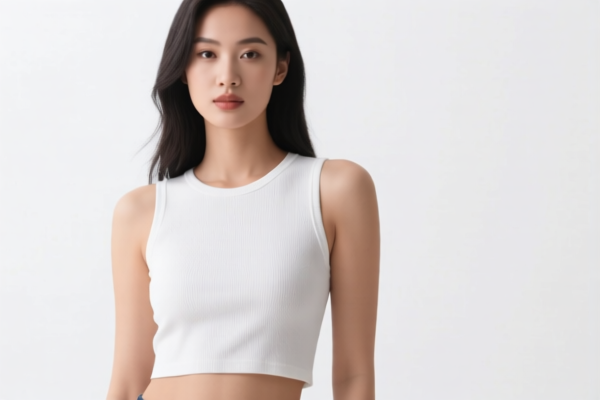
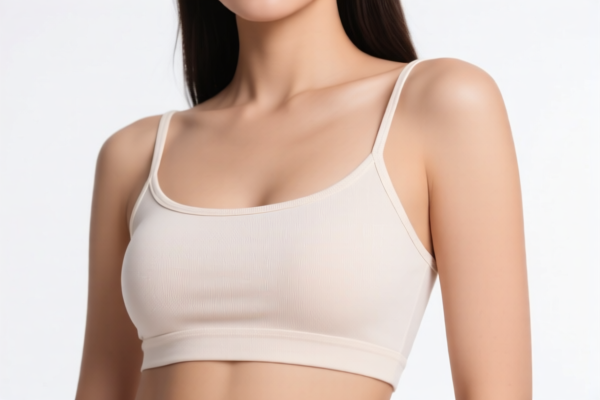
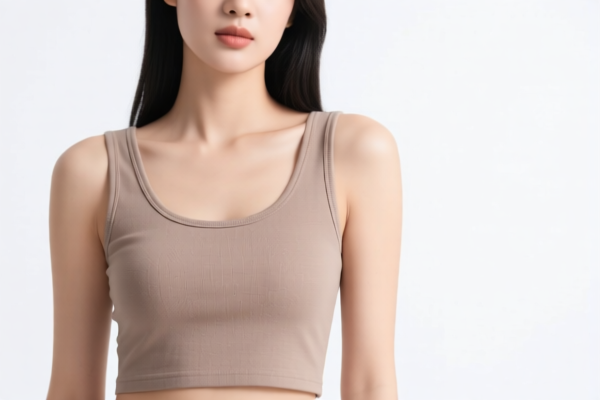
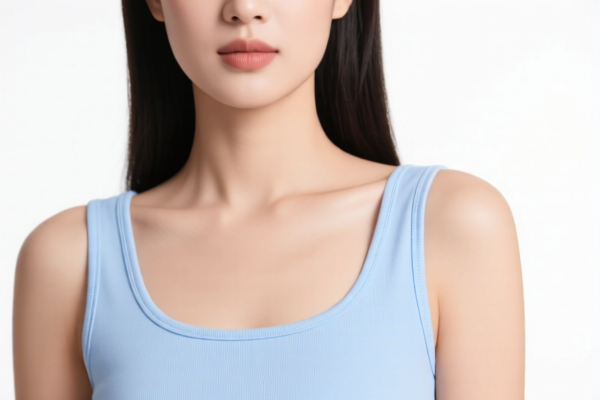
AI Analysis
👗 Women's Tops: HS Code Classification & Tax Strategy | 2026 Trade Compliance Guide
🌐 HS Code Reference & Customs Clearance Guide | Latest 2026 Tariff Analysis | Professional Clearance Strategy
📌 I. Product Definition & Classification: Do You Really Know "Women's Tops"?
Women's tops are a broad category of apparel, including shirts, blouses, camisoles, tank tops, and knit jerseys. In international trade, classification depends heavily on fabric composition (natural vs. synthetic/man-made fibers) and manufacturing method (knitted vs. woven). Misclassification can lead to significant tariff discrepancies, especially with current US trade policies.
⚠️ Key Distinction Point:
- Knitted (Chapter 61): Flexible fabric, stretchy, made by interlocking loops (e.g., T-shirts, jersey tops).
- Woven (Chapter 62): Structured fabric, non-stretchy, made by weaving threads (e.g., button-down shirts, formal blouses).
- Fabric Type: Cotton/Wool/Linen = Natural Fibers; Polyester/Nylon/Spandex = Synthetic/Man-Made Fibers.
📦 II. HS Code Classification Details (2026 Latest Tariff Authority Comparison)
Based on the provided data <DATA>, here are the specific HS Codes for women's tops, their matching criteria, and tax implications:
| HS Code | Product Description & Match Criteria | Fabric Inference | Total Tax Rate | Key Tax Components |
|---|---|---|---|---|
| 6104.29.10.50 | Tops HS Code: Matches general "Tops" form factor. Material inferred as textile. | Textile (General) | 17.5% | Base Tariff + 7.5% Additional + 10% Section 301 |
| 6114.30.10.20 | Women's Sleeveless Tops: Matches women's upper garment & knitted form. Material inferred as Man-Made Fibers. | Man-Made Fibers (Synthetic) | 45.7% | Base (28.2%) + 7.5% Additional + 10% Section 301 |
| 6104.23.00.36 | Women's Sleeveless Tops: Matches women's upper garment. Material inferred as Synthetic or Natural Fibers. | Synthetic/Natural Blend | 17.5% | Base Tariff + 7.5% Additional + 10% Section 301 |
| 6114.20.00.10 | Women's Sleeveless Tops / Women's Pajamas: Matches upper garment form & finished consumer goods. Material inferred as Textiles. | Textile (General) | 20.8% | Base (10.8%) + 0.0% Additional + 10% Section 301 |
🔍 Critical Observation:
- 6114.30.10.20 carries the highest tax burden (45.7%) due to its specific classification under synthetic knitwear with higher base tariffs.
- 6114.20.00.10 offers a lower effective rate (20.8%) but includes a mandatory 10% Section 301 tariff. Note that the "Additional Tariff" is listed as 0.0% for this specific code in the provided data, likely due to specific trade agreements or exemption statuses for certain textile categories.
- 6104 Series Codes show varying base rates, all culminating in a 17.5% total when combining the standard additional duties (7.5%) and Section 301 (10%).
💰 III. 2026 Latest Tariff Rate Breakdown (Including Surcharges & Policy Add-ons)
✅ Applicable Country: United States (US)
✅ Origin: China (CN) (Implied by the 10% Section 301 and 7.5% Additional Tariffs typical of China-origin goods)
✅ Effective Date: Current US Trade Policy (2025-2026)
🎯 1. 6114.30.10.20 — Women's Sleeveless Tops (Synthetic Knit)
| Item | Content |
|---|---|
| Base Tariff | 28.2% (Ad Valorem) |
| USITC Additional Tariff | +7.5% (Typical for certain knitwear) |
| Section 301 Tariff (IEEPA) | +10% (Targeted at Chinese origin goods) |
| Total Effective Rate | 45.7% |
| Tax Calculation | CIF Value × 45.7% |
| De Minimis Exemption | ❌ Not Applicable (Section 301 tariffs generally do not benefit from $800 de minimis if aggregated or if specific exemptions do not apply; check latest CBP rulings) |
| Legal Basis Path | HTSUS:6114.30.10.20 → USITC:7.5% → IEEPA:9903.01.24 (10%) |
📌 Explanation:
- This is the most expensive classification among the options.
- High base tariff (28.2%) suggests it may fall under a less favored subheading for synthetics.
- Risk: If your product is actually natural fiber, misdeclaring as synthetic here leads to overpayment. If it is synthetic, this is the correct but costly path.
🎯 2. 6114.20.00.10 — Women's Sleeveless Tops / Pajamas (Textile/Knit)
| Item | Content |
|---|---|
| Base Tariff | 10.8% (Ad Valorem) |
| USITC Additional Tariff | 0.0% (Exempt or non-applicable for this subheading) |
| Section 301 Tariff (IEEPA) | +10% |
| Total Effective Rate | 20.8% |
| Tax Calculation | CIF Value × 20.8% |
| De Minimis Exemption | ❌ Not Applicable (Section 301 applies) |
| Legal Basis Path | HTSUS:6114.20.00.10 → USITC:0.0% → IEEPA:9903.01.24 (10%) |
📌 Note:
- This code appears to offer a more favorable tax structure than6114.30.10.20.
- The 0.0% additional tariff is a key differentiator.
- Caution: Ensure the product truly fits "Sleeveless Tops" or "Pajamas" under this specific subheading. "Pajamas" often have stricter definition requirements (set of garments).
🎯 3. 6104.29.10.50 & 6104.23.00.36 — General Women's Tops
| Item | Content |
|---|---|
| Base Tariff | Varies (Inferred from total) |
| USITC Additional Tariff | +7.5% |
| Section 301 Tariff (IEEPA) | +10% |
| Total Effective Rate | 17.5% |
| Tax Calculation | CIF Value × 17.5% |
| De Minimis Exemption | ❌ Not Applicable |
📌 Explanation:
- These codes represent a mid-range tax option.
-6104.29.10.50is a "catch-all" for women's tops not elsewhere specified.
-6104.23.00.36specifies sleeveless but allows for broader material inference.
- Both are cheaper than the synthetic-specific6114.30.10.20.
🛠️ IV. Customs Clearance Practical Advice (Real-World Pitfall Avoidance)
✅ 1. Documentation Checklist (Mandatory)
| Document | Must Provide | Description |
|---|---|---|
| ✅ Product Spec Sheet | ✔️ | Detailed fabric composition (e.g., "95% Cotton, 5% Spandex"). Critical for determining Natural vs. Synthetic. |
| ✅ Garment Construction Diagram | ✔️ | Shows if it's knitted (loop) or woven (interlace). Must match Chapter 61 (Knit) or 62 (Woven). |
| ✅ High-Res Photos | ✔️ | Front, back, label, and tag showing fiber content. |
| ✅ Commercial Invoice | ✔️ | Clearly state "Women's Knit Top" or "Women's Woven Blouse." Avoid generic "Clothing." |
| ✅ Certificate of Origin | ✔️ | To prove country of origin for Section 301 applicability. |
| ✅ Packaging List | ✔️ | Confirm if items are sold as sets (e.g., Pajama Sets) or single pieces. |
✅ 2. Declaration Tips (Key Mnemonics)
🔥 "Fabric First, Structure Second, Section 301 Always!"
| Scenario | Correct Declaration | Incorrect Approach |
|---|---|---|
| Synthetic Sleeveless Top | Use 6114.30.10.20 |
Use 6104.29.10.50 → Risk of underpayment if audited, or overpayment if 6114.20.00.10 is eligible. |
| Cotton/Tank Top | Use 6104.29.10.50 or 6114.20.00.10 |
Use 6114.30.10.20 → 45.7% tax instead of 17.5-20.8%! |
| Pajama Set | Use 6114.20.00.10 (if eligible) |
Declare as two separate items → May violate "Set" rules or complicate clearance. |
| Woven Shirt | NOT covered in provided data | Using Chapter 61 codes for woven items → Rejection/Retrospective Duty Assessment. |
✅ 3. Special Case Handling
| Situation | Handling Advice |
|---|---|
| OEM Custom Tops | Provide OEM agreement + design specs. Ensure fiber content on label matches invoice. |
| Mixed Fabric Tops | If >50% synthetic by weight, consider 6114.30.10.20. If natural dominant, consider 6104 or 6114.20 codes. |
| Section 301 Exemptions | Check if your specific HTSUS code has an Exclusion List (USTR Exclusions). If exempt, the 10% can be waived, reducing 6114.30.10.20 to ~28.2%. |
| De Minimis (Section 321) | ⚠️ Warning: While $800 de minimis exists, Section 301 tariffs (10%) apply even to de minimis shipments from China. Do not assume duty-free entry for low-value Chinese-made tops. |
🌍 V. Global Market Comparison (2026 Latest)
| Market | Recommended HS Code | Est. Total Tax (China Origin) | Certification Requirements | Notes |
|---|---|---|---|---|
| 🇺🇸 USA | 6114.30.10.20 or 6104.29.10.50 |
20.8% - 45.7% | CPSIA (if for kids), General Labeling | High Tariff Zone. Section 301 is unavoidable unless excluded. |
| 🇨🇳 China | 6114.30.10.20 |
5% - 10% | GB Standards | Low import duty, but high VAT (13%). |
| 🇪🇺 EU | 6109.10 / 6109.90 |
0% - 12% | CE, REACH, EPR | No Section 301. VAT varies by country. |
| 🇬🇧 UK | 6109.10 |
0% - 12% | UKCA, Textile Labeling | Post-Brexit rules apply. |
📌 Conclusion:
- USA is the most tax-sensitive market for women's tops from China due to the 10% Section 301 + Additional Tariffs.
- Optimization Strategy: Verify if your product qualifies for the lower-tax6114.20.00.10(20.8%) vs. the higher-tax6114.30.10.20(45.7%).
- Check Exclusions: If your HS Code is on the USTR Exclusion List, you can save 10% on the Section 301 tariff.
📌 VI. Common Mistakes & Pitfall Guide (Lessons Learned)
❌ Mistake 1: Assuming all "Tops" are the same tax rate.
👉 Consequence: Paying 45.7% when 17.5% was possible by choosing the correct subheading.
❌ Mistake 2: Ignoring Section 301 on De Minimis Shipments.
👉 Consequence: Packages held by CBP, duties demanded retroactively, or return to sender.
❌ Mistake 3: Incorrect Fiber Content on Label.
👉 Consequence: Misclassification. If label says "Polyester" but code assumes "Cotton," penalties apply.
❌ Mistake 4: Using "General Apparel" descriptions.
👉 Consequence: Customs may select the highest default tariff or request additional documentation, delaying clearance.
✅ Correct Approach:
"Women's Knit Sleeveless Top, 95% Polyester/5% Spandex, Model XYZ, Made in China. HS: 6114.30.10.20. Subject to Section 301."
🎯 VII. Conclusion: Precision Classification Saves Money!
🎯 Remember the Mantra:
🔹 "Synthetic Sleeveless? Check
6114.30.10.20(45.7%).
🔹 General Knit Top? Check6104.29.10.50(17.5%).
🔹 Section 301 Always Applies! Check Exclusions!"
📌 Pro Tip:
If your tops are made in Vietnam, India, or Bangladesh, the 10% Section 301 tariff does NOT apply. You can potentially reduce the total tax to just the Base + Additional Tariff (e.g., 10.8% - 28.2% depending on code).
Recommendation: Consider supply chain diversification if US market is primary.
📣 Immediate Action:
📞 Contact a Customs Broker to verify the latest USTR Exclusion List for your specific HS Code.
📋 Audit Your Labels to ensure fiber content matches the declared HS Code.
🚀 Optimize Your HS Code Selection to choose between 17.5%, 20.8%, or 45.7% based on your actual product!
✨ Professional Clearance Starts with Accurate Classification!
💼 Your Profit Margin Depends on Correct Tariff Calculation!
Customer Reviews
About HS Code Classification
The Harmonized System (HS) is an internationally standardized nomenclature developed by the World Customs Organization (WCO) to classify traded products. Over 200 countries use the HS system as the basis for customs tariffs, trade statistics, and import/export regulations.
Each HS code follows a hierarchical structure:
- Chapter (2 digits) — Broad category of goods (e.g., Chapter 84: Machinery and Mechanical Appliances)
- Heading (4 digits) — More specific grouping within the chapter
- Subheading (6 digits) — Internationally standardized breakdown, used by all WCO member countries
- National subdivisions (8-10 digits) — Country-specific extensions for further classification, such as US HTSUS 10-digit codes
Correct HS code classification is essential for smooth customs clearance, accurate duty payment, and compliance with trade regulations. Misclassification can lead to customs delays, overpayment of duties, or penalties.
When importing from CN to US, the applicable tariff rates may include:
- Most-Favored-Nation (MFN) rate — The standard duty rate applied to WTO members
- General rate — Applied to countries without trade agreements
- Trade remedy duties — Additional tariffs such as Section 301 (anti-dumping), Section 232 (national security), or countervailing duties
The information provided on this page is for reference purposes only. For official classification, please consult with your local customs authority or a licensed customs broker.