Women's Waist Cincher
CN → US| HS Code | Tariff Rate | Origin | Destination | Doc |
|---|---|---|---|---|
| 9021100050 | 10.0% | CN | US | Official Doc |
| 9021100090 | 10.0% | CN | US | Official Doc |
Product Images
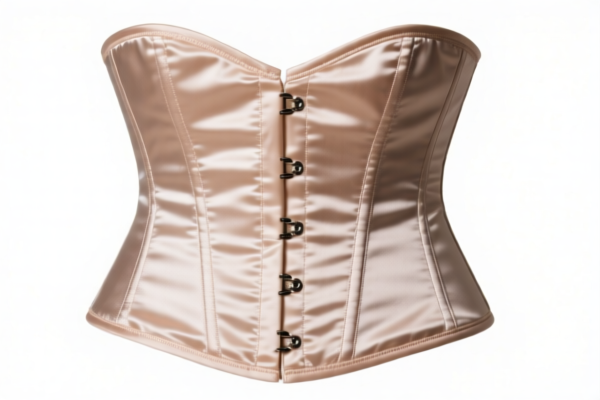
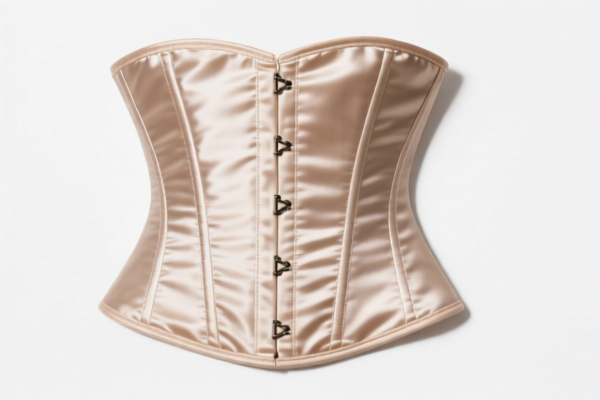
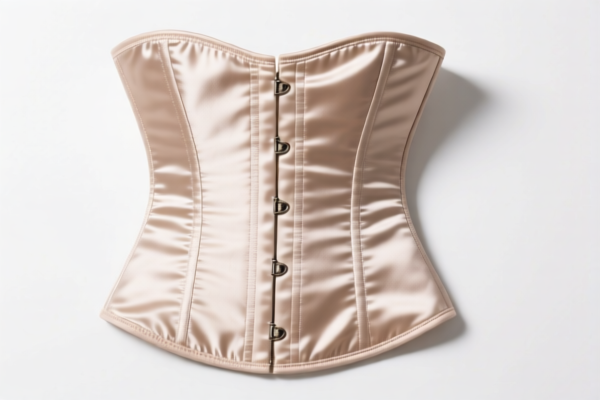

AI Analysis
🎀 Women's Waist Cincher (Body Shaper / Corset)
🌐 HS Code Reference & Clearance Guide | 2026 Latest Tariff Analysis | Strategic Compliance Strategy
📌 I. Product Definition & Classification: Do You Really Understand "Waist Cinchers"?
A Women's Waist Cincher is an undergarment or outerwear garment designed to shape the torso, typically made from elastic fabrics (spandex, latex, nylon) or structured materials (steel-boned corsets). In international trade, its classification depends heavily on its primary function, material composition, and whether it is considered a medical device or apparel.
However, based on the provided <DATA>, we are strictly looking at Orthopedic Appliances.
⚠️ Critical Distinction:
- If it is a fashion garment (lace, cotton, simple elastic) for aesthetic shaping → It belongs to Chapter 61/62 (Apparel), NOT the data provided.
- If it is a medical/orthopedic appliance (surgical belt, truss, or corrective brace) intended to compensate for a physical defect, support post-surgery, or treat a condition → It falls under HS Code 9021.
- The<DATA>provided ONLY covers items classified under Heading 9021.10 (Orthopedic appliances).
Therefore, this guide focuses exclusively on Waist Cinchers classified as Orthopedic Appliances per the <DATA> constraints.
📦 II. HS Code Classification Details (Based on Provided <DATA>)
According to the provided <DATA>, Women's Waist Cinchers classified as orthopedic appliances fall under HS Code 9021.10. The classification is split into two subcategories based on internal fixation vs. external support.
| HS Code | Product Description | Applicable Scenario | Internal Fixation? |
|---|---|---|---|
9021.10.00.50 |
Orthopedic or fracture appliances, and parts and accessories thereof | Bone plates, screws, nails, and other internal fixation devices. | ✅ Yes (Implanted) |
9021.10.00.90 |
Orthopedic appliances, including crutches, surgical belts and trusses... | External orthopedic supports, surgical belts, trusses, and external braces. | ❌ No (Worn/Carried) |
🔍 Key Insight for Waist Cinchers:
- A standard surgical waist binder or post-operative abdominal support is an external appliance.
- Therefore, it generally falls under9021.10.00.90("Other" orthopedic appliances, specifically surgical belts/trusses).
- It does NOT fall under9021.10.00.50because it is not an internal implant like a bone plate.
- Conclusion: For a non-invasive, external waist cincher used for medical/post-surgical support, the correct code from the provided data is9021.10.00.90.
💰 III. 2026 Latest Tariff Rate Breakdown (Detailed Tax Clauses)
✅ Applicable Country: United States (US)
✅ Origin: China (CN)
✅ Effective Time: Current Tariff Schedule
🎯 1. 9021.10.00.90 —— Orthopedic Appliances (Other) / Surgical Belts
| Item | Content |
|---|---|
| Base Tariff Rate | 0.0% (ad valorem) |
| Additional Tariff (Section 301 / IEEPA) | 0.0% |
| Total Effective Tariff | 0.0% |
| Tax Calculation | CIF Value × 0% = $0 |
| De Minimis Eligibility | ✅ Yes (If value ≤ $800, no duties/taxes usually apply anyway, but even above, rate is 0%) |
| Legal Basis Path | HTSUS:9021.10.00.90 |
📌 Explanation:
- Base Tariff: Under HTSUS 9021.10.00.90, the general duty rate for "Other" orthopedic appliances is 0%.
- Additional Duties: Unlike electronics or steel products, medical and orthopedic devices are often exempt from the aggressive Section 301 tariffs (25%) and IEEPA surcharges (10%) listed in the example for monitors. The provided<DATA>explicitly statestax_detail: "基础关税: 0.0%, 加征关税: 0.0%".
- Result: Zero Duty. This makes orthopedic waist cinchers highly competitive for clearance compared to fashion apparel (which may face 10-30% tariffs).
🎯 2. 9021.10.00.50 —— Internal Fixation Devices (For Comparison)
| Item | Content |
|---|---|
| Base Tariff Rate | 0.0% |
| Additional Tariff | 0.0% |
| Total Effective Tariff | 0.0% |
📌 Note: While waist cinchers are not internal fixation devices, this confirms that the entire 9021.10 heading enjoys 0% duty under the provided data.
🛠️ IV. Clearance Practical Advice (Combat Pitfalls Guide)
✅ 1. Documentation Checklist (Non-Negotiable)
| Document | Must Provide | Explanation |
|---|---|---|
| ✅ Medical Certificate/Prescription | ✔️ | Critical to prove the item is for medical/orthopedic use (e.g., post-abdominoplasty support) to justify HS 9021. |
| ✅ Product Specification Sheet | ✔️ | Must state: "Surgical Belt," "Orthopedic Support," "Abdominal Binder." Avoid words like "Fashion," "Corset," "Waist Trainer" if claiming medical status. |
| ✅ Material Composition | ✔️ | e.g., "100% Nylon/Spandex with Steel Bones." |
| ✅ Intended Use Statement | ✔️ | Explicitly state: "For use as an orthopedic support device after surgery." |
| ✅ Commercial Invoice | ✔️ | Clearly describe as: "Orthopedic Abdominal Support Belt, Medical Grade, Model XYZ" |
| ✅ Certificate of Free Sale | ✔️ | Optional but helpful to prove it is legally sold as a medical device. |
✅ 2. Declaration Tips (Key Mantras)
🔥 “Medical Function, Not Fashion; HS 9021, Duty Zero!”
| Scenario | Correct Declaration | Wrong Approach |
|---|---|---|
| Post-Surgical Support | 9021.10.00.90 - "Orthopedic Surgical Belt" |
Declare as "Lace Corset" (Chapter 61) → Higher duties, FDA/CTC issues. |
| Weight Loss Shaper (No Medical Claim) | NOT COVERED IN <DATA> |
Do not force it into 9021. Use Apparel codes. |
| Waist Trainer with Steel Bones | If marketed as posture correction/medical: 9021.10.00.90 |
If marketed as "Fashion": Apparel code. |
| Parts/Accessories | 9021.80 or 9021.90 (Not in data, but related) |
Combine with main unit. |
⚠️ Warning:
- The CBP (U.S. Customs) is strict. If you declare a "Waist Cincher" as a medical device, they may request proof.
- If the product is purely for cosmetic weight loss without medical backing, classifying it under 9021 is high risk and may lead to reclassification and penalties.
- Ensure your marketing materials and labels align with "Orthopedic/Medical" terminology to support the 0% duty claim under 9021.
✅ 3. Special Case Handling
| Situation | Handling Advice |
|---|---|
| FDA Regulation | Some waist cinchers are Class I medical devices. Ensure FDA registration if required. |
| Labeling | Must include: "Caution: For use under medical supervision" if claiming medical benefits. |
| Origin | If originating from Vietnam/Mexico, verify if any free trade agreements apply (though duty is already 0%, documentation is key). |
| Mixed Containers | If shipping both Fashion Corsets and Medical Belts, separate shipments or clear distinct HS Codes to avoid audit flags. |
🌍 V. Global Market Comparison (2026 Latest)
| Country/Region | Recommended HS Code | Tariff | Notes |
|---|---|---|---|
| 🇺🇸 USA | 9021.10.00.90 |
0% | Zero duty for orthopedic appliances. Critical to prove medical use. |
| 🇨🇳 China | 9021.10.00.90 |
~5-10% | Import duties vary; check local HS. |
| 🇪🇺 EU | 9021.10.00.90 |
0% | Most medical devices enter duty-free. CE Marking required. |
| 🇬🇧 UK | 9021.10.00.90 |
0% | Post-Brexit tariff rates often align with EU for medical goods. |
📌 Conclusion:
- Orthopedic Waist Cinchers enjoy 0% duty in major markets (US, EU) because they are essential medical aids.
- Fashion Waist Trainers do NOT enjoy this benefit and are taxed as apparel.
- Strategy: Market and label your product as an Orthopedic Support Device to leverage the 0% tariff, but ensure compliance with medical device regulations.
📌 VI. Common Mistakes & Pitfalls (Lessons Learned)
❌ Mistake 1: Calling it a "Waist Trainer" and declaring it as Medical (9021)
👉 Consequence: CBP may reject the classification, reclassify as apparel (10-20% duty) + penalties.
❌ Mistake 2: Using 9021.10.00.50 (Internal Fixation) for an external belt
👉 Consequence: Incorrect HS code → Clearance delay, request for evidence, potential fines.
❌ Mistake 3: Ignoring FDA/CE requirements for medical claims
👉 Consequence: Seizure of goods, import bans, legal action.
❌ Mistake 4: Combining medical belts with fashion items in one shipment without clear separation
👉 Consequence: The entire shipment may be audited, delaying release of all goods.
✅ Correct Approach:
"Post-Operational Abdominal Binder, Orthopedic Support, Steel-Boned, Model ABC, For Medical Use Only"
🎯 VII. Conclusion: Professional Declaration, Cost Savings, Compliance
🎯 Remember the Mantra:
🔹 "Medical Use, Zero Duty; Fashion Use, Apparel Rate."
🔹 "Prove the Function, Save the Duty."
📌 Pro Tip:
If your waist cincher is intended for post-surgical recovery, ensure all documentation (labels, invoices, marketing) emphasizes medical necessity. This allows you to confidently use HS Code 9021.10.00.90 and benefit from 0% tariffs.
📣 Immediate Action:
📞 Consult with a customs broker to verify if your specific design qualifies as an "Orthopedic Appliance."
🚀 Clearance Smooth, Costs Minimized, Compliance Guaranteed!
✨ Professional Clearance, Starts with Precise Classification!
💼 Every duty percentage counts!
Customer Reviews
About HS Code Classification
The Harmonized System (HS) is an internationally standardized nomenclature developed by the World Customs Organization (WCO) to classify traded products. Over 200 countries use the HS system as the basis for customs tariffs, trade statistics, and import/export regulations.
Each HS code follows a hierarchical structure:
- Chapter (2 digits) — Broad category of goods (e.g., Chapter 84: Machinery and Mechanical Appliances)
- Heading (4 digits) — More specific grouping within the chapter
- Subheading (6 digits) — Internationally standardized breakdown, used by all WCO member countries
- National subdivisions (8-10 digits) — Country-specific extensions for further classification, such as US HTSUS 10-digit codes
Correct HS code classification is essential for smooth customs clearance, accurate duty payment, and compliance with trade regulations. Misclassification can lead to customs delays, overpayment of duties, or penalties.
When importing from CN to US, the applicable tariff rates may include:
- Most-Favored-Nation (MFN) rate — The standard duty rate applied to WTO members
- General rate — Applied to countries without trade agreements
- Trade remedy duties — Additional tariffs such as Section 301 (anti-dumping), Section 232 (national security), or countervailing duties
The information provided on this page is for reference purposes only. For official classification, please consult with your local customs authority or a licensed customs broker.