Women's Wallet
CN → US| HS Code | Tariff Rate | Origin | Destination | Doc |
|---|---|---|---|---|
| 4202316000 | 43.0% | CN | US | Official Doc |
| 3926903300 | 16.5% | CN | US | Official Doc |
| 4202322000 | 55.0% | CN | US | Official Doc |
| 4202228980 | 52.6% | CN | US | Official Doc |
| 4202923120 | 52.6% | CN | US | Official Doc |
Product Images
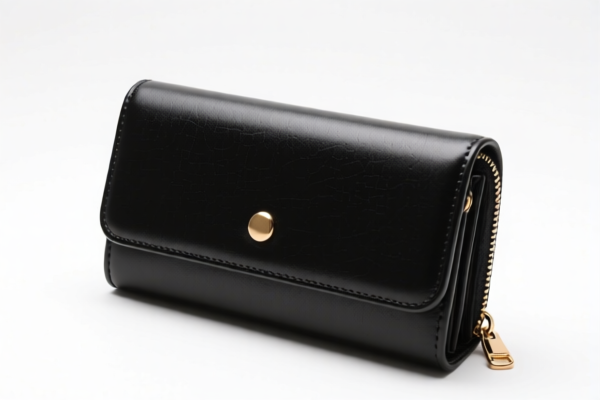
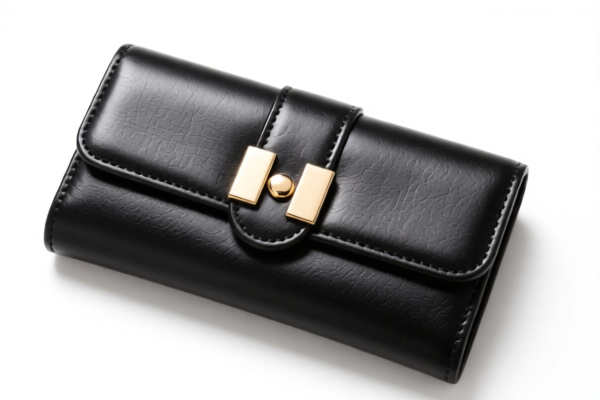
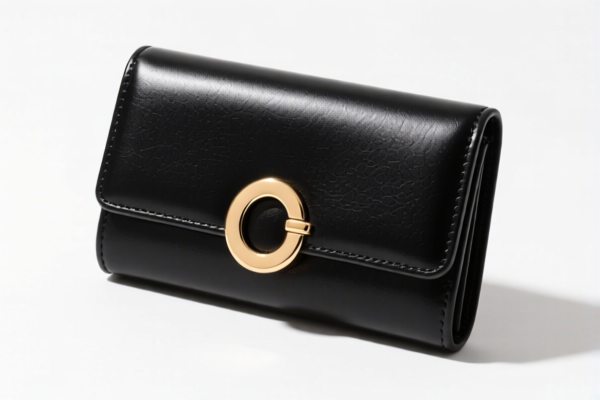

AI Analysis
👛 Women's Wallets: The Ultimate HS Code Guide & Customs Clearance Strategy
🌐 HS Code Reference & Customs Clearance Guide | 2024/2025 Latest Tariff Analysis | Professional Compliance Strategy
📌 I. Product Definition & Classification: Do You Really Understand "Women's Wallets"?
In international trade, "Women's Wallets" are not a single uniform product. They are strictly classified based on material composition and structural form. Misclassification can lead to severe tax discrepancies, as the difference between a leather wallet and a plastic one can be a 12%+ gap in total duties.
The four primary categories identified in your data are: 1. Leather-based Mini Wallets (Classic, high-duty risk due to Section 122) 2. Plastic/Synthetic/Textile Wallets (Low-duty alternative) 3. Plastic-Faced/Textile Mini Wallets (Highest duty risk) 4. Handbags & Backpacks (Often confused with wallets but structurally different)
⚠️ Key Distinction Point:
- If the exterior surface is leather (even if miniaturized) → High Duty Risk (Section 122 applies).
- If the exterior surface is plastic sheeting or textile → Lower Base Duty, but Watch for Section 122 on specific textile/plastic blends.
- If it is a Handbag (handles for carrying) or Backpack (straps for back carrying) → Different HS Chapter (4202.2x vs 4202.3x).
📦 II. HS Code Classification Details (Based on Provided Data)
| HS Code | Product Description | Material Inference | Total Tax Rate | Key Risk Factor |
|---|---|---|---|---|
4202.31.60.00 |
Women's Mini Wallet | Leather | 43.0% | High Section 122 (35%) |
3926.90.33.00 |
Women's Wallet (General) | Plastic, Synthetic Leather, or Fabric | 16.5% | Lowest Tax Option (No Section 122 on 301) |
4202.32.20.00 |
Women's Mini Wallet | Plastic Sheets, Leather, or Textile | 55.0% | Highest Tax (25% 301 + 10% Section 122) |
4202.22.89.80 |
Women's Handbag | Textile or Non-Specific | 52.6% | Structural Difference (Handbag vs. Wallet) |
4202.92.31.20 |
Women's Backpack | Textile or Synthetic Fiber | 52.6% | Structural Difference (Backpack vs. Wallet) |
🔍 Critical Insight:
-3926.90.33.00is the cost-effective champion for non-leather wallets. It avoids the 25% "Section 301" tariff entirely, resulting in only a 16.5% total tax.
-4202.31.60.00and4202.32.20.00are heavily penalized by US trade policies (Section 301 + Section 122), totaling 43-55%.
- Handbags (4202.22) and Backpacks (4202.92) are structurally distinct from wallets (pocket/purse carried items) and carry high duties due to Section 301 (25%).
💰 III. 2024/2025 Latest Tariff Rate Breakdown (Detailed Policy Analysis)
✅ Applicable Market: United States (US)
✅ Origin: China (CN)
✅ Policy Context: Section 301 Tariffs (25%) & Section 122 Tariffs (10%)
🎯 1. 4202.31.60.00 — Women's Mini Wallet (Leather)
| Item | Detail |
|---|---|
| Base Duty | 8.0% |
| Section 301 Tariff | +25.0% |
| Section 122 Tariff | +10.0% |
| Total Effective Rate | 43.0% |
| De Minimis Eligibility | ❌ Denied (deny_de_minimis) |
| Legal Path | Base HS → Footnote 301 → Footnote 122 |
📌 Explanation:
- Leather wallets are classified under Chapter 42.
- Section 301 (25%) applies to most leather goods from China.
- Section 122 (10%) is an additional penalty tariff applied to specific leather articles, pushing the total to 43%.
- Cost Impact: On a $100 shipment, you pay $43 in duties alone.
🎯 2. 3926.90.33.00 — Women's Wallet (Plastic/Synthetic/Fabric)
| Item | Detail |
|---|---|
| Base Duty | 6.5% |
| Section 301 Tariff | 0.0% |
| Section 122 Tariff | +10.0% |
| Total Effective Rate | 16.5% |
| De Minimis Eligibility | ❌ Denied (deny_de_minimis) |
| Legal Path | Chapter 39 (Plastics) → Excluded from 301 list |
📌 Explanation:
- This is the strategic sweet spot.
- Goods classified under Chapter 39 (Articles of Plastic) are often exempt from Section 301 tariffs.
- While Section 122 still applies (+10%), the absence of the 25% tariff saves you 28.5% compared to leather options.
- Cost Impact: On a $100 shipment, you pay only $16.50 in duties.
🎯 3. 4202.32.20.00 — Women's Mini Wallet (Plastic/Textile Blend)
| Item | Detail |
|---|---|
| Base Duty | 20.0% |
| Section 301 Tariff | +25.0% |
| Section 122 Tariff | +10.0% |
| Total Effective Rate | 55.0% |
| De Minimis Eligibility | ❌ Denied (deny_de_minimis) |
| Legal Path | Chapter 42 → Footnote 301 → Footnote 122 |
📌 Explanation:
- This code is for mini-wallets made of plastic sheets or textiles that do not qualify as "plastic articles" under Chapter 39.
- It attracts the highest penalty.
- Cost Impact: On a $100 shipment, you pay $55 in duties. Avoid this if possible.
🎯 4. & 5. 4202.22.89.80 (Handbag) & 4202.92.31.20 (Backpack)
| Item | Detail |
|---|---|
| Base Duty | 17.6% |
| Section 301 Tariff | +25.0% |
| Section 122 Tariff | +10.0% |
| Total Effective Rate | 52.6% |
| De Minimis Eligibility | ❌ Denied (deny_de_minimis) |
| Legal Path | Chapter 42 (Handbags/Backpacks) → Footnote 301 → Footnote 122 |
📌 Explanation:
- These are structural categories. If your product has a long handle for hand-carrying (Handbag) or straps for the back (Backpack), it cannot be declared as a "Wallet" (4202.3x).
- Misclassifying a handbag as a wallet to avoid Section 301 is customs fraud and will result in seizures.
🛠️ IV. Customs Clearance Practical Advice (Avoiding Pitfalls)
✅ 1. Preparation Checklist (Mandatory)
| Document | Required | Explanation |
|---|---|---|
| ✅ Product Photos | ✔️ | Must clearly show the material texture (leather grain vs. plastic sheen vs. fabric weave). |
| ✅ Composition Statement | ✔️ | Explicitly state: "Exterior: 100% Polyurethane (PU)" or "Exterior: Genuine Leather." |
| ✅ Commercial Invoice | ✔️ | Must match the HS Code description exactly (e.g., "Wallet, Plastic Material"). |
| ✅ Structure Diagram | ✔️ | Prove it is a wallet (flat, pocket-sized) and not a handbag (large, handles). |
| ✅ Origin Certificate | ✔️ | Essential for proving CN origin to apply correct Section 122/301 rates. |
✅ 2. Declaration Strategy (Key Mnemonics)
🔥 “Material Matters, Structure Defines, Avoid the Leather Trap!”
| Scenario | Correct HS Code | Wrong Code | Consequence |
|---|---|---|---|
| Plastic/Synthetic Wallet | 3926.90.33.00 |
4202.31.60.00 |
Saving 26.5% in taxes! |
| Leather Wallet | 4202.31.60.00 |
3926.90.33.00 |
Penalty for misclassification + Back taxes |
| Mini Wallet (Fabric/Plastic) | 4202.32.20.00 |
3926.90.33.00 |
55% Tax instead of 16.5% if misclassified as plastic |
| Handbag | 4202.22.89.80 |
4202.31.60.00 |
Seizure for misdescription |
✅ 3. Special Cases & Mitigation
| Scenario | Recommendation |
|---|---|
| OEM Custom Wallets | Provide material test reports (ASTM D412 for leather, etc.) to prove material type. |
| Mixed Materials | If the exterior principal material is plastic/synthetic, argue for 3926.90.33.00. If leather, use 4202.31.60.00. |
| "Section 122" Avoidance | There is no legal way to avoid Section 122 for leather/plastic wallets from China. The only mitigation is using 3926.90.33.00 if the product qualifies as a "plastic article." |
| De Minimis Loophole | ❌ Closed. All these HS codes are explicitly deny_de_minimis. Do not attempt $800 shipments to avoid taxes; they will be seized. |
🌍 V. Global Market Comparison (2024/2025)
| Market | Recommended HS Code | Total Duty (China Origin) | Certification | Note |
|---|---|---|---|---|
| 🇺🇸 USA | 3926.90.33.00 |
16.5% | No specific cert | Best Option |
| 🇺🇸 USA | 4202.31.60.00 |
43.0% | No specific cert | High Cost |
| 🇪🇺 EU | 4202.29 / 3926 |
~10-12% | CE/REACH | No Section 301/122 |
| 🇨🇳 China | 4202.31 / 3926 |
5-10% | N/A | Low Duty, No Retaliatory Tariffs |
📌 Conclusion:
- For US Imports, the3926.90.33.00code is the only viable option for cost efficiency if the wallet is made of plastic/synthetic/fabric.
- For Leather Wallets, you must accept the 43% tax burden or absorb it into pricing.
- Never misclassify a handbag as a wallet. The structural difference is easily audited by CBP.
📌 VI. Common Errors & Lessons Learned (Blood & Tears)
❌ Error 1: Declaring a Plastic Wallet as 4202.31.60.00 (Leather).
👉 Consequence: You pay 43% instead of 16.5%. Loss of Profit.
❌ Error 2: Declaring a Leather Wallet as 3926.90.33.00 (Plastic).
👉 Consequence: CBP audit finds real leather. Back Taxes + Penalty + Potential Fraud Charges.
❌ Error 3: Using De Minimis ($800) for these items.
👉 Consequence: Seizure. The list explicitly denies de minimis for these HS codes.
❌ Error 4: Confusing Mini Wallets with Handbags.
👉 Consequence: If it has a handle for hand-carrying, it’s a handbag (4202.22). Misclassification leads to rejection.
✅ Correct Approach:
"Wallet, Women's, Exterior Material: Synthetic Leather (PU), Interior: Polyester, Dimensions: 10x8x2 cm, No Handles, Model XYZ."
🎯 VII. Conclusion: Precision Classification, Profit Protection!
🎯 Remember the Mantra:
🔹 "Plastic/Synthetic = 16.5% (Gold Mine)"
🔹 "Leather = 43% (Pain Point)"
🔹 "Blends/Textiles = 55% (Trap)"
🔹 "No De Minimis Allowed!"
📌 Pro Tip:
If you are importing from China, prioritize plastic, synthetic leather, or fabric materials for wallets to utilize 3926.90.33.00. This single HS Code decision can save you $26,500 in duties per $100,000 of goods.
📣 Immediate Action:
📞 Verify your material composition with suppliers.
📦 Ensure your product photos clearly show the material texture.
📝 Apply for an Advance Ruling from CBP if you are unsure about the material classification.
✨ Professional Customs Clearance Starts with Accurate HS Codes!
💼 Your Every Dollar Saved is a Dollar Earned!
Customer Reviews
About HS Code Classification
The Harmonized System (HS) is an internationally standardized nomenclature developed by the World Customs Organization (WCO) to classify traded products. Over 200 countries use the HS system as the basis for customs tariffs, trade statistics, and import/export regulations.
Each HS code follows a hierarchical structure:
- Chapter (2 digits) — Broad category of goods (e.g., Chapter 84: Machinery and Mechanical Appliances)
- Heading (4 digits) — More specific grouping within the chapter
- Subheading (6 digits) — Internationally standardized breakdown, used by all WCO member countries
- National subdivisions (8-10 digits) — Country-specific extensions for further classification, such as US HTSUS 10-digit codes
Correct HS code classification is essential for smooth customs clearance, accurate duty payment, and compliance with trade regulations. Misclassification can lead to customs delays, overpayment of duties, or penalties.
When importing from CN to US, the applicable tariff rates may include:
- Most-Favored-Nation (MFN) rate — The standard duty rate applied to WTO members
- General rate — Applied to countries without trade agreements
- Trade remedy duties — Additional tariffs such as Section 301 (anti-dumping), Section 232 (national security), or countervailing duties
The information provided on this page is for reference purposes only. For official classification, please consult with your local customs authority or a licensed customs broker.