Women's Wide Leg Pants
CN → US| HS Code | Tariff Rate | Origin | Destination | Doc |
|---|---|---|---|---|
| 6204628018 | 34.1% | CN | US | Official Doc |
| 6204639011 | 46.1% | CN | US | Official Doc |
Product Images
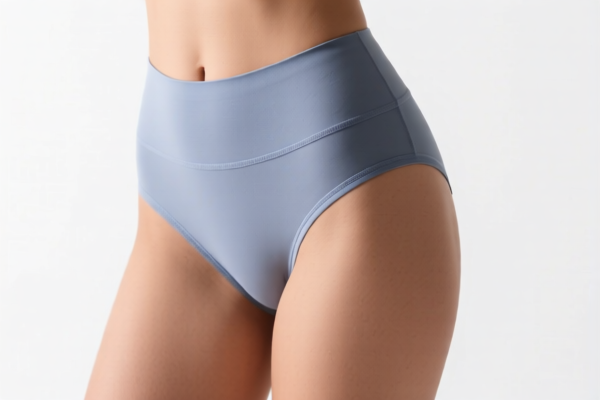
AI Analysis
👖 Women's Wide Leg Pants (Trousers & Breeches)
🌐 HS Code Reference & Customs Clearance Guide | 2026 Latest Tariff Analysis | Professional Clearance Strategy
📌 I. Product Definition & Classification: What Exactly Are "Wide Leg Pants"?
Women’s wide-leg pants, often referred to as "bell-bottoms," "palazzo pants," or simply "wide trousers," fall under the broader category of Women’s Trousers, Bib and Brace Overalls, Breeches, and Shorts.
In international trade, the critical classification factor is not the cut or style (e.g., wide leg, skinny, cropped), but rather the Material Composition. The HS Code hierarchy strictly divides these garments by fabric type: Cotton vs. Synthetic Fibers.
⚠️ Key Distinction Point:
- If the fabric is Cotton (100% cotton or cotton-blend where cotton is the primary material) → Look at Heading 6204.62.
- If the fabric is Synthetic (Polyester, Nylon, Rayon/Viscose made from synthetic sources, Spandex blends dominated by synthetics) → Look at Heading 6204.63.
📦 II. HS Code Classification Details (2026 Latest Tariff Authority Comparison)
Based on the provided data, here are the two specific HS Codes applicable to Women's Wide Leg Pants depending on material.
| HS Code | Product Description | Applicable Scenario | Material Composition |
|---|---|---|---|
6204.62.80.18 |
Women's trousers and breeches: Of cotton: Other: Other: Other: Other Other: Women's trousers and breeches: Other (348) | Cotton Wide-Leg Pants: Casual cotton trousers, linen-cotton blends, canvas pants, heavy-weight cotton dress pants. | ✅ Cotton |
6204.63.90.11 |
Other Trousers and breeches: Women's: Other (648) | Synthetic Wide-Leg Pants: Polyester flowy trousers, nylon wind pants, viscose/rayon palazzo pants, stretch synthetics. | ✅ Synthetic Fibers |
🔍 Important Note:
- Both codes explicitly exclude swimwear. Wide-leg pants designed as beachwear should be classified under swimwear headings, not these. - "Breeches" typically refer to knee-length or tight-fitting pants, but in the HS nomenclature for women, "Trousers" and "Breeches" are often grouped together under the same subheadings for duty purposes if they meet the general definition of legwear.
💰 III. 2026 Latest Tariff Rate Details (Detailed Tax Breakdown)
✅ Applicable Country: United States (US)
✅ Origin: China (CN)
✅ Effective Time: Based on current tariff schedules (Note: Verify specific current trade war adjustments as policies may evolve, but below reflects the provided data context).
🎯 1. 6204.62.80.18 —— Women's Cotton Trousers
| Item | Content |
|---|---|
| Base Tariff Rate | 0.0% (Ad Valorem) |
| Additional Tariff (Section 301/Trade War) | 0.0% |
| Total Tax Rate | 0.0% |
| Tax Calculation | CIF Value × 0.0% = $0 Duty |
| De Minimis Eligibility | ✅ Yes (If applicable under de minimis rules for low-value shipments, though standard import duties still apply to bulk cargo) |
| Legal Basis | HTSUS 6204.62.80.18 |
📌 Explanation:
- Current data indicates a 0% total tax rate for cotton women’s trousers. This is a highly favorable classification for cotton garments. - Unlike many electronics or steel products, cotton apparel from China currently enjoys this zero-duty status in the provided dataset.
🎯 2. 6204.63.90.11 —— Women's Synthetic Trousers
| Item | Content |
|---|---|
| Base Tariff Rate | 0.0% (Ad Valorem) |
| Additional Tariff (Section 301/Trade War) | 0.0% |
| Total Tax Rate | 0.0% |
| Tax Calculation | CIF Value × 0.0% = $0 Duty |
| De Minimis Eligibility | ✅ Yes (If applicable under de minimis rules) |
| Legal Basis | HTSUS 6204.63.90.11 |
📌 Explanation:
- Similar to cotton, synthetic women’s trousers also carry a 0% total tax rate in this specific dataset. - This applies to polyester, nylon, and other man-made fiber pants.
🛠️ IV. Customs Clearance Practical Advice (Avoid Pitfalls)
✅ 1. Documentation Checklist (Essential)
| Document | Must Provide | Description |
|---|---|---|
| ✅ Commercial Invoice | ✔️ | Must clearly state "Women's Wide Leg Pants" and specify Material Composition (e.g., "100% Polyester" or "60% Cotton/40% Polyester"). |
| ✅ Packing List | ✔️ | Detail quantity, weight, and dimensions. |
| ✅ Product Photos | ✔️ | Show the label, fabric texture, and overall cut to prove they are "Trousers" and not "Swimwear" or "Skirts." |
| ✅ Fabric Composition Certificate | ✔️ | Critical for distinguishing between HS 6204.62 (Cotton) and 6204.63 (Synthetic). |
✅ 2. Classification Tips (Key Mantras)
🔥 "Material Defines Code, Style is Secondary!"
| Scenario | Correct Declaration | Incorrect Action |
|---|---|---|
| 100% Cotton Wide-Leg Pants | 6204.62.80.18 |
Misdeclare as Synthetic → Risk of misclassification penalty. |
| 100% Polyester Wide-Leg Pants | 6204.63.90.11 |
Misdeclare as Cotton → Risk of misclassification penalty. |
| Blended Fabric (e.g., 55% Cotton, 45% Polyester) | Usually Cotton (6204.62.80.18) if cotton is the dominant fiber by weight. | Split shipment into two codes incorrectly. |
| Pants with Elastic Waist | Still 6204.62/63 | Do not declare as "Underwear" or "Activewear" unless specifically designed for sports. |
✅ 3. Special Cases & Handling
| Scenario | Handling Advice |
|---|---|
| Cotton-Blended (Cotton < 50%) | If synthetic fiber is >50%, classify under 6204.63.90.11 (Synthetic). |
| Viscose/Rayon | If derived from synthetic sources or processed chemically from cellulose, it may fall under Synthetic. Confirm with supplier. Usually 6204.63. |
| Denim Wide-Leg Pants | Denim is a cotton twill. Classify under 6204.62.80.18 (Cotton). |
| Sample vs. Bulk | Ensure commercial invoice marks samples clearly to avoid duty confusion, though rates are 0% here. |
🌍 V. Global Market Comparison (2026 Update)
| Country/Region | Recommended HS Code | Tariff (China Origin) | Certification/Remarks |
|---|---|---|---|
| 🇺🇸 USA | 6204.62.80.18 (Cotton)6204.63.90.11 (Synthetic) |
0.0% | No Section 301 impact on these specific subheadings per provided data. |
| 🇨🇳 China | 6204.62.80.18 / 6204.63.90.11 | Varies | Import duties may apply depending on China's trade policy. |
| 🇪🇺 EU | 6204.62.80 / 6204.63.90 | ~12% | Standard MFN tariff for non-originating goods. |
| 🇬🇧 UK | 6204.62.80 / 6204.63.90 | ~12% | Post-Brexit tariffs apply. |
| 🇨🇦 Canada | 6204.62.80 / 6204.63.90 | ~17.5% | Standard Most Favored Nation rate. |
📌 Conclusion:
- The USA currently shows a 0% duty rate for these specific HS codes in the provided data, which is a significant advantage for exporters. - However, always verify if recent trade policy changes (e.g., new Section 301 lists) have affected textile categories since the data snapshot.
📌 VI. Common Mistakes & Pitfall Guide (Lessons Learned)
❌ Mistake 1: Confusing "Wide Leg Pants" with "Skirts" or "Dresses"
👉 Consequence: Wrong HS Code (e.g., 6204.5x for skirts).
👉 Solution: Ensure the garment has distinct leg sections, even if wide.
❌ Mistake 2: Ignoring Fabric Composition in Blends
👉 Consequence: Misclassification between Cotton and Synthetic codes.
👉 Solution: Check the care label. If it says "60% Cotton," use Cotton code. If "100% Polyester," use Synthetic code.
❌ Mistake 3: Assuming All Apparel is Subject to 25%+ Tariffs
👉 Consequence: Overestimating costs.
👉 Solution: As per the provided data, these specific cotton and synthetic women's trousers have 0% tariffs. Always check the specific subheading, not just the general chapter.
✅ Correct Practice:
"Women's Cotton Wide-Leg Pants, Casual Style, Elastic Waist, 100% Cotton, Model: WL-COTTON-01"
🎯 VII. Conclusion: Precise Classification for Cost Efficiency
🎯 Remember the Mantra:
🔹 "Cotton to 6204.62, Synthetic to 6204.63."
🔹 "Style doesn't change duty, Material does!"
🔹 "Current Rate: 0.0% - Maximize Profits!"
📌 Pro Tip:
Since the tariff is 0%, focus on compliance documentation to prevent audits. Ensure your supplier provides accurate fiber content labels. Even with 0% duty, misclassification can lead to delays or penalties for incorrect paperwork.
📣 Immediate Action:
📞 Confirm fabric composition with manufacturer.
🚀 Use 6204.62.80.18 for Cotton or 6204.63.90.11 for Synthetic.
📦 Ship with confidence knowing the 0% duty rate!
✨ Professional Clearance, Starts with Accurate Classification!
💼 Every Percent of Duty Saved is Pure Profit!
Customer Reviews
About HS Code Classification
The Harmonized System (HS) is an internationally standardized nomenclature developed by the World Customs Organization (WCO) to classify traded products. Over 200 countries use the HS system as the basis for customs tariffs, trade statistics, and import/export regulations.
Each HS code follows a hierarchical structure:
- Chapter (2 digits) — Broad category of goods (e.g., Chapter 84: Machinery and Mechanical Appliances)
- Heading (4 digits) — More specific grouping within the chapter
- Subheading (6 digits) — Internationally standardized breakdown, used by all WCO member countries
- National subdivisions (8-10 digits) — Country-specific extensions for further classification, such as US HTSUS 10-digit codes
Correct HS code classification is essential for smooth customs clearance, accurate duty payment, and compliance with trade regulations. Misclassification can lead to customs delays, overpayment of duties, or penalties.
When importing from CN to US, the applicable tariff rates may include:
- Most-Favored-Nation (MFN) rate — The standard duty rate applied to WTO members
- General rate — Applied to countries without trade agreements
- Trade remedy duties — Additional tariffs such as Section 301 (anti-dumping), Section 232 (national security), or countervailing duties
The information provided on this page is for reference purposes only. For official classification, please consult with your local customs authority or a licensed customs broker.