Women's Winter Cotton Gloves
CN → US| HS Code | Tariff Rate | Origin | Destination | Doc |
|---|---|---|---|---|
| 6116926440 | 41.0% | CN | US | Official Doc |
| 6116927450 | 33.5% | CN | US | Official Doc |
| 6216003500 | 12.8% | CN | US | Official Doc |
| 6216003800 | 41.0% | CN | US | Official Doc |
| 6216003800 | 41.0% | CN | US | Official Doc |
Product Images
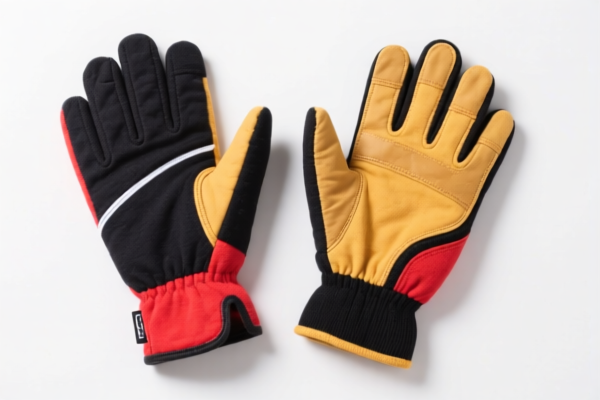
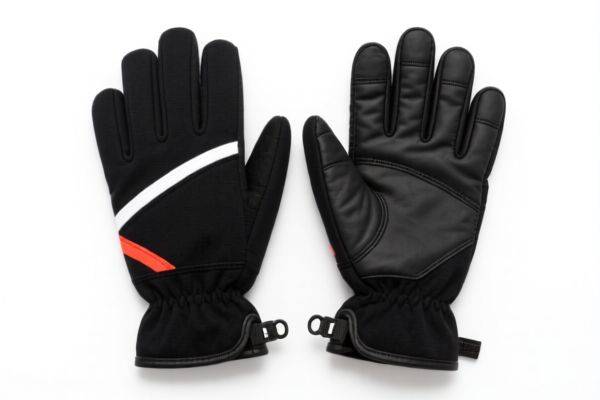
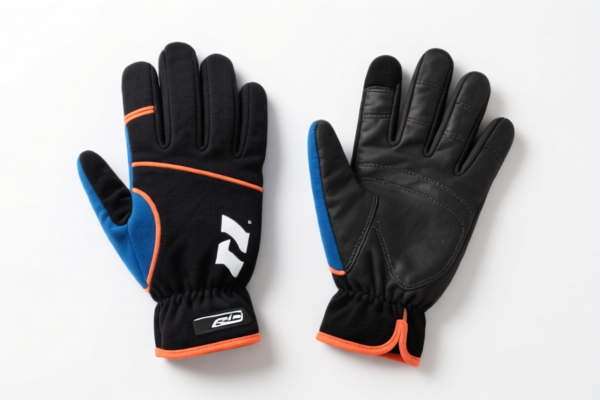
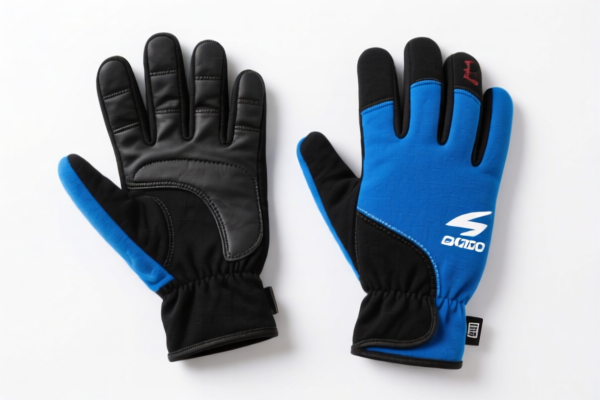
AI Analysis
🧤 Women's Winter Cotton Gloves
🌐 HS Code Reference & Customs Clearance Guide | 2026 Latest Tariff Analysis | Strategic Entry Plan
📌 I. Product Definition & Classification: What Exactly Are "Cotton Gloves"?
Women's winter cotton gloves are knit or crocheted garments primarily designed for thermal insulation and fashion. In international trade, they are classified based on knitting vs. weaving and specific usage characteristics. The confusion often arises because "cotton" is a raw material, but the manufacturing process (Knitted/Crocheted vs. Woven) determines the HS Code chapter.
⚠️ Key Classification Distinction:
- Knitted/Crocheted (Chapter 61): Made by interlocking loops of yarn. Usually softer, more elastic, and common for winter fashion gloves.
- Woven/Other (Chapter 62): Made by weaving threads on a loom. Often stiffer, used for work gloves, sports gloves, or specific structural designs.
📦 II. HS Code Classification Details (Based on Provided Data)
| HS Code | Product Description Summary | Tax Category | Key Classification Feature |
|---|---|---|---|
6116.92.64.40 |
Women's winter cotton gloves | Other | Knitted/Crocheted; Categorized under "Other" items. |
6116.92.74.50 |
Women's winter cotton gloves | Other | Knitted/Crocheted; Specifically fits the "Knitted or Crocheted Gloves" scope. |
6216.00.35.00 |
Women's winter cotton gloves | Sports/Other | Cotton-made; Classified by "Sports/Other Glove" usage. |
6216.00.38.00 |
Pure cotton women's winter gloves | Other | Cotton-made; No finger separation (fingerless) or specific structural feature. |
6216.00.38.00 |
Women's winter cotton gloves | Other | Cotton-made; Matches the target classification for gloves. |
🔍 Critical Note:
- The presence or absence of individual finger separations (fingerless vs. full-finger) and the knitting method are the primary drivers for splitting between Chapter 61 and 62.
-6216.00.38.00appears twice with different summaries, indicating that while the HS code is the same, the detailed description in customs declarations must be precise to match the specific attribute (e.g., "pure cotton" vs. general "cotton mix").
💰 III. 2026 Latest Tariff Rate Breakdown (Detailed Analysis)
✅ Applicable Country: United States (US)
✅ Origin: China (CN)
✅ Note: Rates include Basic Tariff + Additional Tariffs (Section 301/122).
🎯 1. 6116.92.64.40 & 6216.00.38.00 —— High-Tariff Categories
| Item | Content |
|---|---|
| Base Tariff | 23.5% |
| Additional Tariff (Section 301) | +7.5% |
| Section 122 Tariff | +10.0% |
| Total Effective Rate | 41.0% |
| Tax Calculation | CIF Value × 41% |
| Legal Basis | High due to combined base + punitive tariffs. |
📌 Explanation:
- These codes carry the highest burden.
- The 41% rate is a combination of:
1. Base Duty (23.5%): Standard duty for textile/glove imports.
2. Section 301 Tariff (7.5%): Retaliatory tariff on Chinese goods.
3. Section 122 Tariff (10%): National security tariff (often applied to textiles/apparel).
- Risk: This is a prohibitively high duty rate for low-margin fashion gloves.
🎯 2. 6116.92.74.50 —— Moderate-High Tariff Category
| Item | Content |
|---|---|
| Base Tariff | 23.5% |
| Additional Tariff (Section 301) | 0.0% |
| Section 122 Tariff | +10.0% |
| Total Effective Rate | 33.5% |
| Tax Calculation | CIF Value × 33.5% |
📌 Explanation:
- This code saves the 7.5% Section 301 tariff, likely due to a specific subheading classification that exempts it from that particular punitive clause.
- Savings: 7.5% lower than the6116.92.64.40and6216.00.38.00codes.
- Strategy: If your product fits the description for74.50, prioritize this classification to save cost.
🎯 3. 6216.00.35.00 —— Low-Tariff Category (Sports/Other Usage)
| Item | Content |
|---|---|
| Base Tariff | 2.8% |
| Additional Tariff (Section 301) | 0.0% |
| Section 122 Tariff | +10.0% |
| Total Effective Rate | 12.8% |
| Tax Calculation | CIF Value × 12.8% |
📌 Explanation:
- This is the most advantageous rate in the dataset.
- The low base duty (2.8%) suggests it is classified under a specific "Sporting Goods" or "Other Use" subheading that enjoys preferential treatment or lower base rates.
- Eligibility: Only applies if the gloves are explicitly marketed/used as sports gloves or fit the "other" functional category, not just general winter fashion.
🛠️ IV. Customs Clearance Practical Advice (Avoiding Pitfalls)
✅ 1. Documentation Checklist (Crucial for Textiles)
| Document | Required? | Purpose |
|---|---|---|
| ✅ Product Specification Sheet | ✔️ | Must detail: Fiber content (% Cotton), Knit type (Ribbed, Cable, etc.), Thickness, Size Range. |
| ✅ Front & Back Photos | ✔️ | Clearly show: Finger structure (separated vs. mitten/fingerless), Logo, Material texture. |
| ✅ Composition Label | ✔️ | Photo of the care label inside the glove showing "100% Cotton" or blend %. |
| ✅ Commercial Invoice | ✔️ | Description must match HS Code logic (e.g., "Knitted Cotton Gloves" vs. "Woven Sports Gloves"). |
| ✅ Certificate of Origin (CO) | ✔️ | To prove China origin (since all rates above assume CN origin). |
✅ 2. Classification Strategy (The "Cost-Saving" Formula)
🔥 "Check the Knit, Check the Use, Avoid the 41%!"
| Scenario | Recommended HS Code | Total Tax | Strategy |
|---|---|---|---|
| Fashion Knitted Gloves (Standard Winter) | 6116.92.74.50 |
33.5% | Best balance for fashion. Avoids the 7.5% Section 301. |
| Fashion Knitted Gloves (Generic) | 6116.92.64.40 |
41.0% | High risk. Only use if 74.50 description doesn't fit. |
| Work/Sports Gloves (Woven/Functional) | 6216.00.35.00 |
12.8% | Lowest Cost. Must prove "Sport/Other" use (e.g., cycling, gardening). |
| Fingerless/Pure Cotton Special | 6216.00.38.00 |
41.0% | High cost. Avoid unless product physically matches this specific narrow definition. |
✅ 3. Specific Declaration Tips
- Describe the Knit: If classifying under Chapter 61, explicitly state "Knitted or Crocheted" in the description. If misdeclared as "Woven," it will be forced into Chapter 62, potentially triggering the 41% rate.
- Highlight "Sports" Use: If your cotton gloves are for yoga, cycling, or light work, lean towards
6216.00.35.00(12.8%). Provide marketing materials showing sports usage. - Avoid "Generic" Terms: Do not just write "Cotton Gloves." Use precise terms like "Women's Knitted Cotton Winter Gloves with Ribbed Cuff" for
6116.92...or "Cotton Sports Gloves for Cycling" for6216.00.35.00. - Section 122 Impact: Note that Section 122 (10%) applies to all codes in the dataset. There is no avoidance for this specific tariff in this list. Focus your optimization on the Base + Section 301 portions.
🌍 V. Global Market Comparison (2026 Context)
| Market | Recommended Code | Est. Duty | Notes |
|---|---|---|---|
| 🇺🇸 USA | 6116.92.74.50 |
33.5% | Best US rate from the provided list. |
| 🇺🇸 USA | 6216.00.35.00 |
12.8% | Lowest US rate, but strict usage criteria. |
| 🇨🇳 China | 6116.92.00.00 |
~10-15% | Import duty to China varies, usually lower than US punitive rates. |
| 🇪🇺 EU | 6116.93.00 |
~0-12% | EU has different chapter codes. Cotton gloves often fall under 6116.93. Check specific blend. |
📌 Conclusion for US Import:
- The 12.8% rate (6216.00.35.00) is the "Golden Key" if your product qualifies as sports/other use gloves.
- The 33.5% rate (6116.92.74.50) is the "Silver Key" for standard fashion knitted gloves.
- The 41.0% rate is a "Cost Trap" to be avoided if possible.
📌 VI. Common Errors & Pitfalls (Lessons Learned)
❌ Error 1: Declaring "Cotton Gloves" as "Textile Accessories" (6307.90)
👉 Consequence: Misclassification. Customs will assess duty based on the actual nature (gloves), leading to back taxes + penalties.
❌ Error 2: Ignoring the "Knitted" vs. "Woven" distinction
👉 Consequence: Moving from Chapter 61 (33.5%) to Chapter 62 (41%) unnecessarily if the product is actually knitted but declared as woven.
❌ Error 3: Assuming all "Cotton" goods have the same tax
👉 Consequence: Failing to leverage the 12.8% rate for sports gloves, resulting in overpaying 28% in duty.
✅ Correct Approach:
Step 1: Determine manufacturing method (Knit vs. Woven).
Step 2: Determine primary use (Fashion vs. Sports/Work).
Step 3: Select the HS Code that matches both criteria and offers the lowest total tax.
Step 4: Document the "Sport/Other" use with photos and marketing copy if aiming for6216.00.35.00.
🎯 VII. Conclusion: Smart Classification, Higher Profit
🎯 Remember the Strategy:
🔹 "Sports Use? Go Low (12.8%)."
🔹 "Fashion Knit? Go Medium (33.5%)."
🔹 "Generic/Woven? Avoid (41%)."📌 Pro Tip:
Before shipping, request a Pre-Ruling from US Customs and Border Protection (CBP) if your product sits on the boundary between "Fashion" and "Sports." A clear ruling can prevent costly delays and ensure you pay the 12.8% or 33.5% rate rather than 41%.
📣 Action Plan:
📞 Consult your freight forwarder with the exact product photos and material composition.
📄 Ask for an HS Code Pre-determination for6116.92.74.50or6216.00.35.00based on your specific design.
🚀 Optimize your supply chain to target the lower duty brackets.
✨ Accurate Classification is Your Best Defense Against High Tariffs!
💼 Don't let 41% eat your margin—target 12.8% or 33.5% today!
Customer Reviews
About HS Code Classification
The Harmonized System (HS) is an internationally standardized nomenclature developed by the World Customs Organization (WCO) to classify traded products. Over 200 countries use the HS system as the basis for customs tariffs, trade statistics, and import/export regulations.
Each HS code follows a hierarchical structure:
- Chapter (2 digits) — Broad category of goods (e.g., Chapter 84: Machinery and Mechanical Appliances)
- Heading (4 digits) — More specific grouping within the chapter
- Subheading (6 digits) — Internationally standardized breakdown, used by all WCO member countries
- National subdivisions (8-10 digits) — Country-specific extensions for further classification, such as US HTSUS 10-digit codes
Correct HS code classification is essential for smooth customs clearance, accurate duty payment, and compliance with trade regulations. Misclassification can lead to customs delays, overpayment of duties, or penalties.
When importing from CN to US, the applicable tariff rates may include:
- Most-Favored-Nation (MFN) rate — The standard duty rate applied to WTO members
- General rate — Applied to countries without trade agreements
- Trade remedy duties — Additional tariffs such as Section 301 (anti-dumping), Section 232 (national security), or countervailing duties
The information provided on this page is for reference purposes only. For official classification, please consult with your local customs authority or a licensed customs broker.