Women's Woven Trousers
CN → US| HS Code | Tariff Rate | Origin | Destination | Doc |
|---|---|---|---|---|
| 6204628018 | 34.1% | CN | US | Official Doc |
| 6204621511 | 34.1% | CN | US | Official Doc |
Product Images
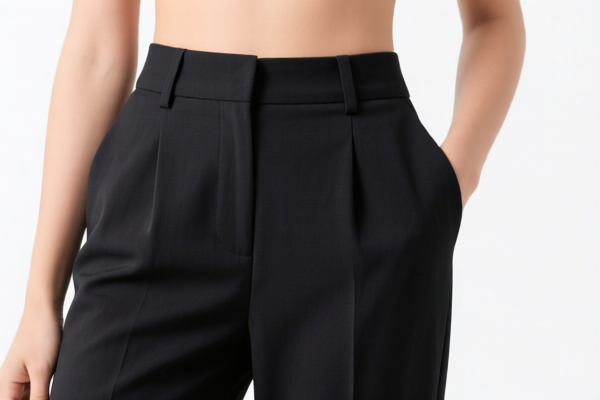
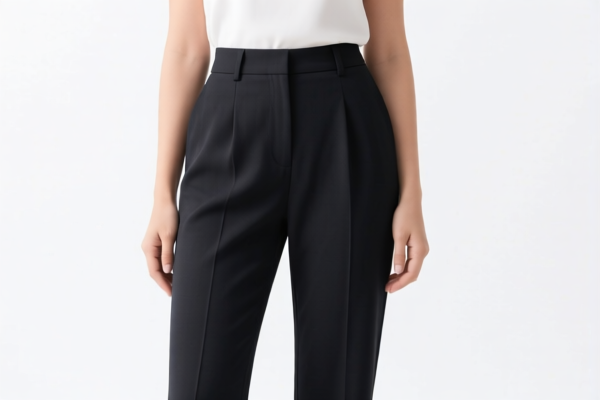
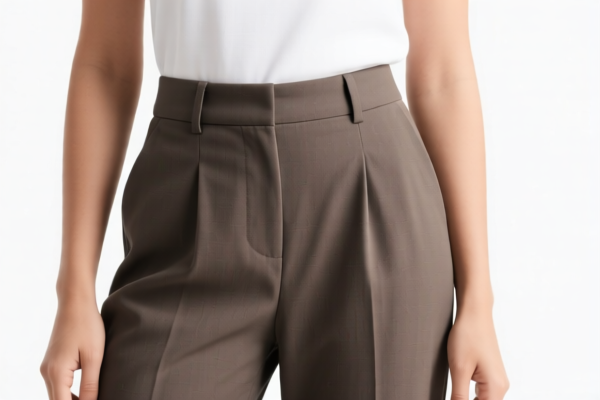
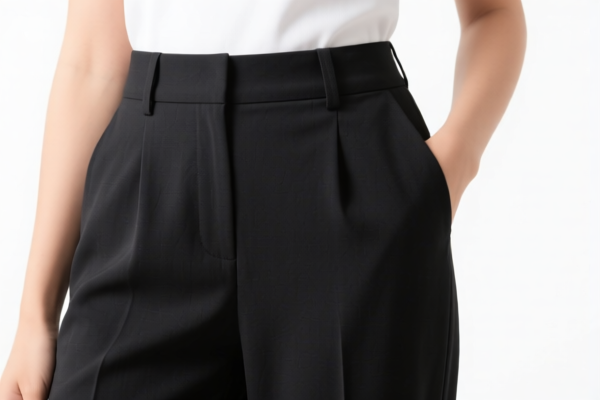
AI Analysis
👖 Women's Woven Trousers (Women's Tailored Pants)
🌐 HS Code Reference & Clearance Guide | 2026 Latest Tariff Full Analysis | Professional Entry Strategy
📌 I. Product Definition & Classification: Do You Really Know "Women's Trousers"?
Women's woven trousers are a staple in international apparel trade, falling under Chapter 62 (Articles of Apparel and Clothing Accessories, Not Knitted or Crocheted). Specifically, they belong to the category of Trousers, Bib and Brace Overalls, Breeches, and Shorts.
In customs classification, the key distinction lies in the material composition and specific type (e.g., denim vs. non-denim). For woven women's trousers, two primary HS Codes are relevant based on the provided data:
- Cotton Trousers (General/Other): Non-denim cotton trousers, excluding recreational outerwear.
- Cotton Denim Trousers: Specifically blue denim trousers intended for recreational performance outerwear.
⚠️ Key Distinction Point:
- If the trousers are made of cotton but are NOT blue denim (e.g., chinos, dress pants, khakis) and are not classified as "recreational performance outerwear" →归入 6204.62.80.18
- If the trousers are made of blue denim and classified under "Recreational performance outerwear" → 归入 6204.62.15.11
📦 II. HS Code Classification Details (2026 Latest Tariff Authority Comparison)
| HS Code | Product Description | Applicable Scenario | Material & Type |
|---|---|---|---|
6204.62.80.18 |
Women's trousers and breeches: Of cotton: Other: Other: Other: Other Other: Women's trousers and breeches: Other | General cotton trousers (non-denim), chinos, dress pants, casual woven pants | ✅ 100% Cotton or Cotton Blend (Non-Denim) |
6204.62.15.11 |
Women's trousers and breeches: Of cotton: Recreational performance outerwear: Other: Other Other Women's trousers and breeches: Blue denim | Blue denim jeans/trousers categorized under recreational performance outerwear | ✅ 100% Cotton (Blue Denim) |
🔍 Critical Reminder:
- "Denim" Specificity: Even if made of cotton, if it is blue denim and intended for recreational wear, it may fall under the specific subheading for 6204.62.15.11.
- "Other" Classification: For all other woven cotton trousers (not denim, not recreational outerwear specifically defined), use 6204.62.80.18.
- Avoid Misclassification: Do not classify wool or synthetic fiber trousers under these codes; those belong to different subheadings (e.g., 6204.63 for synthetic, 6204.64 for wool).
💰 III. 2026 Latest Tariff Rate Details (Including Additional Taxes & Policy Add-ons)
✅ Applicable Country: United States (US)
✅ Country of Origin: China (CN)
✅ Effective Time: 2025-11-10 onwards (including subsequent imports)
🎯 1. 6204.62.80.18 —— Women's Cotton Trousers (Non-Denim / Other)
| Item | Content |
|---|---|
| Base Tariff Rate | 0.0% (ad valorem) |
| Section 301 Additional Tariff | 0.0% |
| Total Tariff Rate | 0.0% |
| Tax Calculation | CIF Value × 0% = $0 |
| De Minimis Eligibility | ✅ Yes (if value < $800) |
| Legal Basis Path | HTSUS:6204.62.80.18 → Section 301 Footnotes |
📌 Explanation:
- The base tariff for this specific subheading is 0%.
- Notably, the data indicates no Section 301 additional tariff applies to this specific code in the provided dataset.
- This makes it a highly favorable classification for cost savings compared to many other textile items.
🎯 2. 6204.62.15.11 —— Women's Blue Denim Trousers (Recreational Performance Outerwear)
| Item | Content |
|---|---|
| Base Tariff Rate | 0.0% (ad valorem) |
| Section 301 Additional Tariff | 0.0% |
| Total Tariff Rate | 0.0% |
| Tax Calculation | CIF Value × 0% = $0 |
| De Minimis Eligibility | ✅ Yes (if value < $800) |
| Legal Basis Path | HTSUS:6204.62.15.11 → Section 301 Footnotes |
📌 Note:
- Similar to the non-denim cotton trousers, this specific subheading also carries a 0% total tariff in the provided data.
- Important: While many denim items face higher tariffs or different classifications, this specific "Recreational performance outerwear: Blue denim" code is listed with 0% total tax.
- Ensure the product truly qualifies as "Recreational performance outerwear" and "Blue Denim" to avoid misclassification penalties.
🛠️ IV. Clearance Practical Advice (Real-World Pitfall Avoidance Guide)
✅ 1. Required Documentation Checklist (Essential)
| Document | Mandatory | Description |
|---|---|---|
| ✅ Commercial Invoice | ✔️ | Clearly state "Women's Woven Trousers," Material (% Cotton), and HS Code. |
| ✅ Packing List | ✔️ | Detail quantity, weight, and packaging method. |
| ✅ Product Description | ✔️ | Specify: "Woven," "Cotton," "Non-Denim" OR "Blue Denim," "Recreational Use." |
| ✅ Material Composition Label | ✔️ | Proof of content (e.g., 100% Cotton). |
| ✅ Photos of Product | ✔️ | Clear images of the garment, showing weave type and color (to prove denim vs. non-denim). |
| ✅ Origin Certificate | ✔️ | If claiming preferential rates under FTAs (though not applicable here due to 0% base rate). |
✅ 2. Declaration Tips (Key Mantra)
🔥 "Material First, Denim Check, Use Correct Subheading!"
| Scenario | Correct Declaration | Incorrect Practice |
|---|---|---|
| Cotton Chinos/Khakis | 6204.62.80.18 |
Misdeclare as denim → Audit risk |
| Blue Denim Jeans | 6204.62.15.11 |
Misdeclare as general cotton → Potential reclassification |
| Synthetic Blend Trousers | Do NOT use these codes | Using cotton codes for polyester → Severe Penalty |
| Knitted Trousers | Do NOT use these codes | Using woven codes for knitted → Chapter 61 vs 62 Error |
✅ 3. Special Case Handling
| Scenario | Handling Advice |
|---|---|
| Mixed Materials | If >50% cotton, classify under cotton. If synthetic, use different HS code. |
| "Denim" Ambiguity | If the fabric is cotton but not indigo/blue denim, use 6204.62.80.18. |
| Sample Shipments | Under $800, eligible for de minimis. Declare accurately with "Sample" in description. |
| Large Volume Imports | Ensure consistency between invoice, packing list, and physical goods description. |
🌍 V. Global Market Clearance Comparison (2026 Latest)
| Country/Region | Recommended HS Code | Tariff Rate | Certification Requirements | Notes |
|---|---|---|---|---|
| 🇺🇸 USA | 6204.62.80.18 / 6204.62.15.11 |
0.0% | No special certification required | Zero tariff benefits |
| 🇨🇳 China | 6204.62.90 (General) |
Varies | CCC (if applicable) | Check local import duties |
| 🇪🇺 EU | 6204.62.90 |
~12% | CE (if functional wear) | VAT applies |
| 🇬🇧 UK | 6204.62.90 |
~12% | UKCA | Post-Brexit rules apply |
📌 Conclusion:
- USA offers 0% tariff for these specific subheadings, making it a competitive market.
- Ensure accurate material description to avoid 25-50% misclassification penalties if audited.
📌 VI. Common Errors & Pitfall Avoidance (Blood-Lesson Guide)
❌ Error 1: Classifying Knitted Trousers under Chapter 62
👉 Consequence: Chapter 61 (Knitted) vs 62 (Woven) error → 100% Duty + Penalty!
👉 Fix: Check if fabric is knitted (stretchy, loops) or woven (flat, rigid). Woven = Chapter 62.
❌ Error 2: Calling Non-Denim Cotton "Denim" to fit a different code
👉 Consequence: Customs may reclassify based on visual inspection → Delay + Extra Duties.
👉 Fix: Be honest. If it's not blue denim, use 6204.62.80.18.
❌ Error 3: Ignoring Material Composition
👉 Consequence: If trousers are 50% Polyester, 50% Cotton, they may not qualify under "Of Cotton" subheadings.
👉 Fix: Verify % composition on garment label.
❌ Error 4: Missing Recreational Use Context for Denim
👉 Consequence: If blue denim is for industrial workwear, it might fall under a different "Recreational" vs "Workwear" subheading.
👉 Fix: Specify use case: "For casual/recreational wear."
✅ Correct Practice:
"Women's Woven Cotton Trousers, Non-Denim, Casual Wear, 100% Cotton, Model XYZ, HS 6204.62.80.18"
🎯 VII. Conclusion: Professional Declaration, Cost Saving & Efficiency!
🎯 Remember the Mantra:
🔹 "Woven Not Knitted, Cotton Not Synthetic, Denim Not Non-Denim!"
🔹 "0% Tariff is Real, But Accuracy is Key!"
🔹 "One Wrong Digit, Hundreds of Dollars Lost!"
📌 Pro Tip:
- If your trousers are 100% Cotton and Non-Denim, use 6204.62.80.18.
- If they are Blue Denim and for Recreational Use, use 6204.62.15.11.
- Both offer 0% Total Tax in the provided data, but misclassification risks are high if details are vague.
📣 Immediate Action:
📞 Consult a licensed customs broker + Provide fabric swatch + Confirm "Woven" status
🚀 Ensure 0% Tariff is claimed correctly, avoiding costly errors!
✨ Professional Clearance, Starting with Precise Classification!
💼 Every Penny Saved is Pure Profit!
Customer Reviews
About HS Code Classification
The Harmonized System (HS) is an internationally standardized nomenclature developed by the World Customs Organization (WCO) to classify traded products. Over 200 countries use the HS system as the basis for customs tariffs, trade statistics, and import/export regulations.
Each HS code follows a hierarchical structure:
- Chapter (2 digits) — Broad category of goods (e.g., Chapter 84: Machinery and Mechanical Appliances)
- Heading (4 digits) — More specific grouping within the chapter
- Subheading (6 digits) — Internationally standardized breakdown, used by all WCO member countries
- National subdivisions (8-10 digits) — Country-specific extensions for further classification, such as US HTSUS 10-digit codes
Correct HS code classification is essential for smooth customs clearance, accurate duty payment, and compliance with trade regulations. Misclassification can lead to customs delays, overpayment of duties, or penalties.
When importing from CN to US, the applicable tariff rates may include:
- Most-Favored-Nation (MFN) rate — The standard duty rate applied to WTO members
- General rate — Applied to countries without trade agreements
- Trade remedy duties — Additional tariffs such as Section 301 (anti-dumping), Section 232 (national security), or countervailing duties
The information provided on this page is for reference purposes only. For official classification, please consult with your local customs authority or a licensed customs broker.