Women's blouses and shirts
CN → US| HS Code | Tariff Rate | Origin | Destination | Doc |
|---|---|---|---|---|
| 6206303045 | 32.9% | CN | US | Official Doc |
| 6106202010 | 49.5% | CN | US | Official Doc |
| 6114200010 | 20.8% | CN | US | Official Doc |
| 6206100050 | 24.4% | CN | US | Official Doc |
| 6206900040 | 24.2% | CN | US | Official Doc |
Product Images
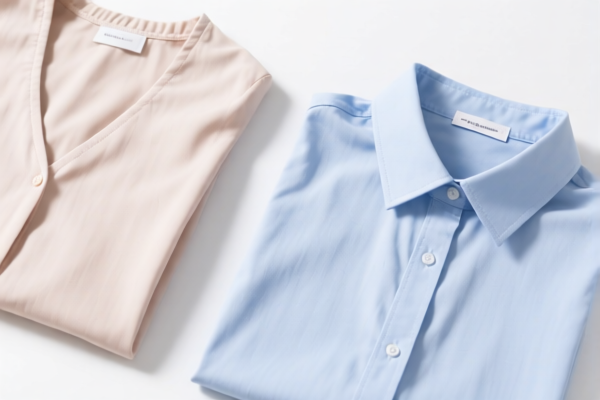
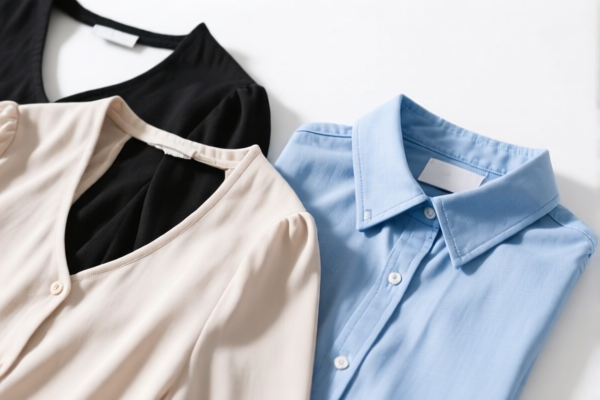
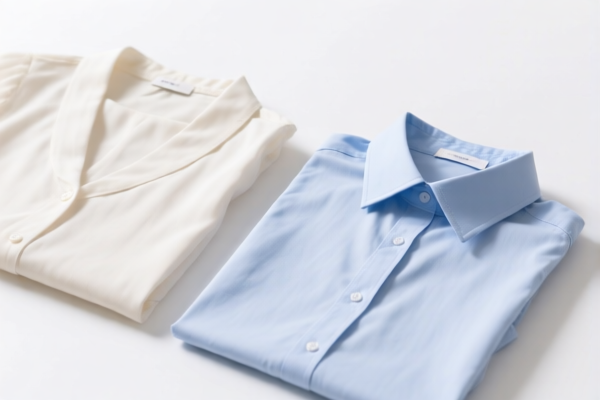
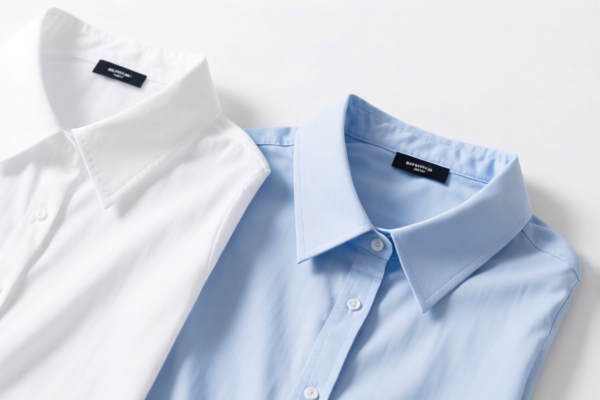
AI Analysis
👗 Women's Blouses and Shirts (The Tax Nightmare & Clearance Guide)
🌐 HS Code Reference & Clearance Guide | 2026 Latest Tariff Analysis | Professional Strategy for "Knitted vs. Woven"
📌 One Product, Five Codes, Three Different Tax Rates!
Women's tops are the most complex category in apparel customs classification. The difference between a "Blouse" (Shirt) and a "Top" often hinges on Fabric Type (Knitted vs. Woven) and Material (Cotton vs. Synthetic).
⚠️ Critical Distinction:
- Knitted (针织): Stretched, elastic fabric (e.g., T-shirts, jersey blouses). Falls under Chapter 61.
- Woven (梭织): Non-stretch, woven fabric (e.g., dress shirts, blouses). Falls under Chapter 62.
- Material Matters: Cotton often has lower base tariffs than synthetic fibers (unless specific quotas apply).
📦 1. HS Code Classification Matrix (Based on Provided Data)
We have identified 5 distinct HS Codes for "Women's Blouses/Shirts" in the provided dataset. Each has a significantly different total tax burden.
| HS Code | Summary & Logic | Fabric/Material Inference | Total Tax Rate | Tax Breakdown |
|---|---|---|---|---|
| 6106.20.20.10 | Women's Blouse/Shirt (Knitted) |
Synthetic/Textile Fibers (Non-Cotton) |
49.5% | Base: 32.0% + Surtax: 7.5% + Sec 122: 10% |
| 6206.30.30.45 | Women's Shirt (Woven) |
Cotton or Other Fibers | 32.9% | Base: 15.4% + Surtax: 7.5% + Sec 122: 10% |
| 6206.90.00.40 | Women's Blouse/Top (Woven) |
Other Textile Materials | 24.2% | Base: 6.7% + Surtax: 7.5% + Sec 122: 10% |
| 6206.10.00.50 | Women's Shirt/Top (Woven) |
Other/Unspecified | 24.4% | Base: 6.9% + Surtax: 7.5% + Sec 122: 10% |
| 6114.20.00.10 | Women's/Girls' Top (Knitted) |
Cotton or Textile | 20.8% | Base: 10.8% + Surtax: 0.0% + Sec 122: 10% |
🔍 Key Observation:
- Chapter 61 (Knitted) items like6114.20.00.10have 0% Surtax, making them the cheapest option (20.8%).
- Chapter 62 (Woven) items generally incur a 7.5% Surtax, pushing their minimum to 24.2%.
- Material Matters:6106.20.20.10(Synthetic Knit) is the most expensive (49.5%) due to a high 32.0% Base Rate.
💰 2. Detailed Tariff Analysis (Why the Difference?)
🎯 1. The "Expensive" Option: 6106.20.20.10
- Description: Women's Shirt/Blouse (Knitted)
- Total Tax: 49.5%
- Breakdown:
- Base Duty: 32.0% (High because it’s likely synthetic/polyester knit)
- Surtax: 7.5%
- Section 122 Duty: 10%
- Why so high?
Synthetic knitted apparel often faces higher base duties to protect domestic textile industries. The combination of high base + surtax + 122 makes this the worst-case scenario.
🎯 2. The "Mid-Range" Option: 6206.30.30.45
- Description: Women's Shirt (Woven)
- Total Tax: 32.9%
- Breakdown:
- Base Duty: 15.4%
- Surtax: 7.5%
- Section 122 Duty: 10%
- Why mid-range?
Woven cotton shirts have moderate base duties. However, the 7.5% Surtax applies to all Chapter 62 items in this dataset, adding significant cost.
🎯 3. The "Cost-Effective" Options: 6206.90.00.40 & 6206.10.00.50
- Description: Women's Blouse/Top (Woven, Other Materials)
- Total Tax: 24.2% - 24.4%
- Breakdown:
- Base Duty: ~6.7% - 6.9% (Very low base!)
- Surtax: 7.5%
- Section 122 Duty: 10%
- Why cheaper?
These codes are for "Other" woven blouses. The Base Duty is remarkably low (~6.7%), offsetting the 7.5% surtax. If your product is not a standard "Cotton Shirt," this might be the best fit.
🎯 4. The "Best Deal": 6114.20.00.10
- Description: Women's/Girls' Top (Knitted)
- Total Tax: 20.8%
- Breakdown:
- Base Duty: 10.8%
- Surtax: 0.0% (Zero!)
- Section 122 Duty: 10%
- Why the best?
This is a knitted item (Chapter 61). Crucially, it has 0% Surtax. Even with the 10% Section 122 duty, the total is the lowest at 20.8%.✅ Strategy: If your blouse is knitted (e.g., jersey, stretch fabric), prioritize this code!
🛠️ 3. Clearance Practical Advice (Avoid Customs Traps)
✅ 1. Product Description Must Be Precise
Do NOT just write "Women's Shirt." Use the following template:
- Wrong: Women's Blouse, Pink, Size M
- Right: Women's Knitted Blouse, 100% Polyester, Jersey Fabric, Collared, Long Sleeve
- Why? "Knitted" vs. "Woven" changes the HS Code entirely.
- Why? "Polyester" vs. "Cotton" changes the Base Duty.
✅ 2. Fabric Composition is King
- If Knitted (Stretchy): Check
6114.20.00.10first (Lowest tax: 20.8%). - If Woven (Non-Stretch):
- If it's a standard cotton shirt: Likely
6206.30.30.45(32.9%). - If it's a generic synthetic/other woven top: Likely
6206.90.00.40(24.2%).
✅ 3. Section 122 Duty is Unavoidable
- Note: All 5 HS codes include a 10% Section 122 Duty.
- What is it? This is a special duty on certain apparel from China (often related to specific trade agreements or retaliatory tariffs).
- Impact: It adds 10% to every code. You cannot avoid it via HS classification, only via country of origin (if non-China).
✅ 4. Documentation Checklist
| Document | Requirement |
|---|---|
| Commercial Invoice | Must state: "Knitted" or "Woven", Material % (e.g., 95% Cotton/5% Spandex) |
| Packing List | Clear item count, weight, dimensions |
| Product Photos | Show fabric texture (knit vs. weave), collar style, cuffs |
| Fiber Content Label | Must match invoice exactly. Discrepancies cause delays. |
🚫 4. Common Mistakes & Pitfalls
❌ Mistake 1: Calling a Woven shirt a "Blouse" to fit 6206.90.00.40
👉 Risk: If customs inspects and finds it's a standard cotton shirt, they will reclassify it to 6206.30.30.45 (32.9%) + penalties.
❌ Mistake 2: Assuming all "Shirts" are Woven
👉 Risk: Many modern "blouses" are knitted (jersey). Misclassifying a knitted item as woven leads to using 6206.xxxx (with 7.5% surtax) instead of 6114.xxxx (0% surtax). You overpay 4.7% unnecessarily!
❌ Mistake 3: Ignoring Section 122
👉 Risk: Underestimating landed cost. Always include the 10% Sec 122 in your pricing model.
🌍 5. Summary & Recommendation
| Scenario | Recommended HS Code | Total Tax | Action |
|---|---|---|---|
| Knitted, Cotton/Textile | 6114.20.00.10 |
20.8% | ✅ BEST VALUE – Ensure fabric is knitted |
| Woven, Other Materials | 6206.90.00.40 |
24.2% | ✅ GOOD – Low base duty |
| Woven, Generic Shirt | 6206.10.00.50 |
24.4% | ✅ GOOD – Similar to above |
| Woven, Cotton/Standard | 6206.30.30.45 |
32.9% | ⚠️ MODERATE – High base duty |
| Knitted, Synthetic | 6106.20.20.10 |
49.5% | ❌ AVOID IF POSSIBLE – Highest tax |
🎯 Pro Tip:
If you can switch from Woven to Knitted fabric (e.g., using jersey for a blouse style), you can save up to 28.7% in tax (from 49.5% to 20.8%).
Always verify if your design can be made with knitted fabric – it’s the single biggest cost-saving lever in apparel clearance.
✨ Clearance Success Starts with Fabric Knowledge!
💼 Don't let a 7.5% Surtax eat your profits – Check "Knit" vs. "Weave" today!
Customer Reviews
About HS Code Classification
The Harmonized System (HS) is an internationally standardized nomenclature developed by the World Customs Organization (WCO) to classify traded products. Over 200 countries use the HS system as the basis for customs tariffs, trade statistics, and import/export regulations.
Each HS code follows a hierarchical structure:
- Chapter (2 digits) — Broad category of goods (e.g., Chapter 84: Machinery and Mechanical Appliances)
- Heading (4 digits) — More specific grouping within the chapter
- Subheading (6 digits) — Internationally standardized breakdown, used by all WCO member countries
- National subdivisions (8-10 digits) — Country-specific extensions for further classification, such as US HTSUS 10-digit codes
Correct HS code classification is essential for smooth customs clearance, accurate duty payment, and compliance with trade regulations. Misclassification can lead to customs delays, overpayment of duties, or penalties.
When importing from CN to US, the applicable tariff rates may include:
- Most-Favored-Nation (MFN) rate — The standard duty rate applied to WTO members
- General rate — Applied to countries without trade agreements
- Trade remedy duties — Additional tariffs such as Section 301 (anti-dumping), Section 232 (national security), or countervailing duties
The information provided on this page is for reference purposes only. For official classification, please consult with your local customs authority or a licensed customs broker.