Women's cotton suits
CN → US| HS Code | Tariff Rate | Origin | Destination | Doc |
|---|---|---|---|---|
| 6204322030 | 26.9% | CN | US | Official Doc |
| 6204322010 | 26.9% | CN | US | Official Doc |
| 6104320000 | 32.4% | CN | US | Official Doc |
| 6104196010 | 26.9% | CN | US | Official Doc |
| 6214900010 | 28.8% | CN | US | Official Doc |
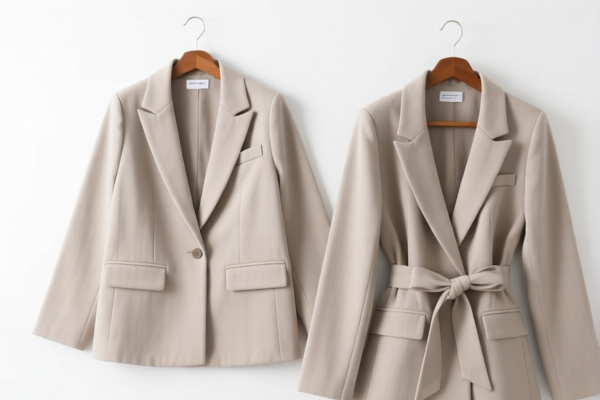
Product Images



AI Analysis
👗 Women's Cotton Suits: HS Code Classification & U.S. Customs Clearance Guide (2026)
🌐 HS Code Reference & Customs Strategy | Latest Tariff Analysis | Professional Entry Strategies
📌 I. Product Definition & Classification: Do You Truly Understand "Women's Cotton Suits"?
Women's Cotton Suits in international trade are not a single, monolithic entity. Their classification hinges critically on two factors:
1. Knitted vs. Woven: Is the fabric knitted (like a sweater) or woven (like a dress shirt)?
2. Garment Type: Is it a tailored "suit jacket/coat" or a general "coat/jacket"?
In international trade, it is often categorized into two primary groups:
- Woven Women’s Suits (Woven): Tailored jackets or coats, typically with lining, lapels, and structured shoulders.
- Knitted Women’s Suits (Knitted): Knitted tops or jackets, often resembling cardigans or blazers made from knit fabric.
⚠️ Key Distinction Point:
- If the item is a tailored jacket made from woven fabric → Classified under Chapter 62 (Woven).
- If the item is a knitted top/jacket → Classified under Chapter 61 (Knitted).
📦 II. HS Code Classification Matrix (2026 Latest Tariff Authority Comparison)
| HS Code | Product Description | Applicability Scenario | Woven or Knitted? |
|---|---|---|---|
6204.32.20.30 |
Women’s woven cotton suits, meeting material and usage requirements | Tailored suits, structured jackets, formal wear | ✅ Woven |
6204.32.20.10 |
Women’s woven cotton suits, meeting cotton, suit jacket, and female requirements | Similar to above, specific sub-category for cotton | ✅ Woven |
6104.32.00.00 |
Women’s knitted or crocheted cotton suits, material and form fully meet classification | Knitted blazers, cardigan-style suits, jersey suits | ✅ Knitted |
6104.19.60.10 |
Women’s cotton coats/jackets, meeting cotton and jacket definitions | General knitted coats or jackets (if not classified as a "suit") | ✅ Knitted |
6214.90.00.10 |
Women’s cotton scarves, matching cotton material and scarf form | Note: Included in data for context (e.g., if suit includes a scarf) | ✅ Woven |
🔍 Key Reminder:
- All woven items must be classified under Chapter 62. Misclassifying a woven suit as knitted (Chapter 61) can lead to significant tax discrepancies.
- If the item is a tailored suit jacket, it should generally fall under 6204.32. If it is a knitted top, it falls under 6104.32.
💰 III. 2026 Latest Tariff Rate Details (Including Additional Taxes & Policy Surcharges)
✅ Applicable Country: United States (US)
✅ Country of Origin: China (CN)
✅ Effective Date: 2025年11月10日起 (November 10, 2025 onwards)
🎯 1. 6204.32.20.30 & 6204.32.20.10 —— Women’s Woven Cotton Suits
| Item | Details |
|---|---|
| Base Tariff | 9.4% (ad valorem) |
| Section 301 Surcharge | 7.5% |
| Section 122 Surcharge | 10% |
| Total Tax Rate | 26.9% |
| Tax Calculation | CIF Value × 26.9% |
| De Minimis Eligibility | ❌ No (deny_de_minimis) |
| Legal Basis Path | Section 301: 9903.01.25 → Section 122: 9903.01.24 → USITC: 6204.32.20.30 |
📌 Explanation:
- The 26.9% total rate includes a base tariff of 9.4%, plus a 7.5% Section 301 surcharge and a 10% Section 122 surcharge.
- This is a high tariff rate for apparel. It is crucial to ensure the product is correctly identified as "woven" to avoid misclassification.
🎯 2. 6104.32.00.00 —— Women’s Knitted Cotton Suits
| Item | Details |
|---|---|
| Base Tariff | 14.9% (ad valorem) |
| Section 301 Surcharge | 7.5% |
| Section 122 Surcharge | 10% |
| Total Tax Rate | 32.4% |
| Tax Calculation | CIF Value × 32.4% |
| De Minimis Eligibility | ❌ No (deny_de_minimis) |
| Legal Basis Path | Section 301: 9903.01.25 → Section 122: 9903.01.24 → USITC: 6104.32.00.00 |
📌 Note:
- Knitted suits have a higher base tariff (14.9%) compared to woven suits (9.4%).
- Even with the same surcharges, the total tax rate is 32.4%, which is 5.5% higher than woven suits.
- Misclassifying a knitted suit as woven could lead to underpayment of taxes and potential penalties.
🎯 3. 6104.19.60.10 —— Women’s Cotton Knitted Coats/Jackets
| Item | Details |
|---|---|
| Base Tariff | 9.4% (ad valorem) |
| Section 301 Surcharge | 7.5% |
| Section 122 Surcharge | 10% |
| Total Tax Rate | 26.9% |
| Tax Calculation | CIF Value × 26.9% |
| De Minimis Eligibility | ❌ No (deny_de_minimis) |
| Legal Basis Path | Section 301: 9903.01.25 → Section 122: 9903.01.24 → USITC: 6104.19.60.10 |
📌 Attention:
- This code is for knitted coats/jackets that may not meet the strict definition of a "suit."
- If the item is a suit jacket, it should preferably be classified under 6204.32 (woven) or 6104.32 (knitted) for accuracy.
🎯 4. 6214.90.00.10 —— Women’s Cotton Scarves
| Item | Details |
|---|---|
| Base Tariff | 11.3% (ad valorem) |
| Section 301 Surcharge | 7.5% |
| Section 122 Surcharge | 10% |
| Total Tax Rate | 28.8% |
| Tax Calculation | CIF Value × 28.8% |
| De Minimis Eligibility | ❌ No (deny_de_minimis) |
| Legal Basis Path | Section 301: 9903.01.25 → Section 122: 9903.01.24 → USITC: 6214.90.00.10 |
📌 Note:
- This code is for scarves. If the product is a suit, do not use this code.
- However, if the suit includes a scarf as an accessory, it should be declared separately.
🛠️ IV. Customs Clearance Practical Suggestions (Avoid Pitfalls)
✅ 1. Required Documentation Checklist (Mandatory)
| Document | Must Provide | Description |
|---|---|---|
| ✅ Product Specification Sheet | ✔️ | Includes fabric type (woven/knitted), composition, weight, and style |
| ✅ Fabric Structure Diagram | ✔️ | To prove whether it is woven or knitted |
| ✅ Product Photos (with label) | ✔️ | Clear images of the suit, including tags, labels, and any accessories |
| ✅ Third-party Test Report | ✔️ | Fiber content analysis, colorfastness, etc. |
| ✅ Commercial Invoice | ✔️ | Clearly state "Women’s Cotton Suit" and HS Code |
| ✅ Packing List | ✔️ | Detail the relationship between the suit and any accessories (e.g., scarf) |
✅ 2. Declaration Tips (Key Mnemonic)
🔥 “Woven vs. Knitted, Check the Fabric! Suit vs. Jacket, Check the Cut!”
| Scenario | Correct Declaration | Incorrect Practice |
|---|---|---|
| Woven Suit Jacket | 6204.32.20.30 or 6204.32.20.10 |
Misclassified as knitted → 32.4% |
| Knitted Suit Jacket | 6104.32.00.00 |
Misclassified as woven → 26.9% |
| Knitted Coat/Jacket | 6104.19.60.10 |
Misclassified as suit → Potential audit |
| Included Scarf | 6214.90.00.10 |
Combined with suit → Incorrect tax calculation |
✅ 3. Special Cases Handling
| Scenario | Handling Suggestion |
|---|---|
| OEM Custom Suits | Provide customer orders + design drawings to avoid "non-standard" classification |
| Suit with Scarf | Declare separately if the scarf is a distinct item |
| Mixed Fabric | If the suit has mixed fabric (e.g., 50% cotton, 50% polyester), the classification may change; consult a customs broker |
| Sustainable/Eco-Friendly | If certified organic cotton, provide certification documents; may help in some markets, but not for US tariffs |
🌍 V. Global Market Comparison (2026 Latest)
| Country/Region | Recommended HS Code | Tariff Rate | Certification Requirements | Remarks |
|---|---|---|---|---|
| 🇺🇸 USA | 6204.32.20.30 (Woven) |
26.9% | No specific cert. | High tariff due to Section 301 & 122 |
| 🇨🇳 China | 6204.32.20.30 |
9.4% | CCC (if applicable) | No additional surcharges |
| 🇪🇺 EU | 6204.32.20.30 |
12% | CE (if applicable) | No Section 301/122 |
| 🇬🇧 UK | 6204.32.20.30 |
12% | UKCA (if applicable) | Post-Brexit tariffs apply |
| 🇯🇵 Japan | 6204.32.20.30 |
16% | PSE (if applicable) | No additional surcharges |
📌 Conclusion:
- The USA imposes the highest tariffs on Chinese-made women’s cotton suits due to additional surcharges.
- Knitted suits face even higher base tariffs, so careful classification is essential.
📌 VI. Common Mistakes & Pitfalls (Lessons Learned)
❌ Mistake 1: Misclassifying a woven suit as knitted
👉 Consequence: Tax rate drops from 26.9% to 32.4% → Overpayment!
❌ Mistake 2: Misclassifying a knitted suit as woven
👉 Consequence: Tax rate drops from 32.4% to 26.9% → Underpayment, potential penalties!
❌ Mistake 3: Not providing fabric structure diagrams
👉 Consequence: Customs cannot verify woven vs. knitted → Delay or return!
❌ Mistake 4: Combining scarf and suit into one HS Code
👉 Consequence: Incorrect tax calculation → Audit risk!
✅ Correct Approach:
"Women’s Woven Cotton Suit, Tailored Jacket, 100% Cotton, Model XYZ, With Lining"
OR
"Women’s Knitted Cotton Suit, Cardigan Style, 100% Cotton, Model XYZ"
🎯 VII. Conclusion: Professional Declaration, Save Time, Reduce Costs!
🎯 Remember the Mnemonic:
🔹 “Woven 26.9%, Knitted 32.4%, Scarf 28.8%! Check fabric, check cut!”
🔹 “HS Code determines the tax, a small mistake can cost thousands!”
📌 Tips:
- If your suit is originally from Vietnam, Mexico, Thailand, or Malaysia, you may apply for IEEPA exemptions, reducing the tax rate to 0%~5%.
- It is recommended to apply for an Advance Ruling to avoid customs risks.
📣 Take Action Now:
📞 Contact a professional customs broker + Provide product photos + Apply for HS Code Advance Ruling
🚀 Let your women’s cotton suits clear customs smoothly, expand globally, and double your profits!
✨ Professional Clearance Starts with Accurate Classification!
💼 Every cent of your cost deserves to be calculated precisely!
Customer Reviews
About HS Code Classification
The Harmonized System (HS) is an internationally standardized nomenclature developed by the World Customs Organization (WCO) to classify traded products. Over 200 countries use the HS system as the basis for customs tariffs, trade statistics, and import/export regulations.
Each HS code follows a hierarchical structure:
- Chapter (2 digits) — Broad category of goods (e.g., Chapter 84: Machinery and Mechanical Appliances)
- Heading (4 digits) — More specific grouping within the chapter
- Subheading (6 digits) — Internationally standardized breakdown, used by all WCO member countries
- National subdivisions (8-10 digits) — Country-specific extensions for further classification, such as US HTSUS 10-digit codes
Correct HS code classification is essential for smooth customs clearance, accurate duty payment, and compliance with trade regulations. Misclassification can lead to customs delays, overpayment of duties, or penalties.
When importing from CN to US, the applicable tariff rates may include:
- Most-Favored-Nation (MFN) rate — The standard duty rate applied to WTO members
- General rate — Applied to countries without trade agreements
- Trade remedy duties — Additional tariffs such as Section 301 (anti-dumping), Section 232 (national security), or countervailing duties
The information provided on this page is for reference purposes only. For official classification, please consult with your local customs authority or a licensed customs broker.