Women's nightgowns
CN → US| HS Code | Tariff Rate | Origin | Destination | Doc |
|---|---|---|---|---|
| 6114200010 | 28.3% | CN | US | Official Doc |
| 6114200060 | 28.3% | CN | US | Official Doc |
| 6108310010 | 26.0% | CN | US | Official Doc |
| 6108320010 | 33.5% | CN | US | Official Doc |
| 6208210020 | 26.4% | CN | US | Official Doc |
| 6208220000 | 33.5% | CN | US | Official Doc |
Product Images
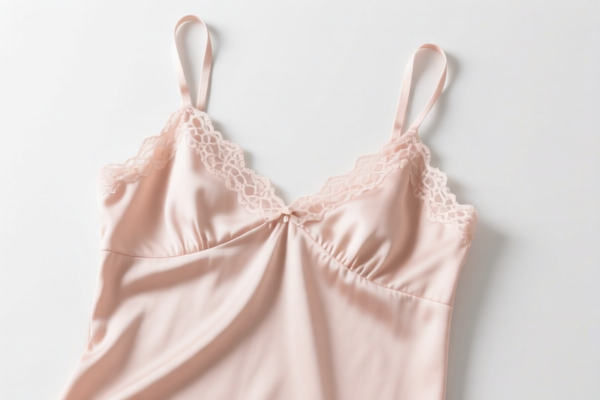
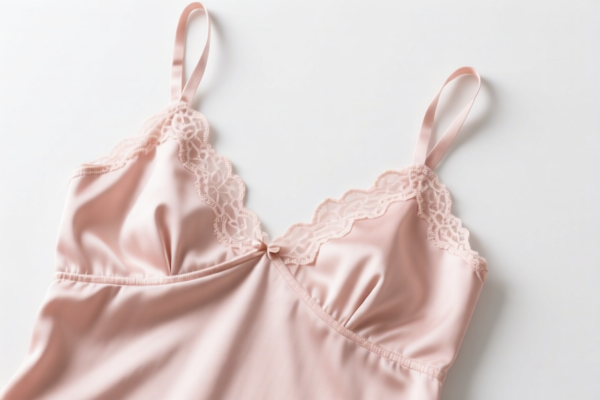
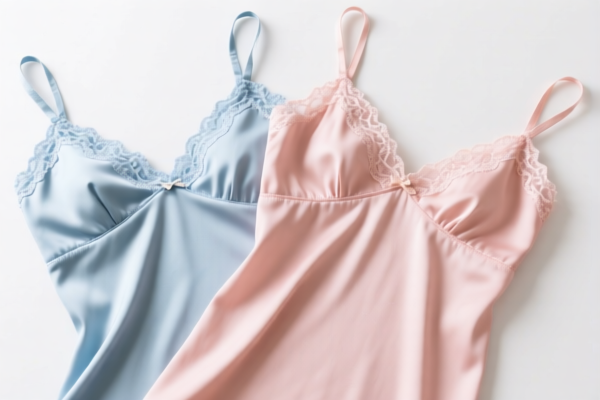
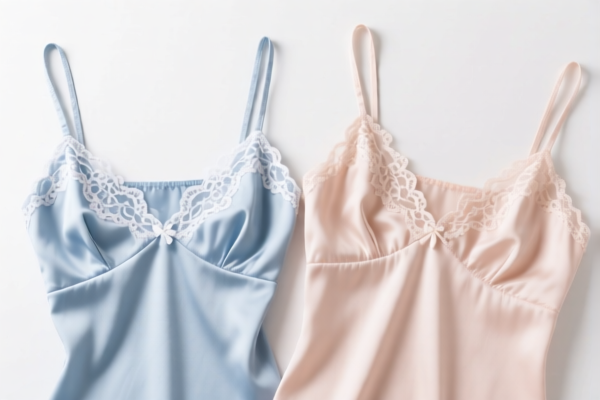
AI Analysis
👗 Women’s Nightgowns (Lingerie & Loungewear)
🌐 HS Code Reference & Customs Clearance Guide | 2026 Latest Tariff Analysis | Professional Clearance Strategy
📌 I. Product Definition & Classification: Are You Sure What You’re Importing?
Women’s nightgowns are sleepwear garments designed for comfort and modesty during rest. In international trade, classification hinges on three critical factors: 1. Knitted vs. Woven: Knitted (soft, stretchy, often cotton/poly) vs. Woven (structured, often silk/cotton blends). 2. Material Composition: Cotton, Synthetic Fibers (Polyester/Nylon), or Other Textiles. 3. Specific Design: Is it a classic nightgown (long, loose) or pajama-style (separate top/bottom)? Note: Strictly "Nightgowns" (one-piece) generally fall under Chapter 61 or 62 depending on construction.
⚠️ Key Distinction Point:
- If the item is knitted (jersey, fleece, tricot) → Look at Chapter 61 (6108, 6114).
- If the item is woven (satin, flannel, non-stretch fabric) → Look at Chapter 62 (6208).
- Misclassification Risk: Calling a knit nightgown "woven" triggers a 7.5%+ penalty; calling a synthetic one "cotton" triggers high duties.
📦 II. HS Code Classification Matrix (2026 Latest Tariff Authority)
Based on the provided dataset, here are the valid classifications for Women’s Nightgowns. The choice depends entirely on Fabric Construction and Material.
| HS Code | Product Description | Matching Criteria | Material Inference | Total Tax |
|---|---|---|---|---|
| 6114.20.00.10 | Knitted Women’s Garment | Matches form & demographic (Women’s wear) | Cotton or Polyester inferred | 28.3% |
| 6114.20.00.60 | Knitted Women’s Sleepwear | Matches form & use (Nightgowns) | Cotton inferred | 28.3% |
| 6108.31.00.10 | Knitted/Hooked Nightgowns | Matches use & form (Female Sleepwear) | Not specified (General Knit) | 26.0% |
| 6108.32.00.10 | Knitted Synthetic Nightgowns | Matches use & form | Artificial/Synthetic Fibers | 33.5% |
| 6208.21.00.20 | Woven Nightgowns | Matches use & form | Cotton inferred | 26.4% |
| 6208.22.00.00 | Woven Nightgowns | Matches use | Synthetic or Natural Fiber | 33.5% |
🔍 Critical Reminder:
- Knitted (Ch 61) vs. Woven (Ch 62) is the primary split.
- Cotton generally enjoys lower base tariffs (8.5%-10.8%) compared to Synthetics (16.0%).
- Chapter 6108 is specific for "Women’s slip-on knitted garments," while 6114/6208 are broader or specific to sleepwear categories depending on national sub-headings.
💰 III. 2026 Latest Tariff Rate Breakdown (Including Surtaxes)
✅ Applicable Country: USA (US)
✅ Origin: China (CN)
✅ Effective Date: Post-2025 Policies (Including 122 Clause & Section 301)
All rates below include: 1. Base Tariff (MFN Rate) 2. Section 301 Surcharge (7.5% - Note: Current data reflects 7.5%, verify if updated to 25%) 3. Section 122 Tariff (10% - Specific provision for certain textile/apparel imports)
🎯 1. The "Lowest Tax" Option: 6108.31.00.10
- Description: Knitted/Hooked Nightgowns (General)
- Tax Structure:
- Base Tariff: 8.5%
- Surtax (Sec 301): 7.5%
- 122 Clause: 10.0%
- Total Effective Rate: 26.0%
- Legal Path:
Base:6108.31.00.10→Sec301:7.5%→Sec122:10% - Why this code? It captures the essence of "nightgown" under the most specific knitted category without penalizing for "synthetic" status.
🎯 2. The "Cotton Knit" Option: 6114.20.00.60 & 6208.21.00.20
- 6114.20.00.60 (Knitted Cotton):
- Base: 10.8% | Surtax: 7.5% | 122: 10% → Total: 28.3%
- 6208.21.00.20 (Woven Cotton):
- Base: 8.9% | Surtax: 7.5% | 122: 10% → Total: 26.4%
- Comparison: Woven Cotton (Ch 62) is slightly cheaper (26.4%) than Knitted Cotton (28.3%) in this specific dataset.
🎯 3. The "High Tax" Traps: Synthetic/Artificial Fibers
- HS Codes: 6108.32.00.10 (Knitted Synthetic) & 6208.22.00.00 (Woven Synthetic/Other)
- Tax Structure:
- Base Tariff: 16.0% (Higher base for synthetics)
- Surtax: 7.5%
- 122 Clause: 10.0%
- Total Effective Rate: 33.5%
- Warning: If your nightgowns are Polyester/Nylon, you pay 33.5%. This is 7.5% more than the cheapest option.
🛠️ IV. Customs Clearance Practical Advice (Real-World Pitfalls)
✅ 1. Documentation Checklist (Non-Negotiable)
| Document | Required? | Purpose |
|---|---|---|
| ✅ Fabric Composition Certificate | ✔️ | Determines Cotton (8.5-10.8%) vs. Synthetic (16.0%). Crucial for tax savings. |
| ✅ Construction Type (Knit/Woven) | ✔️ | Determines Chapter 61 vs. 62. |
| ✅ Product Photos | ✔️ | Must clearly show it is a one-piece nightgown, not pajama sets (which may have different codes). |
| ✅ Commercial Invoice | ✔️ | Must state: "Women's Knitted Nightgown, Cotton, Size S-XXL." |
| ✅ Packing List | ✔️ | Verify no "free gifts" (like belts) that change classification. |
✅ 2. Declaration Strategy (Key Mantra)
🔥 “Knit or Woven? Cotton or Poly? Specify Both or Pay Extra!”
| Scenario | Correct Declaration | Incorrect Action | Consequence |
|---|---|---|---|
| Cotton Knit Nightgown | 6114.20.00.60 (28.3%) |
Declare as 6108.31.00.10 (26.0%) |
Audit Risk: Customs may reclassify and demand back taxes. |
| Polyester Knit Nightgown | 6108.32.00.10 (33.5%) |
Declare as "Cotton" | Fraud: Heavy fines + seizure. |
| Woven Cotton Nightgown | 6208.21.00.20 (26.4%) |
Declare as 6108... (Knit) |
Rejection: Wrong chapter. |
| Set (Top+Bottom) | Likely Not a Nightgown | Declare as "Nightgown" | Reclassification: May fall under Pajama sets with different, potentially higher, tariffs. |
✅ 3. Special Notes on "122 Clause" & "Section 301"
- 122 Clause (10%): This is a specific duty on certain textile/apparel items. It applies to ALL the codes listed above. Do not try to avoid it by changing the description; it is attached to the HTSUS subheading.
- Section 301 (7.5%): Applied to Chinese origin goods.
- Total Burden: You are looking at a landed cost increase of 26%–33.5% purely on tariffs.
🌍 V. Global Market Comparison (2026 Snapshot)
| Market | Recommended HS Code | Base Duty | Surtaxes (China) | Total Est. | Key Certification |
|---|---|---|---|---|---|
| 🇺🇸 USA | 6108.31.00.10 |
8.5% | 17.5% (301+122) | 26.0% | FTC Labeling (Fiber Content) |
| 🇪🇺 EU | 6108.31 |
12% | 0% | 12.0% | CE (if tech textile), REACH |
| 🇨🇳 China | 6108.31 |
0%* | 0% | 0% | CCC (if applicable) |
📌 Conclusion:
- The USA is the most expensive market for nightgowns due to the 17.5% combined surtaxes.
- EU offers lower base duties but stricter environmental regulations.
- Cost Saving Tip: If you have a choice between Cotton (Knit/Woven) and Synthetic, Cotton saves you 2.1% – 7.5% in total duties in the US dataset provided.
📌 VI. Common Errors & Pitfalls (Lessons Learned)
❌ Error 1: Calling a Polyester nightgown "Cotton" to get the 26.0% rate.
👉 Consequence: Customs lab test reveals polyester → Back taxes + penalty.
❌ Error 2: Classifying a Pajama Set (Top + Bottom) as a "Nightgown" (One-piece).
👉 Consequence: Misclassification error. Pajama sets may have different sub-headings. Ensure the item is truly one-piece.
❌ Error 3: Ignoring the Knit vs. Woven distinction.
👉 Consequence: If declared as Knit but is Woven, the base rate jumps from 8.9% (Woven Cotton) to 10.8% (Knit Cotton) or worse.
✅ Correct Practice:
"Women’s Cotton Knit Nightgown, 100% Cotton, Jersey Knit, One-Piece, Size M, Origin China"
🎯 VII. Conclusion: Precision Saves Money
🎯 Remember the Rule:
🔹 "Knit is 61, Woven is 62."
🔹 "Cotton is Cheaper than Synthetic in the US."
🔹 "122 Clause hits you no matter what (10%)."
📌 Pro Tip:
If you are importing large volumes, consider applying for an HTSUS Subheading Ruling from CBP (U.S. Customs and Border Protection) to confirm if your specific garment fits 6108.31.00.10 (26.0%) rather than the broader 6114 (28.3%).
📣 Immediate Action:
📞 Verify Fabric Content on your supplier’s invoice.
📄 Confirm Construction (Knit vs. Woven).
🧮 Calculate Landed Cost using the correct total tax (26.0% – 33.5%).
🚀 Clear Customs Smoothly and protect your margin!
✨ Professional Clearance, Starts with Accurate Classification!
💼 Every Percentage Point Matters in Apparel Trade!
Customer Reviews
About HS Code Classification
The Harmonized System (HS) is an internationally standardized nomenclature developed by the World Customs Organization (WCO) to classify traded products. Over 200 countries use the HS system as the basis for customs tariffs, trade statistics, and import/export regulations.
Each HS code follows a hierarchical structure:
- Chapter (2 digits) — Broad category of goods (e.g., Chapter 84: Machinery and Mechanical Appliances)
- Heading (4 digits) — More specific grouping within the chapter
- Subheading (6 digits) — Internationally standardized breakdown, used by all WCO member countries
- National subdivisions (8-10 digits) — Country-specific extensions for further classification, such as US HTSUS 10-digit codes
Correct HS code classification is essential for smooth customs clearance, accurate duty payment, and compliance with trade regulations. Misclassification can lead to customs delays, overpayment of duties, or penalties.
When importing from CN to US, the applicable tariff rates may include:
- Most-Favored-Nation (MFN) rate — The standard duty rate applied to WTO members
- General rate — Applied to countries without trade agreements
- Trade remedy duties — Additional tariffs such as Section 301 (anti-dumping), Section 232 (national security), or countervailing duties
The information provided on this page is for reference purposes only. For official classification, please consult with your local customs authority or a licensed customs broker.