Women's or Girls' Nightdresses and Robes
CN → US| HS Code | Tariff Rate | Origin | Destination | Doc |
|---|---|---|---|---|
| 6114303070 | 32.4% | CN | US | Official Doc |
| 6208911010 | 25.0% | CN | US | Official Doc |
| 6208920010 | 33.5% | CN | US | Official Doc |
| 6108920030 | 33.5% | CN | US | Official Doc |
| 6114200060 | 28.3% | CN | US | Official Doc |
Product Images
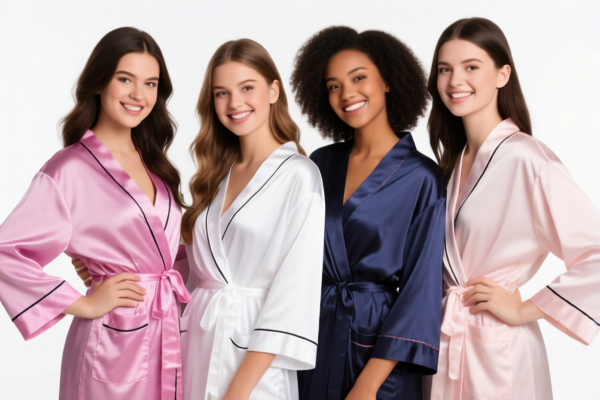
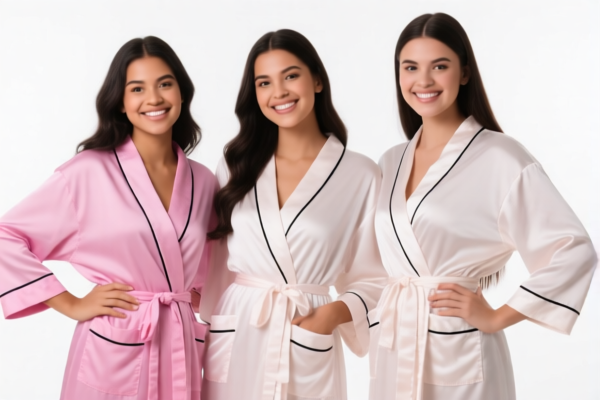

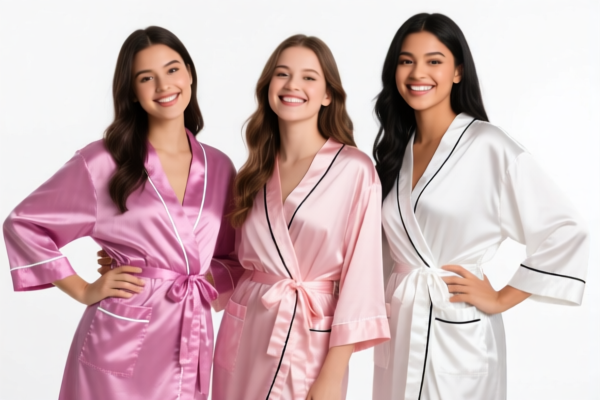
AI Analysis
👗 Women’s & Girls’ Nightdresses & Robes | Pyjamas, Negligees & Dressing Gowns
🌐 HS Code Reference & Customs Clearance Guide | 2024/2025 Latest Tariff Analysis | Professional Entry Strategy
📌 I. Product Definition & Classification: Do You Know Your Pajamas?
Women’s and girls’ nightdresses, nightgowns, negligees, and dressing gowns are categorized under Chapter 61 (Knitted or Crocheted) and Chapter 62 (Non-Knitted/Weaved). The critical differentiator is the manufacturing method (Knitted vs. Non-Knitted) and the fabric material (Cotton, Synthetic, or Artificial Fiber).
In international trade, these garments are strictly divided into two main categories:
1. Knitted or Crocheted (Chapter 61):
* Includes fleece-lined robes, knitted pajama sets, and soft knit nightgowns.
* Key Identifier: The fabric has stretch, loops, or is made from jersey/knit fabric.
2. Non-Knitted/Weaved (Chapter 62):
* Includes woven silk robes, cotton flannel pajamas, synthetic satin nightgowns.
* Key Identifier: The fabric is woven, non-stretchy (usually), or has a distinct weave pattern.
⚠️ Key Distinction Point:
- If the item is Knitted → Refer to HS Code 6114 / 6108
- If the item is Non-Knitted (Woven) → Refer to HS Code 6208 / 6211
- Note: Do not mix up "Artificial Fiber" (Viscose/Rayon) with "Synthetic Fiber" (Polyester/Nylon). They have different tax rates!
📦 II. HS Code Classification Details (Latest Tariff Schedule)
Based on the provided data, here are the exact HS Codes for Women’s/Girls’ Nightdresses and Robes:
| HS Code | Product Description | Fabric Material | Manufacturing Method |
|---|---|---|---|
6114.30.30.70 |
Women’s/Girls’ Nightdresses & Robes | Artificial Fiber (e.g., Viscose, Rayon) | Knitted or Crocheted |
6208.91.10.10 |
Women’s/Girls’ Nightdresses & Robes | Cotton | Non-Knitted (Woven) |
6208.92.00.10 |
Women’s/Girls’ Nightdresses & Robes | Synthetic Fiber (e.g., Polyester, Nylon) | Non-Knitted (Woven) |
6108.92.00.30 |
Women’s/Girls’ Nightdresses & Robes | Artificial Fiber (e.g., Viscose, Rayon) | Knitted or Crocheted |
6114.20.00.60 |
Women’s/Girls’ Nightdresses & Robes | Cotton | Knitted or Crocheted |
🔍 Important Note:
- Artificial Fiber (Viscose/Rayon) falls under 6114.30.30.70 AND 6108.92.00.30.
- Why two codes?6114typically covers "Other garments" (like robes/nightgowns), while6108covers "Women’s girls’ knitted slips, petticoats, briefs, nightdresses..." Please check the specific garment type. Usually, Robes/Dressing Gowns are classified under 6114, while Nightdresses/Nightgowns may fall under 6108. However, for "Robes," 6114 is the standard. For "Nightdresses," 6108 is often used. Always verify with the specific design.
- Synthetic Fiber (Polyester) in Non-Knitted form is 6208.92.00.10.
- Cotton can be Knitted (6114.20.00.60) or Non-Knitted (6208.91.10.10).
💰 III. 2024/2025 Latest Tariff Rate Breakdown (Including Additional Duties)
✅ Applicable Country: United States (US)
✅ Origin: China (CN)
✅ Effective Time: Current rates (2024/2025)
🎯 1. 6114.30.30.70 & 6108.92.00.30 —— Artificial Fiber (Knitted)
| Item | Content |
|---|---|
| Base Tariff | 14.9% |
| Additional Tariff (Section 301) | +7.5% |
| 122-Clause Tariff | +10% |
| Total Tax Rate | 32.4% |
| Tax Calculation | CIF Value × 32.4% |
| De Minimis Exemption | ❌ Not Applicable |
| Legal Basis | Base duty + Section 301 + 122-Clause |
📌 Explanation:
- Both artificial fiber knitted items (6114and6108) share the same total tax rate of 32.4%.
- The 122-Clause Tariff is a specific anti-dumping/countervailing duty or specific trade remedy often applied to textiles. Ensure your classification matches the exact product type to avoid misdeclaration.
🎯 2. 6208.91.10.10 —— Cotton (Non-Knitted/Woven)
| Item | Content |
|---|---|
| Base Tariff | 7.5% |
| Additional Tariff (Section 301) | +7.5% |
| 122-Clause Tariff | +10% |
| Total Tax Rate | 25.0% |
| Tax Calculation | CIF Value × 25.0% |
| De Minimis Exemption | ❌ Not Applicable |
| Legal Basis | Base duty + Section 301 + 122-Clause |
📌 Note:
- Cotton is the most tax-efficient natural fiber option here, with a 25.0% total rate.
- This applies to woven cotton pajamas, robes, and nightdresses.
🎯 3. 6208.92.00.10 —— Synthetic Fiber (Non-Knitted/Woven)
| Item | Content |
|---|---|
| Base Tariff | 16.0% |
| Additional Tariff (Section 301) | +7.5% |
| 122-Clause Tariff | +10% |
| Total Tax Rate | 33.5% |
| Tax Calculation | CIF Value × 33.5% |
| De Minimis Exemption | ❌ Not Applicable |
| Legal Basis | Base duty + Section 301 + 122-Clause |
📌 Note:
- Synthetic fiber (e.g., Polyester) in woven form is the most expensive at 33.5%.
- Common materials: Polyester satin robes, nylon nightgowns.
🎯 4. 6114.20.00.60 —— Cotton (Knitted)
| Item | Content |
|---|---|
| Base Tariff | 10.8% |
| Additional Tariff (Section 301) | +7.5% |
| 122-Clause Tariff | +10% |
| Total Tax Rate | 28.3% |
| Tax Calculation | CIF Value × 28.3% |
| De Minimis Exemption | ❌ Not Applicable |
| Legal Basis | Base duty + Section 301 + 122-Clause |
📌 Note:
- Knitted cotton (e.g., fleece-lined pajamas, knit cotton nightgowns) has a 28.3% total rate.
- Higher base tariff than woven cotton, but lower than synthetic options.
🛠️ IV. Customs Clearance Practical Advice (Avoid Pitfalls)
✅ 1. Documentation Checklist (Mandatory)
| Document | Must Provide | Description |
|---|---|---|
| ✅ Product Specification Sheet | ✔️ | Must clearly state: Fabric Content (e.g., "100% Cotton"), Manufacturing Method (Knitted/Woven), Garment Type (Robe/Nightdress). |
| ✅ Fabric Swatch | ✔️ | Physical sample or photo showing weave/knit structure to prove manufacturing method. |
| ✅ Commercial Invoice | ✔️ | Clearly describe as "Women's Cotton Woven Robe" or "Girls' Knitted Nightdress." Avoid vague terms like "Pajama." |
| ✅ Packing List | ✔️ | Show quantities, weights, and dimensions. |
| ✅ Labeling | ✔️ | Garments must have care labels and fiber content labels as per US FTC regulations. |
✅ 2. Classification Tips (Key Mnemonics)
🔥 "Know the Fiber, Know the Method, Know the Code!"
| Scenario | Correct HS Code | Wrong Code | Consequence |
|---|---|---|---|
| Polyester Woven Robe | 6208.92.00.10 (33.5%) |
6114.30.30.70 (32.4%) |
Under-declaration → Penalty + Back Taxes |
| Cotton Knitted Pajamas | 6114.20.00.60 (28.3%) |
6208.91.10.10 (25.0%) |
Over-declaration? No, but if misclassified as synthetic, it’s worse. |
| Viscose Knitted Nightdress | 6108.92.00.30 (32.4%) |
6114.30.30.70 (32.4%) |
Same Rate! But ensure correct chapter for legal accuracy. |
| Cotton Woven Nightdress | 6208.91.10.10 (25.0%) |
6114.20.00.60 (28.3%) |
Misclassification → 3.3% Overpayment (Waste of money) |
✅ 3. Special Cases
| Scenario | Handling Advice |
|---|---|
| Mixed Fiber Garments | If fabric is 60% Cotton, 40% Polyester → Classified as Cotton (if cotton is chief weight). Use 6208.91.10.10 (if woven) or 6114.20.00.60 (if knitted). |
| Sets (Top + Bottom) | If sold as a set, classify the entire set by the component that gives it its essential character. Usually, the bottom (pants) dictates the code for pajama sets. |
| Robes vs. Nightdresses | Robes (wrap style, belt) → Often 6114 or 6208. Nightdresses (one-piece, no belt) → Often 6108 or 6208. |
| Children’s Garments | If for girls under 14, the codes above still apply, but ensure age labeling is correct for safety regulations. |
🌍 V. Global Customs Comparison (2024/2025)
| Country/Region | Recommended HS Code | Tariff (China Origin) | Certifications Required | Notes |
|---|---|---|---|---|
| 🇺🇸 USA | 6114.30.30.70 / 6208.91.10.10 |
25% - 33.5% | CPSIA (if for children), Labeling Compliance | High Tariffs due to Section 301 + 122-Clause. |
| 🇨🇳 China | Same HS Codes | 7% - 16% | CCC (if applicable), Quality Inspection | Lower base tariffs, no additional duties. |
| 🇪🇺 EU | Similar HS Codes | 12% - 17% | CE, REACH, Textile Labeling | No Section 301, but higher base duties than US for some categories. |
| 🇬🇧 UK | Similar HS Codes | 12% - 17% | UKCA, Textile Labeling | Post-Brexit tariffs may vary slightly from EU. |
| 🇯🇵 Japan | Similar HS Codes | 16% - 18% | PSE (if electrical, e.g., heated robes), Textile Labeling | Generally moderate tariffs. |
📌 Conclusion:
- USA is the most costly market due to additional tariffs (301 + 122-Clause).
- Cotton Woven (6208.91.10.10) is the most tax-efficient option for US imports at 25.0%.
- Polyester Woven (6208.92.00.10) is the most expensive at 33.5%.
📌 VI. Common Mistakes & Pitfalls (Lessons Learned)
❌ Mistake 1: Calling "Viscose" "Artificial Fiber" but classifying it as "Synthetic."
👉 Result: Wrong HS Code → Penalty + Back Taxes.
Correction: Viscose/Rayon = Artificial Fiber. Polyester/Nylon = Synthetic Fiber.
❌ Mistake 2: Ignoring the "Knitted vs. Woven" distinction.
👉 Result: Misclassification → Delay in Customs + Possible Seizure.
Correction: Always provide a fabric swatch or clear photo showing the knit/wave structure.
❌ Mistake 3: Assuming "Nightdress" always falls under one code.
👉 Result: Under/Over-declaration → Financial Loss.
Correction: Check both 6108 (Knitted) and 6208 (Woven) based on material.
❌ Mistake 4: Not accounting for the 122-Clause Tariff (+10%).
👉 Result: Budget Miscalculation → Profit Erosion.
Correction: Always include the 122-Clause in your landed cost calculation.
✅ Correct Practice:
"Women's Cotton Woven Robe, 100% Cotton, Woven, Size M-L, Labeled 'Made in China', with Care Instructions"
🎯 VII. Conclusion: Accurate Classification Saves Money!
🎯 Remember the Mnemonic:
🔹 "Cotton Woven is Cheapest (25%), Cotton Knitted Next (28.3%), Artificial Fiber High (32.4%), Synthetic Woven Highest (33.5%)."
🔹 "Knitted vs. Woven Matters. Artificial vs. Synthetic Matters. 122-Clause is Always There (+10%)."
📌 Tips:
- If your product is Cotton Woven, you save ~8.5% compared to Synthetic Woven.
- If your product is Artificial Fiber, you pay ~8.5% more than Cotton Woven.
- Pre-classification Ruling: Consider applying for an Advance Ruling from US Customs (CBP) if you have large volumes or mixed materials.
📣 Immediate Action:
📞 Consult a Professional Customs Broker + Provide Fabric Swatches + Verify HS Code Accuracy
🚀 Ensure Smooth Clearance, Optimize Costs, and Maximize Profits!
✨ Professional Clearance Starts with Precise Classification!
💼 Every Percent of Tax Saved is Pure Profit!
Customer Reviews
About HS Code Classification
The Harmonized System (HS) is an internationally standardized nomenclature developed by the World Customs Organization (WCO) to classify traded products. Over 200 countries use the HS system as the basis for customs tariffs, trade statistics, and import/export regulations.
Each HS code follows a hierarchical structure:
- Chapter (2 digits) — Broad category of goods (e.g., Chapter 84: Machinery and Mechanical Appliances)
- Heading (4 digits) — More specific grouping within the chapter
- Subheading (6 digits) — Internationally standardized breakdown, used by all WCO member countries
- National subdivisions (8-10 digits) — Country-specific extensions for further classification, such as US HTSUS 10-digit codes
Correct HS code classification is essential for smooth customs clearance, accurate duty payment, and compliance with trade regulations. Misclassification can lead to customs delays, overpayment of duties, or penalties.
When importing from CN to US, the applicable tariff rates may include:
- Most-Favored-Nation (MFN) rate — The standard duty rate applied to WTO members
- General rate — Applied to countries without trade agreements
- Trade remedy duties — Additional tariffs such as Section 301 (anti-dumping), Section 232 (national security), or countervailing duties
The information provided on this page is for reference purposes only. For official classification, please consult with your local customs authority or a licensed customs broker.