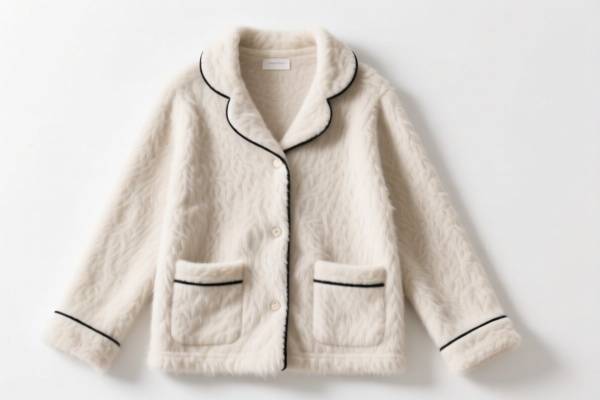
Women's/Girls' Animal Fine Wool Winter Pajamas
CN → US| HS Code | Tariff Rate | Origin | Destination | Doc |
|---|---|---|---|---|
| 5108108000 | 39.0% | CN | US | Official Doc |
| 6208299010 | 24.6% | CN | US | Official Doc |
| 6108391000 | 18.5% | CN | US | Official Doc |
| 6108992000 | 26.0% | CN | US | Official Doc |
| 5108208000 | 39.0% | CN | US | Official Doc |
Product Images


AI Analysis
👗 Women's/Girls' Fine Animal Hair Winter Pajamas
🌐 HS Code Reference & Customs Clearance Guide | 2026 Latest Tariff Analysis | Strategic Classification for Textiles
📌 I. Product Definition & Classification Strategy: Is it Knit or Woven?
Women's/Girls' Pajamas made from Fine Animal Hair (e.g., Cashmere, Merino Wool) represent a complex classification scenario. The key differentiator is the manufacturing process: - Knitted/Crocheted (Chapter 61): If the fabric is knitted, it falls under Chapter 61. The tax burden is significantly lower. - Woven (Chapter 62): If the fabric is woven, it falls under Chapter 62. Standard duties apply, plus additional levies. - Raw Material (Chapter 51): In rare cases where the item is not clearly finished apparel but treated as a specific fiber product, it may be classified under Chapter 51, though this is less common for finished pajamas.
⚠️ Critical Distinction:
- Knitted Pajamas → Chapter 61 (Lower Duty)
- Woven Pajamas → Chapter 62 (Standard Duty)
- Fabric/Yarn only → Chapter 51 (Avoid if importing finished goods)
📦 II. HS Code Classification Details (2026 Latest Tariff Reference)
Based on the provided data, here are the four valid classification options for Women's/Girls' Fine Animal Hair Pajamas. The choice depends on whether the garment is knitted or woven.
| HS Code | Product Description | Key Matching Criteria | Total Tax Rate | Tax Breakdown |
|---|---|---|---|---|
6108.39.10.00 |
Knitted/Crocheted Nightdresses, Pajamas, etc. (Women/Girls) | ✅ Best Match (Knitted): Explicitly matches "Pajamas," "Women/Girls," and "Fine Animal Hair." | 18.5% | Base: 8.5% Section 301: 0.0% 122 Clause: 10% |
6208.29.90.10 |
Woven Pajamas for Women/Girls | ✅ Best Match (Woven): Explicitly matches "Pajamas," "Women/Girls," and "Fine Animal Hair." | 24.6% | Base: 7.1% Section 301: 7.5% 122 Clause: 10% |
6108.99.20.00 |
Knitted/Crocheted Other Women's/Girls' Garments | ✅ Fallback (Knitted): Matches "Pajamas" morphology and "Fine Animal Hair" material under the "Other" subheading. | 26.0% | Base: 8.5% Section 301: 7.5% 122 Clause: 10% |
5108.10.80.00 / 5108.20.80.00 |
Fine Animal Hair Yarn/Fabric | ⚠️ Risk Category: Matches "Fine Animal Hair" material but describes yarn/fabric, not finished apparel. Only applicable if the goods are not finished pajamas. | 39.0% | Base: 4.0% Section 301: 25.0% 122 Clause: 10% |
🔍 Key Insight:
-6108.39.10.00is the most favorable code if the pajamas are knitted. It has 0% Section 301 tariff, saving you 7.5–25% compared to other codes.
-6208.29.90.10is the standard for woven pajamas.
- Avoid5108codes for finished garments unless explicitly instructed by customs for specific uncompleted items, as the tax is prohibitively high (39%).
💰 III. 2026 Latest Tariff Rate Explanation (Including Surtaxes & Policy Levies)
✅ Applicable Country: United States (US)
✅ Origin: China (CN)
✅ Effective Date: 2025–2026 Period
🎯 1. 6108.39.10.00 —— Knitted Women's/Girls' Pajamas (Lowest Duty!)
| Item | Content |
|---|---|
| Base Rate | 8.5% |
| USITC Surtax (Section 301) | 0.0% (Exempt or not applicable for this specific subheading) |
| 122 Clause Levy | 10% |
| Total Duty | 18.5% |
| Calculation | CIF Value × 18.5% |
| De Minimis Exemption | ❌ Not Eligible (Deny De Minimis for Section 301/122 goods) |
| Legal Basis | USITC Chapter 61 → 122 Clause |
📌 Why This is Best:
- The 0% Section 301 surtax makes this code significantly cheaper than6208or6108.99.
- Applicable only if the pajamas are KNITTED. Verify with your supplier!
🎯 2. 6208.29.90.10 —— Woven Women's/Girls' Pajamas
| Item | Content |
|---|---|
| Base Rate | 7.1% |
| USITC Surtax (Section 301) | +7.5% |
| 122 Clause Levy | +10% |
| Total Duty | 24.6% |
| Calculation | CIF Value × 24.6% |
| De Minimis Exemption | ❌ Not Eligible |
| Legal Basis | USITC Chapter 62 → 122 Clause |
📌 Note:
- If your pajamas are WOVEN (e.g., flannel, traditional wool weave), this is the correct code.
- Higher than knitted due to the 7.5% Section 301 surtax.
🎯 3. 6108.99.20.00 —— Other Knitted Women's/Girls' Garments
| Item | Content |
|---|---|
| Base Rate | 8.5% |
| USITC Surtax (Section 301) | +7.5% |
| 122 Clause Levy | +10% |
| Total Duty | 26.0% |
| Calculation | CIF Value × 26.0% |
| De Minimis Exemption | ❌ Not Eligible |
📌 Note:
- This is a "catch-all" for knitted items not specifically listed as "pajamas" in subheading 39.10.
- Use only if6108.39.10.00is rejected by customs.
🎯 4. 5108.10.80.00 / 5108.20.80.00 —— Fine Animal Hair Yarn/Fabric
| Item | Content |
|---|---|
| Base Rate | 4.0% |
| USITC Surtax (Section 301) | +25.0% |
| 122 Clause Levy | +10% |
| Total Duty | 39.0% |
| Calculation | CIF Value × 39.0% |
| De Minimis Exemption | ❌ Not Eligible |
📌 Warning:
- Do NOT use for finished pajamas unless specifically advised.
- This classification applies to raw materials (yarns, felts).
- The high duty (39%) reflects the 25% Section 301 surtax on Chinese textile raw materials.
🛠️ IV. Customs Clearance Practical Advice (Avoiding Pitfalls)
✅ 1. Documentation Checklist (Must-Have)
| Document | Required | Notes |
|---|---|---|
| ✅ Product Composition Label | ✔️ | Must clearly state: "100% Fine Animal Hair" or specific fiber percentage (e.g., 100% Cashmere). |
| ✅ Fabric Type Confirmation | ✔️ | Explicitly state "KNITTED" or "WOVEN" in commercial invoice. This determines Chapter 61 vs. 62. |
| ✅ Product Photos | ✔️ | Show garment structure (knit loops vs. woven weave) if possible. |
| ✅ Commercial Invoice | ✔️ | Describe as: "Women's Knitted Pajamas, Fine Animal Hair." Avoid generic "Textile Goods." |
| ✅ Packing List | ✔️ | Itemize quantities per size/style. |
✅ 2. Declaration Tips (Golden Rules)
🔥 “KNITTED IS CHEAPER, WOVEN IS STANDARD, DON’T DECLARE YARN AS PANTS!”
| Scenario | Correct HS Code | Risk |
|---|---|---|
| Knitted Pajamas | 6108.39.10.00 |
✅ Low Duty (18.5%) |
| Woven Pajamas | 6208.29.90.10 |
✅ Standard Duty (24.6%) |
| Knitted Pajamas (Misdeclared as Woven) | 6108.99.20.00 |
❌ Higher Duty (26%) due to wrong subheading |
| Finished Pajamas (Misdeclared as Yarn) | 5108.10.80.00 |
❌ CRITICAL ERROR: 39% Duty + Potential Fraud Allegations |
✅ 3. Special Considerations
| Issue | Solution |
|---|---|
| Material Ambiguity | If the label says "Fine Animal Hair," ensure it is not blended with synthetic fibers unless declared. 100% animal hair gets specific attention. |
| 122 Clause Application | All textile imports from China are subject to the 122 Clause (10%). Ensure this is calculated in your landed cost. |
| De Minimis Loophole | ❌ No Loophole: These goods are not eligible for Section 321 (De Minimis) exemption. Duties must be paid upon entry. |
| Pre-Advisory Ruling | For large shipments, request an Advance Ruling from CBP to confirm 6108.39.10.00 for knitted items to avoid disputes. |
🌍 V. Global Market Comparison (2026)
| Market | Recommended HS Code | Total Duty (China Origin) | Key Requirement |
|---|---|---|---|
| 🇺🇸 USA | 6108.39.10.00 (Knitted) |
18.5% | Must be Knitted. 122 Clause applies. |
| 🇺🇸 USA | 6208.29.90.10 (Woven) |
24.6% | Standard Section 301 + 122 Clause. |
| 🇨🇳 China | 6108/6208 | 5–15% | CCC/Standard Compliance |
| 🇪🇺 EU | 6108/6208 | 12% | REACH, OEKO-TEX |
| 🇬🇧 UK | 6108/6208 | 12% | UKCA, Post-Brexit Rules |
📌 Conclusion:
- USA is the most complex market due to Section 301 and 122 Clause.
- Knitted (Ch 61) is significantly cheaper than Woven (Ch 62) in the US.
- Always verify knitting vs. weaving with your supplier to optimize duty.
📌 VI. Common Errors & Pitfalls (Lessons Learned)
❌ Error 1: Declaring Knitted Pajamas as Woven (6208)
👉 Result: Paying 24.6% instead of 18.5%. Overpayment!
❌ Error 2: Declaring Finished Pajamas as Yarn (5108)
👉 Result: 39% Duty + Customs Penalties for Misclassification. Expensive Mistake!
❌ Error 3: Assuming "Fine Animal Hair" is exempt from Section 301
👉 Result: Section 301 applies to most Chinese textiles. No Exemption.
❌ Error 4: Using De Minimis for Shipments >$800
👉 Result: Goods seized or held for duty payment. Shipment Delay!
✅ Correct Action:
"Women's Knitted Pajamas, 100% Fine Animal Hair, Designed for Girls, Imported from China. HS Code: 6108.39.10.00."
🎯 VII. Final Advice: Optimize Your Costs!
🎯 Remember the Key Strategy:
🔹 "Knitted Wins: 18.5% vs. 24.6%"
🔹 "Check the Fabric: Knit or Woven? Your Duty Depends on It!"
🔹 "No De Minimis: Pay Duties Upfront, Avoid Seizures."
📌 Pro Tip:
If you are importing large volumes, consider manufacturing in Vietnam or Bangladesh to avoid Section 301 and 122 Clause surtaxes, potentially reducing duty to 0–8%.
📣 Immediate Action:
📞 Verify Knitting/Woven Status with Supplier
📄 Apply for Advance Ruling if Value > $50,000
🚀 Ensure Correct HS Code on Invoice to Avoid Delays
✨ Precision in Classification = Savings in Duty!
💼 Don't Let High Taxes Eat Your Margins!
Customer Reviews
About HS Code Classification
The Harmonized System (HS) is an internationally standardized nomenclature developed by the World Customs Organization (WCO) to classify traded products. Over 200 countries use the HS system as the basis for customs tariffs, trade statistics, and import/export regulations.
Each HS code follows a hierarchical structure:
- Chapter (2 digits) — Broad category of goods (e.g., Chapter 84: Machinery and Mechanical Appliances)
- Heading (4 digits) — More specific grouping within the chapter
- Subheading (6 digits) — Internationally standardized breakdown, used by all WCO member countries
- National subdivisions (8-10 digits) — Country-specific extensions for further classification, such as US HTSUS 10-digit codes
Correct HS code classification is essential for smooth customs clearance, accurate duty payment, and compliance with trade regulations. Misclassification can lead to customs delays, overpayment of duties, or penalties.
When importing from CN to US, the applicable tariff rates may include:
- Most-Favored-Nation (MFN) rate — The standard duty rate applied to WTO members
- General rate — Applied to countries without trade agreements
- Trade remedy duties — Additional tariffs such as Section 301 (anti-dumping), Section 232 (national security), or countervailing duties
The information provided on this page is for reference purposes only. For official classification, please consult with your local customs authority or a licensed customs broker.