Women's/Girls' Solid Color Animal Pattern Wool Pajamas
CN → US| HS Code | Tariff Rate | Origin | Destination | Doc |
|---|---|---|---|---|
| 6108391000 | 18.5% | CN | US | Official Doc |
| 6108320010 | 33.5% | CN | US | Official Doc |
Product Images
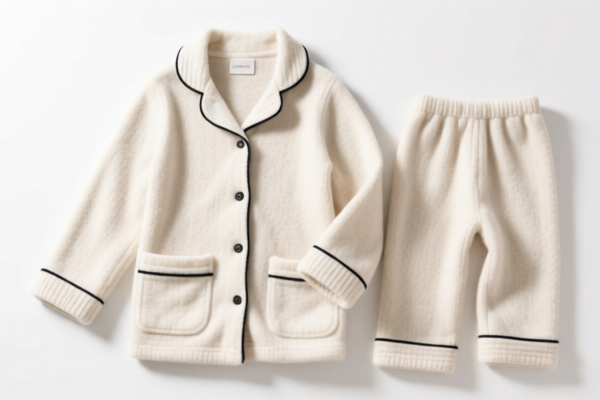
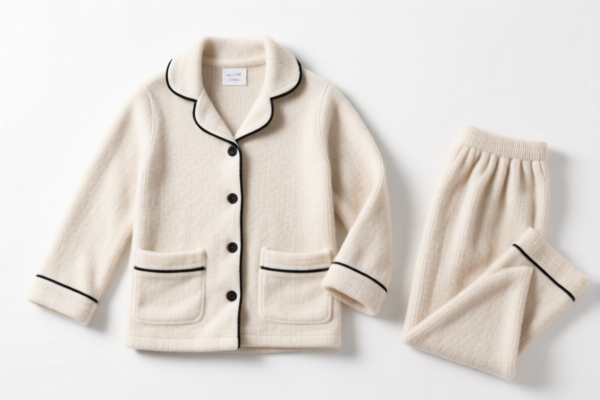
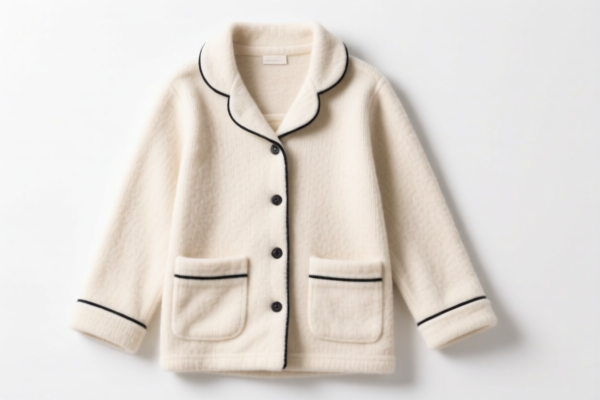
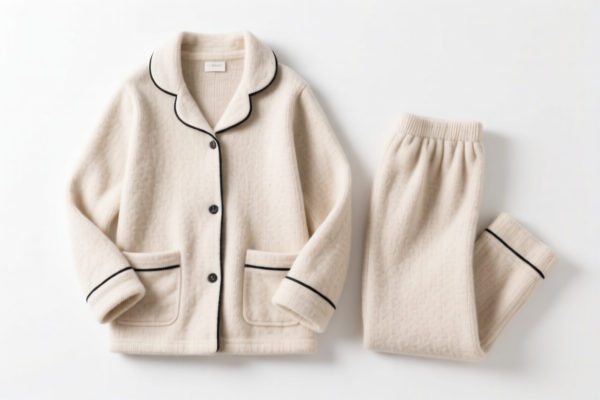
AI Analysis
🧥 Women's/Girls' Wool Pajamas with Animal Patterns
🌐 HS Code Reference & Customs Clearance Guide | 2026 Latest Tariff Analysis | Professional Strategy
📌 I. Product Definition & Classification: Do You Know "Wool Pajamas" Well?
Women’s or girls' pajamas, nightdresses, negligees, and similar articles, knitted or crocheted, fall under Chapter 61 of the Harmonized System. Specifically, when the material is wool or fine animal hair and the item is not man-made fibers, the classification depends on the specific fabric composition and construction.
⚠️ Key Distinction:
- If made of man-made fibers (e.g., polyester, nylon) →归类 to6108.32.00.10
- If made of wool or fine animal hair (e.g., merino, cashmere, alpaca) →归类 to6108.39.10.00
- "Solid Color Animal Pattern" does not change the HS code; it remains classified under the material type.
📦 II. HS Code Classification Details (2026 Latest Tariff Authority Comparison)
| HS Code | Product Description | Material Type | Knitted/Crocheted? | Tax Rate (US) |
|---|---|---|---|---|
6108.39.10.00 |
Nightdresses and pajamas, of wool or fine animal hair | Wool / Fine Animal Hair | ✅ Yes | 0.0% |
6108.32.00.10 |
Nightdresses and pajamas, of man-made fibers | Polyester, Nylon, etc. | ✅ Yes | 0.0% |
🔍 Important Note:
- Both codes listed in the data have a total tax rate of 0.0%.
- The difference lies solely in the material composition:
-6108.39.10.00is for natural fiber (wool/fine animal hair).
-6108.32.00.10is for synthetic/man-made fibers.
- "Animal Pattern" is a design feature and does not affect the classification; only the fiber content matters.
💰 III. 2026 Latest Tariff Rate Details (Including Additional Taxes & Policy Add-ons)
✅ Applicable Country: United States (US)
✅ Origin: China (CN)
✅ Effective Date: 2026 (Current Data)
🎯 1. 6108.39.10.00 —— Pajamas, Nightdresses, of Wool or Fine Animal Hair
| Item | Content |
|---|---|
| Base Tariff | 0.0% |
| Additional Tariff (Section 301) | 0.0% |
| Total Tax Rate | 0.0% |
| Tax Calculation | CIF Value × 0.0% = $0 |
| De Minimis Eligibility | ❌ Not applicable (but tax is 0 anyway) |
| Legal Basis | HTSUS 6108.39.10.00 |
📌 Explanation:
- Wool/pajamas from China enter the US with 0% tariff under current data.
- No additional Section 301 or IEEPA tariffs apply to this specific HS code in the provided data.
- This makes wool pajamas a low-risk, low-cost import category.
🎯 2. 6108.32.00.10 —— Pajamas, Nightdresses, of Man-Made Fibers
| Item | Content |
|---|---|
| Base Tariff | 0.0% |
| Additional Tariff (Section 301) | 0.0% |
| Total Tax Rate | 0.0% |
| Tax Calculation | CIF Value × 0.0% = $0 |
| De Minimis Eligibility | ❌ Not applicable (but tax is 0 anyway) |
| Legal Basis | HTSUS 6108.32.00.10 |
📌 Note:
- Synthetic fiber pajamas also have 0% total tax in the provided data.
- Like wool, no additional tariffs are listed for this code.
- Both codes are tax-free under the current dataset.
🛠️ IV. Customs Clearance Practical Advice (Battle-Tested Pitfall Guide)
✅ 1. Required Documentation List (No Exceptions)
| Document | Mandatory? | Description |
|---|---|---|
| ✅ Product Specification Sheet | ✔️ | Must specify fiber content (e.g., "100% Wool" or "100% Polyester") |
| ✅ Composition Label | ✔️ | Physical label on garment showing fiber % |
| ✅ Product Photos (Clear) | ✔️ | Show pattern, label, and overall design |
| ✅ Commercial Invoice | ✔️ | Must state: "Women's Wool Pajamas, Knitted, Animal Pattern" |
| ✅ Packing List | ✔️ | Item count, weight, dimensions |
| ✅ Fiber Content Test Report | ✔️ | Recommended to avoid misclassification disputes |
| ✅ Brand Authorization (if applicable) | ✔️ | For branded items |
✅ 2. Declaration Tips (Key Mnemonic)
🔥 "Material Dictates Code, Pattern Does Not Matter!"
| Scenario | Correct Declaration | Wrong Practice |
|---|---|---|
| Wool Pajamas | 6108.39.10.00 |
Misdeclare as synthetic → Risk of audit |
| Polyester Pajamas | 6108.32.00.10 |
Misdeclare as wool → Unjustified claim |
| Mixed Fiber (e.g., 50% Wool/50% Poly) | Must determine principal material | Vague description → Customs delay |
| "Animal Pattern" mentioned | Descriptive only, not for classification | Using "Pattern" as HS basis |
📌 Critical Rule:
- Never use "Animal Pattern" or "Solid Color" as the primary classification basis.
- Always declare fiber content first, then style.
✅ 3. Special Circumstances Handling
| Situation | Recommendation |
|---|---|
| Mixed Fiber Blends | If >50% wool, use 6108.39.10.00; if >50% synthetic, use 6108.32.00.10 |
| OEM/Private Label | Provide brand authorization or OEM agreement |
| Gift Items | Still require full declaration; no tax exemption unless under de minimis |
| Samples | Mark clearly as "Sample – Not for Resale" but still declare value |
🌍 V. Global Market Customs Comparison (2026 Latest)
| Country/Region | Recommended HS Code | Tariff | Notes |
|---|---|---|---|
| 🇺🇸 United States | 6108.39.10.00 / 6108.32.00.10 |
0.0% | No additional tariffs in current data |
| 🇨🇳 China (Export) | Same as above | 0.0% | Standard export duty |
| 🇪🇺 European Union | 6108.39 / 6108.32 | Varies | Check EU TARIC for exact rates |
| 🇬🇧 United Kingdom | Same as EU post-Brexit | Varies | Similar to EU standards |
| 🇨🇦 Canada | 6108.39 / 6108.32 | Varies | CBTA may offer reductions |
📌 Conclusion:
- The US offers 0% tariff for both wool and synthetic pajamas in the provided data.
- Compliance hinges on accurate fiber declaration, not design or pattern.
📌 VI. Common Errors & Pitfall Guide (Blood & Tears Lessons)
❌ Error 1: Declaring "Pajamas" without specifying fiber content
👉 Consequence: Customs may downgrade to higher tariff or request additional testing → Delay!
❌ Error 2: Using "Animal Pattern" as the HS basis
👉 Consequence: Misclassification → Potential penalties or retroactive duties
❌ Error 3: Mixing wool and synthetic in description without clarity
👉 Consequence: Customs may assume worst-case (higher tariff) or hold shipment
❌ Error 4: Not providing composition labels
👉 Consequence: Rejection of entry or requirement for third-party testing
✅ Correct Declaration Example:
"Women's Knitted Pajamas, Animal Print, 100% Wool, HS 6108.39.10.00, Country of Origin: China"
🎯 VII. Conclusion: Professional Declaration Saves Time & Money
🎯 Key Takeaways:
🔹 "Fiber Defines Code, Pattern is Cosmetic"
🔹 "0% Tax for Both Wool & Synthetic – But Accuracy is Key"
🔹 "Clear Labels, Clear Invoice, Smooth Clearance"
📌 Pro Tip:
- If your pajamas are blended, ensure the principal material (by weight) is correctly identified.
- Always include fiber composition in the commercial invoice.
- Consider pre-classification rulings if you are unsure about blended materials.
📣 Immediate Action:
📞 Consult a licensed customs broker + Provide fiber test report + Accurate HS Code declaration
🚀 Ensure smooth clearance, zero surprise duties, and maximized profit margins!
✨ Professional Customs Clearance Starts with Accurate Classification!
💼 Your Every Penny Counts – Declare Correctly!
Customer Reviews
About HS Code Classification
The Harmonized System (HS) is an internationally standardized nomenclature developed by the World Customs Organization (WCO) to classify traded products. Over 200 countries use the HS system as the basis for customs tariffs, trade statistics, and import/export regulations.
Each HS code follows a hierarchical structure:
- Chapter (2 digits) — Broad category of goods (e.g., Chapter 84: Machinery and Mechanical Appliances)
- Heading (4 digits) — More specific grouping within the chapter
- Subheading (6 digits) — Internationally standardized breakdown, used by all WCO member countries
- National subdivisions (8-10 digits) — Country-specific extensions for further classification, such as US HTSUS 10-digit codes
Correct HS code classification is essential for smooth customs clearance, accurate duty payment, and compliance with trade regulations. Misclassification can lead to customs delays, overpayment of duties, or penalties.
When importing from CN to US, the applicable tariff rates may include:
- Most-Favored-Nation (MFN) rate — The standard duty rate applied to WTO members
- General rate — Applied to countries without trade agreements
- Trade remedy duties — Additional tariffs such as Section 301 (anti-dumping), Section 232 (national security), or countervailing duties
The information provided on this page is for reference purposes only. For official classification, please consult with your local customs authority or a licensed customs broker.