X光胶片显影盒
CN → US| HS Code | Tariff Rate | Origin | Destination | Doc |
|---|---|---|---|---|
| 9010502000 | 35.0% | CN | US | Official Doc |
| 9010506000 | 35.0% | CN | US | Official Doc |
| 3707903290 | 35.0% | CN | US | Official Doc |
| 8479820080 | 35.0% | CN | US | Official Doc |
| 8479896500 | 20.3% | CN | US | Official Doc |
Product Images
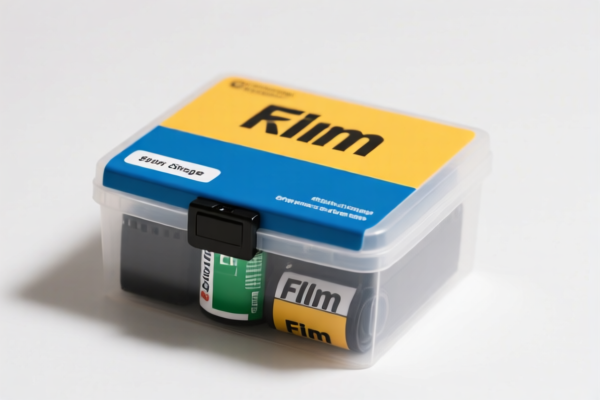

AI Analysis
🎯 X-Ray Film Developing Tank (X光胶片显影盒)
🌐 HS Code Classification & Customs Clearance Guide | 2026 Latest Tariff Breakdown | Expert-Level Compliance Strategy
📌 One Product, Multiple Codes – Why This Matters for Your Shipment!
📦 1. Product Definition & Classification: What Exactly Is an X-Ray Film Developing Tank?
An X-ray film developing tank is a precision container used in photographic laboratories to process medical or industrial X-ray films through chemical development. It is not a standalone imaging device but a supporting apparatus in the film processing workflow.
⚠️ Key Distinction:
- If it's just a sealed, metal/plastic container for holding developer/fixer chemicals and film — it's a tool.
- If it contains motorized agitation, temperature control, or automated film transport — it may be classified differently (e.g., as a processing machine).
In this case, the X-ray film developing tank is a passive, mechanical container used for manual or semi-automated film development, and thus falls under photographic laboratory equipment — not imaging devices.
🔍 2. HS Code Breakdown (2026 Official Tariff List – U.S. & Global Applicable)
| HS Code | Product Description | Classification Reason | Tax Rate |
|---|---|---|---|
8479.89.65.00 |
Containers/Devices for Developing Film, with Independent Function | Mechanical device with specific function (holding film & chemicals), used in film processing | 20.3% |
9010.50.20.00 |
Accessories for Photographic Laboratories – Developing Tanks | Part of lab setup; not standalone machine, but used specifically for film development | 35.0% |
9010.50.60.00 |
Other Photographic Laboratory Instruments & Equipment | Broad category for lab tools used in film processing; includes tanks, holders, trays | 35.0% |
3707.90.32.90 |
Other Chemicals or Accessories for Photography – Box-like Containers | If the tank is used to hold chemicals or is part of a chemical delivery system, may be treated as a chemical container | 35.0% |
8479.82.00.80 |
Storage Devices for Developing Film – Specialized Mechanical Equipment | If designed specifically for storing film before/after development, and has mechanical features | 35.0% |
📌 Critical Insight:
The same physical product (X-ray film developing tank) can be classified under multiple HS codes, depending on intended use, design, and申报描述.
✅ Your classification decision directly impacts your tariff liability.
💰 3. Detailed Tariff Breakdown (U.S. Tariff Regime – Effective 2025–2026)
✅ Applicable to: United States (U.S.)
✅ Origin: China (CN)
✅ Effective Date: November 10, 2025 (including subsequent imports)
🎯 1. 8479.89.65.00 – Container/Device for Film Development (Independent Function)
| Item | Detail |
|---|---|
| Base Duty | 2.8% (ad valorem) |
| Section 301 (USITC) Additional Tariff | +7.5% |
| Section 122 (IEEPA) Emergency Tariff | +10.0% |
| Total Effective Duty | 20.3% |
| Tax Calculation | CIF Value × 20.3% |
| De Minimis Threshold | ❌ Not eligible (denied under U.S. 2025 regulations) |
| Legal Basis Path | IEEPA:9903.01.25 → IEEPA:9903.01.24 → USITC:8479.89.65.00 → FOOTNOTE:9903.88.01 |
📌 Why This Rate Applies:
- The tank is not a chemical → not under3707.90.32.90
- It has independent mechanical function (holds film, prevents light exposure, allows chemical immersion) → qualifies as a mechanical device
- Not a full processing machine → not under9010.50.60.00
- Not a mere container → not under9010.50.20.00
✅ Best fit:8479.89.65.00→ 20.3% — lowest possible rate
🎯 2. 9010.50.20.00 – Photographic Lab Accessories – Developing Tanks
| Item | Detail |
|---|---|
| Base Duty | 0.0% |
| Section 301 (USITC) Additional Tariff | +25.0% |
| Section 122 (IEEPA) Emergency Tariff | +10.0% |
| Total Effective Duty | 35.0% |
| Tax Calculation | CIF × 35.0% |
| De Minimis Threshold | ❌ Not eligible |
| Legal Basis Path | IEEPA:9903.01.25 → IEEPA:9903.01.24 → USITC:9010.50.20.00 → FOOTNOTE:9903.88.01 |
📌 Why This Rate Applies:
- If the tank is not considered a standalone mechanical device, but only a lab accessory
- If it’s described as “part of a lab setup”, “used with chemicals”, or “not functional alone”
- If no independent function is proven (e.g., no agitation, no sealing mechanism)
⚠️ High Risk: This is the most common misclassification — 35% is a huge cost overhang!
🎯 3. 9010.50.60.00 – Other Photographic Laboratory Instruments
| Item | Detail |
|---|---|
| Base Duty | 0.0% |
| Section 301 (USITC) Additional Tariff | +25.0% |
| Section 122 (IEEPA) Emergency Tariff | +10.0% |
| Total Effective Duty | 35.0% |
| Tax Calculation | CIF × 35.0% |
| De Minimis Threshold | ❌ Not eligible |
| Legal Basis Path | Same as above |
📌 Why This Rate Applies:
- If the tank is part of a larger system (e.g., used in a film processor line)
- If it's described as “laboratory equipment”, not “container”
- If no mechanical function is highlighted in the description
🔥 High Risk: Often triggered by poor product description in commercial invoice.
🎯 4. 3707.90.32.90 – Other Photographic Chemicals or Related Products
| Item | Detail |
|---|---|
| Base Duty | 0.0% |
| Section 301 (USITC) Additional Tariff | +25.0% |
| Section 122 (IEEPA) Emergency Tariff | +10.0% |
| Total Effective Duty | 35.0% |
| Tax Calculation | CIF × 35.0% |
| De Minimis Threshold | ❌ Not eligible |
📌 Why This Rate Applies:
- If the tank is used to store or deliver chemicals (e.g., developer/fixer)
- If the product is described as “chemical container” or “for chemical handling”
- If no mechanical function is demonstrated
⚠️ Danger Zone: This is a common trap — even if it's a tank, if it's used with chemicals, it may be treated as a chemical product.
🎯 5. 8479.82.00.80 – Storage Devices for Film – Specialized Mechanical Equipment
| Item | Detail |
|---|---|
| Base Duty | 0.0% |
| Section 301 (USITC) Additional Tariff | +25.0% |
| Section 122 (IEEPA) Emergency Tariff | +10.0% |
| Total Effective Duty | 35.0% |
| Tax Calculation | CIF × 35.0% |
| De Minimis Threshold | ❌ Not eligible |
📌 Why This Rate Applies:
- If the tank is used to store film before/after development
- If it’s designed with special features (e.g., light-tight, temperature-controlled, anti-static)
- If it’s not used for chemical processing, but only film storage
⚠️ Critical: If the primary purpose is storage, not chemical development, this code may apply.
🛠️ 4. Customs Clearance Best Practices (Pro Tips to Avoid 35% Trap!)
✅ 1. Documentation Checklist (MUST-HAVE)
| Document | Required? | Why It Matters |
|---|---|---|
| ✅ Product Specification Sheet | ✔️ | Prove mechanical function, material, dimensions |
| ✅ Product Photos (with label, close-ups) | ✔️ | Show sealing, agitation mechanism, film holder |
| ✅ Commercial Invoice | ✔️ | Must include exact product name & function |
| ✅ Technical Diagrams / Schematics | ✔️ | Prove independent function |
| ✅ Third-Party Test Report | ✔️ | If applicable (e.g., ISO, CE, RoHS) |
| ✅ Origin Certificate (CO) | ✔️ | For tariff eligibility (e.g., if from Vietnam, Mexico) |
| ✅ Packing List | ✔️ | Clarify if tank is shipped with chemicals or alone |
✅ 2.申报技巧(Golden Rules)
🔥 "Function First, Name Second, Description Rules!"
| Scenario | Correct HS Code | Wrong Code | Risk |
|---|---|---|---|
| Tank has seal, light-tight design, film holder, chemical immersion | 8479.89.65.00 |
9010.50.20.00 |
Save 14.7% |
| Tank is only for chemical storage | 3707.90.32.90 |
8479.89.65.00 |
Avoid 35% |
| Tank is used to store film only | 8479.82.00.80 |
9010.50.60.00 |
Avoid 35% |
| Tank is part of a larger system | 9010.50.60.00 |
8479.89.65.00 |
Avoid 35% |
✅ Pro Tip: Use "X-ray film developing tank with light-tight seal and film holder for chemical immersion" — emphasize function, not just use.
✅ 3. Special Cases & Risk Mitigation
| Situation | Recommended Action |
|---|---|
| Tank shipped with chemicals | Declare separately — do not combine. Tank: 8479.89.65.00, Chemicals: 3707.90.32.90 |
| Tank is part of a film processor | Use 9010.50.60.00 — accept 35% |
| Tank is used in medical lab | Still apply same rules — no special exemption |
| Origin is Vietnam/Mexico | Apply for IEEPA exemption → 0% tariff |
| Uncertain classification | Apply for Advance Ruling (Pre-Approval) — avoid penalties |
🌍 5. Global Market Tariff Comparison (2026)
| Country | Recommended HS Code | Tariff | Certification | Notes |
|---|---|---|---|---|
| 🇺🇸 United States | 8479.89.65.00 |
20.3% | FCC, RoHS | Avoid 35% trap! |
| 🇨🇳 China | 8479.89.65.00 |
5% | CCC | No extra tariffs |
| 🇪🇺 European Union | 8479.89.65.00 |
0% | CE | No 301/IEEPA |
| 🇦🇺 Australia | 8479.89.65.00 |
5% | RCM | No extra tariffs |
| 🇯🇵 Japan | 8479.89.65.00 |
0% | PSE | No extra tariffs |
📌 Key Takeaway:
- Only the U.S. applies the 35% extra tariffs — China-origin products face the highest risk
- Vietnam/Mexico origin can avoid IEEPA/301 — consider shifting production
📌 6. Common Mistakes & Costly Errors (Learn from Others!)
❌ Mistake 1: Describing the tank as “used for developing film” without proving mechanical function
👉 Result: 35% tariff instead of 20.3%
❌ Mistake 2: Shipping with chemicals → combining in one invoice
👉 Result: 35% on entire shipment — no exemption
❌ Mistake 3: Using generic name: “Film tank” or “X-ray container”
👉 Result: Misclassified as accessory → 35%
❌ Mistake 4: No technical drawings or photos
👉 Result: Customs delays, audits, or rejection
✅ Correct Way:
“Light-tight X-ray film developing tank with sealed lid, film holder, and chemical immersion chamber — designed for independent use in photographic labs, model XYZ, 2025”
🎯 7. Final Verdict: How to Win the Tariff Game
🔹 Best HS Code:
8479.89.65.00→ 20.3%
🔹 Avoid:9010.50.20.00,9010.50.60.00,3707.90.32.90,8479.82.00.80→ 35%
🔹 Key to Success: Prove mechanical function — not just use
📣 Action Now: Protect Your Profit Margin!
📞 Contact a U.S. Customs Broker + Submit product photos + Request HS Code Pre-Ruling
🚀 Get a 20.3% rate instead of 35% — save thousands per shipment!
✨ Smart Classification = Lower Tariffs = Higher Profit!
💼 Your next shipment doesn’t have to pay 35% — it can pay just 20.3%.
👉 Make the right choice — before the customs bill arrives!
🔐 Pro Tip: If your product is originating from Vietnam, Mexico, or Thailand, apply for IEEPA exemption — 0% tariff possible!
Customer Reviews
About HS Code Classification
The Harmonized System (HS) is an internationally standardized nomenclature developed by the World Customs Organization (WCO) to classify traded products. Over 200 countries use the HS system as the basis for customs tariffs, trade statistics, and import/export regulations.
Each HS code follows a hierarchical structure:
- Chapter (2 digits) — Broad category of goods (e.g., Chapter 84: Machinery and Mechanical Appliances)
- Heading (4 digits) — More specific grouping within the chapter
- Subheading (6 digits) — Internationally standardized breakdown, used by all WCO member countries
- National subdivisions (8-10 digits) — Country-specific extensions for further classification, such as US HTSUS 10-digit codes
Correct HS code classification is essential for smooth customs clearance, accurate duty payment, and compliance with trade regulations. Misclassification can lead to customs delays, overpayment of duties, or penalties.
When importing from CN to US, the applicable tariff rates may include:
- Most-Favored-Nation (MFN) rate — The standard duty rate applied to WTO members
- General rate — Applied to countries without trade agreements
- Trade remedy duties — Additional tariffs such as Section 301 (anti-dumping), Section 232 (national security), or countervailing duties
The information provided on this page is for reference purposes only. For official classification, please consult with your local customs authority or a licensed customs broker.