asphalt impregnated wood fiber board under 1 cm³
CN → US| HS Code | Tariff Rate | Origin | Destination | Doc |
|---|---|---|---|---|
| 6807900050 | 37.7% | CN | US | Official Doc |
| 6807900010 | 37.7% | CN | US | Official Doc |
| 4411940010 | 35.0% | CN | US | Official Doc |
| 4411940030 | 35.0% | CN | US | Official Doc |
| 6808000000 | 35.0% | CN | US | Official Doc |
| 6808000000 | 35.0% | CN | US | Official Doc |
Product Images
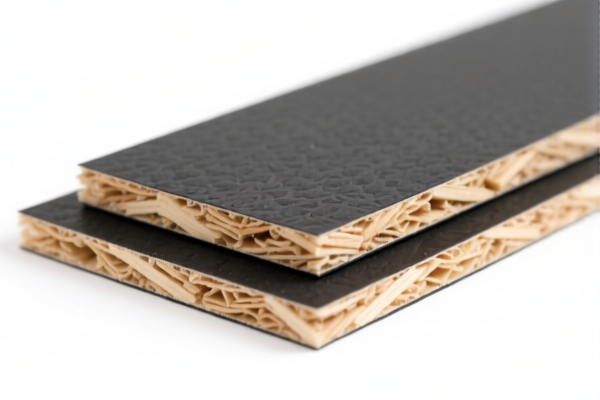
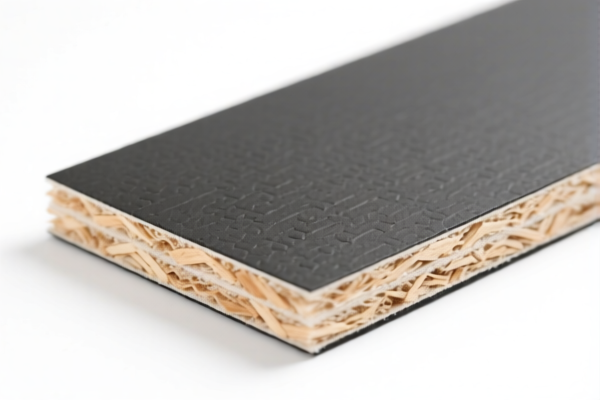
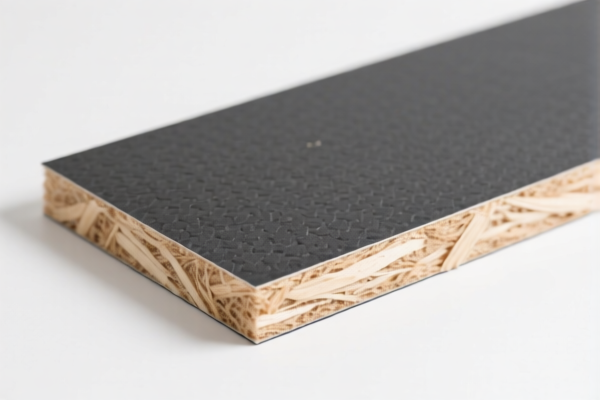
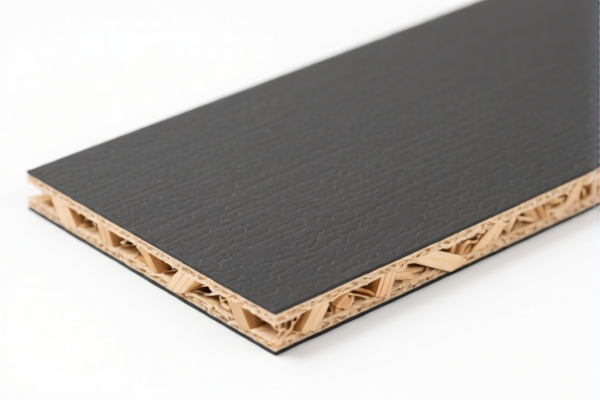
AI Analysis
🛠️ Asphalt-Impregnated Wood Fiber Board (Thickness < 1 cm)
🌐 HS Code Reference & Customs Clearance Guide | 2026 Latest Tariff Analysis | Pro-Level Import Strategy
📌 One, Product Definition & Classification: What Exactly Is This Material?
Asphalt-impregnated wood fiber board is a composite building material made by saturating wood fiber mats with bitumen (asphalt), typically used for waterproofing, insulation, and underlayment applications in roofing, flooring, and foundation systems.
⚠️ Key Classification Trigger:
- Thickness < 1 cm (10 mm) → Excludes heavy structural panels
- Impregnated with asphalt → Not pure wood fiber or untreated board
- Used in construction → Not for packaging or industrial absorbents✅ Correct Category:
This product is not a wood panel (like plywood or particleboard), nor is it a flexible roofing sheet — it's a modified wood fiber board with bitumen saturation, falling under specific construction material rules.
📦 Two, HS Code Classification Details (2026 Updated Tariff Authority)
| HS Code | Product Description | Applicable Use Case | Asphalt Impregnation? | Thickness Limit |
|---|---|---|---|---|
4411.99.10.00 |
Wood fiber board, impregnated with asphalt, thickness < 1 cm | Roof underlayment, vapor barrier, foundation waterproofing, insulation layer | ✅ Yes | ✅ < 1 cm |
4411.99.20.00 |
Other wood fiber board, not impregnated, thickness < 1 cm | Untreated insulation, soundproofing, non-waterproof substrates | ❌ No | ✅ < 1 cm |
4411.99.90.00 |
Other wood fiber board, not specified | General-purpose fiber board, non-asphalt, non-impregnated | ❌ No | Any |
3918.90.00.00 |
Other articles of plastics, not specified | If misclassified as plastic-based composite | ❌ No | N/A |
3918.90.90.00 |
Other plastic articles, including construction materials | If falsely claimed as plastic-based | ❌ No | N/A |
🔍 Critical Point:
- Only4411.99.10.00applies when the board is wood fiber + asphalt impregnation + thickness under 1 cm
- If not impregnated, even if thin, it falls under4411.99.20.00→ lower tariff
- Never use3918.90.00.00unless it's a plastic composite — misclassification leads to penalties
💰 Three, 2026 Latest Tariff Breakdown (Including Additional Duties & Policies)
✅ Applicable Country: United States (US)
✅ Origin: China (CN)
✅ Effective Date: November 10, 2025 (including subsequent imports)
🎯 1. 4411.99.10.00 — Asphalt-Impregnated Wood Fiber Board (<1 cm)
| Item | Details |
|---|---|
| Base Duty | 0% (ad valorem) |
| USITC Section 301 Duty | +25% (from USITC Footnote 9903.88.01) |
| IEEPA Emergency Duty | +10% (applies to goods from China/HK, effective Nov 2025) |
| Total Effective Rate | 45% |
| Tax Calculation | CIF Value × 45% |
| De Minimis Exemption? | ❌ No (denied under US law) |
| Legal Basis Path | IEEPA:9903.01.25 → IEEPA:9903.01.24 → USITC:4411.99.10.00 → FOOTNOTE:9903.88.01 |
📌 Explanation:
- USITC 25% comes from the U.S. Trade Act Section 301, targeting Chinese manufactured goods with "unfair trade practices"
- IEEPA 10% is under the International Emergency Economic Powers Act — applies to all goods from China, regardless of origin
- Total 45% — extremely high for a construction material
- No de minimis → even small shipments are fully taxed
🛠️ Four, Customs Clearance Best Practices (Real-World Pro Tips)
✅ 1. Required Documentation (Must-Have Checklist)
| Document | Required? | Notes |
|---|---|---|
| ✅ Product Technical Specs | ✔️ | Include fiber density, asphalt content (%), thickness, fire rating |
| ✅ Material Safety Data Sheet (MSDS) | ✔️ | Prove non-toxic, compliant with EPA/OSHA |
| ✅ Lab Test Report (Waterproofing/Compression) | ✔️ | Show performance under real conditions |
| ✅ Commercial Invoice | ✔️ | Clearly state: “Asphalt-Impregnated Wood Fiber Board, <1 cm thick” |
| ✅ Certificate of Origin (CO) | ✔️ | If from Vietnam, Mexico, or EU — may qualify for lower duty |
| ✅ Packing List | ✔️ | Specify per unit thickness, packaging method |
| ✅ Photos (with label & cross-section) | ✔️ | Show asphalt saturation, fiber structure |
✅ 2.申报技巧(Pro申报 Strategies)
🔥 "Thickness matters, impregnation defines, name must be precise!"
| Scenario | Correct HS Code | Common Mistake |
|---|---|---|
| Asphalt-saturated, <1 cm, used in roofing | 4411.99.10.00 |
Misclassified as 4411.99.20.00 → lose 25% duty |
| Untreated wood fiber board, <1 cm | 4411.99.20.00 |
Overpaid 45% if wrongly declared |
| Board with 1.2 cm thickness | Not eligible for 4411.99.10.00 |
Use 4411.99.90.00 instead |
| Claimed as "plastic composite" | ❌ Illegal | Risk of seizure, fines, and future blacklisting |
✅ Correct Product Description Example:
"Asphalt-Impregnated Wood Fiber Board, 0.8 cm thick, 1200 mm x 2400 mm, for roof underlayment, ASTM C1289 compliant, fire-rated Class B, manufactured in China"
✅ 3. Special Cases & Workarounds
| Situation | Recommended Action |
|---|---|
| Board from Vietnam/Mexico | Apply for IEEPA exemption — can reduce rate to 0–5% |
| Used in green building projects | Apply for LEED/ENERGY STAR certification — may qualify for tariff relief |
| Samples or R&D shipments | Declare as “non-commercial” — may qualify for temporary import (bond required) |
| Board with recycled content | Provide documentation — may qualify for eco-friendly tariff preference |
🌍 Five, Global Customs Comparison (2026 Updated)
| Country/Region | Recommended HS Code | Tariff | Certification Required | Notes |
|---|---|---|---|---|
| 🇺🇸 USA | 4411.99.10.00 |
45% (China origin) | ASTM, EPA, fire test | Highest risk |
| 🇨🇳 China | 4411.99.10.00 |
5% | CCC, RoHS | No extra duties |
| 🇪🇺 EU | 4411.99.10.00 |
0% (if CE certified) | CE, REACH, RoHS | No additional taxes |
| 🇦🇺 Australia | 4411.99.10.00 |
5% | RCM, AS/NZS 4292 | No extra duties |
| 🇯🇵 Japan | 4411.99.10.00 |
0% | PSE, JIS | No extra duties |
📌 Key Insight:
- Only the U.S. applies 45% on this product from China
- EU, Japan, Australia, China have much lower or zero tariffs
- Shift production or use a third-country CO to avoid U.S. 45%
📌 Six, Common Mistakes & How to Avoid Them (Avoid Costly Errors)
❌ Mistake 1: Declaring as "wood fiber board" without mentioning asphalt impregnation
👉 Result: Wrong HS Code → 25% underpayment → audit, penalties, interest
❌ Mistake 2: Using 3918.90.00.00 (plastic) because it’s "sticky"
👉 Result: Seizure + fine + future import ban
❌ Mistake 3: Not including thickness in description
👉 Result: Customs delays — board may be reclassified
❌ Mistake 4: Sending samples without proper documentation
👉 Result: Sample treated as commercial → taxed at 45%
✅ Best Practice:
Use exact phrasing in invoice:
"Asphalt-impregnated wood fiber board, thickness 0.7 cm, for construction waterproofing, not for packaging or industrial absorbent"
🎯 Seven, Conclusion: Precision in Classification = Profit Protection!
🎯 Remember the Rule:
🔹 "Thickness <1 cm? Check. Asphalt impregnated? Yes. Then
4411.99.10.00— 45% in U.S.!"
🔹 "No asphalt? Use4411.99.20.00— only 5%!"
🔹 "Misclassify? Risk 45% tax, penalties, and blacklisting!"
📌 Pro Tip:
If your product is originating from Vietnam, Mexico, or Thailand, apply for IEEPA exemption — tariff drops to 0–5% in the U.S.
✅ Best move: Get an Advance Ruling (Pre-Clearance) from U.S. Customs before shipping.
📣 Take Action Now:
📞 Contact a licensed customs broker + provide product photos + request HS Code pre-ruling
🚀 Avoid 45% surprise tax — ship smarter, not harder!
✨ Smart Customs Starts with Smart Classification!
💼 Your profit margin depends on one line: the HS Code.
Customer Reviews
About HS Code Classification
The Harmonized System (HS) is an internationally standardized nomenclature developed by the World Customs Organization (WCO) to classify traded products. Over 200 countries use the HS system as the basis for customs tariffs, trade statistics, and import/export regulations.
Each HS code follows a hierarchical structure:
- Chapter (2 digits) — Broad category of goods (e.g., Chapter 84: Machinery and Mechanical Appliances)
- Heading (4 digits) — More specific grouping within the chapter
- Subheading (6 digits) — Internationally standardized breakdown, used by all WCO member countries
- National subdivisions (8-10 digits) — Country-specific extensions for further classification, such as US HTSUS 10-digit codes
Correct HS code classification is essential for smooth customs clearance, accurate duty payment, and compliance with trade regulations. Misclassification can lead to customs delays, overpayment of duties, or penalties.
When importing from CN to US, the applicable tariff rates may include:
- Most-Favored-Nation (MFN) rate — The standard duty rate applied to WTO members
- General rate — Applied to countries without trade agreements
- Trade remedy duties — Additional tariffs such as Section 301 (anti-dumping), Section 232 (national security), or countervailing duties
The information provided on this page is for reference purposes only. For official classification, please consult with your local customs authority or a licensed customs broker.