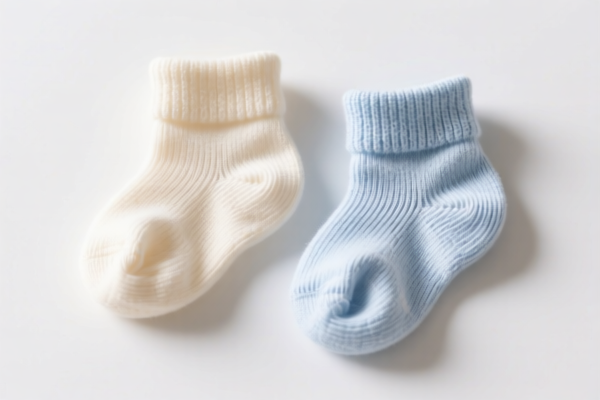
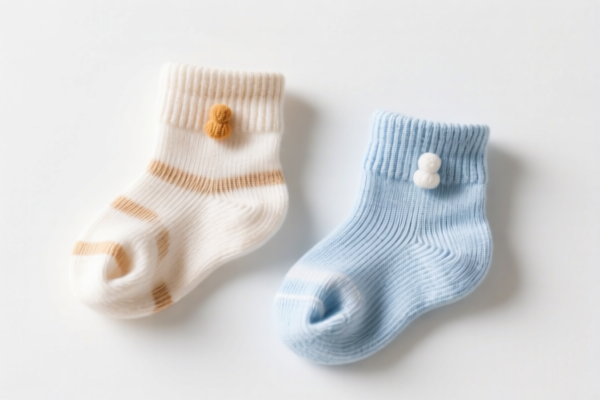
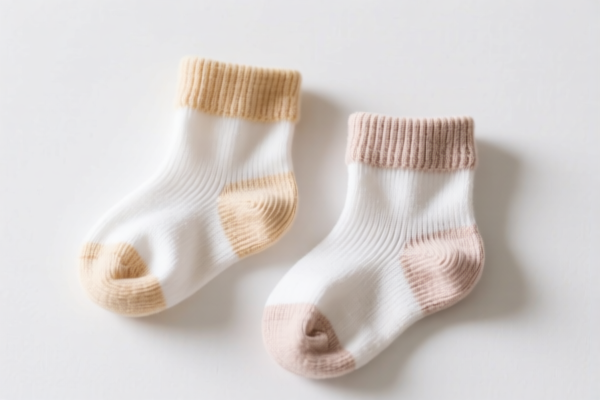
baby's socks
CN → US| HS Code | Tariff Rate | Origin | Destination | Doc |
|---|---|---|---|---|
| 6111305050 | 26.0% | CN | US | Official Doc |
| 6111206050 | 25.6% | CN | US | Official Doc |
| 6115966010 | 36.3% | CN | US | Official Doc |
| 6115940000 | 28.8% | CN | US | Official Doc |
Product Images

AI Analysis
🧦 Baby’s Socks: HS Code Classification & Customs Clearance Strategy
🌐 HS Code Reference & Customs Guide | 2026 Tariff Analysis | Professional Clearance Strategy
📌 Part 1: Product Definition & Classification Strategy
Baby socks are not a single standardized commodity in international trade; their classification depends entirely on material composition and product structure. Misclassification leads to significant tariff disparities.
In the context of US-China trade relations (2026), there are two distinct paths: 1. Knitted/Cuffed Socks (Baby Specific): Usually fall under Chapter 61 (Knitted), specifically subheading 6111. These are often softer, made of cotton or synthetic blends, and designed for infants. 2. General Hosiery (Socks): If the item is not explicitly "baby" size or style, or if it falls under different knitting techniques, it may be classified under Chapter 61 (Hosiery) subheadings 6115.
⚠️ Critical Distinction:
- 6111.20 / 6111.30: Specifically for infants. Material is either Cotton (20) or Synthetic Fibers (30).
- 6115.96 / 6115.94: General hosiery/socks classification. Used when "baby" designation is ambiguous or when the item is a general sock.
- Key Factor: Material (Cotton vs. Synthetic) and Knitting Type.
📦 Part 2: HS Code Breakdown & Tariff Detail (2026 US-China Trade)
Below is the precise mapping based on the provided data. All items are subject to Section 122 Tariffs (10%) and additional USITC/China-specific duties.
1. 🧶 Cotton Baby Socks (Knitted)
| HS Code | Product Description | Material | Total Tariff Rate | Tax Breakdown |
|---|---|---|---|---|
6111.20.60.50 |
Baby Socks, Knitted | Cotton | 25.6% | Base: 8.1% + Add'l: 7.5% + Sec 122: 10% |
Explanation:
- Base Duty (8.1%): Standard MFN rate for knitted cotton infant garments/hosiery.
- Add'l Duty (7.5%): Likely related to Section 301 or specific trade remedy duties on textile goods.
- Section 122 Duty (10%): A specific recent tariff applied to certain textile/apparel imports.
- Total: 8.1 + 7.5 + 10 = 25.6%.
2. 🧵 Synthetic Fiber Baby Socks (Knitted)
| HS Code | Product Description | Material | Total Tariff Rate | Tax Breakdown |
|---|---|---|---|---|
6111.30.50.50 |
Baby Socks, Knitted | Synthetic Fibers | 26.0% | Base: 16.0% + Add'l: 0.0% + Sec 122: 10% |
Explanation:
- Base Duty (16.0%): Higher base rate for synthetic infant hosiery compared to cotton.
- Add'l Duty (0.0%): No additional Section 301/Remedy duty applies specifically to this sub-heading in this dataset.
- Section 122 Duty (10%): Still applies.
- Total: 16.0 + 0 + 10 = 26.0%.
3. 👟 General Socks (Unspecified Material, No Conflict) - Type A
| HS Code | Product Description | Material | Total Tariff Rate | Tax Breakdown |
|---|---|---|---|---|
6115.96.60.10 |
Socks, Unspecified Material | Mixed/Other | 36.3% | Base: 18.8% + Add'l: 7.5% + Sec 122: 10% |
Explanation:
- Base Duty (18.8%): Higher base rate for general hosiery (6115 series) compared to baby-specific (6111).
- Add'l Duty (7.5%): Applies here, unlike the synthetic baby sock.
- Section 122 Duty (10%): Applies.
- Total: 18.8 + 7.5 + 10 = 36.3%.
- Risk: This is the highest tax bracket. Avoid using this code for baby socks if a 6111 code is applicable.
4. 👟 General Socks (Unspecified Material, No Conflict) - Type B
| HS Code | Product Description | Material | Total Tariff Rate | Tax Breakdown |
|---|---|---|---|---|
6115.94.00.00 |
Socks, Unspecified Material | Mixed/Other | 28.8% | Base: 11.3% + Add'l: 7.5% + Sec 122: 10% |
Explanation:
- Base Duty (11.3%): Lower base rate than Type A, but still higher than baby-specific codes.
- Add'l Duty (7.5%): Applies.
- Section 122 Duty (10%): Applies.
- Total: 11.3 + 7.5 + 10 = 28.8%.
💰 Part 3: Tariff Clause Detailed Analysis
🔑 Key Tariff Components Explained
-
Base Tariff (MFN Rate):
- Determined by the Harmonized Tariff Schedule (HTSUS).
- 6111 (Infants) generally has lower base rates than 6115 (Hosiery) to encourage import of baby care items.
- Cotton (
6111.20) has a lower base (8.1%) than Synthetic (6111.30) at 16.0%.
-
Add'l Duty (7.5%):
- This appears to be a Section 301 or similar trade remedy duty applied to Chinese textiles.
- Crucial Note: It applies to
6111.20,6115.96, and6115.94, but NOT to6111.30. This makes synthetic baby socks slightly more competitive than cotton baby socks in terms of add'l duty, though the base rate is higher.
-
Section 122 Tariff (10%):
- A flat 10% ad valorem duty applied to ALL four HS codes listed.
- This is a new/policy-specific levy, likely related to recent trade enforcement or specific category quotas.
- Impact: Increases the cost burden across the board by 10 percentage points.
🛠️ Part 4: Customs Clearance Practical Advice
✅ 1. Documentation Requirements
To ensure smooth clearance and accurate classification, provide:
- Product Description: Must explicitly state "Baby Socks" if claiming 6111 codes.
- Material Composition: Clearly declare % of Cotton vs. Synthetic Fiber.
- Age Range: Specify intended age group (e.g., "0-12 months").
- Construction: "Knitted" is mandatory for Chapter 61. If woven, they fall under Chapter 62 (higher tariffs).
- Labeling: Ensure physical labels on socks state material content and country of origin.
✅ 2. Classification Strategy & Cost Optimization
| Scenario | Recommended HS Code | Total Tariff | Why? |
|---|---|---|---|
| Pure Cotton Baby Socks | 6111.20.60.50 |
25.6% | Lowest total duty. Best for 100% cotton items. |
| Polyester/Acrylic Baby Socks | 6111.30.50.50 |
26.0% | Slightly higher than cotton, but avoids the 7.5% add'l duty. Good if cotton is scarce/expensive. |
| General "Socks" (Not explicitly Baby) | 6115.94.00.00 |
28.8% | Use only if product is not clearly infant-sized. Avoid if possible due to higher tax than baby codes. |
| Mixed Material/Unknown | 6115.96.60.10 |
36.3% | AVOID. Highest tax. Only use if no other classification fits. |
📌 Pro Tip:
If your product is 100% Cotton, choose6111.20.60.50(25.6%).
If your product is 100% Synthetic, choose6111.30.50.50(26.0%).
Difference: Only 0.4% difference in total tax, but6111.30saves the 7.5% add'l duty, while6111.20saves on base duty. Choose based on which duty component is more volatile or subject to change.
✅ 3. Common Pitfalls & Avoidance
-
❌ Mistake: Classifying baby socks as
6115(General Hosiery) without justification.
👉 Result: Higher tariffs (28.8% - 36.3%).
👉 Fix: Prove they are for infants (size, packaging, marketing). -
❌ Mistake: Misdeclaring material (e.g., claiming 100% cotton when it's 80% cotton/20% polyester).
👉 Result: Customs audit, penalties, retroactive duties.
👉 Fix: Provide lab test reports for material composition. -
❌ Mistake: Ignoring Section 122 Tariff.
👉 Result: Underpayment of 10%.
👉 Fix: Always include 10% in cost calculations for all four codes. -
❌ Mistake: Assuming "Socks" means "Hosiery" (
6115).
👉 Result: Classification error.
👉 Fix: Use Chapter 61, Heading 6111 for infants. Chapter 61, Heading 6115 for older children/adults.
🌍 Part 5: Global Market Comparison (2026)
| Market | Recommended HS Code (Baby) | Est. Total Duty | Notes |
|---|---|---|---|
| 🇺🇸 USA | 6111.20.60.50 (Cotton) |
25.6% | High due to Sec 122 + Add'l duties. |
| 🇺🇸 USA | 6111.30.50.50 (Synth) |
26.0% | Slightly higher, but no add'l duty. |
| 🇪🇺 EU | 6111.30.00.00 |
~9-10% | Lower base rates, no Section 122 equivalent. |
| 🇨🇳 China | 6111.30.00.00 |
~10-15% | Varies by trade agreement. |
| 🇬🇧 UK | 6111.30.00.00 |
~10-12% | Post-Brexit tariffs. |
📌 Conclusion:
The US market is the most challenging due to the Section 122 (10%) and Add'l (7.5%) duties.
For US exports, Cotton Baby Socks (6111.20.60.50) offer the lowest total tariff (25.6%).
Always verify material composition to avoid misclassification penalties.
📌 Part 6: Final Checklist for Clearance
- Confirm Material: Is it 100% Cotton? →
6111.20.60.50. Is it Synthetic? →6111.30.50.50. - Confirm Audience: Are they for babies? → Yes, use
6111. No, use6115(Higher Tax). - Check Packaging: Does packaging say "Baby"? → Helps justify
6111. - Calculate Landed Cost: Include CIF + 25.6% (Cotton) or 26.0% (Synthetic).
- Document: Keep lab reports, product specs, and invoice descriptions clear.
🎯 Conclusion: Smart Sourcing, Smarter Classification
🎯 Remember the Rule:
"Baby + Cotton = 25.6% | Baby + Synthetic = 26.0% | General Socks = 28.8%-36.3%"
🚀 Action Plan:
- Label Clearly: "Baby Socks, 100% Cotton".
- Use Correct HS:
6111.20.60.50.- Budget for Tariffs: Plan for ~25.6% duty.
- Avoid General Codes: Don't use
6115unless necessary.
✨ Professional Clearance Starts with Precise Classification!
💼 Your Profit Margin Depends on Accurate HS Codes!
Customer Reviews
About HS Code Classification
The Harmonized System (HS) is an internationally standardized nomenclature developed by the World Customs Organization (WCO) to classify traded products. Over 200 countries use the HS system as the basis for customs tariffs, trade statistics, and import/export regulations.
Each HS code follows a hierarchical structure:
- Chapter (2 digits) — Broad category of goods (e.g., Chapter 84: Machinery and Mechanical Appliances)
- Heading (4 digits) — More specific grouping within the chapter
- Subheading (6 digits) — Internationally standardized breakdown, used by all WCO member countries
- National subdivisions (8-10 digits) — Country-specific extensions for further classification, such as US HTSUS 10-digit codes
Correct HS code classification is essential for smooth customs clearance, accurate duty payment, and compliance with trade regulations. Misclassification can lead to customs delays, overpayment of duties, or penalties.
When importing from CN to US, the applicable tariff rates may include:
- Most-Favored-Nation (MFN) rate — The standard duty rate applied to WTO members
- General rate — Applied to countries without trade agreements
- Trade remedy duties — Additional tariffs such as Section 301 (anti-dumping), Section 232 (national security), or countervailing duties
The information provided on this page is for reference purposes only. For official classification, please consult with your local customs authority or a licensed customs broker.