boy's pants
CN → US| HS Code | Tariff Rate | Origin | Destination | Doc |
|---|---|---|---|---|
| 6203424511 | 34.1% | CN | US | Official Doc |
| 6103431520 | 45.7% | CN | US | Official Doc |
| 6211335030 | 33.5% | CN | US | Official Doc |
| 6211329040 | 25.6% | CN | US | Official Doc |
| 6203439011 | 45.4% | CN | US | Official Doc |
Product Images
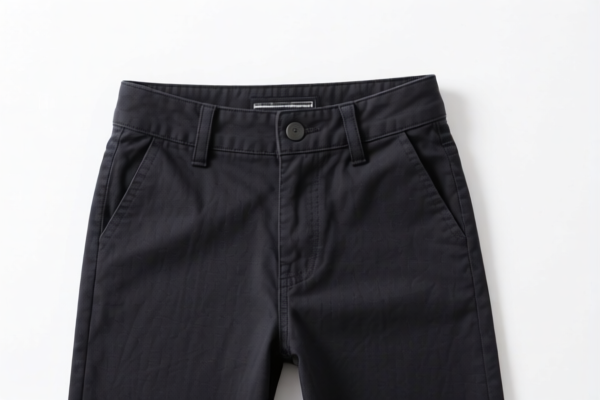
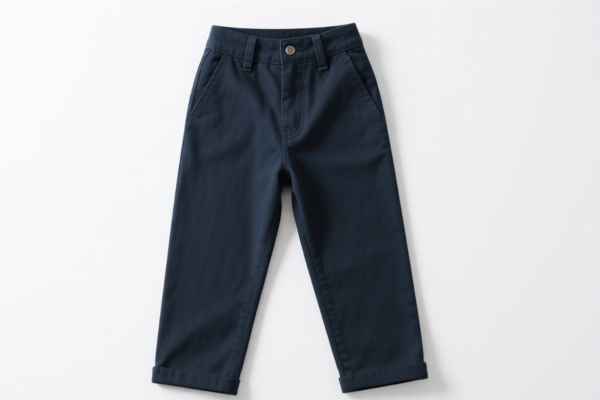
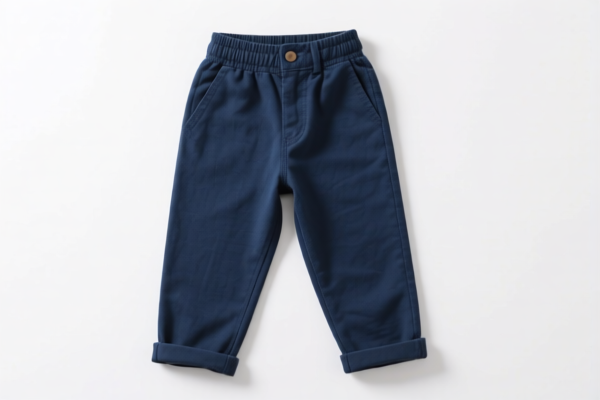
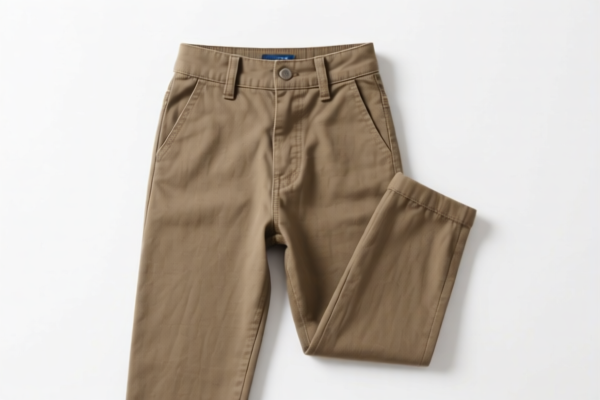
AI Analysis
👖 Boy's Pants: Strategic Classification & US Customs Clearance Guide (2026)
🌐 HS Code Reference & Clearance Strategy | 2026 Latest Tariff Analysis | Expert Compliance Guide
📌 I. Product Definition & Classification: What Exactly Are "Boy's Pants"?
"Boy's pants" (specifically for children under 14 years old) are a critical category in international trade, often subjected to stringent scrutiny due to varying material compositions. In international trade, the classification hinges on material (Cotton vs. Synthetic Fibers) and construction type (Woven vs. Knit).
Key Distinction:
- Woven Pants (Non-Knit): Usually classified under Chapter 62 (e.g., 6203, 6211). These include jeans, khakis, trousers, and formal pants.
- Knit Pants: Usually classified under Chapter 61 (e.g., 6103). These include sweatpants, joggers, and elastic-waist trousers.
⚠️ Critical Identification Point:
- If the fabric is woven (crisscross threads, non-stretchy base) → Go to Chapter 62.
- If the fabric is knit (looped threads, stretchy) → Go to Chapter 61.
- If the pants are part of a swimsuit or specialized garment → Go to Chapter 62/61 Subheadings for "Other garments."
📦 II. HS Code Classification Details (2026 Latest Tariff Authority Match)
Based on the provided data, here are the specific HS codes and their corresponding tax structures for Boy's Pants. Note that all rates include Base Tariff + 301 Tariff (7.5%) + Section 301/122 Tariff (10%).
| HS Code | Product Description & Logic | Material Assumption | Total Tax Rate | Tax Breakdown |
|---|---|---|---|---|
6203.42.45.11 |
Men's/Boys' Trousers | Cotton-Based Inferred from "common sense" for woven pants |
34.1% | Base: 16.6% + Addl: 7.5% (Section 301) + 122 Clause: 10% |
6103.43.15.20 |
Men's/Boys' Trousers | Synthetic or Cotton Inferred as Long Pants/Pants |
45.7% | Base: 28.2% + Addl: 7.5% (Section 301) + 122 Clause: 10% |
6211.33.50.30 |
Men's/Boys' Other Garments | Synthetic Fiber Meets classification requirements |
33.5% | Base: 16.0% + Addl: 7.5% (Section 301) + 122 Clause: 10% |
6211.32.90.40 |
Men's/Boys' Other Garments | Cotton No obvious conflict |
25.6% | Base: 8.1% + Addl: 7.5% (Section 301) + 122 Clause: 10% |
6203.43.90.11 |
Men's/Boys' Trousers | Synthetic Fiber Inferred as Long Pants/Based on bottom-category matching |
45.4% | Base: 27.9% + Addl: 7.5% (Section 301) + 122 Clause: 10% |
🔍 Key Insight:
- The lowest effective tax rate is 25.6% (6211.32.90.40) if the pants are Cotton-based and classified under "Other Garments" (often used for specific styles like Bermuda shorts or casual woven pants not strictly defined as trousers).
- The highest effective tax rate is 45.7% (6103.43.15.20) if the pants are Knitted and made of Synthetic/Cotton mix, classified as standard trousers.
- Section 301 (7.5%) and Section 122 (10%) are mandatory add-ons for Chinese-origin goods.
💰 III. 2026 Latest Tariff Rate Explanation (Detailed Breakdown)
✅ Applicable Country: United States (US)
✅ Origin: China (CN)
✅ Effective Date: Post-2025 Policies (Includes Section 301 & Section 122)
🎯 1. 6203.42.45.11 —— Woven Cotton Pants (Most Common for Jeans/Khakis)
| Item | Detail |
|---|---|
| Base Tariff | 16.6% (General Rate for Woven Cotton Men's/Boys' Trousers) |
| Section 301 Tariff | +7.5% (Additional Tariff for Chinese Origin) |
| Section 122 Tariff | +10% (Targeted Tariff on Specific Textile Categories) |
| Total Tax Rate | 34.1% |
| Calculation | CIF Value × 34.1% |
| De Minimis Eligibility | ❌ No (Textiles over $800 are subject to full duties) |
| Legal Basis | HTSUS: 6203.42.45.11 → Section 301: Footnote 9903.88.01 → Section 122: IEEPA |
📌 Explanation:
- This code applies to woven pants made primarily of cotton.
- The 16.6% base rate is standard for woven cotton trousers.
- The 17.5% additional taxes (7.5% + 10%) significantly increase the landed cost.
- Tip: Ensure the cotton content is >50% to qualify for this specific subheading.
🎯 2. 6103.43.15.20 —— Knitted Synthetic/Cotton Pants (Sweatpants/Joggers)
| Item | Detail |
|---|---|
| Base Tariff | 28.2% (Higher base for knitted synthetic/cotton blends) |
| Section 301 Tariff | +7.5% |
| Section 122 Tariff | +10% |
| Total Tax Rate | 45.7% |
| Calculation | CIF Value × 45.7% |
| De Minimis Eligibility | ❌ No |
| Legal Basis | HTSUS: 6103.43.15.20 → Section 301 → Section 122 |
📌 Warning:
- Knitted pants (sweatpants, joggers) face higher base tariffs (28.2%) compared to woven cotton pants (16.6%).
- Total rate of 45.7% is the highest in the dataset.
- Tip: If possible, consider converting knitted items to woven styles (e.g., twill pants) to reduce base tariff.
🎯 3. 6211.33.50.30 —— Woven Synthetic Pants (Polyester/Rayon)
| Item | Detail |
|---|---|
| Base Tariff | 16.0% |
| Section 301 Tariff | +7.5% |
| Section 122 Tariff | +10% |
| Total Tax Rate | 33.5% |
| Calculation | CIF Value × 33.5% |
| De Minimis Eligibility | ❌ No |
📌 Comparison:
- Slightly lower than cotton woven pants (33.5% vs 34.1%).
- Applicable for synthetic fiber woven pants (e.g., polyester track pants).
🎯 4. 6211.32.90.40 —— Woven Cotton "Other Garments" (Best Rate!)
| Item | Detail |
|---|---|
| Base Tariff | 8.1% |
| Section 301 Tariff | +7.5% |
| Section 122 Tariff | +10% |
| Total Tax Rate | 25.6% |
| Calculation | CIF Value × 25.6% |
| De Minimis Eligibility | ❌ No |
📌 Opportunity:
- This is the lowest tax rate (25.6%).
- Applies to Cotton Woven Pants classified under "Other Garments" (often used for casual shorts, Bermuda shorts, or specific styles not fitting "Trousers").
- Tip: Consult with a customs broker to see if your specific style (e.g., casual woven shorts) can be classified here instead of6203.42.45.11.
🎯 5. 6203.43.90.11 —— Woven Synthetic Pants (Fallback Category)
| Item | Detail |
|---|---|
| Base Tariff | 27.9% |
| Section 301 Tariff | +7.5% |
| Section 122 Tariff | +10% |
| Total Tax Rate | 45.4% |
| Calculation | CIF Value × 45.4% |
| De Minimis Eligibility | ❌ No |
📌 Note:
- High base tariff (27.9%) makes this a less favorable option for synthetic woven pants.
- Use only if no other synthetic subheading applies.
🛠️ IV. Customs Clearance Practical Advice (Avoid Pitfalls)
✅ 1. Documentation Checklist (Non-Negotiable)
| Document | Mandatory? | Purpose |
|---|---|---|
| ✅ Product Specification Sheet | ✔️ | Must detail material composition (e.g., "100% Cotton," "65% Polyester/35% Cotton"). |
| ✅ Fabric Construction Diagram | ✔️ | Prove if Woven (Chapter 62) or Knit (Chapter 61). |
| ✅ Product Photos (Labeled) | ✔️ | Clear images of front, back, and label. Label must show fiber content. |
| ✅ Commercial Invoice | ✔️ | Must state "Boy's Pants, [Material], [Woven/Knit]." |
| ✅ Packing List | ✔️ | Ensure no mixing of HTS codes in one shipment if possible. |
| ✅ Origin Certificate (CO) | ✔️ | Required for Section 301 & 122 tariff assessment. |
✅ 2. Declaration Tips (Critical for Accuracy)
🔥 "Material Defines Chapter, Style Defines Subheading!"
| Scenario | Correct HS Code | Incorrect Practice | Consequence |
|---|---|---|---|
| 100% Cotton Woven Jeans | 6203.42.45.11 (34.1%) |
Misdeclare as Synthetic → Audit Risk | High Audit Risk |
| Polyester Sweatpants (Knit) | 6103.43.15.20 (45.7%) |
Misdeclare as Woven → 25.6% | Penalty + Back Duty |
| Cotton Casual Shorts | 6211.32.90.40 (25.6%) |
Misdeclare as Trousers → 34.1% | Overpaid Taxes |
| Mixed Material Pants | Check Dominant Fiber | Guessing Material | Customs Rejection |
✅ 3. Special Situations
| Situation | Handling Advice |
|---|---|
| OEM Custom Pants | Provide design sheets to prove style. Avoid "generic" descriptions. |
| Pants with Elastic Waist | Still classified by material. Knit elastic → 6103. Woven elastic → 6203/6211. |
| Boys' vs. Men's | Ensure age definition (<14 years). If >14, codes may differ. |
| Swimwear Pants | Must be declared as "Swimsuits" under 6211.33.50.30 or similar, not general pants. |
🌍 V. Global Market Comparison (2026)
| Country/Region | Recommended HS Code | Tariff (China Origin) | Key Certification | Notes |
|---|---|---|---|---|
| 🇺🇸 USA | See Table Above | 25.6% – 45.7% | None (Textiles) | Section 301 & 122 apply. Highest cost. |
| 🇨🇳 China | 6203.42.45.11 |
5% – 15% | CCC (if applicable) | No Section 301. Lower cost. |
| 🇪🇺 EU | 6203.42.45.11 |
12% – 15% | CE (if regulated) | No Section 301. No Section 122. |
| 🇬🇧 UK | 6203.42.45.11 |
12% – 15% | UKCA | Post-Brexit rules apply. |
| 🇨🇦 Canada | 6203.42.45.11 |
16% – 18% | None | CUSMA may apply if origin is CA/MX. |
📌 Conclusion:
- The US market is the most expensive for Chinese-origin boy's pants due to Section 301 (7.5%) and Section 122 (10%) tariffs.
- China-origin pants face 45.7% max tax.
- EU/UK are more favorable with no additional US-style tariffs, but base tariffs remain.
📌 VI. Common Errors & Pitfalls (Lessons Learned)
❌ Error 1: Misidentifying Knit vs. Woven
👉 Consequence: Using 6203 (Woven) for 6103 (Knit) items → Audit & Penalties.
❌ Error 2: Ignoring Material Composition
👉 Consequence: Declaring "Cotton" when it's 51% Polyester → Back Duty + Fine.
❌ Error 3: Not Applying for Pre-Ruling
👉 Consequence: Uncertain classification → Customs Delay (14+ days).
❌ Error 4: Overlooking Section 122
👉 Consequence: Underpaying 10% → Customs Seizure.
✅ Correct Approach:
"Boy's Pants, 100% Cotton, Woven, Khaki Style, Model XYZ, Designed for Children <14 Years."
🎯 VII. Conclusion: Optimize Costs with Precise Classification
🎯 Remember:
🔹 "Woven vs. Knit? Material First! Base Rate Defines Cost."
🔹 "Cotton Woven Shorts? Go for 25.6%. Sweatpants? Expect 45.7%."
🔹 "Section 301 & 122 are Mandatory. Plan Your Cost Accordingly."
📌 Pro Tip:
If your boy's pants are originally from Vietnam, Mexico, or Cambodia, you may be eligible for Section 301 Exemption or Zero Tariff under USMCA/CUSMA.
Recommendation: Apply for a Customs Ruling before shipment to secure the lowest possible rate (e.g.,6211.32.90.40at 25.6%).
📣 Immediate Action:
📞 Contact a licensed customs broker.
📄 Provide fabric swatches and product photos.
🚀 Secure the 25.6% rate instead of paying 45.7%!
✨ Expert Customs Clearance Starts with Accurate HS Codes!
💼 Every Percentage Point Saved is Pure Profit!
Customer Reviews
About HS Code Classification
The Harmonized System (HS) is an internationally standardized nomenclature developed by the World Customs Organization (WCO) to classify traded products. Over 200 countries use the HS system as the basis for customs tariffs, trade statistics, and import/export regulations.
Each HS code follows a hierarchical structure:
- Chapter (2 digits) — Broad category of goods (e.g., Chapter 84: Machinery and Mechanical Appliances)
- Heading (4 digits) — More specific grouping within the chapter
- Subheading (6 digits) — Internationally standardized breakdown, used by all WCO member countries
- National subdivisions (8-10 digits) — Country-specific extensions for further classification, such as US HTSUS 10-digit codes
Correct HS code classification is essential for smooth customs clearance, accurate duty payment, and compliance with trade regulations. Misclassification can lead to customs delays, overpayment of duties, or penalties.
When importing from CN to US, the applicable tariff rates may include:
- Most-Favored-Nation (MFN) rate — The standard duty rate applied to WTO members
- General rate — Applied to countries without trade agreements
- Trade remedy duties — Additional tariffs such as Section 301 (anti-dumping), Section 232 (national security), or countervailing duties
The information provided on this page is for reference purposes only. For official classification, please consult with your local customs authority or a licensed customs broker.