boy's plaid shirt other textile materials
CN → US| HS Code | Tariff Rate | Origin | Destination | Doc |
|---|---|---|---|---|
| 6105908060 | 23.1% | CN | US | Official Doc |
| 6105901000 | 32.4% | CN | US | Official Doc |
| 6217909020 | 32.1% | CN | US | Official Doc |
| 6217909010 | 32.1% | CN | US | Official Doc |
| 6205904040 | 20.3% | CN | US | Official Doc |
Product Images
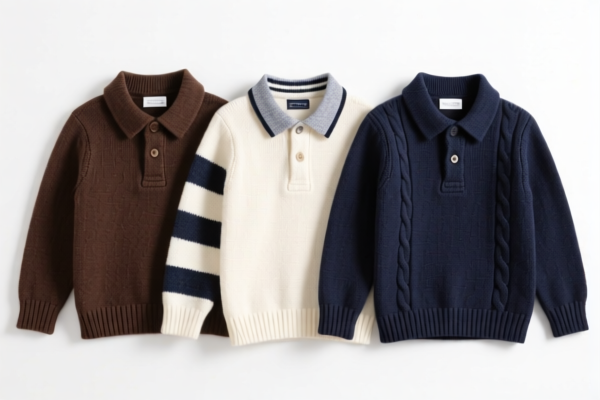
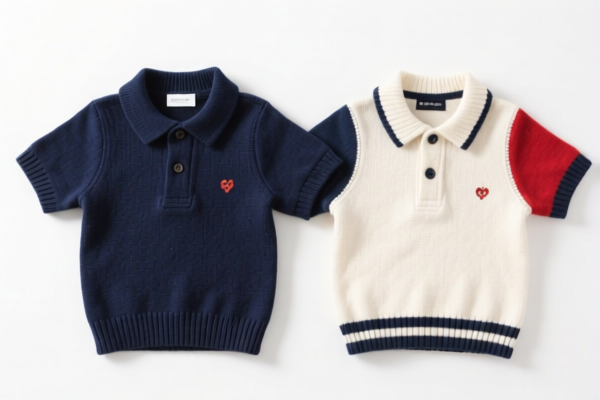
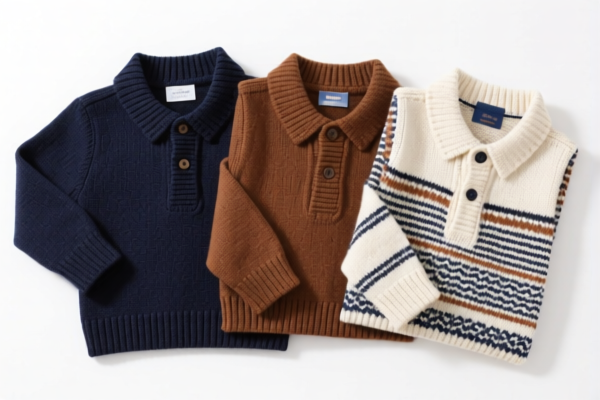
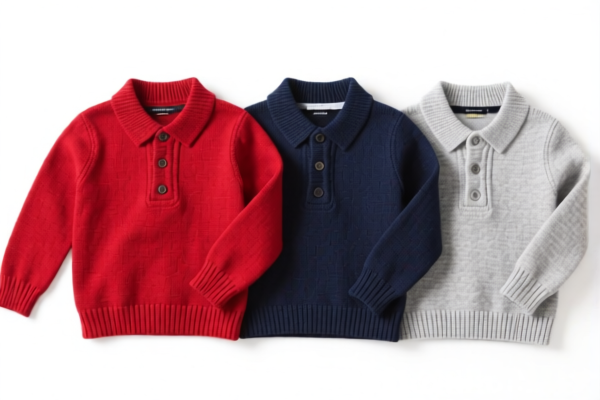
AI Analysis
🧵 Boy's Plaid Shirt, Other Textile Materials
🌐 HS Code Classification & Customs Clearance Guide | 2026 Updated Tariff Analysis | Pro-Level Import Strategy
📌 One, Product Definition & Classification: What Exactly Is a "Boy’s Plaid Shirt"?
A boy’s plaid shirt made from non-cotton, non-wool textile materials — typically synthetic fibers like polyester, nylon, or blended man-made fabrics — is a common children’s apparel item in global trade. In customs classification, it falls under knitted or non-knitted shirts based on construction, not just fabric type.
⚠️ Critical Distinction:
- If the shirt is knitted (stitched with loops, stretchy fabric) → HS Code 6105.90.80.60 or 6105.90.10.00
- If the shirt is woven or non-knitted, made from other textile materials (e.g., polyester, rayon, acrylic) → HS Code 6217.90.90.20 / 6217.90.90.10
- If it's not knitted, and made from other textile materials (non-cotton, non-wool, non-silk) → HS Code 6205.90.40.40🔍 Key Factor:
Knit vs. Woven is the main determinant — not the pattern (plaid) or the child’s age. A knitted plaid shirt is not the same as a woven one in tariff terms.
📦 Two, HS Code Breakdown (2026 Updated Tariff Authority)
| HS Code | Product Description | Target Use | Knitted? | Fabric Type |
|---|---|---|---|---|
6105.90.80.60 |
Boy’s plaid shirt, other textile materials, knitted | Children’s fashion, casual wear | ✅ Yes | Synthetic blends (e.g., polyester, rayon) |
6105.90.10.00 |
Boy’s shirt, other textile materials, knitted | Child’s apparel, youth wear | ✅ Yes | Non-cotton, non-wool, knitted |
6217.90.90.20 |
Shirt, other textile materials, non-cotton, non-wool, non-knitted | Casual shirts, non-knitted style | ❌ No | Woven synthetic fabric |
6217.90.90.10 |
Shirt, other textile materials, artificial fiber or other textile material | General-purpose shirts | ❌ No | Man-made fibers (e.g., polyester, nylon) |
6205.90.40.40 |
Boy’s shirt, other textile materials, other textile materials, non-knitted | Youth shirts, non-knitted construction | ❌ No | Mixed or synthetic fabric, woven |
📌 Important Note:
- "Plaid" pattern does NOT affect HS code — it’s a design feature, not a classification factor.
- "Boy’s" or "Child’s" is descriptive, not a tariff driver — construction (knit/woven) is what matters.
💰 Three, 2026 Updated Tariff Breakdown (With Detailed Tax Clauses)
✅ Applicable Country: United States (US)
✅ Origin: China (CN)
✅ Effective Date: November 10, 2025 (including all subsequent imports)
🎯 1. 6105.90.80.60 — Boy’s Plaid Shirt, Other Textile Materials, Knitted
| Item | Detail |
|---|---|
| Base Tariff | 5.6% (ad valorem) |
| Section 301 (USITC) Additional Duty | +7.5% (from USITC Footnote 9903.88.01) |
| Section 122 (IEEPA) Emergency Tariff | +10% (under IEEPA: 9903.01.25) |
| Total Effective Duty | 23.1% |
| Tax Calculation | CIF Value × 23.1% |
| De Minimis Exemption? | ❌ No (denied under US law) |
| Legal Basis Path | IEEPA:9903.01.25 → USITC:6105.90.80.60 → FOOTNOTE:9903.88.01 |
📌 Explanation:
- 5.6% base tariff: Standard rate for knitted shirts under textile category.
- +7.5% Section 301: From U.S. Trade Representative’s 301 Investigation on China’s unfair trade practices.
- +10% Section 122 (IEEPA): Under the International Emergency Economic Powers Act, targeting China-origin goods due to national security concerns.
- Total = 23.1% — moderate but significant for apparel.
🎯 2. 6105.90.10.00 — Boy’s Shirt, Other Textile Materials, Knitted
| Item | Detail |
|---|---|
| Base Tariff | 14.9% |
| Section 301 (USITC) Additional Duty | +7.5% |
| Section 122 (IEEPA) Emergency Tariff | +10% |
| Total Effective Duty | 32.4% |
| Tax Calculation | CIF Value × 32.4% |
| De Minimis Exemption? | ❌ No |
| Legal Basis Path | IEEPA:9903.01.25 → USITC:6105.90.10.00 → FOOTNOTE:9903.88.01 |
📌 Why Higher?
- 14.9% base rate is higher than the previous code — likely due to product-specific exclusions or updated tariff schedules.
- Despite being the same knitted construction, this code has a higher base duty, making it more expensive to import.
- Same附加 taxes apply: +7.5% (301) +10% (IEEPA) → Total 32.4%
🎯 3. 6217.90.90.20 — Shirt, Other Textile Materials, Non-Cotton, Non-Wool, Non-Knitted
| Item | Detail |
|---|---|
| Base Tariff | 14.6% |
| Section 301 (USITC) Additional Duty | +7.5% |
| Section 122 (IEEPA) Emergency Tariff | +10% |
| Total Effective Duty | 32.1% |
| Tax Calculation | CIF Value × 32.1% |
| De Minimis Exemption? | ❌ No |
| Legal Basis Path | IEEPA:9903.01.25 → USITC:6217.90.90.20 → FOOTNOTE:9903.88.01 |
📌 Key Insight:
- This code applies to woven shirts (non-knitted) made from synthetic or blended fabrics.
- Even if the shirt is plaid, it doesn’t change the code — construction is king.
- 32.1% total — slightly lower than 6105.90.10.00, but still very high.
🎯 4. 6217.90.90.10 — Shirt, Other Textile Materials, Artificial Fiber or Other Textile Material
| Item | Detail |
|---|---|
| Base Tariff | 14.6% |
| Section 301 (USITC) Additional Duty | +7.5% |
| Section 122 (IEEPA) Emergency Tariff | +10% |
| Total Effective Duty | 32.1% |
| Tax Calculation | CIF Value × 32.1% |
| De Minimis Exemption? | ❌ No |
| Legal Basis Path | IEEPA:9903.01.25 → USITC:6217.90.90.10 → FOOTNOTE:9903.88.01 |
📌 Note:
- Same base and附加 rates as6217.90.90.20— difference is descriptive language, not tariff.
- This code is broader — covers any shirt made from artificial fiber or other textile material (e.g., polyester, rayon, acrylic).
- No distinction between woven/knitted — but in practice, non-knitted is implied.
🎯 5. 6205.90.40.40 — Boy’s Shirt, Other Textile Materials, Other Textile Materials, Non-Knitted
| Item | Detail |
|---|---|
| Base Tariff | 2.8% |
| Section 301 (USITC) Additional Duty | +7.5% |
| Section 122 (IEEPA) Emergency Tariff | +10% |
| Total Effective Duty | 20.3% |
| Tax Calculation | CIF Value × 20.3% |
| De Minimis Exemption? | ❌ No |
| Legal Basis Path | IEEPA:9903.01.25 → USITC:6205.90.40.40 → FOOTNOTE:9903.88.01 |
📌 Why Lower?
- Only 2.8% base tariff — one of the lowest in the list.
- Still subject to +7.5% (301) and +10% (IEEPA) — but total is 20.3%, the lowest among all codes.
- Likely applies to non-knitted shirts with no specific fiber type mentioned — more generic.
🛠️ Four, Customs Clearance Best Practices (Pro Tips to Avoid Penalties)
✅ 1. Essential Documentation (MUST Provide)
| Document | Required? | Why It Matters |
|---|---|---|
| ✅ Product Specifications | ✔️ | Confirms fabric type, construction (knit/woven), and material |
| ✅ Fabric Composition Certificate | ✔️ | Proves it’s not cotton/wool — key for correct HS code |
| ✅ Product Photos (Front, Back, Label) | ✔️ | Shows knit pattern, plaid design, labeling |
| ✅ Commercial Invoice | ✔️ | Must state: “Boy’s plaid shirt, knitted, polyester blend” |
| ✅ Bill of Lading / Packing List | ✔️ | Shows quantity, packaging, and shipment details |
| ✅ Certificate of Origin (CO) | ✔️ | If from China, triggers 301 + IEEPA tariffs |
| ✅ Third-Party Test Report (e.g., CPSIA, REACH) | ✔️ | For safety compliance (lead, phthalates, etc.) |
✅ 2.申报技巧(Critical Rules)
🔥 "Knit vs. Woven — That’s the Key!"
| Scenario | Correct HS Code | Wrong Code | Risk |
|---|---|---|---|
| Knitted plaid shirt (stretchy fabric) | 6105.90.80.60 or 6105.90.10.00 |
6217.90.90.20 |
Higher tax, audit risk |
| Woven plaid shirt (stiff fabric) | 6217.90.90.20 or 6217.90.90.10 |
6105.90.80.60 |
Underpaid duties, penalties |
| Non-knitted, synthetic fabric | 6205.90.40.40 |
6105.90.10.00 |
Tax overpayment |
| Plaid pattern, knitted, polyester | 6105.90.80.60 |
6217.90.90.10 |
Wrong code, higher duty |
✅ Pro Tip:
Always check the fabric structure — knit = 6105, woven = 6217/6205.
✅ 3. Special Cases & Solutions
| Situation | Recommended Action |
|---|---|
| OEM/Custom Design Shirt | Provide design drawings + fabric test report to prove construction |
| Mixed Fabric (e.g., 60% polyester, 40% rayon) | Declare as “other textile materials” — use 6105.90.80.60 if knitted |
| Shirt with Embroidery or Patches | Still classified by base construction — not affected by embellishments |
| Shirt for Special Events (e.g., School Uniform) | No tariff relief — still subject to 20.3%–32.4% |
| Shirt with Hidden Knit Structure | Request pre-ruling from U.S. Customs to avoid disputes |
🌍 Five, Global Market Comparison (2026 Update)
| Country/Region | Recommended HS Code | Tariff Rate | Certification | Notes |
|---|---|---|---|---|
| 🇺🇸 USA | 6105.90.80.60 |
23.1% | CPSIA, REACH | 301 + IEEPA apply |
| 🇨🇳 China | 6105.90.80.60 |
5% | CCC | No extra duties |
| 🇪🇺 EU | 6105.90.80.60 |
0% (if CE) | CE, REACH | No 301/IEEPA |
| 🇦🇺 Australia | 6105.90.80.60 |
5% | RCM | No extra taxes |
| 🇯🇵 Japan | 6105.90.80.60 |
0% | PSE | No附加税 |
📌 Insight:
- The U.S. is the only market with 301 + IEEPA tariffs on Chinese-made apparel.
- China, EU, Australia, Japan have no additional tariffs — ideal for cost-effective sourcing.
📌 Six, Common Mistakes & How to Avoid Them (Real-World Risks)
❌ Mistake 1: Misclassifying a knitted shirt as woven
👉 Result: Underpaid duties → back taxes + penalties + interest
❌ Mistake 2: Using "plaid" as a classification factor
👉 Result: Incorrect HS code → delayed clearance, seizure
❌ Mistake 3: Not providing fabric composition proof
👉 Result: Customs may reclassify the item → higher tax
❌ Mistake 4: Assuming all "boy’s shirts" are the same
👉 Result: Wrong code → $5,000+ in unexpected fees
✅ Correct Declaration Example:
"Boy’s knitted plaid shirt, 100% polyester, 6105.90.80.60, 23.1% duty, origin: China, FCC & CPSIA compliant"
🎯 Seven, Conclusion: Precision Wins in Customs
🎯 Remember the Golden Rule:
🔹 "Knit = 6105, Woven = 6217/6205 — Pattern and Age Don’t Matter!"
🔹 "Base Tariff + 7.5% (301) + 10% (IEEPA) = Total Duty — No De Minimis!"
📌 Pro Tip:
If your shirts are originating from Vietnam, Mexico, Thailand, or India, you may qualify for IEEPA exemption — tariff drops to 0%–5%.
✅ Apply for Advance Ruling (Pre-Approval) to lock in the correct HS code and avoid surprises.
📣 Take Action Now:
📞 Contact a licensed customs broker + provide product photos + request HS Code pre-ruling
🚀 Ensure smooth entry, avoid penalties, and protect your margins!
✨ Smart Importing Starts with Accurate Classification!
💼 Your profit depends on the right code — get it right the first time!
Customer Reviews
About HS Code Classification
The Harmonized System (HS) is an internationally standardized nomenclature developed by the World Customs Organization (WCO) to classify traded products. Over 200 countries use the HS system as the basis for customs tariffs, trade statistics, and import/export regulations.
Each HS code follows a hierarchical structure:
- Chapter (2 digits) — Broad category of goods (e.g., Chapter 84: Machinery and Mechanical Appliances)
- Heading (4 digits) — More specific grouping within the chapter
- Subheading (6 digits) — Internationally standardized breakdown, used by all WCO member countries
- National subdivisions (8-10 digits) — Country-specific extensions for further classification, such as US HTSUS 10-digit codes
Correct HS code classification is essential for smooth customs clearance, accurate duty payment, and compliance with trade regulations. Misclassification can lead to customs delays, overpayment of duties, or penalties.
When importing from CN to US, the applicable tariff rates may include:
- Most-Favored-Nation (MFN) rate — The standard duty rate applied to WTO members
- General rate — Applied to countries without trade agreements
- Trade remedy duties — Additional tariffs such as Section 301 (anti-dumping), Section 232 (national security), or countervailing duties
The information provided on this page is for reference purposes only. For official classification, please consult with your local customs authority or a licensed customs broker.