boy's simple robe
CN → US| HS Code | Tariff Rate | Origin | Destination | Doc |
|---|---|---|---|---|
| 6107220025 | 33.5% | CN | US | Official Doc |
| 6207210040 | 26.4% | CN | US | Official Doc |
| 6107210020 | 26.4% | CN | US | Official Doc |
| 6207210020 | 26.4% | CN | US | Official Doc |
| 6207997520 | 24.9% | CN | US | Official Doc |
| 6207911000 | 25.9% | CN | US | Official Doc |
Product Images
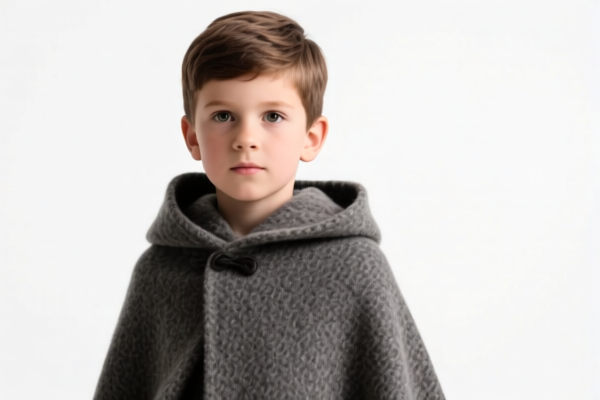
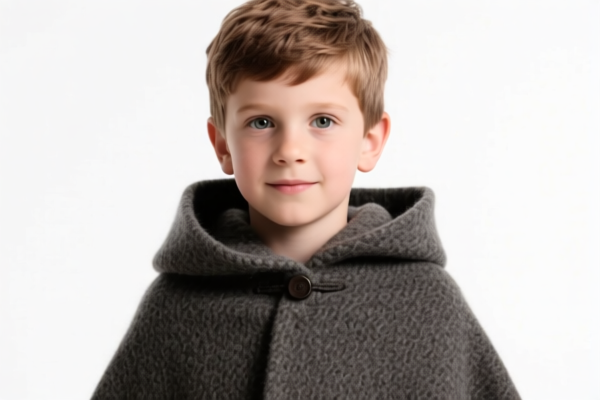
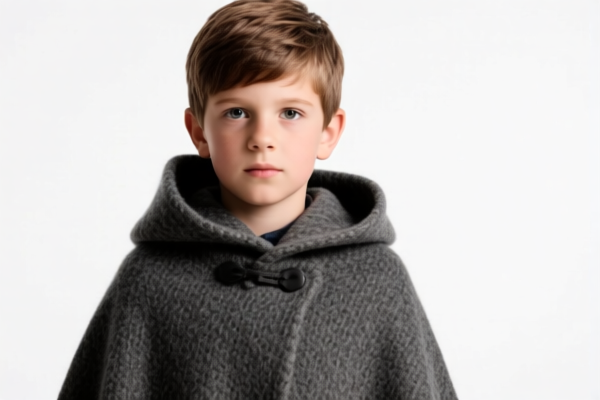

AI Analysis
👘 Boy's Simple Robe (Men's/Boy's Nightwear)
🌐 HS Code Reference & Customs Clearance Guide | 2026 Latest Tariff Analysis | Professional Clearance Strategy
📌 I. Product Definition & Classification: Do You Really Understand "Simple Robes"?
A "Boy's Simple Robe" typically refers to a loose-fitting outer garment worn over nightwear or as sleepwear itself, designed for young males. In international trade, the classification heavily depends on two critical factors: 1. Material Composition: Is it made of cotton, synthetic fibers (polyester, etc.), or other fabrics? 2. Manufacturing Process: Is it knitted/crocheted (Chapter 61) or woven (Chapter 62)?
⚠️ Key Distinction Point: - Knitted/Crocheted (Chapter 61): Flexible fabric, often jersey or fleece. Common for casual, soft robes. → Look for codes starting with 6107. - Woven (Chapter 62): Structured fabric, often cotton broadcloth or flannel. Common for more formal or traditional bathrobes. → Look for codes starting with 6207.
📦 II. HS Code Classification Details (2026 Latest Tariff Authority Comparison)
Based on the provided data, here are the specific HS Codes for "Boy's Simple Robe" categorized by material and construction:
| HS Code | Product Description Summary | Material / Construction | Target Audience |
|---|---|---|---|
6107.22.00.25 |
Boy's simple robe, knitted/crocheted | Non-cotton or Synthetic (Inferred) | Boys |
6207.21.00.40 |
Boy's simple robe | Cotton, Woven | Boys |
6107.21.00.20 |
Boy's simple robe, knitted/crocheted | Cotton (Inferred) | Boys |
6207.21.00.20 |
Boy's simple robe | Cotton, Woven | Boys |
6207.99.75.20 |
Boys' robe | Non-wool synthetic fiber or Cotton (Other category) | Boys |
6207.91.10.00 |
Boys' robe | Cotton (Inferred) | Boys |
🔍 Key Reminder: - Cotton vs. Synthetic: If the robe is made of polyester or nylon, it falls under
6107.22.00.25(if knitted) or potentially6207.99.75.20(if woven and not meeting specific cotton sub-headers). - Knitted vs. Woven: This is the most common customs verification point. If the fabric has elastic stretch and loops (like a t-shirt), it is likely Knitted (61). If it is stiff and woven like a button-down shirt, it is Woven (62). - Specific vs. General: Codes like6107.21and6207.21are specific to "Robes." Codes like6207.99are catch-alls for "Other." Always prioritize specific codes (21) if the material matches.
💰 III. 2026 Latest Tariff Rate Breakdown (Including Surcharges & Policy Add-ons)
✅ Applicable Country: United States (US)
✅ Origin: China (CN)
✅ Effective Time: Ongoing (Based on current 301/IEEPA tariffs)
🎯 1. 6107.22.00.25 – Knitted/Crocheted Robe (Non-Cotton/Synthetic)
| Item | Content |
|---|---|
| Base Tariff | 16.0% (General Ad Valorem) |
| Section 301 Surcharge | +7.5% (Trade Remedy Tariff) |
| Section 122 Tariff | +10.0% (Specific Policy Levy) |
| Total Tariff Rate | 33.5% |
| Calculation Basis | CIF Value × 33.5% |
| De Minimis Exemption | ❌ Not Applicable (Subject to high tariffs) |
| Legal Authority Path | HTSUS:6107.22.00.25 → Section 301: 7.5% → Section 122: 10% |
📌 Explanation: - This is the highest tariff option among the listed codes. - Synthetic fibers (polyester, acrylic) often carry higher base duties than cotton in certain categories due to domestic industry protections. - The 33.5% total rate significantly impacts profit margins. Consider cost-pass-through or sourcing alternatives.
🎯 2. 6207.21.00.40 & 6107.21.00.20 – Robe, Cotton (Woven/Knitted)
| Item | Content |
|---|---|
| Base Tariff | 8.9% |
| Section 301 Surcharge | +7.5% |
| Section 122 Tariff | +10.0% |
| Total Tariff Rate | 26.4% |
| Calculation Basis | CIF Value × 26.4% |
| De Minimis Exemption | ❌ Not Applicable |
| Legal Authority Path | HTSUS:6107.21.00.20 / 6207.21.00.40 → Section 301: 7.5% → Section 122: 10% |
📌 Explanation: - Cotton robes benefit from a lower base tariff (8.9% vs. 16.0%). - Whether Knitted (
6107.21) or Woven (6207.21), the total rate remains 26.4% because the surcharges are applied at the country/origin level or specific duty schedules. - Recommendation: If the robe can be made of 100% cotton, choose this classification to save 7.1% in duties compared to synthetic knitted robes.
🎯 3. 6207.21.00.20 – Robe, Cotton (Woven)
| Item | Content |
|---|---|
| Base Tariff | 8.9% |
| Section 301 Surcharge | +7.5% |
| Section 122 Tariff | +10.0% |
| Total Tariff Rate | 26.4% |
| Calculation Basis | CIF Value × 26.4% |
| De Minimis Exemption | ❌ Not Applicable |
📌 Note: - Functionally identical in tax rate to
6207.21.00.40. The difference lies in the specific sub-heading detail required by customs for precise classification (e.g., specific cotton weave types). Ensure your customs broker selects the most accurate sub-code to avoid audits.
🎯 4. 6207.99.75.20 – Boys' Robe (Other/Synthetic/Cotton Mix)
| Item | Content |
|---|---|
| Base Tariff | 14.9% |
| Section 301 Surcharge | 0.0% (Exempt or Not Applicable for this specific "Other" code?) |
| Section 122 Tariff | +10.0% |
| Total Tariff Rate | 24.9% |
| Calculation Basis | CIF Value × 24.9% |
| De Minimis Exemption | ❌ Not Applicable |
| Legal Authority Path | HTSUS:6207.99.75.20 → Section 122: 10% |
📌 Explanation: - This code falls under "Other men's/boys' nightwear." - Crucial Advantage: It appears to have 0% Section 301 Surcharge (based on the provided data). This makes it the most cost-effective option at 24.9% total. - Risk: Customs may scrutinize this code heavily to ensure it doesn't actually fit into the more specific
6207.21(Robes) category. If it is clearly a "robe," customs may force reclassification to6207.21, resulting in back taxes. - Strategy: Only use if the product is not clearly a "robe" (e.g., a loose tunic or wrap) or if the specific cotton/synthetic blend qualifies for this "Other" category under local legal interpretations.
🎯 5. 6207.91.10.00 – Boys' Robe (Cotton)
| Item | Content |
|---|---|
| Base Tariff | 8.4% |
| Section 301 Surcharge | +7.5% |
| Section 122 Tariff | +10.0% |
| Total Tariff Rate | 25.9% |
| Calculation Basis | CIF Value × 25.9% |
| De Minimis Exemption | ❌ Not Applicable |
📌 Note: - Another cotton option with a slightly lower base tariff (8.4%) than
6207.21(8.9%). - Total rate: 25.9%. Slightly cheaper than the standard cotton robe codes (26.4%). - Verify if this code applies to "Robes" or if it's a broader "Other" category. If it applies, this is a very competitive tariff rate.
🛠️ IV. Customs Clearance Practical Advice (Real-World Pitfall Avoidance)
✅ 1. Documentation Checklist (Non-negotiable)
| Document | Mandatory | Description |
|---|---|---|
| ✅ Product Specification Sheet | ✔️ | Must explicitly state: "Robe," "Sleepwear," "For Boys," and Fabric Composition (e.g., 100% Cotton, 95% Poly/5% Spandex). |
| ✅ Fabric Swatch or Test Report | ✔️ | Critical for Classification. Customs may require proof of whether it is knitted (61) or woven (62). A lab report confirming "Knitted Jersey" vs. "Woven Broadcloth" is invaluable. |
| ✅ Product Photos | ✔️ | Show the front, back, and inner lining. Highlight any buttons, belts, or hoods to confirm it fits the definition of a "robe." |
| ✅ Commercial Invoice | ✔️ | Description must match HS Code logic. E.g., "Boys' Cotton Knitted Robe" for 6107.21.00.20. |
| ✅ Packing List | ✔️ | Ensure weight and dimensions are accurate. |
✅ 2. Classification Strategy (Key Mnemonics)
🔥 “Cotton Saves Money, Synthetics Cost More, Knit vs. Weave Decides the Chapter!”
| Scenario | Recommended HS Code | Total Tariff | Why? |
|---|---|---|---|
| 100% Cotton, Woven | 6207.21.00.40 or 6207.21.00.20 |
26.4% | Standard cotton robe. Safe, common classification. |
| 100% Cotton, Knitted | 6107.21.00.20 |
26.4% | Same tax as woven cotton. |
| Synthetic/Polyester, Knitted | 6107.22.00.25 |
33.5% | Expensive. High base duty. Try to avoid if possible. |
| Unclear "Other" Robe | 6207.99.75.20 |
24.9% | Lowest Rate. But high audit risk. Use only if product structure is ambiguous. |
| Cotton, Specific Sub-code | 6207.91.10.00 |
25.9% | Competitive alternative to 6207.21. Verify eligibility. |
✅ 3. Special Handling & Pitfalls
| Issue | Handling Suggestion |
|---|---|
| Misclassification: Knitted vs. Woven | If you declare "Woven" but customs finds it "Knitted," they will reclassify to Chapter 61, potentially changing the code and duty rate. Solution: Provide a fabric analysis report. |
| Material Composition Errors | If you say "Cotton" but it's 90% Polyester, you risk penalties for false declaration. Solution: Ensure fiber content on label matches invoice and HS code logic. |
| Section 122 & 301 Liability | These are mandatory additions for Chinese goods. Solution: Budget for these in your landed cost calculation. Do not assume they can be negotiated away. |
| "Simple Robe" Ambiguity | If the item is more of a "kimono" or "tunic," it might fall under "Other" (6207.99). Solution: If it has a belt, lapels, and is long enough to be a robe, stick to 6207.21 or 6107.21 to be safe, unless you are confident in the 99 classification. |
🌍 V. Global Market Comparison (2026 Latest)
| Country/Region | Recommended HS Code (Cotton Woven) | Estimated Tariff | Certification | Notes |
|---|---|---|---|---|
| 🇺🇸 USA | 6207.21.00.40 / 6207.91.10.00 |
25.9% - 26.4% | None specific for textile | High tariffs due to Section 301 & 122. |
| 🇨🇳 China | 6207.21.00.00 |
9.0% - 10.0% | CCC (if applicable) | Lower base rates. No Section 301. |
| 🇪🇺 EU | 6207.21.00 |
12.0% | CE (if functional apparel) | No Section 301/122 equivalents. |
| 🇬🇧 UK | 6207.21.00 |
12.0% | UKCA | Post-Brexit rules apply. |
| 🇦🇺 Australia | 6207.21.00 |
5.0% | None | Preferential rates may apply. |
📌 Conclusion: - USA is the most expensive market for this product due to layered tariffs (Base + 301 + 122). - China, EU, and Asia-Pacific markets are significantly cheaper. - Optimization Strategy: For US shipments, prioritize Cotton over Synthetic to save ~7%. Consider if
6207.99.75.20(24.9%) is a defensible alternative to reduce costs by another 1.5-1.5% compared to standard cotton robe codes.
📌 VI. Common Errors & Pitfall Guide (Lessons Learned)
❌ Error 1: Declaring a Polyester Robe as Cotton to get the 26.4% rate. 👉 Consequence: Customs inspection reveals polyester. Repossession, fines, and forced payment of 33.5% + penalties.
❌ Error 2: Using 6107.22.00.25 (33.5%) when a 6207.99.75.20 (24.9%) might be applicable.
👉 Consequence: Overpayment of duties. If the product is not strictly "knitted" or fits the "Other" category, you can save nearly 9%.
❌ Error 3: Ignoring Section 122 in cost calculations. 👉 Consequence: Unexpected 10% charge at clearance. Always include it in your landed cost model.
❌ Error 4: Vague Description: "Boy's Clothes." 👉 Consequence: Customs delays for classification. Always use "Robe" and specify "Knitted/Woven" and "Material."
✅ Correct Action:
"Boys' Cotton Woven Bathrobe, Belted, Full Length. HS Code: 6207.21.00.40. Origin: China."
🎯 VII. Conclusion: Professional Clearance, Cost Optimization!
🎯 Remember the Mantra:
🔹 “Cotton is King, Synthetics are Expensive.” 🔹 “Check Knit vs. Wove, Check Base Rate, Check Surcharge.” 🔹 “26.4% is Safe, 33.5% is Pain, 24.9% is Ambitious but Savvy.”
📌 Tips:
- If your robe is Made in Vietnam or India, you may avoid Section 301/122 tariffs entirely, reducing rates to base levels (e.g., ~5-12% in the US).
- Pre-Ruling: For large shipments, consider applying for an Advance Ruling with US CBP to confirm if 6207.99.75.20 is acceptable for your specific robe design.
📣 Immediate Action:
📞 Consult your customs broker with a fabric swatch and product photo. 🚀 Classify accurately, declare fully, and clear smoothly!
✨ Professional Clearance Starts with Precise Classification! 💼 Every percentage point matters in global trade!
Customer Reviews
About HS Code Classification
The Harmonized System (HS) is an internationally standardized nomenclature developed by the World Customs Organization (WCO) to classify traded products. Over 200 countries use the HS system as the basis for customs tariffs, trade statistics, and import/export regulations.
Each HS code follows a hierarchical structure:
- Chapter (2 digits) — Broad category of goods (e.g., Chapter 84: Machinery and Mechanical Appliances)
- Heading (4 digits) — More specific grouping within the chapter
- Subheading (6 digits) — Internationally standardized breakdown, used by all WCO member countries
- National subdivisions (8-10 digits) — Country-specific extensions for further classification, such as US HTSUS 10-digit codes
Correct HS code classification is essential for smooth customs clearance, accurate duty payment, and compliance with trade regulations. Misclassification can lead to customs delays, overpayment of duties, or penalties.
When importing from CN to US, the applicable tariff rates may include:
- Most-Favored-Nation (MFN) rate — The standard duty rate applied to WTO members
- General rate — Applied to countries without trade agreements
- Trade remedy duties — Additional tariffs such as Section 301 (anti-dumping), Section 232 (national security), or countervailing duties
The information provided on this page is for reference purposes only. For official classification, please consult with your local customs authority or a licensed customs broker.