boys' formal shirt hand woven
CN → US| HS Code | Tariff Rate | Origin | Destination | Doc |
|---|---|---|---|---|
| 6105100030 | 37.2% | CN | US | Official Doc |
| 6205202026 | 37.2% | CN | US | Official Doc |
| 6105100010 | 29.7% | CN | US | Official Doc |
| 6205202031 | 37.2% | CN | US | Official Doc |
| 6105100030 | 37.2% | CN | US | Official Doc |
Product Images
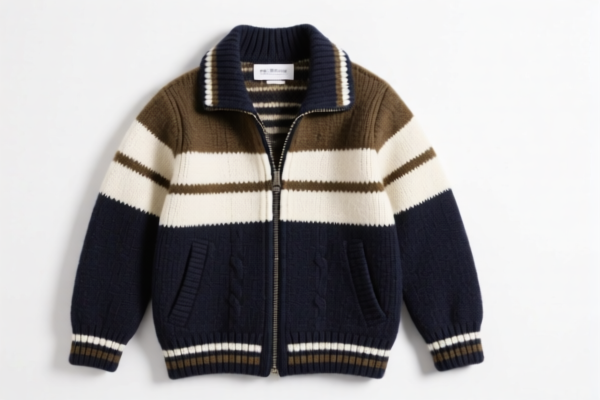

AI Analysis
Here is the detailed classification analysis, tax breakdown, and customs clearance guide for "Boys' Formal Shirt, Hand Woven" (Knitted/Woven distinction clarified below), formatted as a professional Wiki entry.
👔 Boys' Formal Shirt: Hand-Woven & Knitted Analysis (US Market)
HS Code Classification & 2026 Tariff Strategy Guide
🌍 Focus: Men's/Boys' Cotton Shirts (Woven vs. Knitted) | 🇺🇸 Market: United States | 🇨🇳 Origin: China
🚨 CRITICAL CLARIFICATION: "Hand Woven" vs. "Handmade" vs. "Woven Fabric"
Before diving into codes, we must clarify a common confusion: * In HS Classification: "Hand Woven" refers to the fabric manufacturing method (woven fabric, Chapter 61/62), not whether a human sewed it by hand. * The Rule: Almost all commercial "Boys' Formal Shirts" are Machine Woven (using industrial looms). If the shirt is made of machine-woven fabric, it falls under Chapter 62. * Knitted vs. Woven: This is the most critical distinction for classification and tax rates. * Woven (Chapter 62): Fabric where threads are interlaced at right angles (e.g., classic dress shirts). * Knitted (Chapter 61): Fabric made by interlocking loops (e.g., polo shirts, jersey t-shirts).
⚠️ Key Takeaway: If your input "Hand Woven" implies a classic woven fabric (standard dress shirt), it belongs to HS Code 6205. If it is Knitted, it belongs to HS Code 6105.
📦 Section 1: HS Code Classification Matrix
Based on the data provided, here is the breakdown for Cotton Boys' Formal Shirts.
| Product Type | HS Code | Classification Logic | Material | Fabric Type |
|---|---|---|---|---|
| Boys' Formal Shirt | 6205.20.20.26 |
Woven | Cotton | Machine Woven |
| Boys' Formal Shirt | 6205.20.20.31 |
Woven (Specific Sub-cat) | Cotton | Machine Woven |
| Boys' Formal Shirt | 6105.10.00.30 |
Knitted | Cotton | Knitted (Jersey/Pique) |
| Men/Boys' Shirt | 6105.10.00.10 |
Knitted (All Sizes) | Cotton | Knitted |
| Boys' Formal Shirt | 6105.10.00.30 |
Knitted (Boys Only) | Cotton | Knitted |
🔍 Detailed Code Explanation:
1. HS Code 6205.20.20.26 & 6205.20.20.31
Description: Men's or Boys' Shirts of Cotton, Woven.
Why this code? These codes are for Chapter 62 (Articles of apparel and clothing accessories, not knitted or crocheted). If your shirt is a standard button-down, Oxford cloth, or poplin dress shirt, it is Woven, regardless of whether the factory machine was "hand-woven" (which is rare) or machine-woven.
Target: Boys' Formal Shirts (Non-Knitted).
Tax Impact: High (37.2%).
2. HS Code 6105.10.00.10
Description: Men's or Boys' Shirts of Cotton, Knitted.
Why this code? This is for Chapter 61 (Knitted). This applies if the shirt is a Jersey material, a Polo shirt (knitted), or a casual knit shirt.
Target: Boys or Men (Unisex size range in classification).
Tax Impact: Moderate (29.7% - Lower than Woven due to 0% Section 301 surcharge).
3. HS Code 6105.10.00.30
Description: Boys' Shirts of Cotton, Knitted.
Why this code? Specific sub-classification for Boys only (not Men).
Target: Boys' Knitted Shirts.
Tax Impact: High (37.2%).
⚠️ The "Hand Woven" Trap: If you declare a standard men's/boys' dress shirt as "Hand Woven" but it is actually Machine Woven, it MUST go under 6205. If you declare it as "Knitted" when it is "Woven," it will be rejected or reclassified with penalties.
💰 Section 2: 2026 US Tariff Rate Breakdown
Country of Origin: China (CN)
Target Market: United States (US)
Effective Dates: 2025/2026 (Subject to Section 301 and Section 122 updates)
🎯 Scenario A: Woven Cotton Shirts (HS 6205.20.20.26 / .31)
Applicable to: Standard "Hand Woven" style dress shirts.
| Tax Component | Rate | Source / Legal Basis |
|---|---|---|
| Base Duty | 19.7% | General MFN Rate (Chapter 62) |
| Section 301 (USITC) | +7.5% | Additional duties on Chinese textiles (Footnote 8512.00) |
| Section 122 (Reciprocal) | +10.0% | Section 122 Reciprocal Tariff (Specific to China) |
| TOTAL DUTY | 37.2% | High Risk Category |
📌 Formula:
Total Duty = (CIF Value × 37.2%)
🎯 Scenario B: Knitted Cotton Shirts - Men/Boys (HS 6105.10.00.10)
Applicable to: Knitted shirts (e.g., Pique, Jersey).
| Tax Component | Rate | Source / Legal Basis |
|---|---|---|
| Base Duty | 19.7% | General MFN Rate (Chapter 61) |
| Section 301 (USITC) | 0.0% | Exempted (Specific sub-category exemption) |
| Section 122 (Reciprocal) | +10.0% | Section 122 Reciprocal Tariff |
| TOTAL DUTY | 29.7% | Medium Risk (Savings of 7.5%) |
🎯 Scenario C: Knitted Cotton Shirts - Boys Only (HS 6105.10.00.30)
Note: In the provided data, this code carries the higher 37.2% rate, likely due to specific Section 301 application for boys' sizes.
| Tax Component | Rate | Source / Legal Basis |
|---|---|---|
| Base Duty | 19.7% | General MFN Rate |
| Section 301 (USITC) | +7.5% | Applied to this specific sub-category |
| Section 122 (Reciprocal) | +10.0% | Section 122 Reciprocal Tariff |
| TOTAL DUTY | 37.2% | High Risk Category |
🛠️ Section 3: Customs Clearance Strategy & Advice
✅ 1. Product Description Precision (The "Golden Rule")
Do not simply write "Hand Woven" on the commercial invoice. This is ambiguous. * ❌ BAD Description: "Boys' Formal Shirt Hand Woven" * ✅ GOOD Description (Woven): "Boys' Cotton Dress Shirt, Woven Fabric, Non-Knitted, Button Front, Collared" * ✅ GOOD Description (Knitted): "Boys' Cotton Knitted Shirt, Pique/Jersey, Non-Woven"
✅ 2. Fabric Test Report (Critical Evidence)
US Customs (CBP) often doubts the "Woven vs. Knitted" status. * Action: Submit a Fabric Construction Analysis or Lab Test Report from a third party (e.g., SGS, Bureau Veritas). * Content: Must explicitly state: "Fabric is constructed by weaving warp and weft threads at 90 degrees (Woven)" OR "Fabric is constructed by interlocking loops (Knitted)." * Why? This prevents reclassification by CBP, which could change the tax from 29.7% to 37.2% or lead to fines.
✅ 3. Section 122 & 301 Compliance
- Section 122 (10%): This is a specific retaliation tariff. Ensure the Country of Origin is declared as China (CN). If you have a "Made in Vietnam" label, you might qualify for a reduction, but the shirt must be substantially transformed there.
- Section 301 (7.5%): For woven shirts (6205), this is almost always mandatory unless you qualify for a specific exclusion (rare for standard apparel).
✅ 4. Avoiding "De Minimis" Traps
- If you are shipping small parcels (e.g., < $800) under Section 321 (De Minimis), Textiles are often excluded or scrutinized heavily.
- Advice: Do not rely on De Minimis for bulk commercial shipments. Use formal entry (Section 321 is risky for high-tax items like 37.2% goods).
✅ 5. Packaging & Labeling
- Care Labels: Must be in English.
- Fiber Content: Must state "100% Cotton" (or blend percentage).
- Country of Origin: Must be clearly visible ("Made in China").
🌍 Section 4: Quick Comparison & Savings Strategy
| Feature | Woven Shirt (6205) | Knitted Shirt (6105) |
|---|---|---|
| Typical Fabric | Poplin, Oxford, Twill, Linen | Jersey, Pique, Interlock |
| Total Duty (CN Origin) | 37.2% | 29.7% (Men) / 37.2% (Boys) |
| Key Advantage | Formal appearance | Comfort, stretch, casual |
| Customs Risk | Medium (Fabric test needed) | High (Knitting method verification) |
| Strategy | Use for Formal Wear | Use for Casual/Polo (if Men, save 7.5%) |
💡 Pro Tip: If your product allows, design the "Boys' Shirt" as a Men's Knitted Shirt (HS 6105.10.00.10) if it fits adult sizes, as it drops the Section 301 surcharge from 7.5% to 0%. However, if strictly for "Boys" (under 16), the tax remains high in the provided data.
📌 Section 5: Final Checklist for Shipment
- [ ] Verify Fabric: Woven vs. Knitted (Lab test attached).
- [ ] Invoice: Use specific description "Cotton Woven Shirt" or "Cotton Knitted Shirt".
- [ ] Origin: Confirm "Made in China".
- [ ] Tax Calculation: Budget for 37.2% (Woven) or 29.7% (Knitted Men's).
- [ ] Exclusions: Check if your specific factory/HS Code has a valid Section 301 Exclusion (valid until 2026, check current list).
📞 Need Help? If your shirt is truly "Handmade" (sewn by hand, rare), it may still fall under 6205, but the value per unit will be higher. Ensure you have proof of "Handmade" status to avoid disputes on labor standards, though the tax rate remains the same.
⚠️ Disclaimer: Tariff rates are subject to change based on US Trade Representative (USTR) announcements. Always verify with a licensed Customs Broker before shipping.
✨ Professional Clearing Starts with the Right HS Code!
Don't let a 7.5% tax mistake eat your profit margin.
Customer Reviews
About HS Code Classification
The Harmonized System (HS) is an internationally standardized nomenclature developed by the World Customs Organization (WCO) to classify traded products. Over 200 countries use the HS system as the basis for customs tariffs, trade statistics, and import/export regulations.
Each HS code follows a hierarchical structure:
- Chapter (2 digits) — Broad category of goods (e.g., Chapter 84: Machinery and Mechanical Appliances)
- Heading (4 digits) — More specific grouping within the chapter
- Subheading (6 digits) — Internationally standardized breakdown, used by all WCO member countries
- National subdivisions (8-10 digits) — Country-specific extensions for further classification, such as US HTSUS 10-digit codes
Correct HS code classification is essential for smooth customs clearance, accurate duty payment, and compliance with trade regulations. Misclassification can lead to customs delays, overpayment of duties, or penalties.
When importing from CN to US, the applicable tariff rates may include:
- Most-Favored-Nation (MFN) rate — The standard duty rate applied to WTO members
- General rate — Applied to countries without trade agreements
- Trade remedy duties — Additional tariffs such as Section 301 (anti-dumping), Section 232 (national security), or countervailing duties
The information provided on this page is for reference purposes only. For official classification, please consult with your local customs authority or a licensed customs broker.