boys' knitted/crocheted set non swimwear synthetic fiber polyester jacket
CN → US| HS Code | Tariff Rate | Origin | Destination | Doc |
|---|---|---|---|---|
| 6203392020 | 44.8% | CN | US | Official Doc |
| 6114303044 | 32.4% | CN | US | Official Doc |
| 6203292020 | 0.0% | CN | US | Official Doc |
| 6114303060 | 32.4% | CN | US | Official Doc |
| 6103391000 | 32.4% | CN | US | Official Doc |
Product Images
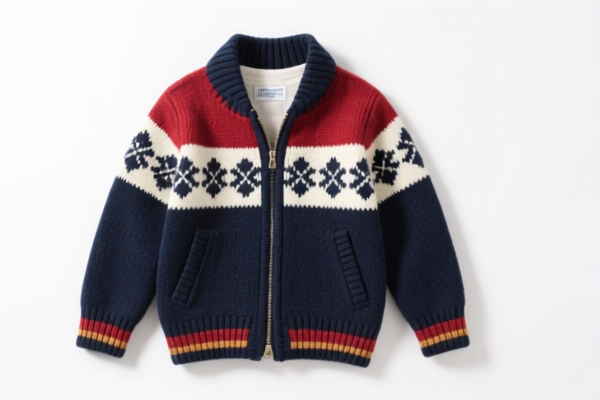
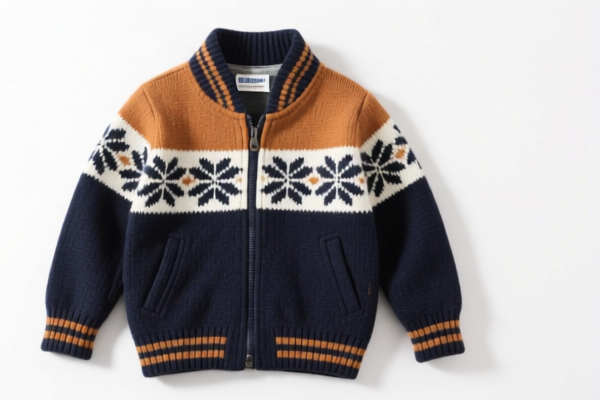
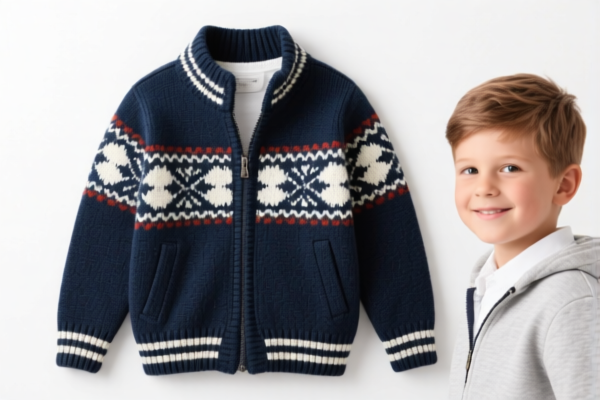

AI Analysis
👔 Boys' Knitted/Crocheted Synthetic Fiber Polyester Jacket & Set
🌐 HS Code Reference & Customs Clearance Guide | 2026 Latest Tariff Analysis | Professional通关 Strategy
📌 I. Product Definition & Classification: Do You Really Understand "Boys' Polyester Jacket"?
For boys' apparel, classification depends strictly on three pillars:
1. Manufacturing Method: Knitted/Crocheted vs. Woven (Non-knitted).
2. Garment Type: Jacket, Suit, or Ensemble (Set).
3. Material: Synthetic Fiber (Polyester).
⚠️ Critical Distinction:
- If it is a Jacket (outerwear, typically open front, zippers/buttons) and Woven (non-knitted) →归入 6203.
- If it is a Jacket/Set and Knitted/Crocheted → 归入 6114.
- Note: The input specifies "Boys' Knitted/Crocheted Set Non Swimwear Synthetic Fiber Polyester Jacket". This implies a knitted/polyester ensemble or a knitted jacket component of a set. However, in customs practice, "Jacket" usually implies woven unless specified as "Knitted Jacket". Let's analyze the specific HS codes provided in the data to match the exact descriptions.
📦 II. HS Code Classification Details (2026 Latest Tariff Authority Alignment)
Based on the provided <DATA>, here are the precise classifications for Boys' Polyester Apparel:
| HS Code | Product Description | Key Characteristics | Tax Rate |
|---|---|---|---|
6203.39.20.20 |
Boys' Non-Swimwear Synthetic Fiber Polyester Jacket (Woven) | Woven (implied by 6203 vs 6114), Jacket form, Boys' use, Polyester | 44.8% |
6114.30.30.44 |
Boys' Knitted/Crocheted Synthetic Fiber Set | Knitted/Crocheted, Set (Ensemble), Boys' use, Polyester | 32.4% |
6203.29.20.20 |
Boys' Non-Swimwear Synthetic Fiber Polyester Jacket (Woven Ensemble) | Woven, Part of an Ensemble, Boys' use, Polyester | Variable + 17.5% |
6114.30.30.60 |
Boys' Knitted/Crocheted Synthetic Fiber Garment | Knitted/Crocheted, Garment (Not specifically a set), Boys' use, Polyester | 32.4% |
6103.39.10.00 |
Boys' Knitted/Crocheted Synthetic Fiber Suit | Knitted/Crocheted, Suit (Matching jacket + trousers), Boys' use, Polyester | 32.4% |
🔍 Key Insight:
- 6203 = Woven Boys' Outerwear/Jackets.
- 6114 = Knitted/Crocheted Other Garments (Sets, Garments).
- 6103 = Knitted/Crocheted Suits.
- The term "Jacket" in the user input often leads to 6203 if it's woven. If it's explicitly Knitted, it may fall under 6114 (as a garment/set) or be classified as a suit component under 6103.
💰 III. 2026 Latest Tariff Rate Breakdown (Including Additional Duties, Policy Add-ons)
✅ Applicable Country: United States (US)
✅ Origin: China (CN)
✅ Effective Date: 2025 November 10 onwards (including subsequent imports)
🎯 1. 6203.39.20.20 – Boys' Woven Polyester Jacket
| Item | Detail |
|---|---|
| Base Duty Rate | 27.3% |
| Section 301 Duty | +7.5% |
| Section 122 Duty | +10.0% |
| Total Duty Rate | 44.8% |
| Tax Calculation | CIF Value × 44.8% |
| De Minimis Eligibility | ❌ Not Eligible (Deny De Minimis) |
| Legal Basis Path | USITC:6203.39.20.20 → Section 301:7.5% → Section 122:10% |
📌 Explanation:
- This is the standard rate for woven boys' polyester jackets.
- Total 44.8% is a high tariff.
- Section 301 (7.5%) is the standard additional tariff on Chinese goods.
- Section 122 (10%) is an additional tariff for certain textile/apparel imports from China.
🎯 2. 6114.30.30.44 & 6114.30.30.60 – Boys' Knitted/Crocheted Synthetic Fiber Set/Garment
| Item | Detail |
|---|---|
| Base Duty Rate | 14.9% |
| Section 301 Duty | +7.5% |
| Section 122 Duty | +10.0% |
| Total Duty Rate | 32.4% |
| Tax Calculation | CIF Value × 32.4% |
| De Minimis Eligibility | ❌ Not Eligible (Deny De Minimis) |
| Legal Basis Path | USITC:6114.30.30.44 → Section 301:7.5% → Section 122:10% |
📌 Explanation:
- Knitted garments generally have a lower base duty (14.9%) compared to woven jackets (27.3%).
- However, after adding Section 301 (7.5%) and Section 122 (10%), the total is 32.4%.
- This applies to Sets (6114.30.30.44) and General Garments (6114.30.30.60).
🎯 3. 6103.39.10.00 – Boys' Knitted/Crocheted Synthetic Fiber Suit
| Item | Detail |
|---|---|
| Base Duty Rate | 14.9% |
| Section 301 Duty | +7.5% |
| Section 122 Duty | +10.0% |
| Total Duty Rate | 32.4% |
| Tax Calculation | CIF Value × 32.4% |
| De Minimis Eligibility | ❌ Not Eligible (Deny De Minimis) |
| Legal Basis Path | USITC:6103.39.10.00 → Section 301:7.5% → Section 122:10% |
📌 Explanation:
- Suits (matching jacket + trousers) fall under 6103.
- Like other knitted garments, the base duty is 14.9%, leading to a 32.4% total.
🎯 4. 6203.29.20.20 – Boys' Woven Polyester Jacket (Ensemble)
| Item | Detail |
|---|---|
| Base Duty Rate | Rate applicable to each garment in the ensemble if separately classified |
| Section 301 Duty | +7.5% |
| Section 122 Duty | +10.0% |
| Total Duty Rate | Variable + 17.5% |
| Tax Calculation | Varies by component |
| De Minimis Eligibility | ❌ Not Eligible (Deny De Minimis) |
| Legal Basis Path | USITC:6203.29.20.20 → Section 301:7.5% → Section 122:10% |
📌 Explanation:
- For ensembles (sets), if the jacket and trousers are classified separately, the duty is calculated on each part.
- Total Additional Duties: 7.5% + 10% = 17.5%.
- The base duty depends on the specific sub-classification of each garment.
🛠️ IV. Customs Clearance Practical Advice (Battle-Tested Pitfall Avoidance Guide)
✅ 1. Document Checklist (Missing Items = Delay/Rejection)
| Document | Required? | Note |
|---|---|---|
| ✅ Product Specification Sheet | ✔️ | Must specify: Knitted/Woven, Polyester content %, Boys' size range. |
| ✅ Fabric Composition Certificate | ✔️ | Crucial to distinguish between 6203 (Woven) and 6114/6103 (Knitted). |
| ✅ Product Photos (Front/Back/Details) | ✔️ | Must show closure type (zipper/buttons) to confirm "Jacket" vs "Cardigan". |
| ✅ Commercial Invoice | ✔️ | Clearly state "Boys' Knitted/Woven Polyester Jacket/Set". |
| ✅ Packing List | ✔️ | If it's a Set (Ensemble), declare all items together to avoid split classification. |
| ✅ Origin Certificate (CO) | ✔️ | For US origin, but note no preferential tariff for China under current Section 301/122. |
✅ 2. Declaration Strategy (Key Mantra)
🔥 "Knitted vs. Woven Defines HS, Set vs. Single Defines Base, Section 301/122 Adds 17.5%!"
| Scenario | Correct Declaration | Wrong Practice |
|---|---|---|
| Woven Jacket | 6203.39.20.20 (44.8%) |
Declare as "Set" → Misclassification Penalty |
| Knitted Set | 6114.30.30.44 (32.4%) |
Declare as "Jacket" → May be reassigned |
| Knitted Suit | 6103.39.10.00 (32.4%) |
Declare as "Garment" → Higher base duty risk |
| Ensemble (Woven) | 6203.29.20.20 (Variable) |
Declare as single item → Complex clearance |
✅ 3. Special Cases Handling
| Scenario | Handling Advice |
|---|---|
| OEM Custom Jackets | Provide design drawings to prove "Jacket" form (not "Cardigan" or "Sweater"). |
| Mixed Material (e.g., Polyester + Cotton) | If Polyester >50%, it falls under Synthetic Fiber category. If <50%, check Cotton classification (6203.43/6109 etc.). |
| Ensemble (Jacket + Pants) | Declare as Ensemble under 6203.29.20.20 or 6114.30.30.44 to simplify calculation. |
| De Minimis (Section 321) | ❌ Not Eligible for China-origin apparel due to Section 301/122. Must file formal entry. |
🌍 V. Global Market Comparison (2026 Latest)
| Country/Region | Recommended HS Code | Duty Rate (China Origin) | Certification | Note |
|---|---|---|---|---|
| 🇺🇸 USA | 6203.39.20.20 / 6114.30.30.44 |
32.4% - 44.8% | CPSIA, Prop 65 | High tariffs due to Section 301/122. |
| 🇨🇳 China | 6203.39.20.20 / 6114.30.30.44 |
8.5% - 10% | GB Standards | No Section 301/122. |
| 🇪🇺 EU | 6203.43 / 6114.30 |
4% - 12% | REACH, CE | No Section 301/122. |
| 🇬🇧 UK | 6203.43 / 6114.30 |
4% - 12% | UKCA | Post-Brexit rules apply. |
| 🇨🇦 Canada | 6203.43 / 6114.30 |
5% - 10% | CPSIA (if for US export) | No Section 301/122. |
📌 Conclusion:
- USA is the only market with high Section 301/122 tariffs (up to 44.8%).
- EU/UK/Canada have standard duties (4-12%) without additional punitive tariffs.
- China Origin in US market is costly. Consider Vietnam/Mexico for US export to avoid Section 301/122 (if rules of origin are met).
📌 VI. Common Errors & Pitfalls (Lessons from Blood & Tears)
❌ Error 1: Declaring a Knitted Set as a Woven Jacket
👉 Consequence: HS Code misclassification → Audit & Penalty.
👉 Fix: Provide fabric composition certificate proving Knitted.
❌ Error 2: Declaring a Woven Jacket as a Knitted Garment
👉 Consequence: Base duty under-declared (27.3% vs 14.9%) → Back Duty + Interest.
👉 Fix: Clearly state Woven in description.
❌ Error 3: Ignoring Section 122 (10%)
👉 Consequence: Underpayment of 10% → Seizure or Delay.
👉 Fix: Always include 10% Section 122 in cost calculation for China-origin apparel to US.
❌ Error 4: Using "De Minimis" for China-origin apparel
👉 Consequence: Package Seized due to Section 301/122 exclusions.
👉 Fix: File Formal Entry with all duties paid.
✅ Correct Declaration Example:
"Boys' Knitted Polyester Set, Non-Swimwear, 100% Polyester, HS Code 6114.30.30.44, Origin: China, Tariff: 32.4% (incl. Sec 301 & 122)"
🎯 VII. Conclusion: Professional Declaration, Save Time & Money!
🎯 Remember the Mantra:
🔹 "Knitted/Woven Defines HS, Set/Single Defines Base, 301+122 Adds 17.5%!"
🔹 "HS Code Determines Destiny, Tax Rate Differs 12.4%, Declaration Error Costs Thousands!"
📌 Tip:
If your apparel is originally from Vietnam, Mexico, Thailand, Malaysia, you can apply for IEEPA/Section 301 Exemption (if eligible), reducing tariffs to 0%-10%.
Recommend Advance Ruling before shipment to avoid clearance risks.
📣 Immediate Action:
📞 Contact Professional Customs Broker + Provide Product Photos + Apply for HS Code Advance Ruling
🚀 Let your apparel clear customs smoothly, export efficiently, and maximize profits!
✨ Professional Clearance Starts with Accurate Classification!
💼 Every Cent of Your Cost Deserves Precise Calculation!
Customer Reviews
About HS Code Classification
The Harmonized System (HS) is an internationally standardized nomenclature developed by the World Customs Organization (WCO) to classify traded products. Over 200 countries use the HS system as the basis for customs tariffs, trade statistics, and import/export regulations.
Each HS code follows a hierarchical structure:
- Chapter (2 digits) — Broad category of goods (e.g., Chapter 84: Machinery and Mechanical Appliances)
- Heading (4 digits) — More specific grouping within the chapter
- Subheading (6 digits) — Internationally standardized breakdown, used by all WCO member countries
- National subdivisions (8-10 digits) — Country-specific extensions for further classification, such as US HTSUS 10-digit codes
Correct HS code classification is essential for smooth customs clearance, accurate duty payment, and compliance with trade regulations. Misclassification can lead to customs delays, overpayment of duties, or penalties.
When importing from CN to US, the applicable tariff rates may include:
- Most-Favored-Nation (MFN) rate — The standard duty rate applied to WTO members
- General rate — Applied to countries without trade agreements
- Trade remedy duties — Additional tariffs such as Section 301 (anti-dumping), Section 232 (national security), or countervailing duties
The information provided on this page is for reference purposes only. For official classification, please consult with your local customs authority or a licensed customs broker.