boys' lightweight down jacket
CN → US| HS Code | Tariff Rate | Origin | Destination | Doc |
|---|---|---|---|---|
| 6201402500 | 21.9% | CN | US | Official Doc |
| 6201303000 | 21.9% | CN | US | Official Doc |
| 6201405500 | 21.9% | CN | US | Official Doc |
| 6111909000 | 23.1% | CN | US | Official Doc |
Product Images
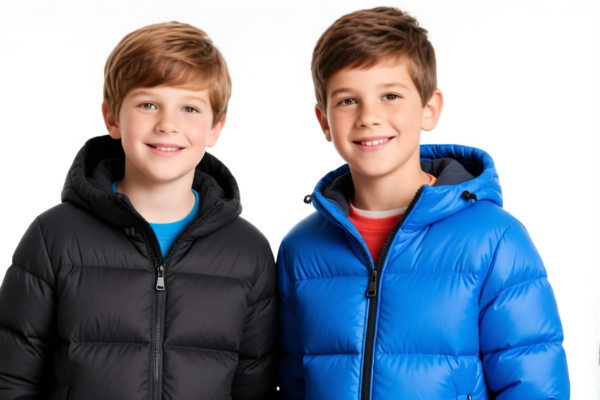
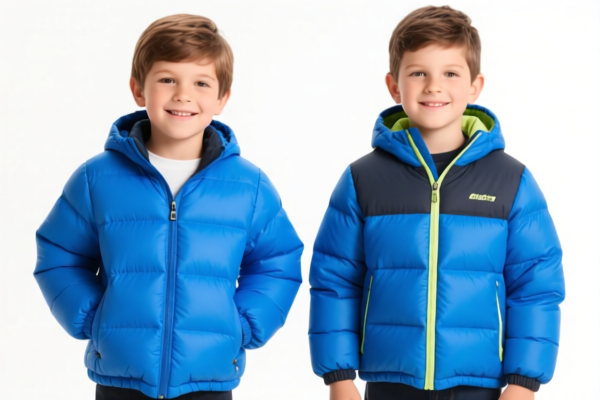
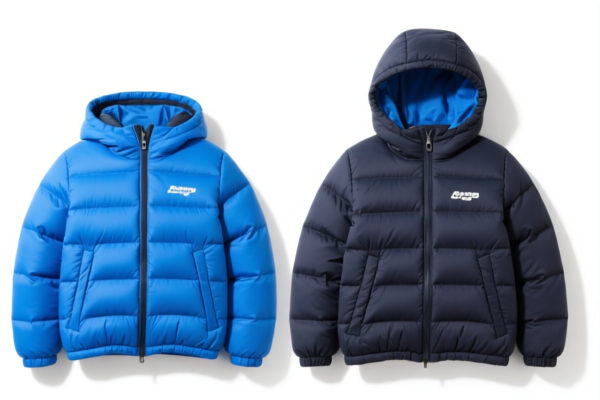

AI Analysis
🧥 Boys' Lightweight Down Jacket
🌐 HS Code Reference & Customs Clearance Guide | 2026 Latest Tariff Analysis | Professional Clearance Strategy
📌 Part 1: Product Definition & Classification: Do You Really Know "Boys' Lightweight Down Jacket"?
A Boys' Lightweight Down Jacket is a specialized outerwear garment designed for young male children. In international trade, its classification depends heavily on three key factors: 1. Material Composition: Specifically whether the shell/lining is made of woven fabric (Chapter 62) or knitted/crocheted fabric (Chapter 61). 2. Filling Type: Must contain down feathers or synthetic替代品 (though "down" usually implies feather fill). 3. Garment Structure: Whether it is a coat, jacket, or other outerwear.
⚠️ Key Classification Point:
- If the jacket is woven (e.g., nylon ripstop, polyester weave) → Typically falls under Chapter 62 (Non-knitted).
- If the jacket is knitted (e.g., knit windbreaker style) → Typically falls under Chapter 61 (Knitted/Crocheted).
- "Lightweight" usually implies no heavy thermal lining, but the presence of down is the critical determinant for sub-heading.
📦 Part 2: HS Code Classification Details (2026 Latest Tariff Authority Comparison)
Based on the provided data, here are the four most likely HS Codes for Boys' Lightweight Down Jackets, along with their specific tax implications.
| HS Code | Product Description | Applicability / Logic | Total Tax Rate |
|---|---|---|---|
6201.30.30.00 |
Boys' Anoraks, Windbreakers, and Similar Articles (Woven), with Down/Feather Fill | Woven Fabric. The summary notes the name "Down Jacket" matches "containing down" and "outerwear". "Boys" matches the gender limit. Material inferred as cotton or synthetic fiber shell. | 21.9% |
6201.40.55.00 |
Boys' Trousers, Bib-and-Brace Overalls, Breeches and Shorts (Woven) — Wait, Summary Mismatch? | Note: The summary states "Boys' Lightweight Down Jacket" and mentions "surface artificial fiber (like polyester)". However, 6201.40 typically refers to trousers/shorts. If the product is truly a jacket, this code may be incorrect unless it is a specific type of bib-overall suit. The summary logic seems to focus on "material" and "filling" but the HS code header suggests bottoms. Caution Advised.* |
21.9% |
6111.90.90.00 |
Baby Garments & Clothing Accessories (Knitted/Crocheted), Other | Knitted Fabric. Summary argues it fits "Baby/Child" category (boys) and is "clothing". It is classified under "Other textile materials" because it doesn't fit specific knitted outerwear codes for older children. "Down/Fabric" inferred as textile. | 23.1% |
6201.40.25.00 |
Boys' Trousers, Bib-and-Brace Overalls, Breeches and Shorts (Woven) — Same Code Issue | Woven Fabric. Similar to above, the summary links "Boys" + "Down" + "Jacket" but the HS Code 6201.40 is generally for bottoms. The summary claims "material inferred as mostly artificial fiber" matches classification. Discrepancy Alert: Ensure the product is not misclassified due to code-header mismatch. |
21.9% |
🔍 Critical Observation:
- Codes6201.30.30.00and6111.90.90.00are the most logically consistent for a Jacket (Outerwear).
- Codes6201.40.55.00and6201.40.25.00typically classify Trousers/Shorts. If your product is genuinely a Jacket, using these codes may lead to customs rejection or misdeclaration penalties, despite the summary's attempt to justify it based on material/fill. Verify with customs broker!
💰 Part 3: 2026 Latest Tariff Rate Breakdown (Including Surcharge & Policy Additions)
✅ Applicable Country: United States (US)
✅ Origin: China (CN)
✅ Effective Date: Includes imports from 2025 onwards (subject to Section 301 & IEEPA rules)
🎯 1. Codes under Chapter 62 (Woven) – e.g., 6201.30.30.00
| Item | Detail |
|---|---|
| Base Duty Rate | 4.4% (General Rate) |
| Section 301 Surcharge | +7.5% (Additional tariffs on Chinese goods) |
| IEEPA 122 Clause Tariff | +10% (Specific add-on for certain categories) |
| Total Effective Rate | 21.9% |
| Tax Calculation | CIF Value × 21.9% |
| De Minimis Exemption | ❌ Not Applicable (De minimis threshold is generally not applied to Section 301/IEEPA taxed goods) |
| Legal Basis Path | USITC:6201.30.30.00 → FOOTNOTE:301 → IEEPA:122 |
📌 Explanation:
- The 4.4% is the standard MFN (Most Favored Nation) duty for woven boys' outerwear.
- The 7.5% is part of the Section 301 tariff list.
- The 10% is a specific additional tariff under IEEPA Section 122.
- Total: 21.9%. This is a high duty rate for apparel.
🎯 2. Code under Chapter 61 (Knitted) – e.g., 6111.90.90.00
| Item | Detail |
|---|---|
| Base Duty Rate | 5.6% (General Rate for Other Knitted Baby/Child Garments) |
| Section 301 Surcharge | +7.5% |
| IEEPA 122 Clause Tariff | +10% |
| Total Effective Rate | 23.1% |
| Tax Calculation | CIF Value × 23.1% |
| De Minimis Exemption | ❌ Not Applicable |
| Legal Basis Path | USITC:6111.90.90.00 → FOOTNOTE:301 → IEEPA:122 |
📌 Explanation:
- Knitted garments often have slightly different base rates. Here, the base is 5.6%, making the total 23.1%, which is 1.2% higher than the woven option.
- This highlights the importance of correctly identifying the fabric construction (Woven vs. Knitted).
🛠️ Part 4: Customs Clearance Practical Advice (Real-World Pitfall Guide)
✅ 1. Required Documentation Checklist (Non-Negotiable)
| Document | Mandatory? | Notes |
|---|---|---|
| ✅ Product Specification Sheet | ✔️ | Must specify: Fabric Type (Woven/Knitted), Fill Content (Down/Feather %), Age Group (Boys), Weight (Lightweight). |
| ✅ Composition Label | ✔️ | Clear photo of the care label showing % of Shell, Lining, Filling. |
| ✅ Product Photos | ✔️ | Front, back, inside (showing fill), and close-up of fabric texture. |
| ✅ Commercial Invoice | ✔️ | Must clearly state: "Boys' Lightweight Down Jacket, Woven/Knitted, with Down Fill." |
| ✅ Packing List | ✔️ | Weight and dimensions per carton. |
| ✅ Fiber Content Certificate | ✔️ | Optional but recommended to avoid disputes on "Cotton vs. Synthetic". |
✅ 2. Declaration Tips (Key Mantras)
🔥 “Define Fabric, Define Fill, Define Gender!”
| Scenario | Correct Declaration | Common Error |
|---|---|---|
| Woven Shell + Down Fill | HS 6201.30.30.00 |
Misdeclaring as Knitted (61xx) → 23.1% Tax (Higher) |
| Knitted Shell + Down Fill | HS 6111.90.90.00 |
Misdeclaring as Woven (62xx) → 21.9% Tax (Lower, but still misdeclared) |
| "Jacket" vs. "Coat" | Ensure description matches "Jacket" (usually lighter) | Over-describing as "Heavy Parka" might trigger different codes |
| Fill Material | Specify "Goose Down" or "Duck Down" | Vague "Down Fill" → Customs may reclassify or demand testing |
⚠️ Warning on
6201.40Codes:
The provided data lists6201.40.55.00and6201.40.25.00for "Down Jackets". These codes typically cover Trousers/Shorts.
- If you declare a Jacket under a code for Trousers, customs WILL flag this mismatch.
- Recommendation: Use6201.30.30.00for Woven Jackets. Double-check if6201.40is truly applicable to your specific garment style (e.g., if it's a bib-overall suit, then it's correct).
✅ 3. Special Circumstances
| Situation | Handling Advice |
|---|---|
| Mixed Fill (Down + Synthetic) | Clearly state the % of natural down. If >50% down, it may still fall under down codes, but check USITC rules. |
| OEM/White Label | Ensure the invoice lists the actual manufacturer or brand to avoid "Undeclared Brand" issues. |
| Low-Value Shipments | Even under $800 (De Minimis), Section 301 and IEEPA tariffs MUST BE PAID. Do not attempt to evade duties. |
🌍 Part 5: Global Market Comparison (2026 Latest)
| Country/Region | Recommended HS Code | Tariff (China Origin) | Certification | Notes |
|---|---|---|---|---|
| 🇺🇸 USA | 6201.30.30.00 (Woven) |
21.9% | CPSIA, ASTM F2294 (Flammability) | High due to 301/IEEPA. |
| 🇺🇸 USA | 6111.90.90.00 (Knitted) |
23.1% | CPSIA, ASTM F2294 | Slightly higher base rate. |
| 🇨🇳 China | 6201.30.30.00 |
~5-10% | CCC (if applicable) | No Section 301. |
| 🇪🇺 EU | 6201.93.10 (Approx) |
12% | REACH, CE (if tech fabric) | Different subheadings. |
| 🇬🇧 UK | 6201.93.10 (Approx) |
12% | UKCA | Post-Brexit rules apply. |
📌 Conclusion:
- The US market is the most challenging for Chinese-origin down jackets due to the 21.9%-23.1% effective duty rate.
- Accurate fabric classification (Woven vs. Knitted) is critical to avoid penalties.
- Do not use6201.40codes for Jackets unless they are bib-overalls.
📌 Part 6: Common Errors & Pitfalls (Blood & Tears Lessons)
❌ Error 1: Using 6201.40 for a Woven Jacket
👉 Result: Customs rejects because 6201.40 is for trousers. Delay, fines, or return.
👉 Fix: Use 6201.30.30.00 for Woven Outerwear.
❌ Error 2: Ignoring Section 301/IEEPA in De Minimis Shipments
👉 Result: Seizure of goods. Many shippers assume < $800 is tax-free, but Section 301/IEEPA taxes apply.
👉 Fix: Factor in 21.9%-23.1% into your cost model.
❌ Error 3: Vague Description "Down Jacket"
👉 Result: Customs may assign a default higher rate or require additional testing.
👉 Fix: Use precise descriptions: "Boys' Woven Nylon Down Jacket, Lightweight, 90% Down Fill".
✅ Correct Approach:
"Boys' Woven Lightweight Down Jacket, 100% Polyester Shell, 90% White Duck Down, Model XYZ, CPSIA Compliant"
🎯 Part 7: Conclusion: Professional Classification Saves Money!
🎯 Remember the Mantra:
🔹 “Woven is 62, Knitted is 61.
🔹 “Down Fill is Key, Gender Defines the Subheading.
🔹 “21.9% to 23.1% is the US Cost, Don’t Let Misclassification Break the Bank!”
📌 Pro Tip:
If you have large volumes, consider applying for an Advance Ruling from US Customs and Border Protection (CBP) to lock in the HS Code and duty rate. This provides certainty and avoids surprise audits.
📣 Immediate Action:
📞 Contact a Licensed Customs Broker
📝 Provide Product Samples + Specs
🚀 Ensure Your Commercial Invoice Matches the HS Code Logic!
✨ Professional Clearance Starts with Accurate Classification!
💼 Every Percent of Duty Saved is Pure Profit!
Customer Reviews
About HS Code Classification
The Harmonized System (HS) is an internationally standardized nomenclature developed by the World Customs Organization (WCO) to classify traded products. Over 200 countries use the HS system as the basis for customs tariffs, trade statistics, and import/export regulations.
Each HS code follows a hierarchical structure:
- Chapter (2 digits) — Broad category of goods (e.g., Chapter 84: Machinery and Mechanical Appliances)
- Heading (4 digits) — More specific grouping within the chapter
- Subheading (6 digits) — Internationally standardized breakdown, used by all WCO member countries
- National subdivisions (8-10 digits) — Country-specific extensions for further classification, such as US HTSUS 10-digit codes
Correct HS code classification is essential for smooth customs clearance, accurate duty payment, and compliance with trade regulations. Misclassification can lead to customs delays, overpayment of duties, or penalties.
When importing from CN to US, the applicable tariff rates may include:
- Most-Favored-Nation (MFN) rate — The standard duty rate applied to WTO members
- General rate — Applied to countries without trade agreements
- Trade remedy duties — Additional tariffs such as Section 301 (anti-dumping), Section 232 (national security), or countervailing duties
The information provided on this page is for reference purposes only. For official classification, please consult with your local customs authority or a licensed customs broker.