boys' lightweight wool suit jacket
CN → US| HS Code | Tariff Rate | Origin | Destination | Doc |
|---|---|---|---|---|
| 6203315020 | 35.0% | CN | US | Official Doc |
| 6203319020 | 35.0% | CN | US | Official Doc |
| 6103310000 | 0.0% | CN | US | Official Doc |
| 5112116060 | 60.0% | CN | US | Official Doc |
| 6103290520 | 0.0% | CN | US | Official Doc |
| 5111117060 | 60.0% | CN | US | Official Doc |
Product Images
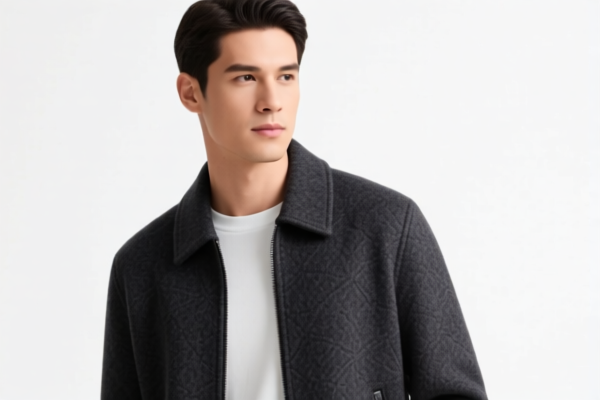
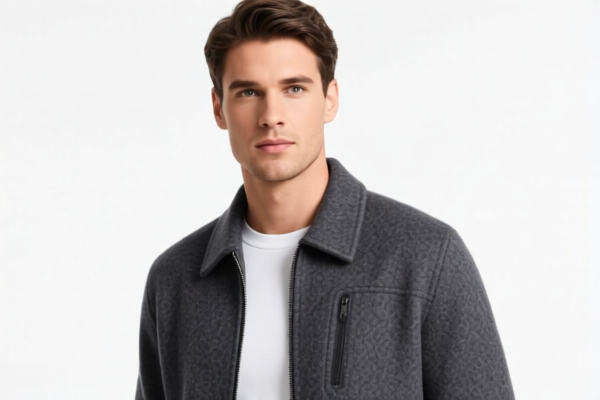

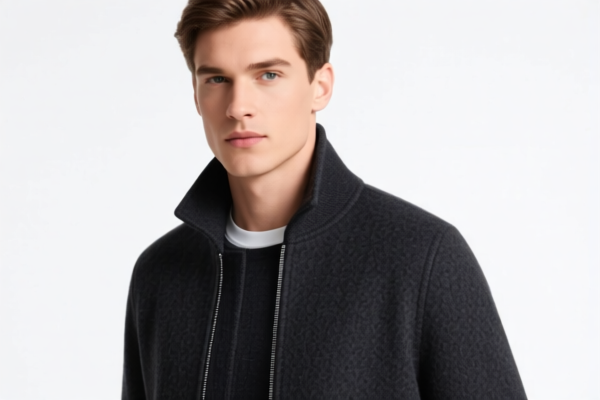
AI Analysis
👔 Boys' Lightweight Wool Suit Jacket
--- 🌐 HS Code Reference & Customs Clearance Guide | 2026 Latest Tariff Analysis | Professional Clearance Strategy
📌 I. Product Definition & Classification: What is a "Boys' Lightweight Wool Suit Jacket"?
This product refers to outerwear designed for boys, specifically crafted from wool materials. In international trade, it is categorized not just by material, but by its form (suit-style) and construction method (knitted vs. woven).
Key Distinction Points: * Knitted/ crocheted (针织): If the jacket is made of knitted wool fabric, it generally falls under Chapter 61. * Non-knitted/Woven (非针织/机织): If the jacket is made of woven wool fabric (even if lightweight/spun), it falls under Chapter 62. * "Lightweight" (轻便): This descriptor often influences the specific sub-heading or the interpretation of "fine wool" (精纺) versus coarse wool, but primarily impacts the tariff rate rather than the fundamental HS code chapter in many cases.
⚠️ Critical Classification Logic:
- Knitted Wool Jackets → Chapter 61 (6103.31...)
- Woven Wool Jackets → Chapter 62 (6203.31...)
- Raw Wool Fabric (if the item is sold as fabric, not a jacket) → Chapter 51 (5112...)
📦 II. HS Code Classification Details (2026 Latest Tariff Authority Comparison)
Based on the provided dataset, here are the specific HS Codes and their corresponding tax profiles. Note that the total tax burden varies significantly depending on the exact material structure (knitted vs. woven) and specific duty calculations.
| HS Code | Product Description & Logic | Application Scenario | Tax Structure Summary |
|---|---|---|---|
6203.31.50.20 |
Woven Wool Suit Jacket Material: Wool. Form: Suit Jacket. Meets requirements for worsted wool fabric. |
Traditional woven suit jackets for boys; formal or semi-formal wear. | 35.0% (See Breakdown Below) |
6203.31.90.20 |
Other Woven Wool Suit Jacket Material: Wool. Form: Suit Jacket. Fits classification for "wool or fine animal hair suits/jackets." |
Woven wool jackets that do not fit the specific "worsted" criteria of 50.20, but are still suit-style. | 35.0% (See Breakdown Below) |
6103.31.00.00 |
Knitted Wool Jacket Material: Wool. Form: Jacket. Fits "Boys' Wool Jacket" classification under Chapter 61. |
Knitted or crocheted wool jackets for boys. Note: Different duty calculation method. | 38.6¢/kg + 10% + 17.5% (See Breakdown Below) |
5112.11.60.60 |
Lightweight Wool Fabric/Outerwear Component Material: Wool. Category: Combed wool woven fabric. Meets lightweight standards. |
⚠️ Caution: This code typically applies to fabric or specific wool articles that do not fit the standard jacket chapters. If declared as a finished jacket, this may be a misclassification unless it's a specific garment type not covered by 61/62. | 60.0% (See Breakdown Below) |
6103.29.05.20 |
Other Knitted Wool Jacket/Ensemble Material: Wool. Form: Jacket. Fits "Boys' Wool Jacket/Suit Jacket" definition. |
Knitted wool jackets that are part of an ensemble or fall under "other" knitted jackets. | Variable (See Breakdown Below) |
🔍 Key Observation:
- Woven (Chapter 62) codes generally have a flat ad valorem rate of 35%. - Knitted (Chapter 61) codes often use a specific duty (per kg) + ad valorem structure, which can be higher or lower depending on the weight and value of the item. - Code5112.11.60.60carries the highest tax burden (60%) and is likely intended for fabric or less common wool articles. Using this for a standard suit jacket is risky and costly.
💰 III. 2026 Latest Tariff Rate Details (Including Additional Taxes)
✅ Applicable Country: United States (US)
✅ Origin: China (CN)
✅ Effective Time: 2025/2026 Import Period
🎯 1. Woven Wool Suits (6203.31.50.20 & 6203.31.90.20)
| Item | Detail |
|---|---|
| Base Tariff | 17.5% |
| Section 301 Additional Tariff | 7.5% |
| Section 122 Tariff | 10% |
| Total Tax Rate | 35.0% |
| Tax Calculation | CIF Value × 35% |
| Legal Basis | Standard USITC rates for Chinese wool apparel + Trade Act surcharges. |
📌 Explanation:
- The 17.5% is the standard Most Favored Nation (MFN) rate for wool suits. - The 7.5% is the Section 301 tariff (Section 301 Tariff List 3). - The 10% is a specific Section 122 tariff (often related to national security or specific trade acts affecting textiles/apparel from certain origins). - Total: 35%. This is a predictable, flat rate.
🎯 2. Knitted Wool Jacket (6103.31.00.00)
| Item | Detail |
|---|---|
| Base Tariff | 38.6¢/kg + 10% |
| Additional Tariff | 7.5% |
| Section 122 Tariff | 10% |
| Total Tax Rate | Mixed: Specific Duty (38.6¢/kg) + 27.5% Ad Valorem |
| Tax Calculation | (Weight in kg × $0.386) + (CIF Value × 27.5%) |
| Legal Basis | Chapter 61 specific duty rates + Section 301 & 122 surcharges. |
📌 Explanation:
- This code uses a compound duty. For lightweight jackets, the per-kg duty might be low, but the 27.5% ad valorem (10% base + 7.5% Sec 301 + 10% Sec 122) is significant. - Caution: If the jacket is heavy, the 38.6¢/kg can add up quickly.
🎯 3. Lightweight Wool Fabric/Article (5112.11.60.60)
| Item | Detail |
|---|---|
| Base Tariff | 25.0% |
| Additional Tariff | 25.0% |
| Section 122 Tariff | 10% |
| Total Tax Rate | 60.0% |
| Tax Calculation | CIF Value × 60% |
| Legal Basis | High-duty classification for specific wool products. |
📌 Explanation:
- This is the most expensive classification. The 25% additional tariff suggests a higher level of trade restriction or specific product category treatment. - Risk: Misclassifying a standard jacket as this code increases tax cost by 25 percentage points compared to the woven suit codes.
🎯 4. Other Knitted Ensemble (6103.29.05.20)
| Item | Detail |
|---|---|
| Base Tariff | "The rate applicable to each garment in the ensemble if separately..." |
| Additional Tariff | 7.5% |
| Section 122 Tariff | 10% |
| Total Tax Rate | Variable |
| Tax Calculation | Depends on individual garment rates + 17.5% (7.5% + 10%) |
| Legal Basis | Ensemble rules under HTSUS. |
📌 Explanation:
- This code applies if the jacket is part of a set (e.g., jacket + trousers sold together). The tax is calculated on the most valuable component or individually, then summed. - If sold alone, this code may be incorrect;6103.31.00.00is more appropriate for a standalone knitted jacket.
🛠️ IV. Customs Clearance Practical Advice (Real-World Pitfall Guide)
✅ 1. Preparation Checklist (Must-Have Documents)
| Document | Required? | Purpose |
|---|---|---|
| ✅ Product Description | ✔️ | Must explicitly state: "Boys' Wool Suit Jacket," "Knitted/Woven," "Wool Content %" |
| ✅ Fabric Composition Certificate | ✔️ | Proves wool content (e.g., 100% Wool, 80% Wool/20% Polyester) |
| ✅ Tech Pack / Spec Sheet | ✔️ | Shows construction (knitted vs. woven), lining, closures |
| ✅ Commercial Invoice | ✔️ | Must list HS Code, CIF value, country of origin |
| ✅ Packing List | ✔️ | Details weight (for per-kg duty codes like 6103.31.00.00) |
| ✅ Test Report | ✔️ | Fiber analysis to confirm wool vs. synthetic blend |
✅ 2. Declaration Tips (Key Mnemonics)
🔥 "Knitted is 61, Woven is 62. Weight matters for 61. 35% is safe for Woven. 60% is a trap!"
| Scenario | Correct HS Code | Wrong Code | Consequence |
|---|---|---|---|
| Woven Suit Jacket | 6203.31.50.20 |
6103.31.00.00 |
Overpayment or Underpayment depending on value/weight. |
| Knitted Jacket | 6103.31.00.00 |
6203.31.90.20 |
Misclassification risk. |
| Fabric (Not Jacket) | 5112.11.60.60 |
6203.31.50.20 |
High Tax (60%) if misdeclared as jacket. |
| Set (Jacket + Pants) | 6103.29.05.20 (if knitted) |
Individual codes | Incorrect calculation of ensemble value. |
✅ 3. Special Handling
| Situation | Advice |
|---|---|
| Wool vs. "Wool-Blend" | If wool < 50%, it may not qualify for "Wool" headings. Check specific HTSUS rules for Chapter 61/62. |
| Lightweight Definition | Ensure the "lightweight" claim is supported by GSM (grams per square meter) if challenged. |
| Section 122 Impact | The 10% Section 122 tariff is a fixed add-on. Do not try to avoid it by misclassifying; it applies to most Chinese apparel. |
| Valuation | For 6103.31.00.00, accurate weight declaration is critical. Under-declaring weight leads to penalties. |
🌍 V. Global Market Clearance Comparison (2026 Update)
| Country/Region | Recommended HS Code | Tariff (China Origin) | Key Requirements |
|---|---|---|---|
| 🇺🇸 USA | 6203.31.50.20 (Woven) |
35% | Strict fiber composition labeling. |
| 🇨🇳 China | 6203.31.50.20 |
~10-15% | CCC (if applicable), standard export docs. |
| 🇪🇺 EU | 6203.33.00 (Wool) |
12% | REACH, Eco-label if claimed. |
| 🇬🇧 UK | 6203.33.00 |
12% | UKCA marking if safety-related. |
📌 Conclusion:
- USA has the highest effective tariff (35%) due to additional trade measures. - Woven wool suits are more straightforward to classify and tax-calculate than knitted ones. - Avoid5112.11.60.60unless you are importing fabric or a very specific non-jacket item.
📌 VI. Common Errors & Pitfalls (Blood-Tear Lessons)
❌ Error 1: Declaring a Woven jacket as Knitted (6103.31.00.00) to try to use the per-kg rate.
👉 Result: If the jacket is lightweight, the per-kg rate might be lower, but if it's misclassified, seizure and fines apply. The ad valorem part (27.5%) is still high.
❌ Error 2: Declaring a Finished Jacket as Fabric (5112.11.60.60).
👉 Result: 60% Tax! A massive overpayment. Customs will reclassify it as a jacket (35%) but may impose penalties for false declaration.
❌ Error 3: Ignoring Section 122.
👉 Result: Under-declaring duties by 10%. US Customs will issue a CBP Form 28 (Demand Statement) for back taxes + interest.
✅ Correct Practice:
"Boys' Wool Suit Jacket, Woven, 100% Wool, 350gsm, Lined, Size 8-10. HS: 6203.31.50.20"
🎯 VII. Conclusion: Professional Declaration, Cost Control, Risk Reduction
🎯 Remember the Mantras:
🔹 "Woven is 62, 35% is standard. Knitted is 61, watch the weight."
🔹 "Section 122 adds 10%, don't ignore it. 60% is for fabric, not jackets!"
📌 Pro Tip:
If your boys' jackets are originating from Vietnam, Mexico, or Malaysia, you may qualify for preferential tariffs (e.g., USMCA, GSP alternatives), reducing the 35% to 0-5%.
Recommendation: Apply for an Advance Ruling from US Customs if your product design is unique or your supply chain involves multiple countries.
📣 Take Action Now:
📞 Contact a licensed customs broker + Provide Tech Packs + Request HS Code Pre-Ruling
🚀 Ensure your boys' wool suits clear customs smoothly, maximize your margin, and avoid surprise duties!
✨ Professional Clearance Starts with Precise Classification!
💼 Every percentage point of tax saved is pure profit!
Customer Reviews
About HS Code Classification
The Harmonized System (HS) is an internationally standardized nomenclature developed by the World Customs Organization (WCO) to classify traded products. Over 200 countries use the HS system as the basis for customs tariffs, trade statistics, and import/export regulations.
Each HS code follows a hierarchical structure:
- Chapter (2 digits) — Broad category of goods (e.g., Chapter 84: Machinery and Mechanical Appliances)
- Heading (4 digits) — More specific grouping within the chapter
- Subheading (6 digits) — Internationally standardized breakdown, used by all WCO member countries
- National subdivisions (8-10 digits) — Country-specific extensions for further classification, such as US HTSUS 10-digit codes
Correct HS code classification is essential for smooth customs clearance, accurate duty payment, and compliance with trade regulations. Misclassification can lead to customs delays, overpayment of duties, or penalties.
When importing from CN to US, the applicable tariff rates may include:
- Most-Favored-Nation (MFN) rate — The standard duty rate applied to WTO members
- General rate — Applied to countries without trade agreements
- Trade remedy duties — Additional tariffs such as Section 301 (anti-dumping), Section 232 (national security), or countervailing duties
The information provided on this page is for reference purposes only. For official classification, please consult with your local customs authority or a licensed customs broker.