boys' long sleeve pajamas other materials
CN → US| HS Code | Tariff Rate | Origin | Destination | Doc |
|---|---|---|---|---|
| 6208299030 | 24.6% | CN | US | Official Doc |
| 6108398000 | 13.8% | CN | US | Official Doc |
| 6108299000 | 30.8% | CN | US | Official Doc |
| 6107299000 | 15.6% | CN | US | Official Doc |
| 6107220025 | 26.0% | CN | US | Official Doc |
Product Images
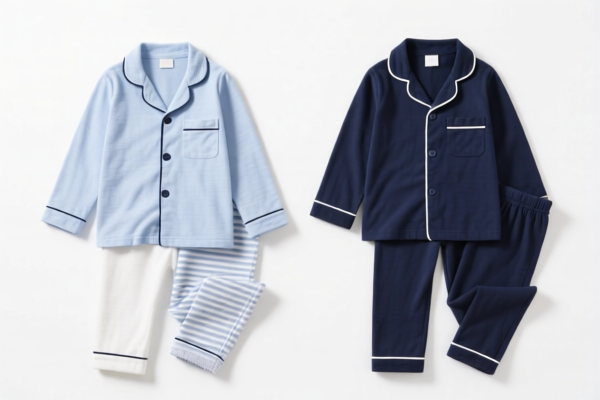
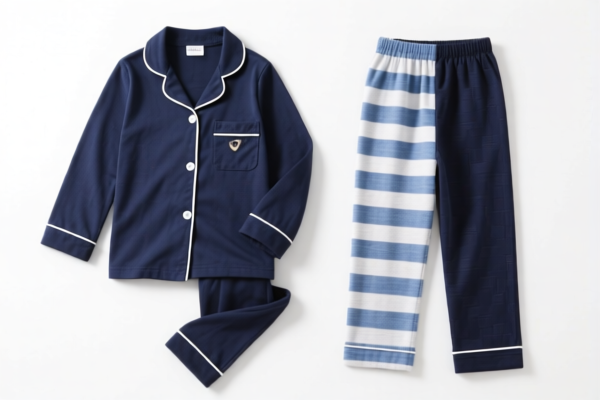
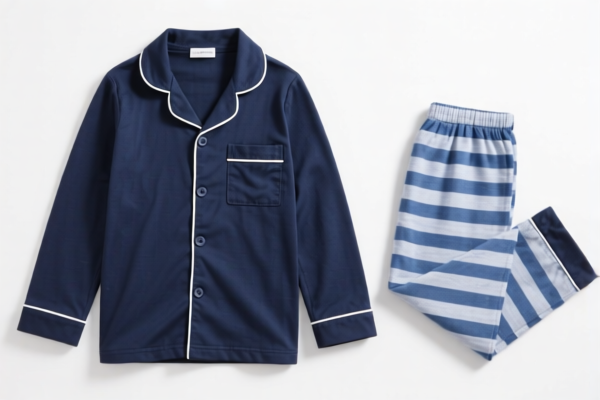
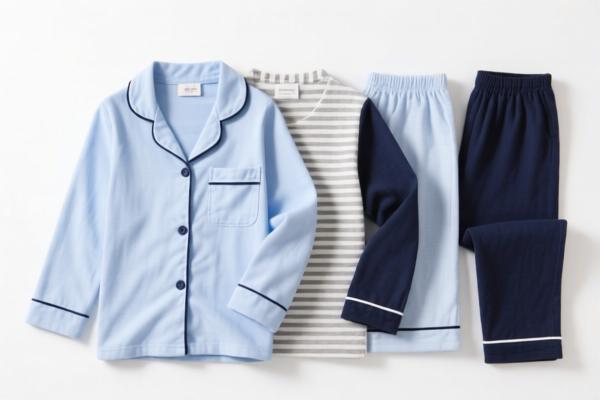
AI Analysis
🧸 Boys' Long Sleeve Pajamas (Other Materials)
🌐 HS Code Reference & Customs Clearance Guide | 2026 Updated Tariff Analysis | Pro-Level Import Strategy
📌 One, Product Definition & Classification: What Exactly Are "Boys' Long Sleeve Pajamas"?
Boys’ long sleeve pajamas are intimate sleepwear garments designed for children, typically made from non-cotton or mixed textile materials. In international trade, these are classified based on fabric type, construction method (knit or woven), and intended use.
⚠️ Critical Distinction:
- If the garment is knitted or crocheted → Likely falls under 6108.xx.xx.xx
- If the garment is woven → Likely falls under 6208.29.90.30
- If made from artificial fibers → May trigger higher tariffs due to specific trade measures
📦 Two, HS Code Classification Breakdown (2026 Official Tariff Matrix)
| HS Code | Product Description | Applicable Fabric Type | Knit/Woven? | Key Use Case |
|---|---|---|---|---|
6208.29.90.30 |
Other materials, boys' long sleeve pajamas | All textile materials (non-cotton, blends) | Woven | Non-knitted children's sleepwear |
6108.39.80.00 |
Other materials, boys' long sleeve pajamas | Knit/crochet, other textiles | Knit/Crochet | Stretchy, flexible children’s sleepwear |
6108.29.90.00 |
Other materials, boys' long sleeve pajamas | Knit/crochet, other textiles | Knit/Crochet | Innerwear-style sleepwear (e.g., sleeveless tops + pants) |
6107.29.90.00 |
Other materials, boys' long sleeve pajamas | Knit/woven, other textiles | Knit/Woven | General-purpose kids' sleepwear (non-socks, non-hats) |
6107.22.00.25 |
Other materials, boys' long sleeve pajamas | Artificial fibers (e.g., polyester, nylon) | Woven | Synthetic-fiber-based children's sleepwear |
🔍 Key Insight:
- The construction method (knit vs. woven) is the primary factor in classification; - Even if the material is "other textiles", the fabric structure determines the correct HS code; - Artificial fiber garments are subject to higher tariffs due to U.S. trade policy.
💰 Three, 2026 Updated Tariff Breakdown (With Full Tax Clause Details)
✅ Applicable Country: United States (US)
✅ Origin: China (CN)
✅ Effective Date: November 10, 2025 (including all subsequent imports)
🎯 1. 6208.29.90.30 — Woven Boys' Long Sleeve Pajamas (Other Materials)
| Item | Detail |
|---|---|
| Base Duty Rate | 7.1% (ad valorem) |
| Additional Tariff (Section 301) | +7.5% |
| Section 122 Tariff (IEEPA) | +10% |
| Total Effective Tariff | 24.6% |
| Tax Calculation | CIF Value × 24.6% |
| De Minimis Threshold | ❌ Not eligible (denied) |
| Legal Basis Path | IEEPA:9903.01.25 → Section 301:9903.88.01 → 6208.29.90.30 |
📌 Explanation:
- This code applies to woven children’s sleepwear made from non-cotton or mixed fabrics; - The +7.5% Section 301 tariff is due to China’s alleged unfair trade practices; - The +10% IEEPA tariff stems from the International Emergency Economic Powers Act — targeting Chinese-origin goods; - Total: 24.6% — moderate but still significant.
🎯 2. 6108.39.80.00 — Knit/Crochet Boys' Long Sleeve Pajamas (Other Materials)
| Item | Detail |
|---|---|
| Base Duty Rate | 3.8% |
| Additional Tariff (Section 301) | 0.0% |
| Section 122 Tariff (IEEPA) | +10% |
| Total Effective Tariff | 13.8% |
| Tax Calculation | CIF Value × 13.8% |
| De Minimis Threshold | ❌ Not eligible |
| Legal Basis Path | IEEPA:9903.01.25 → 6108.39.80.00 |
📌 Explanation:
- Applies to knitted or crocheted sleepwear; - No Section 301 tariff — likely because this category is not currently under the 301 list; - Still subject to 10% IEEPA — a blanket tariff on all Chinese-origin goods under this provision; - Lower overall rate (13.8%) — more favorable than woven counterparts.
🎯 3. 6108.29.90.00 — Knit/Crochet Boys' Long Sleeve Pajamas (Other Materials, Innerwear Type)
| Item | Detail |
|---|---|
| Base Duty Rate | 13.3% |
| Additional Tariff (Section 301) | +7.5% |
| Section 122 Tariff (IEEPA) | +10% |
| Total Effective Tariff | 30.8% |
| Tax Calculation | CIF Value × 30.8% |
| De Minimis Threshold | ❌ Not eligible |
| Legal Basis Path | IEEPA:9903.01.25 → Section 301:9903.88.01 → 6108.29.90.00 |
📌 Explanation:
- This code applies to knit/crochet sleepwear that is classified as innerwear (e.g., matching sets with sleeveless tops); - Highest tariff rate (30.8%) — due to combination of all three taxes; - Double-duty on Section 301 (7.5%) — likely because this subcategory is explicitly targeted; - High-risk for audits and penalties — must ensure accurate classification.
🎯 4. 6107.29.90.00 — Knit/Woven Boys' Long Sleeve Pajamas (Other Materials)
| Item | Detail |
|---|---|
| Base Duty Rate | 5.6% |
| Additional Tariff (Section 301) | 0.0% |
| Section 122 Tariff (IEEPA) | +10% |
| Total Effective Tariff | 15.6% |
| Tax Calculation | CIF Value × 15.6% |
| De Minimis Threshold | ❌ Not eligible |
| Legal Basis Path | IEEPA:9903.01.25 → 6107.29.90.00 |
📌 Explanation:
- Applies to general-purpose boys' sleepwear (knit or woven), not specifically innerwear; - No Section 301 — favorable; - Still 10% IEEPA — standard for Chinese-origin goods; - 15.6% total — moderate, but still costly.
🎯 5. 6107.22.00.25 — Woven Boys' Long Sleeve Pajamas (Artificial Fibers)
| Item | Detail |
|---|---|
| Base Duty Rate | 16.0% |
| Additional Tariff (Section 301) | 0.0% |
| Section 122 Tariff (IEEPA) | +10% |
| Total Effective Tariff | 26.0% |
| Tax Calculation | CIF Value × 26.0% |
| De Minimis Threshold | ❌ Not eligible |
| Legal Basis Path | IEEPA:9903.01.25 → 6107.22.00.25 |
📌 Explanation:
- Applies only to garments made from artificial fibers (e.g., polyester, rayon, nylon); - High base duty (16%) — artificial fibers are often subject to higher scrutiny; - No Section 301, but 10% IEEPA still applies; - 26.0% total — one of the highest rates in this group; - Critical to verify fiber content before shipment.
🛠️ Four, Customs Clearance Best Practices (Pro Tips to Avoid Penalties)
✅ 1. Required Documentation (Must-Have List)
| Document | Required? | Notes |
|---|---|---|
| ✅ Commercial Invoice | ✔️ | Must clearly state "Boys' Long Sleeve Pajamas, Woven/Knit, Other Materials" |
| ✅ Packing List | ✔️ | Include quantity, weight, packaging type |
| ✅ Product Photos (with labels) | ✔️ | Show fabric type, stitching, brand, size |
| ✅ Technical Specs / Material Composition | ✔️ | Include % of cotton, polyester, etc. |
| ✅ Certificate of Origin (CO) | ✔️ | Required for tariff claims; use Form A or CO for China |
| ✅ Third-Party Test Report | ✔️ | FCC, CPSIA, REACH, or ASTM F963 (if applicable) |
| ✅ HS Code Pre-Ruling (Optional but Recommended) | ✔️ | Apply for Advance Ruling to lock in classification |
✅ 2.申报技巧 (Key Declaration Rules)
🔥 "Knit vs. Woven — That’s the Key! Fabric Type = HS Code!"
| Scenario | Correct HS Code | Wrong Practice |
|---|---|---|
| Woven pajamas, 100% polyester | 6208.29.90.30 or 6107.22.00.25 |
Misclassified as knit → higher tax |
| Knit pajamas, cotton-poly blend | 6108.39.80.00 or 6107.29.90.00 |
Misclassified as innerwear → 30.8% tax |
| Artificial fiber, woven | 6107.22.00.25 |
Misclassified as general woven → 24.6% instead of 26% |
| Matching set (top + pants) | 6108.29.90.00 |
Misclassified as separate items → higher tax |
✅ 3. Special Cases & Risk Mitigation
| Situation | Recommended Action |
|---|---|
| Mixed fabric (cotton + polyester) | Declare dominant fiber (by weight); if >50% polyester → treat as artificial fiber |
| Custom-designed pajamas | Provide design drawings + sample photos to avoid misclassification |
| Bulk shipment with multiple styles | Submit product matrix with HS code per style |
| Used or second-hand pajamas | Not eligible for these codes — may be classified under 6302.92.90.00 (used clothing) → higher risk |
| Gift shipments (under $800) | ❌ No de minimis benefit — all tariffs apply even for small parcels |
🌍 Five, Global Market Comparison (2026 Tariff Snapshot)
| Country/Region | Recommended HS Code | Tariff Rate | Certification Required | Notes |
|---|---|---|---|---|
| 🇺🇸 USA | 6208.29.90.30, 6108.39.80.00, etc. |
13.8% – 30.8% | CPSIA, ASTM F963 | No de minimis — high risk |
| 🇨🇳 China | 6208.29.90.30 |
5% | CCC | No extra tariffs |
| 🇪🇺 EU | 6208.29.90.30 |
0% (if CE compliant) | CE, REACH | No additional tariffs |
| 🇦🇺 Australia | 6208.29.90.30 |
5% | RCM | No extra taxes |
| 🇯🇵 Japan | 6208.29.90.30 |
0% | PSE | No extra tariffs |
📌 Takeaway:
- The U.S. is the only market with significant additional tariffs; - China-origin goods face the highest burden; - EU, Japan, Australia are much more favorable — consider shifting logistics.
📌 Six, Common Mistakes & How to Avoid Them (Real-World Pitfalls)
❌ Mistake 1: Misclassifying woven as knit (or vice versa)
👉 Result: Wrong HS code → higher tax, delayed clearance, penalties
❌ Mistake 2: Failing to declare artificial fiber content
👉 Result: Misclassified as cotton → underpaid duties, back taxes + fines
❌ Mistake 3: Shipping multiple styles in one container without a product matrix
👉 Result: Customs may apply highest tariff to all items → massive overpayment
❌ Mistake 4: Using generic name like "kids' pajamas" on invoice
👉 Result: Customs cannot verify classification → request for clarification, delay
✅ Correct Declaration Example:
"Boys' Long Sleeve Pajamas, Woven, 100% Polyester, Size 4T, Brand XYZ, Complies with CPSIA, ASTM F963"
🎯 Seven, Conclusion: Precision in Classification = Profit Protection
🎯 Remember the Golden Rule:
🔹 "Knit or Woven? That’s the Code!"
🔹 "Artificial Fiber? Expect 26%!"
🔹 "Section 301 + IEEPA = 30.8% Risk!"
🔹 "No de minimis in the U.S. — Always Calculate!"
📌 Pro Tip:
If your goods are originating from Vietnam, Mexico, Thailand, or India, you may qualify for IEEPA exemption — tariff drops to 0%–5%.
✅ Apply for a Certificate of Origin (CO) and pre-ruling to lock in lower rates.
📣 Act Now!
📞 Contact a licensed customs broker + Submit product samples + Request HS Code Pre-Ruling
🚀 Ensure smooth clearance, avoid penalties, and protect your margins!
✨ Expert Customs, Built on Precision.
💼 Your product. Your tariff. Your profit.
Customer Reviews
About HS Code Classification
The Harmonized System (HS) is an internationally standardized nomenclature developed by the World Customs Organization (WCO) to classify traded products. Over 200 countries use the HS system as the basis for customs tariffs, trade statistics, and import/export regulations.
Each HS code follows a hierarchical structure:
- Chapter (2 digits) — Broad category of goods (e.g., Chapter 84: Machinery and Mechanical Appliances)
- Heading (4 digits) — More specific grouping within the chapter
- Subheading (6 digits) — Internationally standardized breakdown, used by all WCO member countries
- National subdivisions (8-10 digits) — Country-specific extensions for further classification, such as US HTSUS 10-digit codes
Correct HS code classification is essential for smooth customs clearance, accurate duty payment, and compliance with trade regulations. Misclassification can lead to customs delays, overpayment of duties, or penalties.
When importing from CN to US, the applicable tariff rates may include:
- Most-Favored-Nation (MFN) rate — The standard duty rate applied to WTO members
- General rate — Applied to countries without trade agreements
- Trade remedy duties — Additional tariffs such as Section 301 (anti-dumping), Section 232 (national security), or countervailing duties
The information provided on this page is for reference purposes only. For official classification, please consult with your local customs authority or a licensed customs broker.