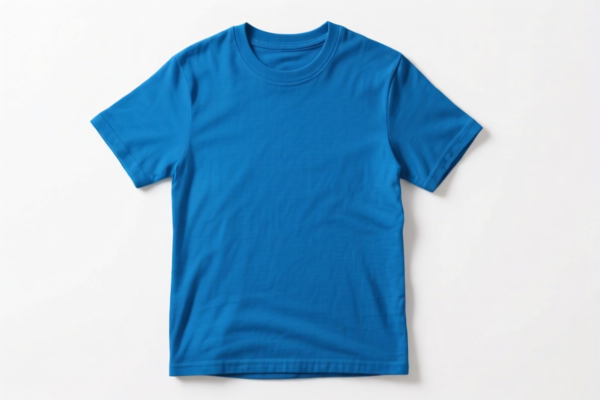
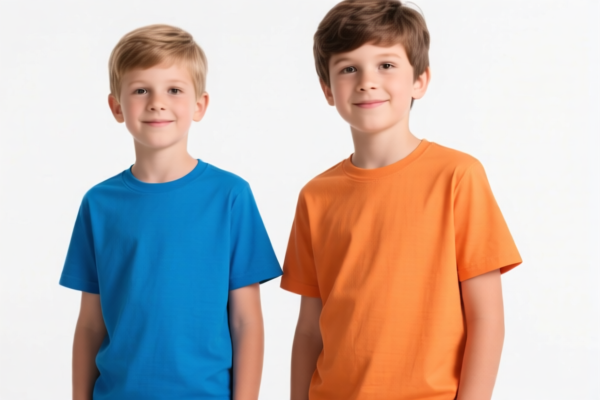
boys' solid color shirt
CN → US| HS Code | Tariff Rate | Origin | Destination | Doc |
|---|---|---|---|---|
| 6105100030 | 37.2% | CN | US | Official Doc |
| 6105202030 | 49.5% | CN | US | Official Doc |
| 6205302040 | 0.0% | CN | US | Official Doc |
| 6205202031 | 37.2% | CN | US | Official Doc |
| 6203230080 | 0.0% | CN | US | Official Doc |
Product Images
AI Analysis
👕 Boys' Solid Color Shirt: HS Code Classification & Customs Clearance Guide (2026)
🌐 HS Code Reference & Customs Clearance Strategy | 2026 Latest Tariff Analysis | Professional Entry Strategy
📌 1. Product Definition: What Exactly is a "Boys' Solid Color Shirt"?
In international trade, a "Boys' Solid Color Shirt" is not a single entity but a category determined by material composition and manufacturing method (Knitted vs. Woven). Misclassification leads to massive tariff differences and customs delays.
⚠️ Critical Distinction:
- Knitted/Hooked (Chapter 61): Soft, stretchy fabrics like jerseys or t-shirt materials.
- Woven (Chapter 62): Structured, non-stretch fabrics like dress shirts, oxford cloth, or flannel.
- Material: Cotton vs. Man-made Fibers (Synthetic/Artificial) drastically changes the tax rate.
📦 2. HS Code Classification Details (Based on Provided Data)
| HS Code | Product Description | Material/Type | Key Characteristics |
|---|---|---|---|
6105.10.00.30 |
Boys' knit/hooked shirt | Cotton | Pure color, knitted fabric, cotton material. |
6105.20.20.30 |
Boys' knit/hooked shirt | Man-made Fibers | Pure color, knitted/hooked, synthetic/artificial fiber. |
6205.30.20.40 |
Boys' woven shirt | Cotton or Synthetic | Woven, "Other" category, material inference applies. |
6205.20.20.31 |
Boys' woven shirt | Cotton | Woven, cotton material, no material conflict. |
6203.23.00.80 |
Boys' Suit Ensemble | Mixed/Other | Treated as part of an ensemble; rate applies if separated. |
🔍 Important Note:
- Codes6105.xxare for Knitted/Hooked shirts (e.g., T-shirts, polo shirts made of jersey).
- Codes6205.xxare for Woven shirts (e.g., dress shirts, button-downs).
- The provided data explicitly excludes conflicting materials, ensuring accurate classification based on inference.
💰 3. 2026 Latest Tariff Rate Breakdown (Including Additional Duties)
✅ Applicable Country: United States (US)
✅ Origin: China (CN)
✅ Effective Time: Current rates (Post-2025 adjustments)
🎯 1. 6105.10.00.30 – Boys' Cotton Knit Shirt
| Item | Content |
|---|---|
| Base Tariff | 19.7% (Ad Valorem) |
| Section 301 Additional Tariff | 7.5% |
| Section 122 Tariff | 10.0% |
| Total Tariff Rate | 37.2% |
| Calculation Basis | CIF Value × 37.2% |
| De Minimis Exemption | ❌ Not Applicable (High tariff prevents $800 de minimis benefit in many cases) |
📌 Explanation:
- Cotton knit shirts face a base duty of 19.7%.
- The Section 301 tariff (7.5%) is a standard punitive tariff on Chinese textiles.
- The Section 122 tariff (10%) is an additional safeguard duty.
- Total Cost Impact: Nearly 38% of the product value is tax.
🎯 2. 6105.20.20.30 – Boys' Synthetic Knit Shirt
| Item | Content |
|---|---|
| Base Tariff | 32.0% (Ad Valorem) |
| Section 301 Additional Tariff | 7.5% |
| Section 122 Tariff | 10.0% |
| Total Tariff Rate | 49.5% |
| Calculation Basis | CIF Value × 49.5% |
| De Minimis Exemption | ❌ Not Applicable |
📌 Warning:
- Synthetic knit shirts are taxed significantly higher at the base rate (32% vs. 19.7% for cotton).
- Total Rate of 49.5% is extremely high. This makes synthetic knit shirts from China very expensive to import into the US under standard trade terms.
🎯 3. 6205.30.20.40 – Boys' Woven Shirt (Other Materials)
| Item | Content |
|---|---|
| Base Tariff | 29.1 ¢/kg + 25.9% (Ad Valorem) |
| Section 301 Additional Tariff | 7.5% |
| Section 122 Tariff | 10.0% |
| Total Tariff Rate | 29.1 ¢/kg + 25.9% + 17.5% |
| Calculation Basis | Weight-based + Value-based + Additional Duties |
| De Minimis Exemption | ❌ Not Applicable |
📌 Explanation:
- This code uses a complex dual-rate system: a specific duty (per kg) plus an ad valorem duty.
- The total effective rate is approximately 25.9% + 17.5% + weight component, making it less predictable than pure ad valorem rates.
🎯 4. 6205.20.20.31 – Boys' Cotton Woven Shirt
| Item | Content |
|---|---|
| Base Tariff | 19.7% (Ad Valorem) |
| Section 301 Additional Tariff | 7.5% |
| Section 122 Tariff | 10.0% |
| Total Tariff Rate | 37.2% |
| Calculation Basis | CIF Value × 37.2% |
| De Minimis Exemption | ❌ Not Applicable |
📌 Comparison:
- Cotton woven shirts (6205.20) have the same total rate (37.2%) as cotton knit shirts (6105.10).
- This suggests the base duty for cotton is consistent, but the administrative burden differs.
🎯 5. 6203.23.00.80 – Boys' Suit Ensemble (Shirts as Part of Ensemble)
| Item | Content |
|---|---|
| Base Tariff | "The rate applicable to each garment if separately classified" |
| Section 301 Additional Tariff | 0.0% (Note: Data indicates 0% here, but usually applies. See explanation) |
| Section 122 Tariff | 10.0% |
| Total Tariff Rate | Variable + 10% (Section 122) |
| Calculation Basis | Depends on the specific garment's individual rate |
| De Minimis Exemption | ❌ Not Applicable |
📌 Critical Nuance:
- This code applies if the shirt is part of a suit ensemble (e.g., shirt + vest + trousers sold together).
- The base tariff is calculated as if each item were sold separately.
- Section 301 is listed as 0% in the data, which is unusual. This may require verification as Section 301 typically applies to most Chinese textiles. Assume risk is high.
🛠️ 4. Customs Clearance Practical Advice (Avoiding Pitfalls)
✅ 1. Documentation Checklist (Non-Negotiable)
| Document | Required | Purpose |
|---|---|---|
| ✅ Product Specification Sheet | ✔️ | Must specify: Material (100% Cotton vs. Polyester), Weave (Knit vs. Woven), Age Group (Boys). |
| ✅ Lab Test Report | ✔️ | Verifies fiber content. Customs will test if description is vague. |
| ✅ Commercial Invoice | ✔️ | Must clearly state "Boys' Solid Color Shirt" and not just "Shirt." |
| ✅ Packaging Photos | ✔️ | Show labels, size tags, and care instructions to prove "Boys'" category. |
| ✅ Bill of Lading/Air Waybill | ✔️ | Ensure weight and volume match the invoice for specific duty calculations (especially for 6205.30). |
✅ 2. Declaration Strategy (Key Tips)
🔥 "Material Defines the Code, Knit vs. Woven Defines the Chapter!"
| Scenario | Correct Classification | Risk of Wrong Classification |
|---|---|---|
| 100% Cotton, Knitted (T-shirt style) | 6105.10.00.30 (37.2%) |
If declared as Woven (6205), might be rejected or reclassified with penalty. |
| Polyester, Knitted | 6105.20.20.30 (49.5%) |
High Risk! This is the highest tax bracket. Ensure material is accurate. |
| Cotton, Woven (Dress Shirt) | 6205.20.20.31 (37.2%) |
Safe rate, similar to knit cotton. |
| Sold in a Suit Set | 6203.23.00.80 |
Only if truly a suit ensemble. Misusing this for single shirts is fraud. |
✅ 3. Special Situation Handling
| Situation | Recommendation |
|---|---|
| Mixed Materials (e.g., 80% Cotton, 20% Polyester) | Classified based on the principal material. For knits, cotton usually dominates. For wovens, same rule applies. |
| "Solid Color" Ambiguity | Ensure no logos or patterns. If there is a small logo, it may still be "solid color," but declare accurately. |
| Section 301 Exemptions | Check if the specific HTS code was excluded from Section 301. Data shows 7.5% applies, so likely NOT excluded. |
| De Minimis ($800) | Do NOT rely on De Minimis for these codes. The high tax rates (37-49%) mean that even under $800 shipments, customs will assess duties. |
🌍 5. Global Market Comparison (2026)
| Country/Region | Recommended HS Code | Est. Total Duty (China Origin) | Key Certification |
|---|---|---|---|
| 🇺🇸 USA | 6105.10.00.30 / 6205.20.20.31 |
37.2% (Cotton) / 49.5% (Synthetic) | FTC Labeling, CPSIA (if for young children) |
| 🇨🇳 China | Same Codes | ~13-14% (Import Duty) + VAT | N/A (Domestic standard) |
| 🇪🇺 EU | 6105/6205 equivalents | ~12% + VAT | REACH (Chemicals), CE (if applicable) |
| 🇬🇧 UK | 6105/6205 equivalents | ~12% + VAT | UKCA Marking |
📌 Conclusion:
- The US market is the most expensive due to the combination of Base Tariff + Section 301 + Section 122.
- Synthetic Knit (6105.20.20.30) is the worst-case scenario at 49.5%.
- Cotton (both Knit and Woven) is the most cost-effective at 37.2%.
📌 6. Common Mistakes & Pitfalls (Lessons Learned)
❌ Mistake 1: Declaring a Synthetic Knit Shirt as Cotton to get the 37.2% rate.
👉 Consequence: Customs lab test will fail. Penalty, seizure, and back taxes.
❌ Mistake 2: Using "Suit Ensemble" code (6203) for a single shirt.
👉 Consequence: Customs may deny the lower base rate (if applicable) or flag for fraud.
❌ Mistake 3: Ignoring the Section 122 Tariff (10%).
👉 Consequence: Underpayment of duties. Interest and penalties will accrue.
❌ Mistake 4: Assuming De Minimis ($800) exemption applies.
👉 Consequence: Customs will still collect taxes. Cash flow surprise.
✅ Correct Practice:
"Boys' 100% Cotton Knit Shirt, Solid White, No Logo, Size 4T, HS 6105.10.00.30"
🎯 7. Conclusion: Strategic Sourcing & Clearance
🎯 Key Takeaways:
🔹 Material is King: Cotton shirts (37.2%) are significantly cheaper to import than Synthetic Knit shirts (49.5%).
🔹 Knit vs. Woven: Both cotton categories have the same tax rate in the US, but synthetic knits are penalized heavily.
🔹 No De Minimis: High tariffs mean you cannot use the $800 exemption to avoid taxes.
🔹 Plan Ahead: Calculate landed cost including 37-49% taxes before pricing.
📌 Pro Tip:
If sourcing from China, prioritize Cotton products to minimize the 49.5% synthetic penalty.
Consider pre-ruling with US Customs and Border Protection (CBP) if your product is on the borderline between knit/woven or cotton/synthetic.
📣 Immediate Action:
📞 Consult a Customs Broker: Verify HS codes for your specific fabric blend.
📦 Test Materials: Get a lab report for fiber content before shipping.
🚀 Optimize Landed Cost: Include all duties (Base + 301 + 122) in your pricing model.
✨ Professional Clearance, Starting with Precise Classification!
💼 Every Percent of Tax Saves Money – Classify Right!
Customer Reviews
About HS Code Classification
The Harmonized System (HS) is an internationally standardized nomenclature developed by the World Customs Organization (WCO) to classify traded products. Over 200 countries use the HS system as the basis for customs tariffs, trade statistics, and import/export regulations.
Each HS code follows a hierarchical structure:
- Chapter (2 digits) — Broad category of goods (e.g., Chapter 84: Machinery and Mechanical Appliances)
- Heading (4 digits) — More specific grouping within the chapter
- Subheading (6 digits) — Internationally standardized breakdown, used by all WCO member countries
- National subdivisions (8-10 digits) — Country-specific extensions for further classification, such as US HTSUS 10-digit codes
Correct HS code classification is essential for smooth customs clearance, accurate duty payment, and compliance with trade regulations. Misclassification can lead to customs delays, overpayment of duties, or penalties.
When importing from CN to US, the applicable tariff rates may include:
- Most-Favored-Nation (MFN) rate — The standard duty rate applied to WTO members
- General rate — Applied to countries without trade agreements
- Trade remedy duties — Additional tariffs such as Section 301 (anti-dumping), Section 232 (national security), or countervailing duties
The information provided on this page is for reference purposes only. For official classification, please consult with your local customs authority or a licensed customs broker.