boys' underpants
CN → US| HS Code | Tariff Rate | Origin | Destination | Doc |
|---|---|---|---|---|
| 6109100007 | 34.0% | CN | US | Official Doc |
| 6107120020 | 32.4% | CN | US | Official Doc |
| 6207199030 | 20.5% | CN | US | Official Doc |
| 6207110000 | 23.6% | CN | US | Official Doc |
| 6107110020 | 24.9% | CN | US | Official Doc |
Product Images
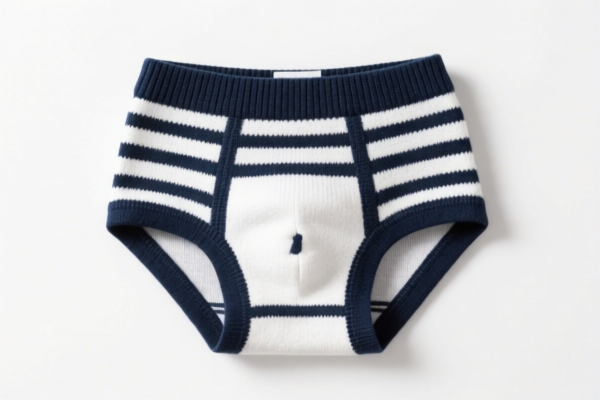
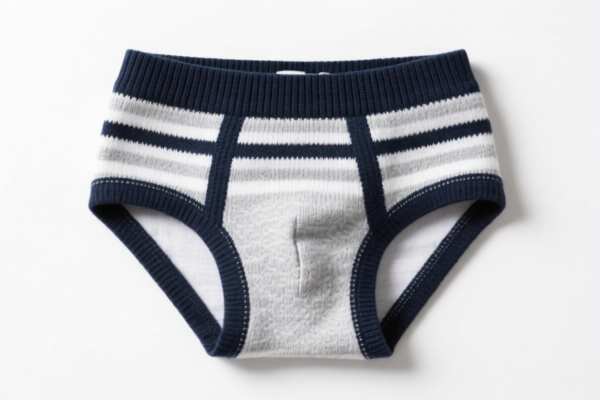
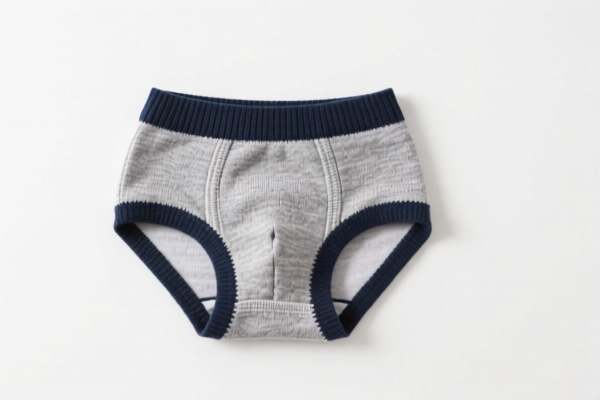
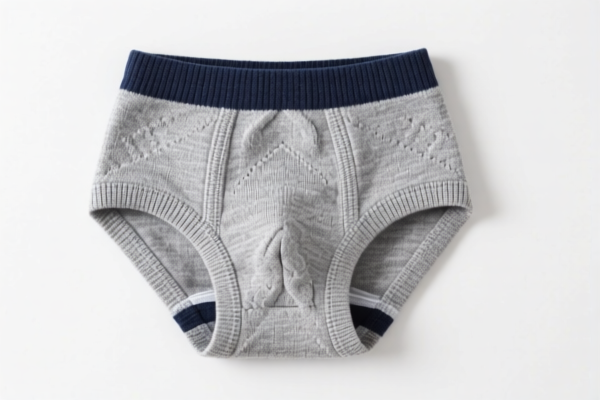
AI Analysis
👙 Boys' Underpants (Kids' Briefs & Boxer Briefs)
🌐 HS Code Reference & Customs Clearance Guide | 2026 Latest Tariff Analysis | Professional Clearance Strategy
📌 I. Product Definition & Classification: Do You Really Understand "Boys' Underpants"?
Boys' underpants are essential daily wear items for children, primarily designed for hygiene and comfort. In international trade, they are strictly categorized based on construction method (Knitted vs. Non-Knitted/Woven) and material composition (Cotton vs. Synthetic/Fiber). Misclassification here leads to significant tax discrepancies due to varying duty rates on US imports from China.
⚠️ Key Distinction Point:
- Knitted (Knit): Made by interlocking loops of yarn (e.g., jersey, ribbed). Usually softer, stretchier. → Typically falls under Chapter 61.
- Non-Knitted (Woven): Made by weaving threads (e.g., cotton broadcloth). Usually more structured. → Typically falls under Chapter 62.
📦 II. HS Code Classification Details (2026 Latest Tariff Authority Comparison)
Based on the provided data, here is the breakdown for Boys' Simple Underpants:
| HS Code | Product Description | Material/Type | Total Tax Rate |
|---|---|---|---|
6109.10.00.07 |
Boys' Simple Underpants, Knitted | Cotton or Synthetic Fiber (Inferred) | 34.0% |
6107.12.00.20 |
Boys' Simple Underpants, Knitted | Artificial Fiber or Cotton | 32.4% |
6207.19.90.30 |
Boys' Simple Underpants, Non-Knitted | Cotton or Non-Artificial Fiber (Inferred) | 20.5% |
6207.11.00.00 |
Boys' Simple Underpants, Non-Knitted | Cotton | 23.6% |
6107.11.00.20 |
Boys' Simple Underpants, Knitted | Cotton | 24.9% |
🔍 Critical Insight:
- Chapter 61 (Knitted) items generally face higher base duties in some sub-categories but vary significantly based on specific fiber content notes.
- Chapter 62 (Non-Knitted/Woven) items (6207...) generally show lower total tax rates (20.5% - 23.6%) compared to certain Knitted categories (32.4% - 34.0%).
- Material Matters: "Cotton" and "Artificial Fiber" trigger different sub-codes within both chapters.
💰 III. 2026 Latest Tariff Rate Breakdown (Including Additional Duties)
✅ Applicable Country: United States (US)
✅ Origin: China (CN)
✅ Effective Date: Current rates apply (including Section 122 & Trade War tariffs)
The total tax is composed of three distinct layers: 1. Base Tariff: Standard MFN or General rate. 2. Additional Tariff (Section 301): The "Trade War" tariff (typically 7.5% or 25% depending on the list; here shown as 7.5% or 0%). 3. Section 122 Tariff: A specific additional duty (10%) applied to certain textile/apparel imports.
🎯 1. 6109.10.00.07 – Knitted Underpants (Cotton/Synthetic)
| Item | Content |
|---|---|
| Base Tariff | 16.5% |
| Additional Tariff | 7.5% |
| Section 122 Tariff | 10% |
| Total Tax Rate | 34.0% |
| Calculation | CIF Value × 34.0% |
| De Minimis Exemption | ❌ Not Eligible (Section 122 and Trade War tariffs usually negate de minimis benefits for textiles from China). |
| Legal Path | HTSUS:6109.10.00.07 + Section 122 Footnote |
📌 Explanation:
- This is the highest tax bracket among the provided options.
- High base tariff (16.5%) + 7.5% trade duty + 10% special textile duty.
- Risk: High cost. Ensure this code is strictly for "Knitted" items with mixed or synthetic-heavy composition if this is the only match.
🎯 2. 6107.12.00.20 – Knitted Underpants (Artificial Fiber/Cotton)
| Item | Content |
|---|---|
| Base Tariff | 14.9% |
| Additional Tariff | 7.5% |
| Section 122 Tariff | 10% |
| Total Tax Rate | 32.4% |
| Calculation | CIF Value × 32.4% |
| De Minimis Exemption | ❌ Not Eligible |
📌 Explanation:
- Slightly better than the 34.0% bracket.
- Specific to Artificial Fiber (e.g., Polyester, Nylon, Rayon) or specific cotton blends under sub-heading 6107.12.
🎯 3. 6207.19.90.30 – Non-Knitted Underpants (General)
| Item | Content |
|---|---|
| Base Tariff | 10.5% |
| Additional Tariff | 0.0% |
| Section 122 Tariff | 10% |
| Total Tax Rate | 20.5% |
| Calculation | CIF Value × 20.5% |
| De Minimis Exemption | ❌ Not Eligible |
📌 Explanation:
- Most Cost-Effective Option for Non-Knitted items.
- Note the 0% Additional Tariff in the tax detail provided (likely due to specific HTSUS exclusion or current trade list status for this sub-code).
- Requires proof that the garment is Woven/Non-Knitted (e.g., boxers made from woven cotton poplin).
🎯 4. 6207.11.00.00 – Non-Knitted Underpants (Cotton)
| Item | Content |
|---|---|
| Base Tariff | 6.1% |
| Additional Tariff | 7.5% |
| Section 122 Tariff | 10% |
| Total Tax Rate | 23.6% |
| Calculation | CIF Value × 23.6% |
| De Minimis Exemption | ❌ Not Eligible |
📌 Explanation:
- Lower base tariff (6.1%) compared to6207.19...(10.5%), but incurs the 7.5% Additional Tariff.
- Must be 100% Cotton (or cotton predominant) and Non-Knitted.
🎯 5. 6107.11.00.20 – Knitted Underpants (Cotton)
| Item | Content |
|---|---|
| Base Tariff | 7.4% |
| Additional Tariff | 7.5% |
| Section 122 Tariff | 10% |
| Total Tax Rate | 24.9% |
| Calculation | CIF Value × 24.9% |
| De Minimis Exemption | ❌ Not Eligible |
📌 Explanation:
- A strong middle-ground option.
- If your product is Knitted and Cotton, this is the preferred code over6109.10...or6107.12...because of the lower base rate (7.4%).
- Key: Must be primarily Cotton.
🛠️ IV. Customs Clearance Practical Advice (Real-World Pitfall Guide)
✅ 1. Preparation Checklist (Non-Negotiable)
| Document | Required? | Purpose |
|---|---|---|
| ✅ Fabric Composition Label | ✔️ | Critical for distinguishing "Cotton" (6107.11/6207.11) vs. "Artificial/Synthetic" (6107.12/6109.10). |
| ✅ Construction Photo | ✔️ | Must clearly show Knitted (loop structure) vs. Woven (cross-hatch structure). |
| ✅ Commercial Invoice | ✔️ | Must specify: "Boys' Underpants, Knitted/Woven, [Material]% [Fiber]." |
| ✅ Product Specs | ✔️ | Age range (Boys'), Style (Briefs/Boxers), Material content. |
✅ 2. Declaration Strategy (Key Mantra)
🔥 “Knit vs. Weave First, Cotton Next, Total Tax Final!”
| Scenario | Correct HS Code | Wrong Code | Consequence |
|---|---|---|---|
| Knitted, Cotton | 6107.11.00.20 (24.9%) |
6109.10.00.07 (34.0%) |
Overpay ~10% |
| Knitted, Synthetic | 6107.12.00.20 (32.4%) or 6109.10.00.07 (34.0%) |
6207... |
Misclassification Risk |
| Woven, Cotton | 6207.11.00.00 (23.6%) |
6107... |
Incorrect Chapter |
| Woven, Mixed/Other | 6207.19.90.30 (20.5%) |
6107... |
Best Rate for Woven |
✅ 3. Special Handling Tips
| Situation | Recommendation |
|---|---|
| Mixed Materials | If the tag says "95% Cotton, 5% Elastane," it is still classified as Cotton for HTS purposes (principal material). Use 6107.11 or 6207.11. |
| "Simple" Design | The term "Simple" in the HS summary usually refers to basic briefs without complex decorations. If your product has large graphics, zippers, or non-essential trim, customs may scrutinize the classification. |
| Section 122 Impact | All these codes incur a 10% Section 122 tariff. This is a special textile duty. Ensure your broker is aware that this is not a "standard" 301 tariff; it is specific to textiles. |
| De Minimis (Section 321) | ❌ Do Not Attempt De Minimis. Textiles from China subject to Section 122 and Trade War tariffs are explicitly excluded from the $800 de minimis exemption. You must file formal entry. |
🌍 V. Global Market Clearance Comparison (2026)
| Country/Region | Recommended HS Code | Tariff (China Origin) | Certification | Notes |
|---|---|---|---|---|
| 🇺🇸 USA | Varies (see above) | 20.5% - 34.0% | CPSIA, Prop 65 | High complexity due to Section 122 + Trade War. |
| 🇨🇳 China | 6107.11 / 6207.11 | ~8.5% - 10% | CCC (if applicable) | Lower duties, but export restrictions may apply. |
| 🇪🇺 EU | 6107.11 / 6207.11 | ~0% - 12% | OEKO-TEX, REACH | No Section 122. Focus on chemical compliance. |
| 🇬🇧 UK | 6107.11 / 6207.11 | ~0% - 12% | UKCA | Post-Brexit rules apply. |
📌 Conclusion:
The USA is the most complex market for Boys' Underpants due to the layered tariff structure (Base + Trade War + Section 122).
- Optimal Strategy: If manufacturing allows, consider Non-Knitted (Woven) cotton underpants (6207.19.90.30) to target the 20.5% rate, provided the design allows for woven fabric (less stretch than knit).
- If Knitted is Required: Choose Cotton (6107.11.00.20at 24.9%) over Synthetic/Mixed (6109.10.00.07at 34.0%) to save 9.1%.
📌 VI. Common Errors & Pitfall Guide (Lessons Learned)
❌ Error 1: Declaring Knitted underwear as "Textile Parts" to avoid higher duties.
👉 Result: Customs rejects, classifies as proper underwear, adds penalties.
❌ Error 2: Ignoring "Section 122" and only calculating "Base + 301".
👉 Result: Underpayment by 10%, leading to audits and back-taxes.
❌ Error 3: Misidentifying Fabric Structure.
👉 Result: Knitted declared as Woven (6207... 20.5%) but actually Knitted (6107... 24.9%+). If audited, you pay the higher rate + interest.
❌ Error 4: Using De Minimis for Shipment under $800.
👉 Result: Shipment seized or returned. Textiles are not eligible for de minimis entry from China under current 122/301 rules.
✅ Correct Practice:
"Boys' Cotton Briefs, Knitted, 100% Cotton, Plain Dye. HS Code: 6107.11.00.20."
🎯 VII. Conclusion: Precise Classification Saves Money!
🎯 Remember the Mantra:
🔹 "Knit vs. Weave is King, Cotton vs. Synth is Queen."
🔹 "Section 122 is 10%, Add it to the 301."
🔹 "Woven Cotton is Cheapest (23.6%), Knitted Synthetic is Most Expensive (34.0%)."
📌 Pro Tip:
If you are shipping large volumes, consider Advance Rulings with US Customs and Border Protection (CBP) to lock in the correct HS Code. This protects you from retrospective audits and rate changes.
📣 Immediate Action:
📞 Verify Fabric Label: Is it Knit or Woven? Is it Cotton or Synthetic?
🚀 Select the Lowest Valid HS Code from the table above.
💼 Prepare Formal Entry Documents (No De Minimis!).
✨ Professional Clearance Starts with Accurate Classification!
💼 Your Bottom Line Depends on the Decimal Point in the HS Code!
Customer Reviews
About HS Code Classification
The Harmonized System (HS) is an internationally standardized nomenclature developed by the World Customs Organization (WCO) to classify traded products. Over 200 countries use the HS system as the basis for customs tariffs, trade statistics, and import/export regulations.
Each HS code follows a hierarchical structure:
- Chapter (2 digits) — Broad category of goods (e.g., Chapter 84: Machinery and Mechanical Appliances)
- Heading (4 digits) — More specific grouping within the chapter
- Subheading (6 digits) — Internationally standardized breakdown, used by all WCO member countries
- National subdivisions (8-10 digits) — Country-specific extensions for further classification, such as US HTSUS 10-digit codes
Correct HS code classification is essential for smooth customs clearance, accurate duty payment, and compliance with trade regulations. Misclassification can lead to customs delays, overpayment of duties, or penalties.
When importing from CN to US, the applicable tariff rates may include:
- Most-Favored-Nation (MFN) rate — The standard duty rate applied to WTO members
- General rate — Applied to countries without trade agreements
- Trade remedy duties — Additional tariffs such as Section 301 (anti-dumping), Section 232 (national security), or countervailing duties
The information provided on this page is for reference purposes only. For official classification, please consult with your local customs authority or a licensed customs broker.