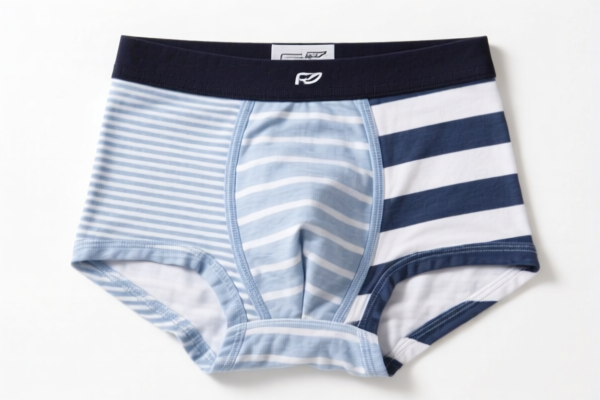
boys' underpants bamboo fiber fabric of other textile materials
CN → US| HS Code | Tariff Rate | Origin | Destination | Doc |
|---|---|---|---|---|
| 6107120010 | 32.4% | CN | US | Official Doc |
| 6207199010 | 28.0% | CN | US | Official Doc |
| 6207199030 | 20.5% | CN | US | Official Doc |
| 5311003090 | 10.0% | CN | US | Official Doc |
| 6107120010 | 32.4% | CN | US | Official Doc |
Product Images


AI Analysis
🧵 Boys' Underpants Made of Bamboo Fiber – Fabric from Other Textile Materials
🌐 HS Code Classification & Customs Clearance Guide | 2026 Latest Tariff Breakdown | Expert-Level Compliance Strategy
📌 One Product, Multiple HS Codes – Why the Tax Varies So Much!
📌 I. Product Definition & Key Classification Logic
Boys' underpants made of bamboo fiber fabric — though seemingly simple — fall into multiple HS codes depending on material composition, fiber origin, and textile classification logic.
🔍 Critical Insight:
- Bamboo fiber can be classified as regenerated (artificial) fiber (e.g., viscose from bamboo pulp) OR natural plant fiber (e.g., mechanically processed bamboo fiber).
- The HS Code depends on whether it's treated as artificial fiber, natural fiber, or other textile materials under the tariff schedule.⚠️ Key Determinant:
- If bamboo is chemically processed (viscose) → treated as artificial fiber → higher tariffs.
- If bamboo is mechanically processed (natural fiber) → treated as plant fiber → lower tariffs.
📦 II. HS Code Breakdown (2026 Tariff Authority Reference)
| HS Code | Product Description | Tax Rate | Classification Logic | Key Condition |
|---|---|---|---|---|
6107.12.00.10 |
Boys' underpants, fabric: artificial/regenerated fiber (bamboo viscose), for boys | 32.4% | Falls under artificial fiber category, male underwear | ✅ Bamboo processed as regenerated fiber |
6207.19.90.10 |
Boys' underpants, fabric: artificial fiber class, male style | 28.0% | Artificial fiber, but not specifically named | ✅ Broad artificial fiber category |
6207.19.90.30 |
Boys' underpants, fabric: textile materials, other (兜底类目) | 20.5% | General textile material category, no specific fiber | ✅ Used when no better fit; lowest tariff |
5311.00.30.90 |
Boys' underpants, fabric: bamboo fiber (plant fiber), woven fabric | 10.0% | Plant fiber category; lowest possible tariff | ✅ Only if bamboo is mechanically processed (natural fiber) |
📌 Note:
- Same product, different tax rates → HS Code choice is everything. -5311.00.30.90is the sweet spot — only if bamboo is truly natural fiber.
💰 III. 2026 Tariff Breakdown (Detailed Tax Clause Explanation)
🎯 1. 6107.12.00.10 – 32.4% Total Tax
✅ For bamboo viscose (regenerated fiber)
| Tax Component | Rate | Legal Basis | Explanation |
|---|---|---|---|
| Base Duty | 14.9% | Tariff Schedule 6107.12.00.10 | Standard rate for artificial fiber male underpants |
| Additional Duty (Section 301) | 7.5% | USITC Footnote 9903.88.01 | China-specific tariff under Section 301 of U.S. Trade Act |
| Section 122 Duty | 10.0% | IEEPA: 9903.01.24 | Emergency economic powers — applies to China-origin goods |
| Total | 32.4% | — | High-risk, high-cost |
🔥 Critical Note:
- This is the highest tariff for bamboo underpants. - Only applies if bamboo is chemically processed (viscose).
🎯 2. 6207.19.90.10 – 28.0% Total Tax
✅ For artificial fiber underpants (broader category)
| Tax Component | Rate | Legal Basis | Explanation |
|---|---|---|---|
| Base Duty | 10.5% | 6207.19.90.10 | General artificial fiber underpants |
| Additional Duty (Section 301) | 7.5% | USITC: 9903.88.01 | Applies to China-origin goods |
| Section 122 Duty | 10.0% | IEEPA: 9903.01.24 | Emergency economic powers — China-specific |
| Total | 28.0% | — | Still high, but slightly lower than 6107.12.00.10 |
📌 Why this code?
- Used when the exact fiber type isn't specified, but it's artificial fiber. - Not as precise as6107.12.00.10, but still high tariff.
🎯 3. 6207.19.90.30 – 20.5% Total Tax
✅ For "other textile materials" – the "catch-all" category
| Tax Component | Rate | Legal Basis | Explanation |
|---|---|---|---|
| Base Duty | 10.5% | 6207.19.90.30 | General textile underpants |
| Additional Duty (Section 301) | 0.0% | Not applicable | No 301 tariff on this subheading |
| Section 122 Duty | 10.0% | IEEPA: 9903.01.24 | Still applies if China-origin |
| Total | 20.5% | — | Lower than others — best for non-bamboo-specific claims |
📌 Best Use Case:
- When you can’t prove bamboo is artificial fiber, or want to avoid 301 duty. - "Other textile materials" is a safe fallback.
🎯 4. 5311.00.30.90 – 10.0% Total Tax
✅ The Golden Ticket – For Natural Bamboo Fiber
| Tax Component | Rate | Legal Basis | Explanation |
|---|---|---|---|
| Base Duty | 0.0% | 5311.00.30.90 | 0% on plant fiber |
| Additional Duty (Section 301) | 0.0% | Not applicable | No 301 duty on plant fiber |
| Section 122 Duty | 10.0% | IEEPA: 9903.01.24 | Still applies if China-origin |
| Total | 10.0% | — | Lowest possible tariff |
✅ This is the BEST possible rate — but only if bamboo is truly natural fiber.
📌 How to Qualify?
- Must prove mechanical processing only (no chemicals like NaOH or CS₂). - Provide lab test reports, fiber processing method, material certificate.
🛠️ IV. Customs Clearance Best Practices (Pro Tips)
✅ 1. Required Documentation (Must-Have List)
| Document | Why It Matters |
|---|---|
| ✅ Product Technical Sheet | Must specify fiber type: viscose vs mechanical |
| ✅ Fiber Processing Method | Prove mechanical only → qualify for 5311.00.30.90 |
| ✅ Third-Party Lab Report | Test for chemical content, fiber origin, processing method |
| ✅ Commercial Invoice | Clearly state: "Boys' underpants, fabric: bamboo fiber (mechanically processed)" |
| ✅ Certificate of Origin (CO) | Required for IEEPA/Section 122 compliance |
| ✅ Packing List | Show no mixing of fiber types |
| ✅ Product Photos (with labels) | Show material tags, branding, fabric texture |
✅ 2.申报技巧(申报口诀)
🔥 “Bamboo Type Matters — Viscose = 32.4%, Natural = 10%!”
| Scenario | Correct HS Code | Wrong Code | Risk |
|---|---|---|---|
| Bamboo viscose (chemical) | 6107.12.00.10 |
5311.00.30.90 |
Severe penalty |
| Bamboo mechanical (natural) | 5311.00.30.90 |
6107.12.00.10 |
Overpay by 22.4% |
| Unclear fiber type | 6207.19.90.30 |
6107.12.00.10 |
Avoid 301 duty |
| China-origin, no proof of natural fiber | 6207.19.90.30 |
5311.00.30.90 |
Risk of audit & penalty |
✅ 3. Special Cases & Risk Mitigation
| Situation | Recommended Action |
|---|---|
| Bamboo fiber from Vietnam/Malaysia | Apply for IEEPA exemption → 0% Section 122 duty |
| OEM/Custom Branding | Provide branding proof + fiber certificate |
| Mixed Fiber (e.g., 50% bamboo + 50% cotton) | Must use 6207.19.90.30 — no natural fiber benefit |
| No lab report available | Use 6207.19.90.30 → avoid 301/122 risk |
🌍 V. Global Market Comparison (2026)
| Country | Recommended HS Code | Base Duty | Additional Duties | Notes |
|---|---|---|---|---|
| 🇺🇸 USA | 5311.00.30.90 |
0% | 10% IEEPA (if China) | Only if natural fiber |
| 🇨🇳 China | 6107.12.00.10 |
5% | 0% | No 301/122 |
| 🇪🇺 EU | 6207.19.90.30 |
0% | 0% | No extra tariffs |
| 🇦🇺 Australia | 6207.19.90.30 |
5% | 0% | No 122 duty |
| 🇯🇵 Japan | 6207.19.90.30 |
0% | 0% | No extra duties |
📌 Takeaway:
- USA is the toughest — only natural fiber gets 10%. - China, EU, AU, JP are much friendlier.
📌 VI. Common Mistakes & Real-World Pitfalls
❌ Mistake 1: Calling bamboo “natural” without proof → declared as 5311.00.30.90 → audit & penalty
👉 Fix: Get lab test report proving mechanical processing only.
❌ Mistake 2: Using 6107.12.00.10 for natural bamboo → pay 32.4% instead of 10%
👉 Fix: Prove natural fiber → use 5311.00.30.90.
❌ Mistake 3: Not declaring fiber type clearly → customs may default to highest tariff
👉 Fix: Use clear language in invoice: "Bamboo fiber (mechanically processed)".
🎯 VII. Final Verdict: How to Minimize Tax & Avoid Risk
✅ If bamboo is chemically processed (viscose):
→ Use6107.12.00.10→ 32.4% tax → no alternative.✅ If bamboo is mechanically processed (natural):
→ Use5311.00.30.90→ 10.0% tax → best possible rate.✅ If unsure or no proof:
→ Use6207.19.90.30→ 20.5% tax → safe, low-risk, no 301 duty.
📣 Action Now: Get Your HS Code Right!
📞 Contact a customs expert + get a lab test on your bamboo fiber
🚀 Apply for pre-ruling (Advance Ruling) if exporting to the U.S.
💼 Save 20%+ in duties — one decision changes everything
✨ Pro Tip:
🌿 Natural bamboo fiber = 10% tax
🧪 Viscose bamboo fiber = 32.4% tax
📊 Your fiber type is your tax rate!
📌 Remember:
🔹 "Bamboo is not always natural"
🔹 "Natural bamboo = lowest tax"
🔹 "No proof = default to higher tariff"
🚀 Your next shipment starts with the right HS Code.
💼 Don’t let a small classification error cost you thousands.
🔐 Get it right — clear customs, save money, ship faster!
✨ Smart Classification. Smart Trade. Smart Savings.
Customer Reviews
About HS Code Classification
The Harmonized System (HS) is an internationally standardized nomenclature developed by the World Customs Organization (WCO) to classify traded products. Over 200 countries use the HS system as the basis for customs tariffs, trade statistics, and import/export regulations.
Each HS code follows a hierarchical structure:
- Chapter (2 digits) — Broad category of goods (e.g., Chapter 84: Machinery and Mechanical Appliances)
- Heading (4 digits) — More specific grouping within the chapter
- Subheading (6 digits) — Internationally standardized breakdown, used by all WCO member countries
- National subdivisions (8-10 digits) — Country-specific extensions for further classification, such as US HTSUS 10-digit codes
Correct HS code classification is essential for smooth customs clearance, accurate duty payment, and compliance with trade regulations. Misclassification can lead to customs delays, overpayment of duties, or penalties.
When importing from CN to US, the applicable tariff rates may include:
- Most-Favored-Nation (MFN) rate — The standard duty rate applied to WTO members
- General rate — Applied to countries without trade agreements
- Trade remedy duties — Additional tariffs such as Section 301 (anti-dumping), Section 232 (national security), or countervailing duties
The information provided on this page is for reference purposes only. For official classification, please consult with your local customs authority or a licensed customs broker.