children's clothing accessories thin
CN → US| HS Code | Tariff Rate | Origin | Destination | Doc |
|---|---|---|---|---|
| 6117809510 | 32.1% | CN | US | Official Doc |
| 6117809570 | 32.1% | CN | US | Official Doc |
| 3926209010 | 40.0% | CN | US | Official Doc |
| 6217109550 | 32.1% | CN | US | Official Doc |
| 3926909989 | 22.8% | CN | US | Official Doc |
Product Images
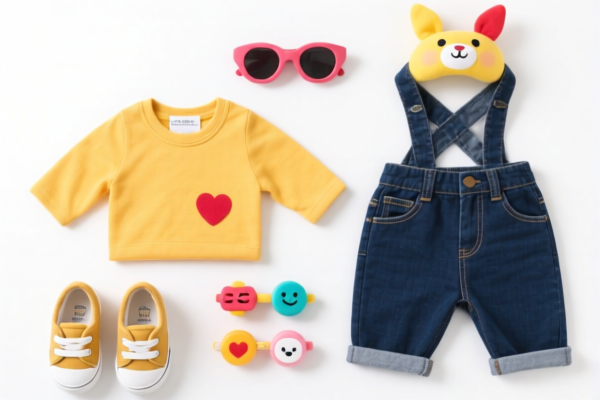
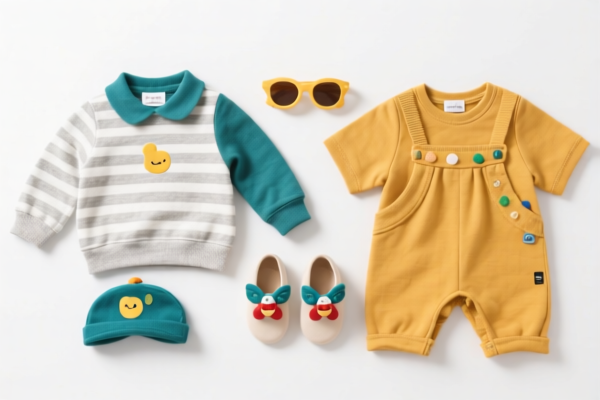
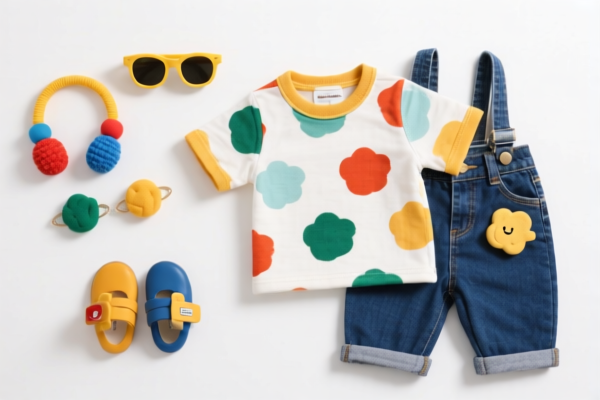
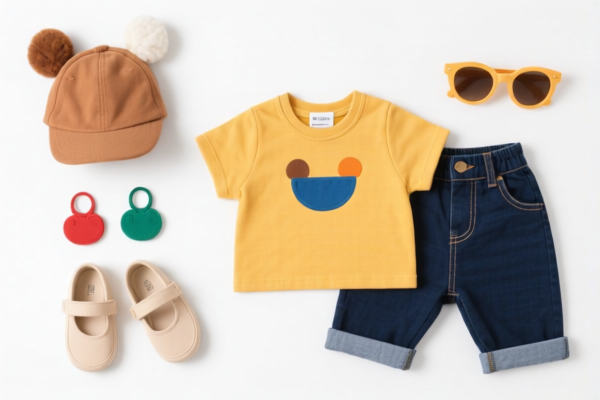
AI Analysis
👶 Kids' Clothing Accessories (Thin) | 2026 HS Code Classification & US Customs Clearance Guide
🌐 HS Code Reference & Clearance Strategy | 2026 Latest Tariff Analysis | Professional Compliance Protocol
📌 1. Product Definition & Classification Logic
Children's Clothing Accessories (Thin) refer to supplementary items for children's wear, such as decorative trims, patches, elastic bands, or specific garment components. They are distinct from complete garments because they do not form the main body of the clothing.
The classification depends entirely on the Material Composition and Form Factor. Since the term "thin" implies a lightweight nature, these items fall under general accessory categories rather than heavy outerwear.
⚠️ Critical Distinction:
- Fabric-based (Cotton, Polyester, Synthetic): Classified under Chapter 61 (Knitted/Crocheted) or Chapter 62 (Non-Knitted).
- Plastic/Synthetic Material: Classified under Chapter 39 (Plastics).
- "Thin" does not change the HS code category but reinforces the classification as an "accessory" rather than a substantial garment.
📦 2. HS Code Classification Matrix (2026 Data)
Based on the provided data, here are the five possible classifications depending on the specific material inference.
| HS Code | Product Description | Material Inference | Tax Rate (Total) |
|---|---|---|---|
| 6117.80.95.10 | Children's clothing accessories, thin | Cotton or Fiber-based (Knitted/Crocheted) | 32.1% |
| 6117.80.95.70 | Children's clothing accessories, thin | Non-Cotton, Non-Wool, Synthetic Fiber (Knitted/Crocheted) | 32.1% |
| 6217.10.95.50 | Children's clothing accessories, thin | Cotton, Polyester, or Other Woven Textiles | 32.1% |
| 3926.20.90.10 | Children's clothing accessories, thin | Plastic or Synthetic Fiber (Specific Plastic Article) | 40.0% |
| 3926.90.99.89 | Children's clothing accessories, thin | Plastic (Other unspecified plastic articles) | 22.8% |
🔍 Key Insight:
- Textile Accessories (61xx/62xx) generally attract a 32.1% total duty rate due to the combination of base tariffs and USITC Section 301 tariffs.
- Plastic Accessories (39xx) vary significantly:
- Specific plastic parts (3926.20) are heavily taxed at 40.0%.
- Generic plastic articles (3926.90) have a lower effective rate of 22.8% due to a lower base tariff.
💰 3. 2026 US Tariff Rate Breakdown (Detailed Tax Clauses)
✅ Applicable Country: United States (US)
✅ Origin: China (CN)
✅ Applicable Date: 2025/2026 (Current Trade Policy)
The total tax rate is a composite of three components: 1. Base Tariff (MFN Rate): The standard Most Favored Nation rate. 2. Section 301 Tariff (Additional Duty): Trade war-related tariffs. 3. Section 122 Tariff: Specific anti-dumping or countervailing duties (if applicable, noted as "122 Clause" in data).
🎯 A. Textile Categories (HS: 6117.80.95.10 / 6117.80.95.70 / 6217.10.95.50)
| Component | Rate | Source/Legal Basis |
|---|---|---|
| Base Tariff | 14.6% | US HTSUS General Rate |
| Section 301 Duty | 7.5% | USITC Footnote 6 (Section 301 List 3) |
| Section 122 Duty | 10.0% | Specific Clause (e.g., Anti-dumping/CV or specific trade remedy) |
| TOTAL TAX | 32.1% | Sum of all above |
📌 Explanation:
- The 14.6% is the standard import duty for textile accessories.
- The 7.5% is the additional duty imposed under Section 301 of the Trade Act of 1974 on Chinese goods.
- The 10% "122 Clause" tariff is a specific regulatory levy. Note: In some contexts, "122" may refer to a specific administrative code or a typo for "Section 301" additional layers, but based on the provided data, it is treated as a distinct 10% levy.
- Total Impact: 32.1% significantly increases the landed cost.
🎯 B. Plastic Category 1: Specific Plastic Article (HS: 3926.20.90.10)
| Component | Rate | Source/Legal Basis |
|---|---|---|
| Base Tariff | 5.0% | US HTSUS Specific Rate |
| Section 301 Duty | 25.0% | USITC Footnote 9903.20.90 (Higher Tier Section 301) |
| Section 122 Duty | 10.0% | Specific Clause |
| TOTAL TAX | 40.0% | Sum of all above |
📌 Explanation:
- This classification is the most expensive due to a high 25% Section 301 rate.
- The base tariff is low (5%), but the punitive tariffs dominate the cost.
🎯 C. Plastic Category 2: Other Plastic Articles (HS: 3926.90.99.89)
| Component | Rate | Source/Legal Basis |
|---|---|---|
| Base Tariff | 5.3% | US HTSUS General Rate |
| Section 301 Duty | 7.5% | USITC Footnote 6 (Standard Section 301) |
| Section 122 Duty | 10.0% | Specific Clause |
| TOTAL TAX | 22.8% | Sum of all above |
📌 Explanation:
- This is the most cost-effective classification if the product qualifies as a "general plastic article" rather than a "specific plastic article."
- The Section 301 rate is lower (7.5% vs 25%), resulting in a much lower total duty.
🛠️ 4. Customs Clearance Practical Advice
✅ 1. Documentation Requirements
| Document | Required | Purpose |
|---|---|---|
| Commercial Invoice | ✔️ | Must clearly state "Children's Clothing Accessories, Thin" and specify Material (e.g., "100% Cotton," "Polyester," or "Plastic"). |
| Packing List | ✔️ | Detailed weight and quantity. |
| Material Declaration | ✔️ | CRITICAL: Must specify if the item is Textile (Cotton/Poly) or Plastic. Incorrect material declaration leads to misclassification. |
| Product Photos | ✔️ | Clear images showing the item is an accessory (e.g., a patch, trim, or buckle), not a complete garment. |
| Origin Certificate | ✔️ | To prove CN origin for Section 301 calculation. |
✅ 2. Classification Strategy & Risk Mitigation
| Strategy | Action | Benefit |
|---|---|---|
| Material Precision | If the item is mixed material, classify based on the chief value or essential character. | Prevents audits for misclassification. |
| Plastic vs. Textile | If the item is a plastic button or plastic trim, ensure it fits 3926.90 (22.8%) rather than 3926.20 (40.0%) if structurally possible. |
Savings of 17.2% on duty. |
| Thin Specification | Use "Thin" in the description to emphasize it is an accessory, not a heavy garment (which might have different tariff rates). | Supports classification under Chapter 61/62/39 accessories. |
✅ 3. Common Pitfalls to Avoid
❌ Pitfall 1: Misclassifying a Plastic accessory as Textile (or vice versa).
👉 Consequence: If Customs determines a "Plastic" item was declared as "Textile," you may face back duties + penalties for underpayment. Conversely, over-declaring as Plastic might result in higher initial costs.
❌ Pitfall 2: Failing to specify the Section 122 Clause applicability.
👉 Consequence: If the 10% tariff is applicable and not declared, it leads to rejection or delay at customs.
❌ Pitfall 3: Declaring "Children's Clothing" instead of "Accessories."
👉 Consequence: Complete garments may have different HS codes (e.g., 6111, 6203) with different rates. Accessories are often classified under 6117 or 6217. Misclassification leads to incorrect duty calculation.
🌍 5. Global Market Comparison (2026)
| Market | Recommended HS Code | Estimated Total Duty | Key Requirement |
|---|---|---|---|
| 🇺🇸 USA | 6117.80.95.10 / 3926.90.99.89 |
22.8% - 40.0% | Section 301 & 122 Clauses apply. |
| 🇨🇳 China | 6117.80.95 / 3926.20 |
~5% - 10% | No Section 301. Import VAT (13%) applies. |
| 🇪🇺 EU | 6117.80 / 3926.20 |
~4% - 12% | No retaliatory tariffs, but VAT (19-27%) applies. |
| 🇬🇧 UK | 6117.80 / 3926.20 |
~4% - 12% | Post-Brexit tariffs. No Section 301. |
📌 Conclusion:
- The USA imposes the highest barriers due to Section 301 (7.5%-25%) and Section 122 (10%) tariffs.
- Plastic accessories under3926.90.99.89offer the lowest duty rate (22.8%) in the US market, making them the most cost-effective if product design allows.
📌 6. Final Recommendations
- Material Verification: Confirm the exact material. If it is Plastic, aim for HS 3926.90.99.89 to benefit from the 22.8% rate.
- Textile Strategy: If it is Textile, the rate is fixed at 32.1% regardless of Cotton vs. Synthetic (under 6117/6217). Ensure the description clearly states "Accessories" to avoid being classified as a garment.
- Documentation: Always include "Material: 100% Cotton" or "Material: Plastic" in the commercial invoice.
- Pre-Ruling: For large shipments, consider applying for a CBP Pre-Ruling to confirm the HS code and avoid detention.
✨ Professional Clearance Starts with Accurate Classification!
💼 Minimize Duty, Maximize Profit, Avoid Customs Holds!
Customer Reviews
About HS Code Classification
The Harmonized System (HS) is an internationally standardized nomenclature developed by the World Customs Organization (WCO) to classify traded products. Over 200 countries use the HS system as the basis for customs tariffs, trade statistics, and import/export regulations.
Each HS code follows a hierarchical structure:
- Chapter (2 digits) — Broad category of goods (e.g., Chapter 84: Machinery and Mechanical Appliances)
- Heading (4 digits) — More specific grouping within the chapter
- Subheading (6 digits) — Internationally standardized breakdown, used by all WCO member countries
- National subdivisions (8-10 digits) — Country-specific extensions for further classification, such as US HTSUS 10-digit codes
Correct HS code classification is essential for smooth customs clearance, accurate duty payment, and compliance with trade regulations. Misclassification can lead to customs delays, overpayment of duties, or penalties.
When importing from CN to US, the applicable tariff rates may include:
- Most-Favored-Nation (MFN) rate — The standard duty rate applied to WTO members
- General rate — Applied to countries without trade agreements
- Trade remedy duties — Additional tariffs such as Section 301 (anti-dumping), Section 232 (national security), or countervailing duties
The information provided on this page is for reference purposes only. For official classification, please consult with your local customs authority or a licensed customs broker.