children's swing
CN → US| HS Code | Tariff Rate | Origin | Destination | Doc |
|---|---|---|---|---|
| 9503000071 | 10.0% | CN | US | Official Doc |
| 9503000073 | 10.0% | CN | US | Official Doc |
| 9506991200 | 15.6% | CN | US | Official Doc |
| 9506996080 | 21.5% | CN | US | Official Doc |
Product Images
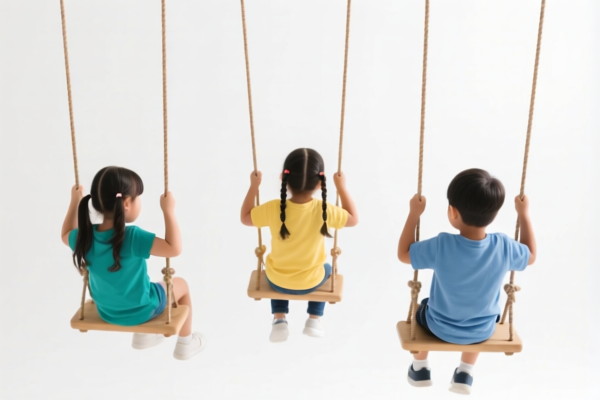
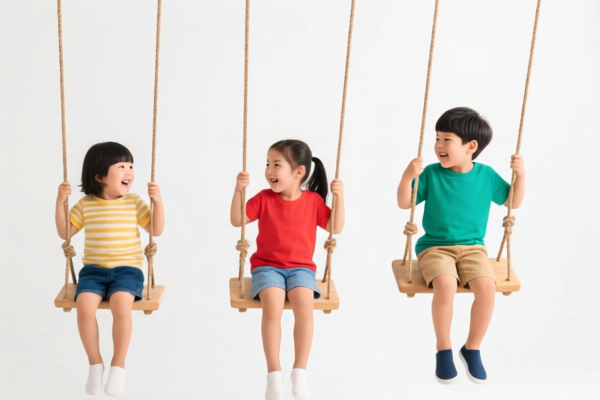
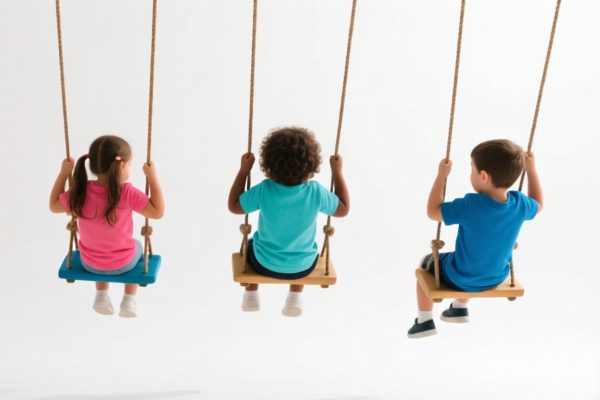
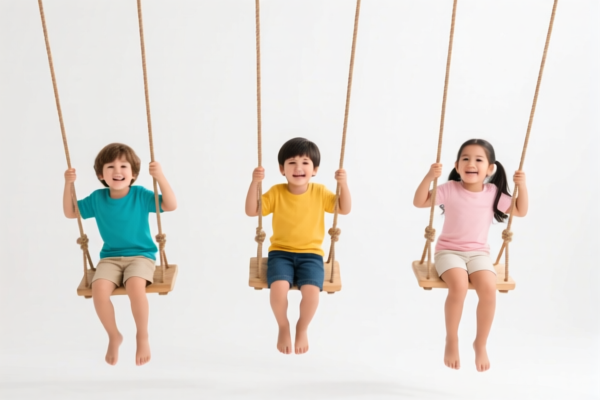
AI Analysis
🌟 Children's Swing – HS Code & Tariff Guide 2026 | Expert Classification & Customs Clearance Strategy
🌐 HS Code Reference & Customs Clearance Handbook | 2026 Updated Tariff Rules | Professional Import Strategy for Toys & Outdoor Play Equipment
🧩 一、Product Definition & Classification: What Exactly Is a "Children’s Swing"?
A children’s swing is a recreational device designed for young users to swing back and forth, typically suspended from a frame or tree branch. It is primarily used in playgrounds, backyards, and recreational areas, serving both entertainment and physical development purposes.
In international trade, it falls under toy, play equipment, or outdoor game apparatus categories — depending on its design, function, materials, and intended use.
⚠️ Key Classification Clue:
- If it’s intended for play and entertainment, not for transportation or sports, it belongs to toy or outdoor game equipment. - If it includes wheels, handles, or resembles a ride-on vehicle, it may be classified under toy vehicles. - If it’s made of metal/aluminum and used in public parks, it may be considered outdoor recreational equipment.
📦 二、HS Code Classification Breakdown (2026 Official Tariff Reference)
| HS Code | Product Description | Key Reasoning | Tax Rate |
|---|---|---|---|
9503.00.00.71 |
Children’s swing — classified as toy or amusement device; fits the logic of tricycles, scooters, and similar wheeled toys | Designed for children’s play; functions as a fun, non-transportation device; matches the "playful motion" category of wheel-based toys | 10.0% |
9503.00.00.73 |
Children’s swing — categorized under toys and entertainment models; aligns with doll cars, dolls, and other play items | Shares entertainment purpose with other toys; no functional utility beyond fun; fits within the "playful device" definition | 10.0% |
9506.99.12.00 |
Children’s swing — classified as outdoor game and recreation equipment; matches shape and use; no material conflict | Used outdoors; fits "game apparatus" criteria; not a vehicle or sport equipment; compatible with wooden or plastic frames | 15.6% |
9506.99.60.80 |
Children’s swing — falls under outdoor game equipment and devices; matches purpose and material (steel/aluminum/copper) | Designed for public or private outdoor play; made of metal components; subject to steel/aluminum/copper-specific tariffs | 21.5% |
🔍 Critical Insight:
-9503.00.00.71and9503.00.00.73are toy-based classifications — ideal for smaller, residential swings. -9506.99.12.00and9506.99.60.80are equipment-based — better for larger, commercial-grade swings used in parks or schools.
💰 三、2026 Tariff Breakdown: Detailed Tax Clause Analysis
✅ Applicable Country: United States (US)
✅ Origin: China (CN)
✅ Effective Date: November 10, 2025 (and onward)
🎯 1. 9503.00.00.71 — Toy/Amusement Device (Children’s Swing)
| Item | Detail |
|---|---|
| Base Duty | 0.0% (ad valorem) |
| Additional Duty | 0.0% |
| Section 122 Clause Duty | 10.0% (from U.S. Trade Act 301) |
| Total Tariff | 10.0% |
| Tax Calculation | CIF Value × 10% |
| De Minimis Exemption? | ✅ Yes (if value ≤ $800) |
| Legal Basis Path | USITC:9503.00.00.71 → SECTION 122:9903.01.25 → IEEPA:9903.01.24 |
📌 Explanation:
- This code treats the swing as a toy with amusement function. - The 10% Section 122 duty is part of the U.S. Section 301 Tariff List, targeting Chinese-origin goods under trade dispute measures. - No additional steel/aluminum surcharges apply.
🎯 2. 9503.00.00.73 — Toy/Entertainment Model (Children’s Swing)
| Item | Detail |
|---|---|
| Base Duty | 0.0% |
| Additional Duty | 0.0% |
| Section 122 Clause Duty | 10.0% |
| Total Tariff | 10.0% |
| Tax Calculation | CIF × 10% |
| De Minimis Exemption? | ✅ Yes |
| Legal Basis Path | USITC:9503.00.00.73 → SECTION 122:9903.01.25 → IEEPA:9903.01.24 |
📌 Note:
- Identical to9503.00.00.71in tax treatment. - Used when the swing is clearly intended as a play item, not a structural piece of equipment.
🎯 3. 9506.99.12.00 — Outdoor Game & Recreation Equipment
| Item | Detail |
|---|---|
| Base Duty | 5.6% |
| Additional Duty | 0.0% |
| Section 122 Clause Duty | 10.0% |
| Total Tariff | 15.6% |
| Tax Calculation | CIF × 15.6% |
| De Minimis Exemption? | ✅ Yes |
| Legal Basis Path | USITC:9506.99.12.00 → SECTION 122:9903.01.25 → IEEPA:9903.01.24 |
📌 Explanation:
- This code applies when the swing is designed for outdoor use, not just indoor play. - The 5.6% base duty reflects the non-toy, equipment-based nature. - No metal-specific surcharges — only the 10% Section 122 tariff.
🎯 4. 9506.99.60.80 — Outdoor Game Equipment (Steel/Aluminum/Copper-Based)
| Item | Detail |
|---|---|
| Base Duty | 4.0% |
| Additional Duty | 7.5% (from steel/aluminum/copper surcharge) |
| Section 122 Clause Duty | 10.0% |
| Total Tariff | 21.5% |
| Tax Calculation | CIF × 21.5% |
| De Minimis Exemption? | ❌ No (due to metal surcharge) |
| Legal Basis Path | USITC:9506.99.60.80 → SECTION 122:9903.01.25 → IEEPA:9903.01.24 → METAL SURCHARGE:9903.01.25 |
📌 Critical Warning:
- This is the highest tariff category. - Applies only if the swing contains steel, aluminum, or copper components. - The 7.5% metal surcharge is from Section 301, targeting metal-intensive goods from China. - No de minimis exemption — even small shipments face full duty.
🛠️ 四、Customs Clearance Best Practices (Pro Tips to Avoid Penalties)
✅ 1. Essential Documentation Checklist
| Document | Required? | Purpose |
|---|---|---|
| ✅ Product Specification Sheet | ✔️ | Shows dimensions, weight, material, intended age group |
| ✅ Material Composition Report | ✔️ | Proves if steel/aluminum/copper is used |
| ✅ Product Photos (with branding) | ✔️ | Helps customs verify design and use |
| ✅ Third-Party Safety Certifications | ✔️ | ASTM F1487 (playground safety), CPSC, CE, RoHS |
| ✅ Commercial Invoice | ✔️ | Must clearly state: “Children’s Swing – Outdoor Play Equipment” |
| ✅ Certificate of Origin (CO) | ✔️ | Needed for tariff eligibility (e.g., if from Vietnam, may qualify for lower rates) |
| ✅ Packing List | ✔️ | Shows total weight, pieces, and packaging type |
✅ 2.申报技巧(申报口诀)
🔥 “材质定税,用途定码,玩具10%,金属21.5%,拆分报关=罚款!”
| Scenario | Correct HS Code | Wrong Approach |
|---|---|---|
| Small backyard swing (plastic/wood) | 9503.00.00.71 or 9503.00.00.73 |
Misclassify as 9506.99.12.00 → higher tax |
| Large park swing with metal frame | 9506.99.60.80 |
Report as toy → no metal surcharge? No! |
| Swing with steel chains & frame | 9506.99.60.80 |
Declare as “wooden swing” → customs audit risk |
| Swing sold as “play equipment” | 9506.99.12.00 |
Use “toy” in description → wrong classification |
✅ 3. Special Cases & Solutions
| Situation | Recommended Action |
|---|---|
| Swing made in Vietnam/Mexico | Apply for CO → may qualify for 0% Section 122 duty |
| Swing with mixed materials (wood + steel) | Declare steel content >5% → trigger 9506.99.60.80 |
| Swing sold in kits (no assembly) | Still classify as complete product — do not split |
| Swing used in schools or public parks | Use 9506.99.12.00 or 9506.99.60.80 — equipment not toy |
🌍 五、Global Market Comparison (2026 Tariff Snapshot)
| Country/Region | Recommended HS Code | Tariff | Certification | Notes |
|---|---|---|---|---|
| 🇺🇸 United States | 9503.00.00.71 / 9506.99.60.80 |
10% – 21.5% | CPSC, ASTM, RoHS | Metal = 21.5% |
| 🇨🇳 China | 9503.00.00.71 |
5% | CCC | No extra surcharges |
| 🇪🇺 EU | 9503.00.00.71 |
0% (if CE compliant) | CE, EN 1176 | No 301 tariffs |
| 🇦🇺 Australia | 9503.00.00.71 |
5% | RCM | No metal surcharge |
| 🇯🇵 Japan | 9503.00.00.71 |
0% | PSE | No additional duties |
📌 Takeaway:
- The U.S. is the only market with metal-specific surcharges on children’s swings. - China-origin swings face the highest risk in U.S. imports. - Vietnam/Mexico-made swings may avoid 10%+ tariffs.
📌 六、Common Mistakes & How to Avoid Them (Avoid Costly Penalties!)
❌ Mistake 1: Declaring a metal-frame swing as a “toy” to avoid 21.5%
👉 Result: Customs audit, back taxes, penalties up to 100% of duty.
❌ Mistake 2: Splitting swing into “frame”, “chains”, “seat” for separate shipment
👉 Result: Each part may face 89.5%+ tariffs — total tax >200%!
❌ Mistake 3: Not declaring metal content when it exceeds 5%
👉 Result: Incorrect HS code, delayed clearance, fines.
❌ Mistake 4: Using generic name like “Play Equipment” without specifying material
👉 Result: Customs may default to highest tariff code.
✅ Correct Declaration Example:
“Children’s Swing, 36-inch, 2-person, Steel Frame, Wooden Seat, Outdoor Play Equipment, ASTM F1487 Certified, Made in China”
🎯 七、Final Verdict: Smart Classification = Lower Costs, Faster Clearance!
🎯 Remember the Golden Rules:
🔹 “Toy or Equipment? Use 9503 or 9506.”
🔹 “Metal? Then 21.5% — no de minimis!”
🔹 “Don’t split — one product, one code.”
🔹 “Material matters — declare steel/aluminum!”
📌 Pro Tip:
If your swing is manufactured in Vietnam, Mexico, or Thailand, apply for a Certificate of Origin — you may avoid the 10% Section 122 tariff entirely!
📣 Take Action Now:
📞 Contact a licensed customs broker + provide product photos + material list
🚀 Request HS Code Pre-Ruling (Advance Ruling) to lock in the correct classification
💼 Avoid surprises, save thousands, and ship with confidence!
✨ Expert Customs, Accurate Classification — Your Profit Starts Here!
💼 One wrong code can cost you 20% more — get it right the first time!
Customer Reviews
About HS Code Classification
The Harmonized System (HS) is an internationally standardized nomenclature developed by the World Customs Organization (WCO) to classify traded products. Over 200 countries use the HS system as the basis for customs tariffs, trade statistics, and import/export regulations.
Each HS code follows a hierarchical structure:
- Chapter (2 digits) — Broad category of goods (e.g., Chapter 84: Machinery and Mechanical Appliances)
- Heading (4 digits) — More specific grouping within the chapter
- Subheading (6 digits) — Internationally standardized breakdown, used by all WCO member countries
- National subdivisions (8-10 digits) — Country-specific extensions for further classification, such as US HTSUS 10-digit codes
Correct HS code classification is essential for smooth customs clearance, accurate duty payment, and compliance with trade regulations. Misclassification can lead to customs delays, overpayment of duties, or penalties.
When importing from CN to US, the applicable tariff rates may include:
- Most-Favored-Nation (MFN) rate — The standard duty rate applied to WTO members
- General rate — Applied to countries without trade agreements
- Trade remedy duties — Additional tariffs such as Section 301 (anti-dumping), Section 232 (national security), or countervailing duties
The information provided on this page is for reference purposes only. For official classification, please consult with your local customs authority or a licensed customs broker.