children's toy for playing house
CN → US| HS Code | Tariff Rate | Origin | Destination | Doc |
|---|---|---|---|---|
| 3924905610 | 20.9% | CN | US | Official Doc |
| 3924905650 | 20.9% | CN | US | Official Doc |
| 9503000071 | 10.0% | CN | US | Official Doc |
| 9503000073 | 10.0% | CN | US | Official Doc |
| 6911108090 | 38.3% | CN | US | Official Doc |
Product Images
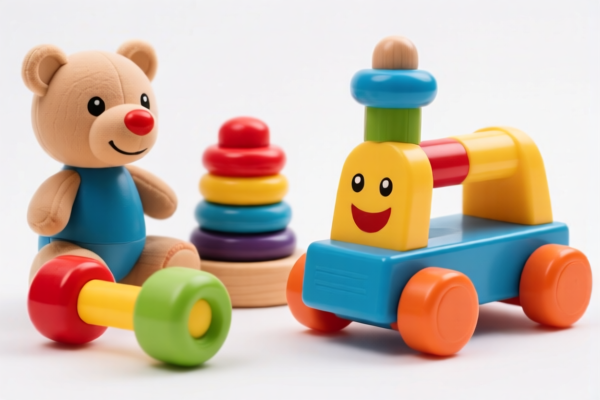
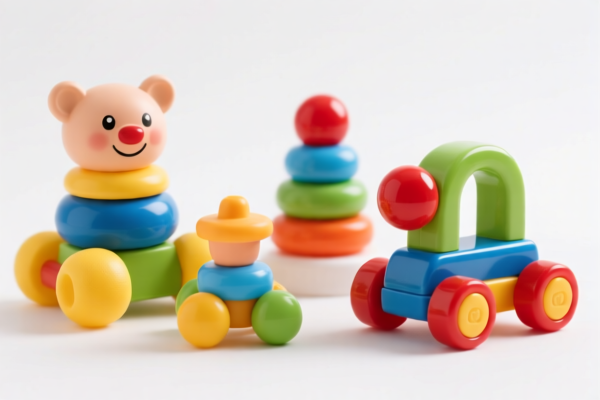

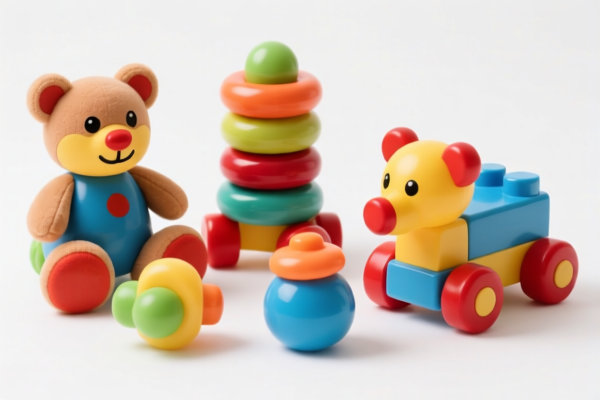
AI Analysis
🧸 Playhouse Toys for Children (Playing House)
🌐 HS Code Reference & Customs Clearance Guide | 2026 Latest Tariff Breakdown | Professional Clearance Strategy
📌 I. Product Definition & Classification: Do You Really Understand "Playhouse Toys"?
Playhouse toys, often referred to as "playing house" sets, are imaginative play items designed for children to mimic domestic activities. In international trade, the classification of these toys depends heavily on their primary material and specific design attributes. They are generally categorized into three main groups:
Plastic Playsets: The most common type, made primarily of molded plastic (ABS, PP, etc.), including kitchen sets, dollhouses, or furniture pieces.
Ceramic/Ceramic-like Kitchenware: Often found in high-end or realistic-looking toy kitchens, made from ceramic or clay-like materials.
Dolls/Action Figures: Specifically included if the "playing house" activity is centered around dolls or specific character figures.
⚠️ Key Classification Point:
- If the item is primarily a kitchen utensil or furniture made of plastic → Grouped under 3924.90.56.xx
- If the item is primarily a doll or toy figure → Grouped under 9503.00.00.xx
- If the item is made of ceramic → Grouped under 6911.10.80.90
📦 II. HS Code Classification Details (2026 Latest Tariff Authority Comparison)
| HS Code | Product Description | Application Scenario | Material Characteristic |
|---|---|---|---|
3924.90.56.10 |
Other household articles and toilet articles, of plastics: Other | Plastic play kitchen sets, plastic toy furniture, plastic "household" accessories | ✅ Plastic |
3924.90.56.50 |
Other household articles and toilet articles, of plastics: Other | Plastic toy kitchens, play food items, plastic domestic accessories | ✅ Plastic |
9503.00.00.71 |
Dolls representing only human beings; other dolls; stuffed toys; dolls' accessories | Dolls included in playhouse sets, or specific human-figure toys | ✅ Doll/Toy |
9503.00.00.73 |
Dolls representing only human beings; other dolls; stuffed toys; dolls' accessories | Non-conflict material dolls, playhouse human figures | ✅ Doll/Toy |
6911.10.80.90 |
Tableware, kitchenware and other household articles, of porcelain or china: Other | Ceramic toy kitchens, ceramic-looking play utensils, realistic clay-style play items | ✅ Ceramic/Clay |
🔍 Important Reminder:
- Plastic items intended for household-like use (even if for toys) often fall under Chapter 39 if they mimic utensils/furniture. However, if the primary intent is clearly "toy," Chapter 95 may apply. Customs often looks at the design and marketing.
- Ceramic items are strictly classified under Chapter 69, regardless of whether they are for real use or toys, due to material specificity.
- Dolls are always under Chapter 95, even if part of a playset.
💰 III. 2026 Latest Tariff Rate Details (Including Surtaxes, Policy Surcharges)
✅ Applicable Country: United States (US)
✅ Country of Origin: China (CN)
✅ Effective Date: From November 10, 2025 (and subsequent imports)
🎯 1. 3924.90.56.10 & 3924.90.56.50 — Plastic Household/Toy Articles
| Item | Content |
|---|---|
| Base Tariff | 3.4% (ad valorem) |
| Section 301 Surcharge | +7.5% |
| Section 122 Tariff | +10% |
| Total Rate | 20.9% |
| Tax Calculation | CIF Value × 20.9% |
| De Minimis Eligibility | ❌ No (deny_de_minimis) |
| Legal Pathway | Base: 3.4% → Section 301: 7.5% → Section 122: 10% |
📌 Explanation:
- These plastic "household" items are subject to three layers of tariffs: base, Section 301, and Section 122.
- Total 20.9% is significant for low-cost plastic toys.
- Not eligible for de minimis (Section 321), meaning all imports must go through formal entry procedures.
🎯 2. 9503.00.00.71 & 9503.00.00.73 — Dolls & Toys
| Item | Content |
|---|---|
| Base Tariff | 0.0% |
| Section 301 Surcharge | 0.0% |
| Section 122 Tariff | +10% |
| Total Rate | 10.0% |
| Tax Calculation | CIF Value × 10.0% |
| De Minimis Eligibility | ❌ No (deny_de_minimis) |
| Legal Pathway | Base: 0.0% → Section 301: 0.0% → Section 122: 10% |
📌 Note:
- Dolls and toy figures enjoy zero base tariff and zero Section 301 surcharge.
- Only the Section 122 10% applies.
- Total 10% is much lower than plastic household items.
- Crucial Strategy: If your "playing house" set is primarily a doll, classify under 9503 to save 10.9% in taxes compared to plastic household classification.
🎯 3. 6911.10.80.90 — Ceramic Kitchen/Household Items
| Item | Content |
|---|---|
| Base Tariff | 20.8% |
| Section 301 Surcharge | +7.5% |
| Section 122 Tariff | +10% |
| Total Rate | 38.3% |
| Tax Calculation | CIF Value × 38.3% |
| De Minimis Eligibility | ❌ No (deny_de_minimis) |
| Legal Pathway | Base: 20.8% → Section 301: 7.5% → Section 122: 10% |
📌 Warning:
- Ceramic items are the most heavily taxed category among playhouse toys.
- Base tariff alone is 20.8%, plus two surcharges.
- Total 38.3% is very high. Avoid this classification unless the product is genuinely ceramic and not easily replaceable by plastic.
🛠️ IV. Customs Clearance Practical Advice (Practical Pitfall Avoidance Guide)
✅ 1. Preparation Checklist (Must-Have)
| Document | Required | Description |
|---|---|---|
| ✅ Product Spec Sheet | ✔️ | Material composition (e.g., "100% Plastic," "Ceramic"), dimensions, weight |
| ✅ Product Photos | ✔️ | Clear images of the entire set, including any dolls, utensils, and packaging |
| ✅ Commercial Invoice | ✔️ | Clearly state "Playhouse Toy Set" or "Doll Accessories" |
| ✅ Packing List | ✔️ | Detail contents: number of dolls, plastic utensils, ceramic items (if any) |
| ✅ Material Certificate | ✔️ | Proves material type (Plastic vs. Ceramic) for correct HS Code |
| ✅ Children's Product Certificate (CPC) | ✔️ | Mandatory for US import (CPSC compliance) |
✅ 2. Declaration Tips (Key Mnemonics)
🔥 "Material First, Purpose Second, Dolls Save Money!"
| Situation | Correct Declaration | Wrong Practice |
|---|---|---|
| Plastic kitchen set | 3924.90.56.10 |
Misdeclare as doll → Risk of penalty |
| Plastic doll house | 9503.00.00.71 (if doll-focused) |
Misdeclare as household → 20.9% instead of 10% |
| Ceramic toy utensils | 6911.10.80.90 |
Declare as plastic → Severe customs penalty |
| Mixed set (Doll + Plastic Kitchen) | Separate by component or declare as Toy (9503) if doll is primary | Declare all as plastic → Higher tax |
📌 Strategy:
- If the set includes both plastic kitchenware and dolls, consult with a customs broker. Often, the primary function determines classification. If the set is marketed as a "Doll Playset," it may qualify under 9503 for the entire set, saving 10.9%.
- Never misdeclare ceramic as plastic. Customs inspections will reveal the material, leading to fines and delays.
✅ 3. Special Cases
| Situation | Handling Advice |
|---|---|
| Mixed Material Sets | If a set has plastic and ceramic parts, consult a broker. Separating them in the declaration may be required to apply correct rates. |
| OEM Custom Toys | Provide design drawings to prove intent as a toy, not household goods. |
| Doll Accessories Only | If the item is just a tiny plastic fork for a doll, it may still fall under 9503 (doll accessories), not 3924. |
| High-Value Ceramic Sets | Consider sourcing from non-China origins if possible, as Section 122 and 301 may not apply to certain countries. |
🌍 V. Global Market Comparison (2026 Latest)
| Country/Region | Recommended HS Code | Tariff Rate | Certification Required | Notes |
|---|---|---|---|---|
| 🇺🇸 USA | 9503.00.00.71 |
10% | CPC + ASTM F963 | Lowest tax for dolls; 20.9% for plastic household |
| 🇨🇳 China | 9503.00.00.71 |
0-7% | CCC (if applicable) | No Section 122/301 |
| 🇪🇺 EU | 9503.00 |
4.5% | CE + EN71 | No Section 122/301 |
| 🇬🇧 UK | 9503.00 |
0-4.5% | UKCA + EN71 | Post-Brexit rules apply |
| 🇨🇦 Canada | 9503.00 |
0% | CSTC (if applicable) | No Section 122/301 |
📌 Conclusion:
- USA is the most complex market due to Section 122 and 301 tariffs.
- Classifying as Dolls (9503) is the most cost-effective strategy for playhouse toys in the US, saving 10.9% compared to plastic household classification.
- Avoid Ceramic unless necessary, due to the 38.3% total tariff.
📌 VI. Common Mistakes & Pitfall Guide (Lessons from Experience)
❌ Mistake 1: Declaring plastic play kitchenware as "Toys" under 9503 without justification
👉 Consequence: Customs may reclassify under 3924, resulting in 20.9% instead of 10%, plus penalties.
❌ Mistake 2: Declaring ceramic items as plastic
👉 Consequence: Severe customs penalty, seizure, and back taxes at 38.3%.
❌ Mistake 3: Ignoring CPC (Children's Product Certificate)
👉 Consequence: Goods held at customs, returned, or destroyed. CPC is mandatory for all children's toys in the US.
❌ Mistake 4: Not separating mixed-material sets
👉 Consequence: Confusion at customs, leading to delays and potential incorrect taxation.
✅ Correct Approach:
"Plastic Play Kitchen Set with Dolls, Age 3+, ASTM F963 Compliant, Model XYZ"
🎯 VII. Conclusion: Precise Classification Saves Money!
🎯 Remember the Mnemonic:
🔹 "Dolls are 10%, Plastic Household is 20.9%, Ceramic is 38.3%!"
🔹 "Classify as Toy if Dolls are Present, Save 10.9% Instantly!"
🔹 "Ceramic is Expensive, Avoid if Possible!"
📌 Pro Tip:
If your product is a mixed set (e.g., doll + plastic kitchen), try to structure the marketing and packaging to emphasize the doll/play character aspect, allowing classification under 9503 for the entire set. Consult a customs broker for a Pre-Ruling (ISF + Advance Ruling) to secure the correct HS Code before shipping.
📣 Take Action Now:
📞 Contact a licensed customs broker + Provide product photos + Apply for HS Code Pre-Ruling
🚀 Ensure smooth customs clearance, reduce costs, and boost profits!
✨ Professional Customs Clearance Starts with Accurate Classification!
💼 Every cent saved counts!
Customer Reviews
About HS Code Classification
The Harmonized System (HS) is an internationally standardized nomenclature developed by the World Customs Organization (WCO) to classify traded products. Over 200 countries use the HS system as the basis for customs tariffs, trade statistics, and import/export regulations.
Each HS code follows a hierarchical structure:
- Chapter (2 digits) — Broad category of goods (e.g., Chapter 84: Machinery and Mechanical Appliances)
- Heading (4 digits) — More specific grouping within the chapter
- Subheading (6 digits) — Internationally standardized breakdown, used by all WCO member countries
- National subdivisions (8-10 digits) — Country-specific extensions for further classification, such as US HTSUS 10-digit codes
Correct HS code classification is essential for smooth customs clearance, accurate duty payment, and compliance with trade regulations. Misclassification can lead to customs delays, overpayment of duties, or penalties.
When importing from CN to US, the applicable tariff rates may include:
- Most-Favored-Nation (MFN) rate — The standard duty rate applied to WTO members
- General rate — Applied to countries without trade agreements
- Trade remedy duties — Additional tariffs such as Section 301 (anti-dumping), Section 232 (national security), or countervailing duties
The information provided on this page is for reference purposes only. For official classification, please consult with your local customs authority or a licensed customs broker.