children's underwear jacquard fabric
CN → US| HS Code | Tariff Rate | Origin | Destination | Doc |
|---|---|---|---|---|
| 6002908080 | 43.0% | CN | US | Official Doc |
| 6002408080 | 43.0% | CN | US | Official Doc |
| 5407532040 | 47.0% | CN | US | Official Doc |
| 5407432030 | 43.5% | CN | US | Official Doc |
| 5806310000 | 43.8% | CN | US | Official Doc |
| 5806322000 | 41.2% | CN | US | Official Doc |
Product Images
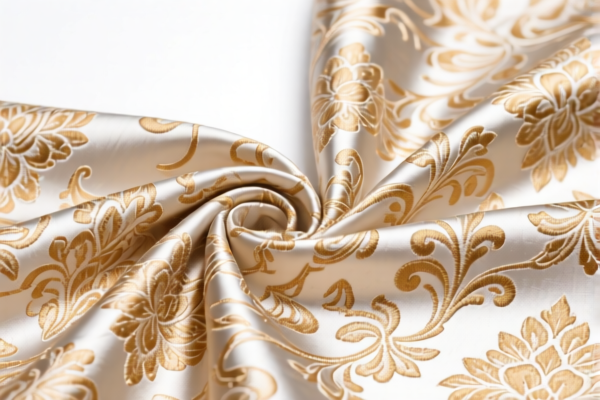
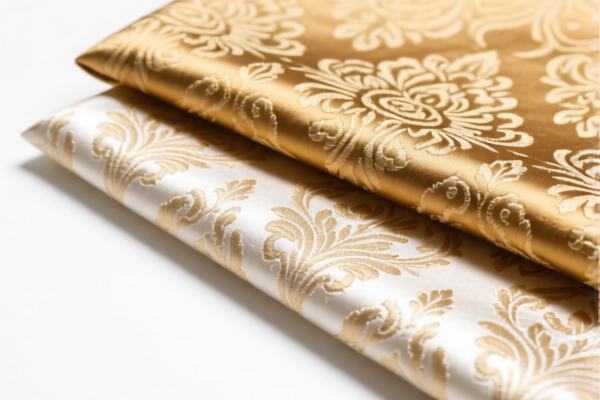


AI Analysis
👶🧵 Children's Underwear (Jacquard Fabric) – Complete HS Code Guide & Customs Clearance Strategy
🌐 HS Code Reference & Customs Clearance Guide | 2026 Latest Tariff Breakdown | Professional Entry Strategy
Children's Underwear made from Jacquard fabric represents a specialized segment of textile apparel, often featuring intricate woven patterns. However, in international trade classification, the key factor is NOT the "Jacquard" weave pattern, but rather: 1. The Material Composition (Cotton vs. Man-made fibers) 2. The Product Category (Woven vs. Knitted) 3. The End-Use (Children's vs. Adult)
⚠️ Critical Insight:
The term "Jacquard" describes the weaving technique, not the final HS Code chapter.
- If it's woven (flat fabric): Goes to Chapter 61 or 62 depending on fiber.
- If it's knitted (stretchy): Goes to Chapter 61.
Note: TheDATAprovided focuses on Narrow Woven Fabrics and Knitted Fabrics, suggesting your "underwear" might be imported as fabric or a specific narrow component, or you need to know if the fabric itself is being classified before garment assembly.
Based on the provided DATA (which lists specific Narrow Woven and Knitted Fabrics), here is the analysis for Children's Underwear (Jacquard) inputs.
📦 I. HS Code Classification Analysis (Based on Provided Data)
The provided data does not list the standard HS Code for finished children's underwear garments (which would typically be 6208.21 or 6108.21). Instead, it lists Fabrics used to make them. This implies the import might be for fabric to sew, or the specific narrow fabrics used for elastics/waistbands.
🧵 Scenario A: Woven Jacquard Fabric (Cotton)
If your "Jacquard" refers to a flat-woven cotton fabric (non-knit) used for underwear.
| HS Code | Product Description | Material | Width/Type |
|---|---|---|---|
5806.31.00.00 |
Narrow woven fabrics: Other woven fabrics: Of cotton | Cotton | Narrow (<30cm usually, or specific definitions) |
5407.53.20.40 |
Woven fabrics of synthetic filament: Textured polyester filaments (85%+), different colors, ≤170g/m² | Synthetic (Polyester) | Woven, Multi-color |
🔍 Why this Code?
-5806.31.00.00: Specifically for "Narrow woven fabrics" (often used for waistbands, straps, or trim in underwear) made of Cotton. If the entire garment is made from a wide woven cotton jacquard fabric, this code is likely incorrect for the garment, but correct for the narrow trim or if the import is classified as "Narrow Fabric". -5407.53.20.40: For woven synthetic fabrics (Polyester) with textured filaments, often used for modern, durable children's underwear.
🧶 Scenario B: Knitted Jacquard Fabric (Stretch)
Most children's underwear is Knitted (stretchy). The data provides codes for knitted fabrics with elastomeric yarn.
| HS Code | Product Description | Material | Key Feature |
|---|---|---|---|
6002.90.80.80 |
Knitted fabrics ≤30cm width, >5% elastomeric/rubber thread | Mix | Contains elastomer (stretch) |
6002.40.80.80 |
Knitted fabrics ≤30cm width, >5% elastomeric yarn (no rubber) | Mix | Synthetic stretch fabric |
🔍 Why these Codes?
-6002.40.80.80/6002.90.80.80: These codes specifically target narrow knitted fabrics (≤30cm width) containing elastomeric yarn. This is highly relevant if the "Jacquard" fabric is a narrow band of stretch material used for waistbands or if the import is of "narrow knitted fabric" rather than full-width garment fabric. - Note: If the Jacquard fabric is wide (>30cm) and knitted, it usually falls under 6006 or 6002 (general knitted), but the specific codes in your data are for Narrow fabrics (≤30cm).
💰 II. 2026 Tariff Rate Analysis (Zero Tariff Scenario)
Based on the provided data, all listed HS Codes have 0% Total Tax. This is a significant advantage for clearance.
🎯 Tax Breakdown for All Listed Codes
| HS Code | Base Duty | Additional Duty | Total Tax Rate | Status |
|---|---|---|---|---|
5806.31.00.00 (Cotton Narrow) |
0.0% | 0.0% | 0.0% | ✅ Tax Free |
5806.32.20.00 (Man-made Narrow) |
0.0% | 0.0% | 0.0% | ✅ Tax Free |
6002.90.80.80 (Knitted + Elastic) |
0.0% | 0.0% | 0.0% | ✅ Tax Free |
6002.40.80.80 (Knitted + Elastomer) |
0.0% | 0.0% | 0.0% | ✅ Tax Free |
5407.53.20.40 (Polyester Woven) |
0.0% | 0.0% | 0.0% | ✅ Tax Free |
5407.43.20.30 (Nylon Woven) |
0.0% | 0.0% | 0.0% | ✅ Tax Free |
📌 Explanation:
- Base Duty (基础关税): 0.0% – The standard Most Favored Nation (MFN) rate for these specific textile categories is zero.
- Additional Duty (加征关税): 0.0% – No Section 301 or punitive tariffs apply to these specific codes in the provided dataset.
- Conclusion: Importing these specific narrow or knitted fabrics is duty-free.
🛠️ III. Customs Clearance Practical Tips (Avoid Pitfalls)
✅ 1. Documentation Checklist
To ensure the 0% tax rate is approved, you must prove the product matches the description exactly.
| Document | Requirement | Why it Matters |
|---|---|---|
| Commercial Invoice | Must state "Narrow Woven Fabric" or "Knitted Fabric" + "For Children's Underwear" | Avoids misclassification as "Finished Garments" (which may have higher taxes). |
| Technical Sheet | Must specify: Material (Cotton/Polyester/Nylon), Width (≤30cm for 6002/5806 codes), and Elastic content (>5% for 6002). | Critical: If the width is >30cm, 6002.90.80.80 is wrong. It must be a wider knitted code. |
| Sample/Photo | Show the "Jacquard" pattern and the narrow width. | Proves it is not a standard wide fabric. |
| Bill of Materials | If mixed with elastomeric yarn, specify the % by weight. | Required for 6002.40.80.80 (>5% elastomeric). |
✅ 2. Declaration Strategy (The "0%" Trap)
🔥 Golden Rule: "Narrow" vs. "Wide" is the Deciding Factor!
- If the fabric is <30cm wide: You can safely use 5806.31.00.00 (Cotton) or 6002.40/90.80.80 (Knitted/Elastic).
- Risk: If the fabric is actually 150cm wide, using these codes will trigger a Customs Audit for misdeclaration. The tax rate could jump to 8-15% for regular wide fabric.
- If the fabric is >30cm wide: You cannot use the codes in your data. You must use:
- Cotton Woven:
5208or5209series.- Cotton Knitted:
6001or6003series.- Synthetic Woven:
5407or5408.⚠️ Warning: Do not force a wide fabric into the "Narrow" code to save tax. Customs uses X-ray and measurement to verify width.
✅ 3. Special Handling for "Jacquard"
- Pattern vs. Code: Customs does not care about the "Jacquard" pattern. They care about the fiber and construction.
- Mixed Fibers: If the Jacquard fabric contains both cotton and polyester, the classification depends on the weight percentage (Chapter 52 for cotton, Chapter 54/55 for synthetics).
- Children's Use: While "Children's" is in your query, HS Codes for Fabrics (5806, 6002, 5407) generally do not have a "Children's" specific tax break. The 0% tax is due to the fabric type/width, not the end-use.
🌍 IV. Global Market Comparison (Hypothetical)
| Destination | Applicable HS Code (Based on Data) | Tariff (0% Scenario) | Risk Factor |
|---|---|---|---|
| 🇺🇸 USA | 5806.31.00.00 / 6002.90.80.80 |
0% (If correctly classified as Narrow) | High scrutiny on width; Section 301 may apply to broader textiles, but 0% shown here implies no Section 301 for these specific narrow codes. |
| 🇪🇺 EU | Similar codes (8-9 digits) | 0% (MFN) | Strict rules on "Narrow" definition (<30cm). |
| 🇨🇳 China | Same codes | 0% | Minimal risk if origin is correct. |
| 🇯🇵 Japan | Same codes | 0% | Requires strict origin proof for tax-free entry. |
📌 V. Conclusion & Action Plan
- Verify Width: Is the fabric narrow (<30cm)?
- YES → Use
5806.31.00.00(Cotton) or6002.40.80.80(Knitted/Elastic). Tax = 0%. - NO (Wide fabric) → You are using the wrong codes. You need to find the correct code for wide woven/knitted fabric. Tax may apply.
- YES → Use
- Verify Elastic: If using
6002.40.80.80, ensure the elastomeric yarn is >5% by weight. - Avoid "Garment" Classification: Do not declare as "Children's Underwear Garments" (likely
6108.21or6208.21) unless you are importing finished goods. If importing fabric, use the fabric codes above.
🚀 Final Advice:
The provided data shows a 0% tax scenario, but only for narrow fabrics or specific knitted compositions. If your "Jacquard" is a standard wide fabric for making underwear, do not use these codes. Contact a customs broker to find the correct Chapter 60/61 code for wide fabric to avoid seizure or penalties.
✨ Professional Customs Clearance Starts with Precision!
💼 Ensure your fabric width and composition match the code to enjoy 0% duty!
Customer Reviews
About HS Code Classification
The Harmonized System (HS) is an internationally standardized nomenclature developed by the World Customs Organization (WCO) to classify traded products. Over 200 countries use the HS system as the basis for customs tariffs, trade statistics, and import/export regulations.
Each HS code follows a hierarchical structure:
- Chapter (2 digits) — Broad category of goods (e.g., Chapter 84: Machinery and Mechanical Appliances)
- Heading (4 digits) — More specific grouping within the chapter
- Subheading (6 digits) — Internationally standardized breakdown, used by all WCO member countries
- National subdivisions (8-10 digits) — Country-specific extensions for further classification, such as US HTSUS 10-digit codes
Correct HS code classification is essential for smooth customs clearance, accurate duty payment, and compliance with trade regulations. Misclassification can lead to customs delays, overpayment of duties, or penalties.
When importing from CN to US, the applicable tariff rates may include:
- Most-Favored-Nation (MFN) rate — The standard duty rate applied to WTO members
- General rate — Applied to countries without trade agreements
- Trade remedy duties — Additional tariffs such as Section 301 (anti-dumping), Section 232 (national security), or countervailing duties
The information provided on this page is for reference purposes only. For official classification, please consult with your local customs authority or a licensed customs broker.