girls' coveralls
CN → US| HS Code | Tariff Rate | Origin | Destination | Doc |
|---|---|---|---|---|
| 6104621020 | 27.8% | CN | US | Official Doc |
| 6204620510 | 26.4% | CN | US | Official Doc |
| 6204626010 | 26.4% | CN | US | Official Doc |
| 6210402540 | 24.6% | CN | US | Official Doc |
| 6211325010 | 25.6% | CN | US | Official Doc |
Product Images

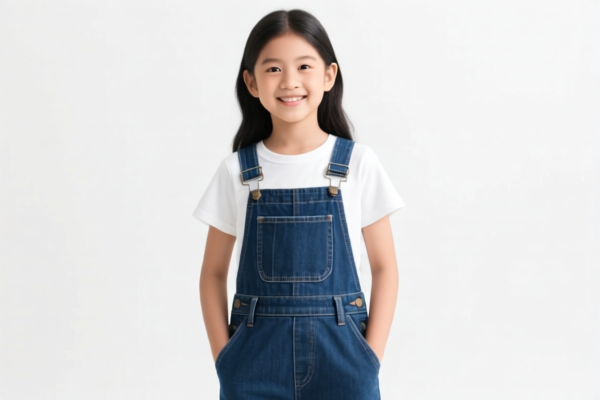
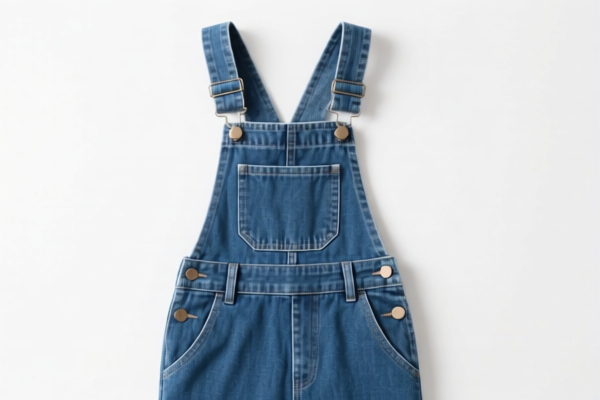

AI Analysis
👗🔒 Girls' Coveralls (Women's & Girls' Overall/Work Jumpsuit)
🌐 HS Code Reference & Clearance Guide | 2026 Customs Tariff Deep Dive | Professional Strategy
📌 Section I: Product Definition & Classification: Do You Truly Know "Girls' Coveralls"?
Girls' Coveralls are one-piece garments designed for female wearers, combining a top and bottom in a single unit. In international trade, they are categorized based on material composition (Cotton vs. Synthetic), fabric structure (Knitted vs. Woven), and specific function (General wear vs. Workwear/Utility).
⚠️ Critical Classification Distinctions:
- Knitted (Knit) Cotton: If the garment is made of knitted cotton fabric, it falls under Chapter 61 (e.g.,6104.62.10.20).
- Woven (Woven) Cotton: If made of woven cotton fabric, it falls under Chapter 62 (e.g.,6204.62.05.10,6204.62.60.10).
- Workwear/Utility: If the item is specifically designed as "Work Overalls" or "Coveralls" with reinforced stitching, pockets, or industrial style, it may fall under 6210.40 or 6211.32 depending on the exact fabric blend and design intent.
📦 Section II: HS Code Classification Details (2026 Latest Tariff Authority)
Based on the provided data, here is the precise breakdown for Girls' Coveralls:
| HS Code | Product Description (Summary) | Material & Form | Key Application |
|---|---|---|---|
| 6104.62.10.20 | Knitted Cotton Girls' Work Overalls Material: Cotton Form: One-piece Jumpsuit |
Knitted Cotton | Female workwear/utility |
| 6204.62.05.10 | Woven Cotton Girls' Jumpsuit Material: Cotton Form: One-piece Jumpsuit |
Woven Cotton | General female fashion/jumpsuit |
| 6204.62.60.10 | Woven Cotton Girls' Coveralls (Full Compliance) Material: Cotton Form: One-piece Jumpsuit |
Woven Cotton | Female coveralls (Strict classification) |
| 6210.40.25.40 | Work Coveralls (Industrial Style) Material: Textiles Form: Utility/Workwear |
Textile (Workwear) | Work/Industrial overalls |
| 6211.32.50.10 | Other Coveralls/One-Piece Workwear Material: Cotton or Synthetic (Inferred) Form: One-piece |
Mixed/Specific Textile | General coveralls/workwear |
🔍 Important Note:
- 6104 vs. 6204: The first digit differs (61 = Knitted/Not Woven, 62 = Woven). This is the most critical distinction for customs.
- 6210 vs. 6211: 6210.40 is specifically for "Made up of textile fabrics" often implying specific workwear construction, while 6211.32 covers other one-piece garments (often sportswear or casual coveralls).
💰 Section III: 2026 Latest Tariff Rate Breakdown (Including Surcharges)
✅ Applicable Country: United States (US)
✅ Origin: China (CN)
✅ Effective Date: 2025/2026 (Based on provided data context)
🎯 1. 6104.62.10.20 – Knitted Cotton Girls' Work Overalls
| Item | Content |
|---|---|
| Base Tariff (MFN) | 10.3% |
| Section 301/Surcharge | 7.5% (Additional) |
| Section 122 Tariff | 10% (Specific Trade Measure) |
| Total Tax Rate | 27.8% |
| Tax Calculation | CIF Value × 27.8% |
| Legal Basis | Base Tariff + Section 301 (7.5%) + Section 122 (10%) |
📌 Explanation:
- Base (10.3%): Standard Most Favored Nation (MFN) rate for knitted cotton women's overalls.
- Section 301 (7.5%): Additional tariff imposed on specific Chinese goods.
- Section 122 (10%): Additional specific duty targeting China (often related to trade remedy or specific sector restrictions).
- Total: 27.8% is the final duty payable on the customs value.
🎯 2. 6204.62.05.10 & 6204.62.60.10 – Woven Cotton Girls' Coveralls/Jumpsuits
| Item | Content |
|---|---|
| Base Tariff (MFN) | 8.9% |
| Section 301/Surcharge | 7.5% (Additional) |
| Section 122 Tariff | 10% (Specific Trade Measure) |
| Total Tax Rate | 26.4% |
| Tax Calculation | CIF Value × 26.4% |
| Legal Basis | Base Tariff + Section 301 (7.5%) + Section 122 (10%) |
📌 Explanation:
- Base (8.9%): Standard MFN rate for woven cotton women's overalls.
- Combined Surcharges: Same 7.5% + 10% structure applies as above.
- Total: 26.4% for woven cotton variants.
🎯 3. 6210.40.25.40 & 6211.32.50.10 – Work Coveralls / Other One-Piece
| Item | Content |
|---|---|
| Base Tariff (MFN) | 7.1% (for 6210) / 8.1% (for 6211) |
| Section 301/Surcharge | 7.5% (Additional) |
| Section 122 Tariff | 10% (Specific Trade Measure) |
| Total Tax Rate | 24.6% (6210) / 25.6% (6211) |
| Tax Calculation | CIF Value × (Total Rate) |
| Legal Basis | Base Tariff + Section 301 (7.5%) + Section 122 (10%) |
📌 Explanation:
- Workwear Advantage: The base tariff for specific workwear (6210) and other coveralls (6211) is slightly lower (7.1% vs 10.3%) due to classification nuances.
- Total Impact: Despite lower base rates, the Section 122 and 301 surcharges are mandatory, keeping the total tax burden high (24.6% – 25.6%).
🛠️ Section IV: Customs Clearance Practical Advice (Pitfall Avoidance)
✅ 1. Preparation Checklist (Non-Negotiable)
| Document | Requirement | Reason |
|---|---|---|
| Product Specifications | ✔️ Must-Have | Must explicitly state "Cotton," "Knitted" or "Woven," and "One-piece." |
| Fabric Test Report | ✔️ Must-Have | Proof of material composition (100% Cotton vs. Blend) to distinguish 61xx vs. 62xx. |
| Product Photos | ✔️ Must-Have | Show seams, pockets, and cut to prove "Workwear" (6210) vs. "Fashion Jumpsuit" (6204). |
| Commercial Invoice | ✔️ Must-Have | Must use clear English descriptions matching the HS Code summary. |
| Packing List | ✔️ Must-Have | Ensure no "accessories" are mixed in to avoid misclassification. |
✅ 2. Declaration Strategy (Golden Rules)
🔥 口诀 (Mnemonic):
"Knit vs. Woven: Don't Mix! Workwear: Prove It! Surcharges: Always Apply!"
| Scenario | Correct Declaration | Error Risk |
|---|---|---|
| Knitted Cotton | 6104.62.10.20 | If declared as Woven (6204) → Base rate 8.9% vs 10.3% + Inspection delay. |
| Woven Cotton | 6204.62.05.10 or 6204.62.60.10 | If declared as Knitted → Classification error, potential penalties. |
| True Workwear | 6210.40.25.40 | If declared as Fashion Jumpsuit → Missed opportunity for lower base rate (7.1%). |
| Mixed Material | 6211.32.50.10 | If declared as 100% Cotton → Misleading invoice → Customs rejection. |
✅ 3. Special Handling for "Coveralls"
| Situation | Action Plan |
|---|---|
| "Workwear" Claim | Provide design drawings showing reinforced knees, tool pockets, or industrial labels to support 6210 classification. |
| "Girls' Fashion" Claim | Provide photos showing fashion cuts (lace, frills, colors) to support 6204 or 6104. |
| Surcharge Avoidance | No Avoidance: The 7.5% + 10% surcharges are mandatory for Chinese origin goods under current trade rules. No de minimis exemption. |
🌍 Section V: Global Market Comparison (2026 Context)
| Market | Recommended HS Code | Est. Total Tax (CN Origin) | Notes |
|---|---|---|---|
| 🇺🇸 USA | 6204.62.05.10 / 6104.62.10.20 |
26.4% – 27.8% | High due to Section 122 + 301. |
| 🇨🇳 China | Same Codes | ~8.9% – 10.3% | No Section 301/122. |
| 🇪🇺 EU | Same Codes | ~6% – 9% | No Section 122/301, but anti-dumping checks possible. |
| 🇯🇵 Japan | Same Codes | ~5% – 8% | Generally lower, but strict textile labeling rules. |
📌 Conclusion:
The USA is the most expensive market for Chinese Girls' Coveralls due to the cumulative surcharges (24.6% – 27.8%).
Strategy: If possible, consider supply chain relocation to Vietnam or Mexico to avoid these specific Section 301/122 duties, subject to rules of origin compliance.
📌 Section VI: Common Errors & Lessons Learned
❌ Error 1: Confusing Knitted (61) with Woven (62)
👉 Consequence: 1.4% tariff difference + 72-hour customs delay for re-evaluation.
❌ Error 2: Calling "Work Coveralls" as "General Jumpsuits"
👉 Consequence: You miss the lower base rate (7.1%) available for true workwear (6210).
❌ Error 3: Assuming "Cotton" means 100% Cotton
👉 Consequence: If it's a blend (e.g., 60% Cotton/40% Poly), the HS Code and tax rate change entirely.
❌ Error 4: Ignoring the Section 122 Tax (10%)
👉 Consequence: Under-declaration leads to fines up to 100% of the duty evaded + seizure of goods.
✅ Correct Practice:
"Girls' Coveralls, 100% Cotton, Woven, One-piece, Workwear Design, Model G-123, US Size 12."
Declared Code:6210.40.25.40(if truly workwear) or6204.62.60.10(if fashion).
🎯 Section VII: Conclusion – Precision is Profit!
🎯 Key Takeaway:
🔹 "Knitted = 61xx, Woven = 62xx, Workwear = 6210, Fashion = 6204!"
🔹 "Don't forget the 17.5% Surcharges (7.5% + 10%) on top of Base!"
🔹 "Total Tax = Base + 17.5% (approx). A 0.2% material change can shift your code!"
📌 Pro Tip:
If your product is 100% Cotton Knitted, use 6104.62.10.20 (27.8%).
If your product is 100% Cotton Woven, use 6204.62.60.10 (26.4%).
If it is Industrial Workwear, use 6210.40.25.40 (24.6%).
Always verify the fabric weave and design intent before filing!
📣 Call to Action:
📞 Contact a Licensed Customs Broker immediately for HS Code Pre-Ruling.
🚀 Prepare Fabric Certificates to prove "Knitted" vs. "Woven" status.
💡 Optimize Your Landed Cost: A 1.2% rate difference saves $1,200 per $100,000 shipment!
✨ Precision Classification = Safe Clearance + Maximized Profit!
💼 Your Supply Chain, Secured!
Customer Reviews
About HS Code Classification
The Harmonized System (HS) is an internationally standardized nomenclature developed by the World Customs Organization (WCO) to classify traded products. Over 200 countries use the HS system as the basis for customs tariffs, trade statistics, and import/export regulations.
Each HS code follows a hierarchical structure:
- Chapter (2 digits) — Broad category of goods (e.g., Chapter 84: Machinery and Mechanical Appliances)
- Heading (4 digits) — More specific grouping within the chapter
- Subheading (6 digits) — Internationally standardized breakdown, used by all WCO member countries
- National subdivisions (8-10 digits) — Country-specific extensions for further classification, such as US HTSUS 10-digit codes
Correct HS code classification is essential for smooth customs clearance, accurate duty payment, and compliance with trade regulations. Misclassification can lead to customs delays, overpayment of duties, or penalties.
When importing from CN to US, the applicable tariff rates may include:
- Most-Favored-Nation (MFN) rate — The standard duty rate applied to WTO members
- General rate — Applied to countries without trade agreements
- Trade remedy duties — Additional tariffs such as Section 301 (anti-dumping), Section 232 (national security), or countervailing duties
The information provided on this page is for reference purposes only. For official classification, please consult with your local customs authority or a licensed customs broker.