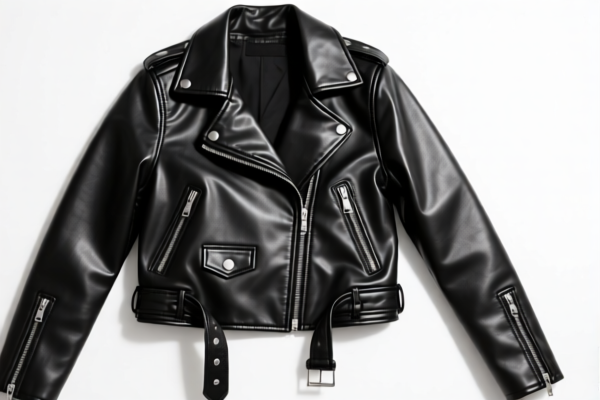
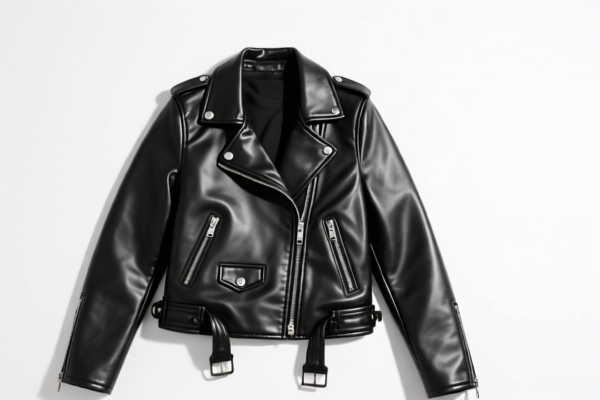
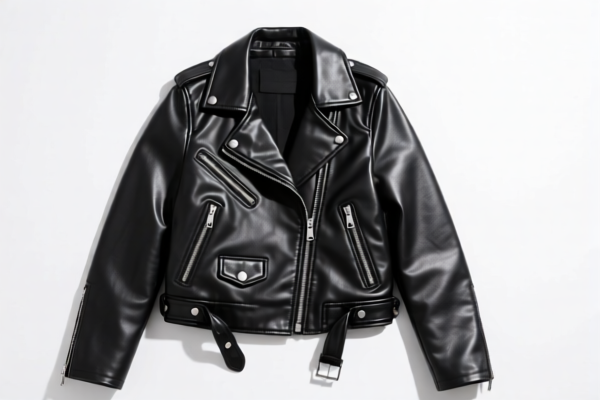
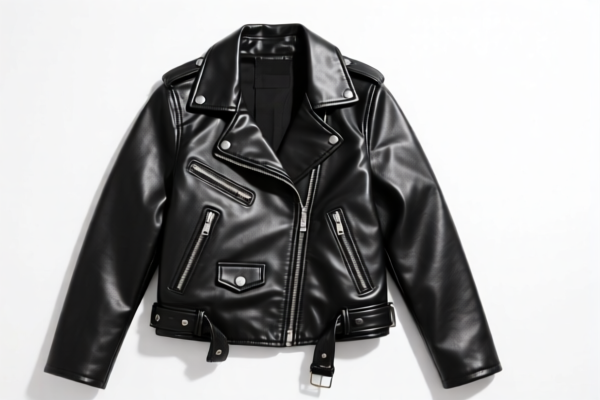
girls' leather jacket
CN → US| HS Code | Tariff Rate | Origin | Destination | Doc |
|---|---|---|---|---|
| 4203104030 | 41.0% | CN | US | Official Doc |
| 4107127040 | 15.0% | CN | US | Official Doc |
| 4203104060 | 41.0% | CN | US | Official Doc |
| 6210508090 | 23.7% | CN | US | Official Doc |
| 6210408060 | 23.7% | CN | US | Official Doc |
| 4303100060 | 39.0% | CN | US | Official Doc |
Product Images
AI Analysis
👧 Girls' Leather Jacket (Leather Outerwear for Young Females)
🌐 HS Code Reference & Customs Clearance Guide | 2026 Latest Tariff Analysis | Professional Clearance Strategy
📌 I. Product Definition & Classification: Do You Really Know "Girls' Leather Jacket"?
A girls' leather jacket is a finished garment designed for female minors, characterized by the use of leather as the primary material. In international trade, the classification hinges on two critical factors:
1. Material Nature: Is it genuine leather (tanned animal skin), fur skin, or a synthetic material imitating leather?
2. Garment Type: Is it an outer coat/jacket suitable for wearing over other clothes?
⚠️ Key Distinction Points:
- If the material is genuine leather (Chapter 41) → Likely falls under 4203.10 or 6210.50 depending on specific construction.
- If the material is fur skin (fur on, fur off, etc.) → Falls under 4303.10.
- If the material is non-woven fabric or fabric impregnated with plastic/rubber (often confused with leather) → May fall under 6210.🚨 Critical Note for "Girls'":
While many HS codes in Chapter 62 distinguish between "Men's/Boys'" and "Women's/Girls'", Chapter 42 (Articles of Leather) often groups "men's, women's, or children's" together under the same subheading (e.g., 4203.10). However, some codes in Chapter 62 explicitly separate them. This distinction can drastically affect the Additional Duties applied under US trade policies.
📦 II. HS Code Classification Details (Based on Provided Data)
The following HS codes are derived from the provided dataset, matching the product name "Girls' Leather Jacket" with varying interpretations of material (Leather vs. Fur) and fabric type.
| HS Code | Summary from Data | Key Matching Logic | Total Tax Rate |
|---|---|---|---|
| 4203.10.40.30 | Matched. "Leather jacket" includes "material (leather)" and "form (outerwear/jacket)" for men/boys/others. | Assumes standard leather outerwear, potentially grouped under "others" or "men's/boys'" due to coding structure, but applicable to jackets generally. | 41.0% |
| 4107.12.70.40 | Material (leather) & purpose (garment); inferred tanned leather for clothing. | Directly classifies as Leather Garments under Chapter 41. Note: This is often a raw leather or semi-finished good code, but data suggests it applies here. | 15.0% |
| 4203.10.40.60 | Explicitly matches "leather" and "jacket" for outerwear/coats. | High-confidence match for finished leather jackets under Chapter 42. | 41.0% |
| 6210.50.80.90 | Finished garment; material (leather) not excluded under 5602/5903; fits "Women's/Girls' Other Wear". | Classifies as Textile-Based (possibly coated or synthetic leather treated as fabric). Specifically targets Women's/Girls' category. | 23.7% |
| 6210.40.80.60 | Finished garment; men's/boys' category; inferred leather not silk/excluded织物. | Classifies as Textile-Based, but data links it to Men's/Boys' ("男式/童式"). Caution: For girls, verify if 6210.50 is more appropriate. | 23.7% |
| 4303.10.00.60 | Leather garment meets "fur-skin clothing" material requirement; "Others" (non-mink). | Classifies as Fur/Skin Garments. Used if the "leather" is actually fur skin or classified under fur trade rules. | 39.0% |
💰 III. 2026 Tariff Rate Detailed Breakdown (Including Surcharges)
✅ Applicable Country: USA (US)
✅ Origin: China (CN) (Inferred from 122-Clause & Section 301 context in data)
✅ Effective Date: Post-November 2025 (Based on 122-Clause 10% implementation)
🎯 1. The "Leather Outerwear" Cluster (4203.10.40.30 & 4203.10.40.60)
These codes carry the highest tax burden due to specific trade restrictions on leather goods.
| Item | Detail |
|---|---|
| Base Tariff | 6.0% |
| Section 301 Surcharge | 25.0% |
| Section 122 Surcharge | 10.0% |
| Total Tax Rate | 41.0% |
| Calculation | CIF Value × 41.0% |
| De Minimis Exemption | ❌ Not Eligible (High value threshold violations typical for clothing) |
| Legal Path | Base HTS → Footnote 9903.88.01 (Sec 301) → IEEPA 122 (10%) |
📌 Analysis:
- The 41% rate is prohibitive. It combines standard USITC duties with aggressive political surcharges. - 4203.10 generally covers "Leather garments." If customs determines your "leather" is actually fur, this code might be rejected, but the tax remains high.
🎯 2. The "Raw Leather / Semi-Finished" Code (4107.12.70.40)
Lowest tax rate, but high classification risk.
| Item | Detail |
|---|---|
| Base Tariff | 5.0% |
| Section 301 Surcharge | 0.0% |
| Section 122 Surcharge | 10.0% |
| Total Tax Rate | 15.0% |
| Calculation | CIF Value × 15.0% |
| De Minimis Exemption | ❌ Not Eligible |
| Legal Path | Base HTS → IEEPA 122 (10%) |
⚠️ Risk Alert:
- 4107.12 typically refers to Raw Leather or Crust Leather (not finished garments).
- Using this code for a finished jacket is a major compliance risk. Customs may reclassify it to 4203, leading to back taxes + penalties (from 15% to 41%).
- Only use if the item is sold as "unfinished leather panels" for local sewing.
🎯 3. The "Textile-Coated/Synthetic" Cluster (6210.50.80.90 & 6210.40.80.60)
Middle ground tax rate; hinges on whether the "leather" is treated as fabric.
| Item | Detail |
|---|---|
| Base Tariff | 6.2% |
| Section 301 Surcharge | 7.5% |
| Section 122 Surcharge | 10.0% |
| Total Tax Rate | 23.7% |
| Calculation | CIF Value × 23.7% |
| De Minimis Exemption | ❌ Not Eligible |
| Legal Path | Base HTS → Footnote 9903.01.25 (Sec 301 7.5%) → IEEPA 122 (10%) |
📌 Analysis:
- 6210.50 explicitly mentions "Women's or Girls'" wear. This is likely the correctest code for a girls' jacket if the material is classified as "fabric coated with plastic/rubber" or "non-woven fabric."
- 6210.40 is for Men's/Boys', so for a girls' jacket, 6210.50 is the preferred choice.
- If the product is genuine animal hide, customs may reject 6210 and move to 4203 (41%).
🎯 4. The "Fur Skin" Category (4303.10.00.60)
High tax rate; applies if material is legally defined as "fur."
| Item | Detail |
|---|---|
| Base Tariff | 4.0% |
| Section 301 Surcharge | 25.0% |
| Section 122 Surcharge | 10.0% |
| Total Tax Rate | 39.0% |
| Calculation | CIF Value × 39.0% |
| De Minimis Exemption | ❌ Not Eligible |
| Legal Path | Base HTS → Footnote 9903.88.01 → IEEPA 122 |
📌 Analysis:
- If the jacket is made from fur skins (not tanned leather), it falls here.
- Note the 25% Sec 301 surcharge, which is higher than the textile category (7.5%) but lower than the leather category (25% - same rate, but base is different).
🛠️ IV. Customs Clearance Practical Advice (Pitfall Avoidance)
✅ 1. Documentation Checklist (Must-Have)
| Document | Required? | Note |
|---|---|---|
| ✅ Product Description | ✔️ | Must specify: "Girls' Leather Jacket," Material (e.g., "Cowhide," "Synthetic PU"), Age Group. |
| ✅ Material Test Report | ✔️ | Crucial! Proof that material is "Genuine Leather" (Ch 41/42) vs. "Coated Fabric" (Ch 62). |
| ✅ Tech Pack / Photos | ✔️ | Show lining, zipper, stitching. Helps determine if it's "Garment" vs. "Part." |
| ✅ Commercial Invoice | ✔️ | Value must be accurate. Undervaluation triggers Sec 301 scrutiny. |
| ✅ Country of Origin Cert | ✔️ | Essential for calculating Sec 301 & 122 duties. |
✅ 2. Declaration Strategy (Key Mantras)
🔥 "Material Determines Chapter, Age Determines Subheading!"
| Scenario | Correct Code Choice | Why? | Tax Impact |
|---|---|---|---|
| Genuine Leather Jacket | 4203.10.40.xx |
Chapter 42 covers leather garments. | 41.0% |
| Synthetic/PU Leather Jacket | 6210.50.80.90 |
Treated as textile/apparel. Fits "Girls'". | 23.7% |
| Fur Skin Jacket | 4303.10.00.xx |
Chapter 43 covers fur. | 39.0% |
| Unfinished Leather Panels | 4107.12.70.40 |
NOT a jacket. Only for raw/semi-finished. | 15.0% (High Risk of Rejection) |
🚨 Warning on
4107.12.70.40:
Using this for a finished jacket is misclassification. While the tax is low (15%), the risk of customs audit, penalty, and retroactive duty adjustment (to 41%) is extremely high. Do not use unless you are shipping raw hides.
✅ 3. Special Considerations for "Girls'" Category
- Gender Specificity: Codes like
6210.50explicitly target Women's/Girls'. Using6210.40(Men's/Boys') for a girls' jacket is a declaration error. - Age Definition: "Girls'" typically implies pre-adolescent. Ensure labeling says "Girls' Size" not "Women's" if claiming 6210.50.
- Labeling: Ensure the care label and hangtag clearly state Material Composition (e.g., "100% Polyurethane" vs. "100% Cowhide"). This is the first thing customs looks at to assign Chapter 41/42 vs. Chapter 62.
🌍 V. Global Market Comparison (2026 Context)
| Market | Recommended HS | Est. Duty (China Origin) | Key Requirement |
|---|---|---|---|
| 🇺🇸 USA | 4203.10 or 6210.50 |
23.7% – 41.0% | Sec 301 + 122 Clauses apply. Strict material proof. |
| 🇨🇳 China (Import) | Similar HS | ~5-10% | No heavy surcharges. Standard VAT. |
| 🇪🇺 EU | 4203.10 or 6210 | ~4-12% | CE marking not required for apparel, but REACH compliance for chemicals. |
| 🇬🇧 UK | Similar to EU | ~4-12% | Post-Brexit rules apply. |
📌 Conclusion for US Imports:
The US market is the most expensive due to the 122 Clause (10%) and Section 301 (7.5% or 25%).
- If your product is Synthetic/PU, aim for 6210.50 to pay 23.7%.
- If your product is Genuine Leather, expect 41.0%. There is no avoiding this for true leather jackets from China.
📌 VI. Common Mistakes & Pitfalls
❌ Mistake 1: Labeling a Synthetic Jacket as "Leather" to fit Chapter 42.
👉 Consequence: Customs may reclassify to 6210 (lower tax) but if they suspect fraud, they may deny entry. Conversely, labeling a Genuine Leather jacket as "Fabric" to get 23.7% instead of 41% is fraud.
❌ Mistake 2: Using 4107.12.70.40 (15% tax) for a finished jacket.
👉 Consequence: High probability of Customs Audit. If deemed "Finished Garment," duty jumps to 41%. Back taxes + penalties apply.
❌ Mistake 3: Ignoring the "Girls'" specification in 6210.
👉 Consequence: Using 6210.40 (Men's) for a girls' jacket leads to misdeclaration. Customs may assess penalties for incorrect gender classification.
✅ Correct Practice:
"Girls' Jacket, Synthetic Leather (PU), Size 4-6X, HS 6210.50.80.90, Origin China"
🎯 VII. Conclusion: Professional Declaration, Cost Control!
🎯 Remember the Strategy:
🔹 Genuine Leather? → Accept 41% tax under 4203.10.
🔹 Synthetic/PU Leather? → Declare as 6210.50 to save ~17% (23.7% vs 41%).
🔹 Raw Hides? → Use 4107 (15%) only if unsewn.
🔹 Fur? → Use 4303 (39%).
📌 Pro Tip:
If you are using Synthetic Leather, ensure your product description highlights "Polyurethane" or "Faux Leather" on the invoice and packaging. This supports the 6210 classification and defends against claims of misdeclaration.
✨ Professional Customs Clearance Starts with Accurate Classification!
💼 Your Profit Margin Depends on These Percentages!
Customer Reviews
About HS Code Classification
The Harmonized System (HS) is an internationally standardized nomenclature developed by the World Customs Organization (WCO) to classify traded products. Over 200 countries use the HS system as the basis for customs tariffs, trade statistics, and import/export regulations.
Each HS code follows a hierarchical structure:
- Chapter (2 digits) — Broad category of goods (e.g., Chapter 84: Machinery and Mechanical Appliances)
- Heading (4 digits) — More specific grouping within the chapter
- Subheading (6 digits) — Internationally standardized breakdown, used by all WCO member countries
- National subdivisions (8-10 digits) — Country-specific extensions for further classification, such as US HTSUS 10-digit codes
Correct HS code classification is essential for smooth customs clearance, accurate duty payment, and compliance with trade regulations. Misclassification can lead to customs delays, overpayment of duties, or penalties.
When importing from CN to US, the applicable tariff rates may include:
- Most-Favored-Nation (MFN) rate — The standard duty rate applied to WTO members
- General rate — Applied to countries without trade agreements
- Trade remedy duties — Additional tariffs such as Section 301 (anti-dumping), Section 232 (national security), or countervailing duties
The information provided on this page is for reference purposes only. For official classification, please consult with your local customs authority or a licensed customs broker.