ph测试仪
CN → US| HS Code | Tariff Rate | Origin | Destination | Doc |
|---|---|---|---|---|
| 9027504015 | 35.0% | CN | US | Official Doc |
| 9027894530 | 35.0% | CN | US | Official Doc |
| 9025805000 | 19.1% | CN | US | Official Doc |
| 9025801000 | 36.7% | CN | US | Official Doc |
| 9027504015 | 35.0% | CN | US | Official Doc |
Product Images
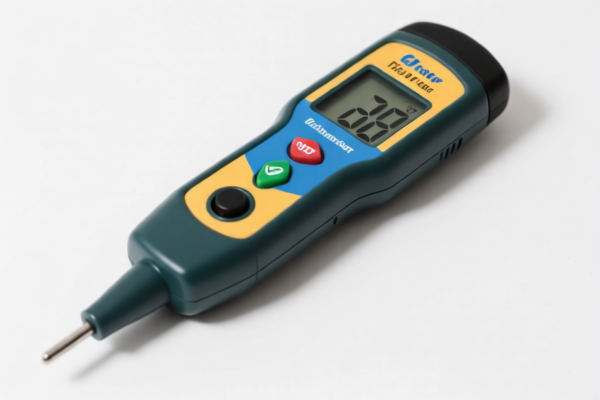
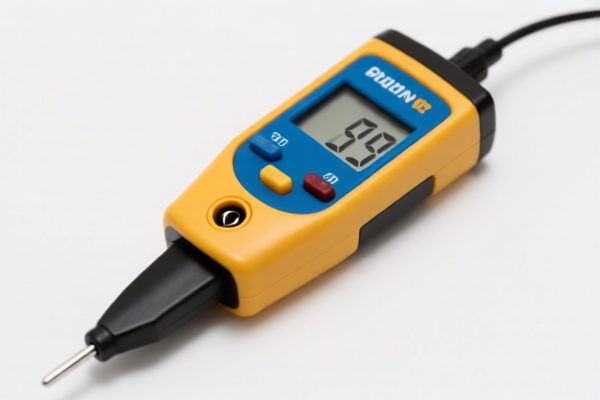
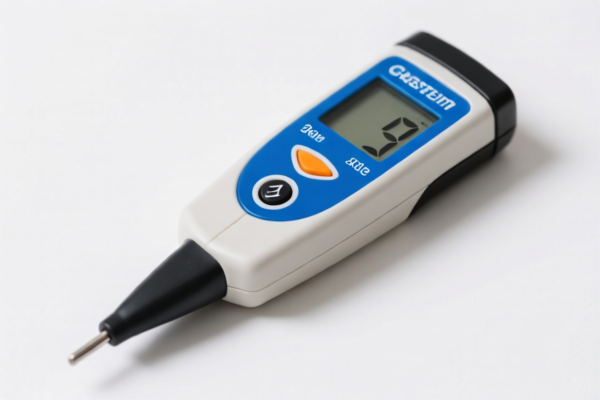
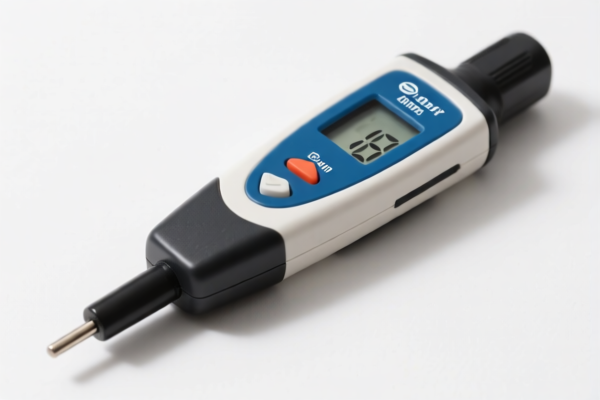
AI Analysis
🧪 pH Tester (pH Measurement Instruments)
🌐 HS Code Reference & Customs Clearance Guide | 2026 Latest Tariff Breakdown | Professional Import Strategy
📌 One, Product Definition & Classification: Do You Really Understand "pH Testers"?
A pH tester is a precision instrument used to measure the acidity or alkalinity of a solution by detecting hydrogen ion activity. In international trade, it is classified based on its functional principle (electrochemical or chemical analysis) and intended use, not just its name.
⚠️ Key Differentiation Points: - If it measures pH via electrochemical potential (e.g., glass electrode) → falls under electrical/chemical analysis instruments
- If it uses colorimetric indicators (e.g., test strips) → may be treated differently, but digital pH meters with probes are clearly electronic devices
- pH testers with digital displays, probes, and calibration functions are not simple tools — they are precision measurement instruments
📦 Two, HS Code Classification Details (2026 Latest Tariff Authority Match)
| HS Code | Product Description | Applicable Use Case | Classification Basis |
|---|---|---|---|
9027.50.40.15 |
pH testers using electrochemical principles to measure ion activity; part of chemical analysis instruments | Laboratory, industrial, environmental testing, water quality monitoring | ✅ Electrochemical measurement → Chemical analysis instrument |
9027.89.45.30 |
pH testers used for measuring acidity/alkalinity; fits definition of chemical analysis devices | Clinical, food & beverage, pharmaceutical, research labs | ✅ Purpose matches chemical analysis |
9025.80.50.00 |
pH detection instruments categorized under other measuring instruments (like thermometers, barometers) | General-purpose pH meters, non-laboratory use | ✅ Similar to other measuring instruments |
9025.80.10.00 |
pH detection instruments as electrical precision measuring devices | High-accuracy lab-grade meters, digital multimeter-style pH testers | ✅ Electrical precision instrument → Electrical measuring device |
9027.50.40.15 |
pH detection instruments classified as chemical analysis equipment | Repeated for consistency — same product type | ✅ Matches chemical analysis definition |
🔍 Critical Insight:
- Digital pH meters with probes and displays are not "simple testers" — they are electrochemical measurement systems
- Even if marketed as "pH test kit", if it includes a digital meter with sensor, it must be declared as an instrument, not a consumable
- Test strips alone would fall under different codes (e.g.,3822.00.00), but digital pH testers are not consumables
💰 Three, 2026 Latest Tariff Breakdown (With Full Tax Clause Explanation)
✅ Applicable Country: United States (US)
✅ Origin: China (CN)
✅ Effective Date: November 10, 2025 (including subsequent imports)
🎯 1. 9027.50.40.15 — pH Tester (Chemical Analysis Instrument)
| Item | Detail |
|---|---|
| Base Duty | 0.0% (ad valorem) |
| USITC Additional Duty | +25% (from Section 301 of U.S. Trade Act) |
| IEEPA Additional Duty | +10% (under International Emergency Economic Powers Act) |
| Total Duty | 35.0% |
| Tax Calculation | CIF Value × 35.0% |
| De Minimis Exemption? | ❌ Not eligible (denied under de minimis rule) |
| Legal Basis Path | IEEPA:9903.01.25 → IEEPA:9903.01.24 → USITC:9027.50.40.15 → FOOTNOTE:9903.88.01 |
📌 Explanation: - USITC 25% comes from Section 301 tariffs targeting Chinese goods deemed to have unfair trade practices
- IEEPA 10% is a national security-related tariff under emergency powers, applied to all imports from China
- Total 35% — high but not the highest in this list
- No de minimis → even small shipments (under $800) are not exempt from this tariff
🎯 2. 9027.89.45.30 — pH Tester (Chemical Analysis Instrument)
| Item | Detail |
|---|---|
| Base Duty | 0.0% |
| USITC Additional Duty | +25% |
| IEEPA Additional Duty | +10% |
| Total Duty | 35.0% |
| Tax Calculation | CIF × 35.0% |
| De Minimis Exemption? | ❌ Not eligible |
| Legal Basis Path | IEEPA:9903.01.25 → IEEPA:9903.01.24 → USITC:9027.89.45.30 → FOOTNOTE:9903.88.01 |
📌 Note: - Same tariff treatment as
9027.50.40.15— both are chemical analysis instruments
- Even if the product is labeled “pH meter” or “digital tester”, if it performs chemical analysis, it falls under this code
🎯 3. 9025.80.50.00 — pH Detection Instrument (Other Measuring Instruments)
| Item | Detail |
|---|---|
| Base Duty | 1.6% |
| USITC Additional Duty | +7.5% |
| IEEPA Additional Duty | +10% |
| Total Duty | 19.1% |
| Tax Calculation | CIF × 19.1% |
| De Minimis Exemption? | ❌ Not eligible |
| Legal Basis Path | IEEPA:9903.01.25 → IEEPA:9903.01.24 → USITC:9025.80.50.00 → FOOTNOTE:9903.88.01 |
📌 Why Lower? - This code is for non-chemical-analysis instruments like thermometers, hygrometers, barometers
- If the pH tester is marketed as a general-purpose instrument (not lab-grade), it may be classified here
- Lower base duty (1.6%) and lower USITC tariff (7.5%) → 19.1% total
- Still high, but lower than 35% — potential savings if properly argued
🎯 4. 9025.80.10.00 — pH Detection Instrument (Electrical Precision Measuring Device)
| Item | Detail |
|---|---|
| Base Duty | 1.7% |
| USITC Additional Duty | +25.0% |
| IEEPA Additional Duty | +10% |
| Total Duty | 36.7% |
| Tax Calculation | CIF × 36.7% |
| De Minimis Exemption? | ❌ Not eligible |
| Legal Basis Path | IEEPA:9903.01.25 → IEEPA:9903.01.24 → USITC:9025.80.10.00 → FOOTNOTE:9903.88.01 |
📌 Why Highest? - This code applies to electrical precision measuring instruments — high-accuracy digital devices
- If your pH tester has high resolution, calibration features, data logging, or USB output, it fits here
- USITC 25% applies fully → highest tariff in the list
- Avoid this classification unless strictly accurate
🛠️ Four, Customs Clearance Best Practices (Pro Tips to Avoid Penalties)
✅ 1. Required Documentation (Must-Have Checklist)
| Document | Required? | Notes |
|---|---|---|
| ✅ Product Specification Sheet | ✔️ | Include probe type, accuracy, display type, calibration method |
| ✅ Circuit Diagram / PCB Layout | ✔️ | Prove whether it’s electrical or chemical analysis |
| ✅ Product Photos (with label) | ✔️ | Show model, brand, interface ports, probe connector |
| ✅ Third-Party Test Report | ✔️ | FCC, CE, RoHS, or ISO 17025 (if lab-grade) |
| ✅ Commercial Invoice | ✔️ | Clearly state: "Digital pH Tester, 3-in-1, with Electrode Probe" |
| ✅ Certificate of Origin (CO) | ✔️ | If from Vietnam, Mexico, Thailand — may qualify for exemption |
| ✅ Packing List | ✔️ | Show if probe, battery, case, cables are included |
✅ 2.申报技巧(Key Pro Tips)
🔥 "Function First, Name Second — Accuracy Beats Marketing!"
| Scenario | Correct HS Code | Wrong Code | Risk |
|---|---|---|---|
| Digital pH meter with probe & screen | 9027.50.40.15 or 9027.89.45.30 |
9025.80.10.00 |
Overpay 1.7% |
| Low-accuracy field tester | 9025.80.50.00 |
9027.50.40.15 |
Underpay → risk of audit |
| High-precision lab-grade meter | 9025.80.10.00 |
9027.50.40.15 |
Overpay 1.7% |
| pH tester with data logger | 9025.80.10.00 |
9027.50.40.15 |
Higher duty |
✅ 3. Special Cases & Solutions
| Situation | Recommended Action |
|---|---|
| Purchased from China, shipped via Vietnam | Apply for Certificate of Origin (CO) from Vietnam → may qualify for IEEPA exemption |
| Used in medical labs | Apply for non-commercial use exemption (if applicable) |
| R&D or educational use | Submit letter of purpose — may reduce risk of audit |
| Test strips only (no meter) | Use 3822.00.00 — not subject to 35% tariff |
🌍 Five, Global Market Customs Comparison (2026)
| Country/Region | Recommended HS Code | Tariff | Certification | Notes |
|---|---|---|---|---|
| 🇺🇸 USA | 9027.50.40.15 / 9025.80.10.00 |
35%–36.7% | FCC, RoHS | High tariffs apply |
| 🇨🇳 China | 9027.50.40.15 |
5% | CCC | No additional tariffs |
| 🇪🇺 EU | 9027.50.40.15 |
0% (if CE compliant) | CE, ErP | No IEEPA/USITC |
| 🇦🇺 Australia | 9027.50.40.15 |
5% | RCM | No附加税 |
| 🇯🇵 Japan | 9027.50.40.15 |
0% | PSE | No附加税 |
📌 Takeaway:
- The U.S. is the only market with 35%+ tariffs on Chinese pH testers
- Vietnam/Mexico/Thailand origin can avoid IEEPA 10% — huge savings
📌 Six, Common Mistakes & How to Avoid Them (Learn from Others' Errors)
❌ Mistake 1: Declaring a digital pH meter as “pH test kit” or “test strips”
👉 Result: Under-declared → penalties, delays, or seizure
❌ Mistake 2: Using 9025.80.50.00 for a high-precision lab meter
👉 Result: Under-tariff → audit risk, back taxes, fines
❌ Mistake 3: Not providing circuit diagrams or probe specs
👉 Result: Customs cannot verify function → delayed clearance
❌ Mistake 4: Assuming all pH testers are the same
👉 Result: Wrong HS code → wrong duty → cost overrun
✅ Correct Approach:
“Digital pH Tester, 0.01 resolution, glass electrode probe, USB data output, Model XYZ, FCC & RoHS Certified”
🎯 Seven, Conclusion: Precision Matters — Your Tax Bill Depends on It!
🎯 Remember the Mantra:
🔹 "Function over name, proof over claim, code over guess!"
🔹 "One wrong HS code = 35% vs 19% = $10,000+ difference on a $100k shipment!"
📌 Pro Tip:
📞 Apply for an Advance Ruling (Pre-Decision) from U.S. Customs before shipping
🚀 Get your HS code confirmed in writing — avoid surprises at port
📣 Act Now:
📞 Contact a licensed customs broker + provide product photos + specs
📝 Request an HS Code pre-ruling — protect your margins, avoid penalties
✨ Professional Clearance Starts with Accurate Classification!
💼 Your Profit Margin Depends on the Right HS Code.
Customer Reviews
About HS Code Classification
The Harmonized System (HS) is an internationally standardized nomenclature developed by the World Customs Organization (WCO) to classify traded products. Over 200 countries use the HS system as the basis for customs tariffs, trade statistics, and import/export regulations.
Each HS code follows a hierarchical structure:
- Chapter (2 digits) — Broad category of goods (e.g., Chapter 84: Machinery and Mechanical Appliances)
- Heading (4 digits) — More specific grouping within the chapter
- Subheading (6 digits) — Internationally standardized breakdown, used by all WCO member countries
- National subdivisions (8-10 digits) — Country-specific extensions for further classification, such as US HTSUS 10-digit codes
Correct HS code classification is essential for smooth customs clearance, accurate duty payment, and compliance with trade regulations. Misclassification can lead to customs delays, overpayment of duties, or penalties.
When importing from CN to US, the applicable tariff rates may include:
- Most-Favored-Nation (MFN) rate — The standard duty rate applied to WTO members
- General rate — Applied to countries without trade agreements
- Trade remedy duties — Additional tariffs such as Section 301 (anti-dumping), Section 232 (national security), or countervailing duties
The information provided on this page is for reference purposes only. For official classification, please consult with your local customs authority or a licensed customs broker.