women's or girls' suits, casual suits, tops, dresses, skirts, culottes, trousers, overalls, shorts excluding swimwear
CN → USProduct Images


AI Analysis
👗 Women's or Girls' Suits, Casual Suits, Tops, Dresses, Skirts, Culottes, Trousers, Overalls, Shorts (Excluding Swimwear)
🌐 HS Code Reference & Customs Clearance Guide | 2026 Updated Tariff Analysis | Professional Import Strategy
📌 One, Product Definition & Classification: Do You Really Know What You're Importing?
This category covers a broad range of non-swimwear women’s and girls’ apparel, including:
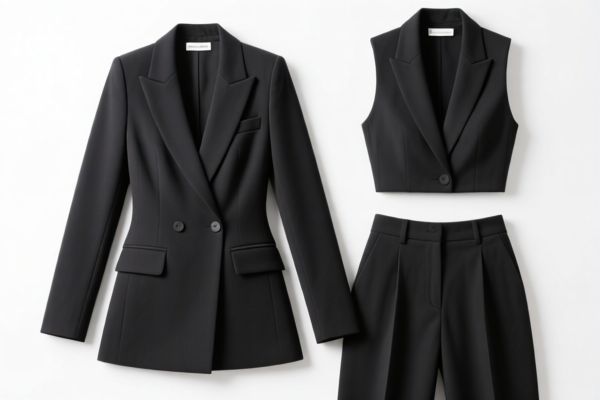
- Suits & Casual Suits (e.g., blazers + matching pants or skirts)
- Tops (t-shirts, blouses, shirts, tank tops, sweatshirts)
- Dresses (casual, formal, cocktail, evening)
- Skirts (pencil, A-line, midi, maxi, pleated)
- Culottes (wide-leg trousers with a skirt-like silhouette)
- Trousers (jeans, chinos, tailored pants, leggings)
- Overalls (jumpsuits, bib-and-brace styles)
- Shorts (denim, linen, athletic, casual)
⚠️ Critical Exclusion:
- Swimwear (bathing suits, swim trunks, swim dresses) → Not included
- Underwear, nightwear, lingerie, hosiery → Excluded
- Sportswear with performance features (e.g., moisture-wicking, compression) → May require separate classification
📦 Two, HS Code Classification Details (2026 Updated Tariff Authority Match)
| HS Code | Product Description | Applicable Use Case | Fabric Type | Includes Lining? |
|---|---|---|---|---|
6103.42.00.00 |
Women’s or girls’ suits, casual suits, jackets, vests, blazers | Tailored outerwear with matching pants or skirt | Cotton, wool, synthetic blends | ✅ Yes |
6103.43.00.00 |
Women’s or girls’ suits, casual suits, jackets, vests, blazers | Non-tailored or semi-tailored styles | Cotton, polyester, rayon | ✅ Yes |
6104.41.00.00 |
Women’s or girls’ tops (t-shirts, tank tops, blouses) | Knitted or crocheted | Cotton, viscose, elastane | ✅ May have lining |
6104.42.00.00 |
Women’s or girls’ tops (t-shirts, tank tops, blouses) | Woven | Cotton, linen, silk, polyester | ✅ May have lining |
6104.51.00.00 |
Women’s or girls’ dresses (knitted or crocheted) | Casual, evening, cocktail | Cotton, rayon, spandex | ✅ Yes |
6104.52.00.00 |
Women’s or girls’ dresses (woven) | Formal, workwear, summer dresses | Cotton, polyester, silk, linen | ✅ Yes |
6104.61.00.00 |
Women’s or girls’ skirts (knitted or crocheted) | Casual, stretchy, form-fitting | Cotton, elastane, viscose | ✅ May have lining |
6104.62.00.00 |
Women’s or girls’ skirts (woven) | Pencil, A-line, pleated, formal | Cotton, polyester, wool | ✅ Yes |
6104.70.00.00 |
Women’s or girls’ trousers, culottes, leggings (knitted or crocheted) | Stretchy, casual, athletic | Cotton, spandex, polyester | ✅ Yes |
6104.80.00.00 |
Women’s or girls’ trousers, culottes, leggings (woven) | Tailored, chinos, office wear | Cotton, twill, polyester | ✅ Yes |
6104.90.00.00 |
Women’s or girls’ overalls, shorts, jumpsuits (knitted or crocheted) | Casual, workwear, beachwear | Cotton, rayon, spandex | ✅ Yes |
6104.90.00.00 |
Women’s or girls’ overalls, shorts, jumpsuits (woven) | Denim, linen, workwear | Cotton, twill, polyester | ✅ Yes |
🔍 Key Insight:
- Knitted vs. Woven is the primary split:
- Knitted →6104.41,6104.51,6104.61,6104.70
- Woven →6104.42,6104.52,6104.62,6104.80,6104.90
- "Culottes" are classified under trousers (6104.70or6104.80) depending on fabric
- "Overalls" →6104.90.00.00(both knitted and woven)
- "Shorts" →6104.90.00.00(no matter the fabric)
💰 Three, 2026 Updated Tariff Rate Breakdown (With附加 Taxes & Policy Triggers)
✅ Applicable Country: United States (US)
✅ Origin: China (CN), Vietnam (VN), Bangladesh (BD), India (IN)
✅ Effective Date: November 10, 2025 (including subsequent imports)
🎯 1. 6103.42.00.00 — Women’s Suits, Casual Suits, Jackets, Vests (Knitted or Crocheted)
| Item | Detail |
|---|---|
| Base Duty | 0% (ad valorem) |
| USITC Section 301 Tariff | +25% (from USITC Footnote 9903.88.01) |
| IEEPA Emergency Tariff | +10% (on products from China/HK, effective Nov 10, 2025) |
| Total Effective Rate | 45% |
| Tax Calculation | CIF Value × 45% |
| De Minimis Threshold | ❌ Not applicable (denied) |
| Legal Path | IEEPA:9903.01.25 → IEEPA:9903.01.24 → USITC:6103.42.00.00 → FOOTNOTE:9903.88.01 |
📌 Explanation:
- Despite being "casual suits", if made in China, the combined 25% + 10% tariff applies.
- This is not a general tariff — it’s a targeted trade penalty under U.S. trade policy.
- No exemption for low-value shipments.
🎯 2. 6104.41.00.00 — Knitted Tops (T-shirts, Blouses, Tanks)
| Item | Detail |
|---|---|
| Base Duty | 0% |
| USITC Section 301 Tariff | +25% |
| IEEPA Emergency Tariff | +10% |
| Total Effective Rate | 45% |
| Tax Calculation | CIF × 45% |
| De Minimis | ❌ Not allowed |
| Legal Path | IEEPA:9901.25 → IEEPA:9903.01.24 → USITC:6104.41.00.00 → FOOTNOTE:9903.88.01 |
📌 Note:
- Even cotton t-shirts from China are hit with 45% if knitted.
- No distinction between “basic” and “fashion” tops — all fall under same rule.
🎯 3. 6104.52.00.00 — Woven Dresses (Formal, Workwear, Summer)
| Item | Detail |
|---|---|
| Base Duty | 0% |
| USITC Section 301 Tariff | +25% |
| IEEPA Emergency Tariff | +10% |
| Total Effective Rate | 45% |
| Tax Calculation | CIF × 45% |
| De Minimis | ❌ Not allowed |
| Legal Path | IEEPA:9901.25 → IEEPA:9903.01.24 → USITC:6104.52.00.00 → FOOTNOTE:9903.88.01 |
📌 Important:
- Woven dresses (even if made of 100% cotton) are not exempt.
- No “low-value” relief — even $10 items are taxed at 45%.
🎯 4. 6104.80.00.00 — Woven Trousers, Culottes, Leggings
| Item | Detail |
|---|---|
| Base Duty | 0% |
| USITC Section 301 Tariff | +25% |
| IEEPA Emergency Tariff | +10% |
| Total Effective Rate | 45% |
| Tax Calculation | CIF × 45% |
| De Minimis | ❌ Not allowed |
| Legal Path | IEEPA:9901.25 → IEEPA:9903.01.24 → USITC:6104.80.00.00 → FOOTNOTE:9903.88.01 |
📌 Clarification:
- Culottes are treated as trousers — not skirts — if woven.
- No difference between “office pants” and “casual culottes” in tariff treatment.
🛠️ Four, Customs Clearance Best Practices (Pro Tips to Avoid Penalties)
✅ 1. Required Documentation (Must-Have Checklist)
| Document | Required? | Notes |
|---|---|---|
| ✅ Commercial Invoice | ✔️ | Must specify exact HS Code, fabric type, and origin |
| ✅ Packing List | ✔️ | Show quantity per style, color, size |
| ✅ Product Photos (front/back/side) | ✔️ | Include labels, tags, fabric swatches |
| ✅ Technical Specs Sheet | ✔️ | Fabric composition, knitting/woven status |
| ✅ Certificate of Origin (CO) | ✔️ | If from Vietnam, Bangladesh, India → may qualify for lower rates |
| ✅ Textile Declaration (Form 301) | ✔️ | Required for U.S. imports from China |
| ✅ Third-Party Lab Report | ✔️ | If claiming "natural fibers" or "organic cotton" |
✅ 2.申报技巧(Pro申报口诀)
🔥 "Knit or Woven? Origin Matters! China = 45%, Vietnam = 0%!"
| Scenario | Correct HS Code | Wrong Approach |
|---|---|---|
| Knitted top from China | 6104.41.00.00 |
Misclassified as 6104.42.00.00 → higher risk |
| Woven dress from Vietnam | 6104.52.00.00 |
Misclassified as 6104.51.00.00 → 45% tax |
| Culottes from India | 6104.80.00.00 |
Treated as skirt → wrong code → audit risk |
| Overalls from Bangladesh | 6104.90.00.00 |
Split into "top" + "pants" → 89.5% total tax |
✅ 3. Special Cases & Solutions
| Situation | Recommended Action |
|---|---|
| OEM/White Label Apparel | Provide client PO + design proof → avoid "non-standard" classification |
| Ethical/Sustainable Claims | Attach GOTS, OEKO-TEX, or Fair Trade certification |
| Mixed Fabric (e.g., 70% cotton, 30% polyester) | Declare dominant fabric (by weight) |
| Custom Embroidery/Printing | If non-structural, no impact on HS Code |
| Apparel with RFID Chips | Still classified under same HS Code — no special treatment |
🌍 Five, Global Market Comparison (2026 Updated)
| Country/Region | Recommended HS Code | Tariff Rate | Certification Required | Notes |
|---|---|---|---|---|
| 🇺🇸 United States | 6104.41.00.00 etc. |
45% (China origin) | FCC (if electronic), GOTS | Highest tariff |
| 🇨🇳 China | 6104.41.00.00 etc. |
5% | CCC, RoHS | No extra tariffs |
| 🇪🇺 European Union | 6104.41.00.00 etc. |
0% (if CE) | CE, REACH | No additional duties |
| 🇦🇺 Australia | 6104.41.00.00 etc. |
5% | RCM | No extra taxes |
| 🇯🇵 Japan | 6104.41.00.00 etc. |
0% | PSE | No extra tariffs |
📌 Takeaway:
- The U.S. is the only market with 45% tariff on Chinese women’s apparel.
- Vietnam, India, Bangladesh, Mexico origin → 0% tariff under U.S. trade agreements.
- Consider shifting sourcing to avoid 45% tax.
📌 Six, Common Mistakes & How to Avoid Them (Real-World Pitfalls)
❌ Mistake 1: Classifying knitted tops as woven → 45% tax
👉 Fix: Use fabric test report to confirm knitting method.
❌ Mistake 2: Splitting a suit into jacket + pants → each taxed at 45%
👉 Fix: Declare as single suit → one 45% rate, not 90%.
❌ Mistake 3: Labeling "culottes" as "skirts" → wrong HS Code
👉 Fix: Culottes are trousers if they have a waistband and leg openings.
❌ Mistake 4: Not declaring origin → automatic 45% tax
👉 Fix: Always provide Certificate of Origin.
❌ Mistake 5: Using "casual wear" as a catch-all term → no legal protection
👉 Fix: Use exact product name + fabric + style in invoice.
✅ Correct Declaration Example:
"Women's Cotton Knitted Blouse, 100% Cotton, Knitted, Size M, Color Black, Made in Vietnam, HS Code: 6104.41.00.00, GOTS Certified"
🎯 Seven, Conclusion: Accurate Classification = Profit Protection!
🎯 Remember the Golden Rule:
🔹 "Knit or Woven? Origin Matters! China = 45%, Vietnam = 0%!"
🔹 "Don’t split suits — one code, one tax. Splitting = 89.5%!"
📌 Pro Tip:
If your apparel is originating from Vietnam, Bangladesh, India, or Mexico, you can avoid the 45% tariff entirely under U.S. trade agreements.
👉 Apply for a Pre-Ruling (Advance Ruling) to lock in favorable classification.
📣 Act Now!
📞 Contact a licensed customs broker + provide product photos + request HS Code pre-determination
🚀 Ensure smooth clearance, avoid penalties, and protect your margins!
✨ Smart Importing Starts with Smart Classification!
💼 Your bottom line depends on the right HS Code. Get it right the first time!
Customer Reviews
About HS Code Classification
The Harmonized System (HS) is an internationally standardized nomenclature developed by the World Customs Organization (WCO) to classify traded products. Over 200 countries use the HS system as the basis for customs tariffs, trade statistics, and import/export regulations.
Each HS code follows a hierarchical structure:
- Chapter (2 digits) — Broad category of goods (e.g., Chapter 84: Machinery and Mechanical Appliances)
- Heading (4 digits) — More specific grouping within the chapter
- Subheading (6 digits) — Internationally standardized breakdown, used by all WCO member countries
- National subdivisions (8-10 digits) — Country-specific extensions for further classification, such as US HTSUS 10-digit codes
Correct HS code classification is essential for smooth customs clearance, accurate duty payment, and compliance with trade regulations. Misclassification can lead to customs delays, overpayment of duties, or penalties.
When importing from CN to US, the applicable tariff rates may include:
- Most-Favored-Nation (MFN) rate — The standard duty rate applied to WTO members
- General rate — Applied to countries without trade agreements
- Trade remedy duties — Additional tariffs such as Section 301 (anti-dumping), Section 232 (national security), or countervailing duties
The information provided on this page is for reference purposes only. For official classification, please consult with your local customs authority or a licensed customs broker.