x光设备配件
CN → US| HS Code | Tariff Rate | Origin | Destination | Doc |
|---|---|---|---|---|
| 9022906000 | 35.0% | CN | US | Official Doc |
| 8543908885 | 85.0% | CN | US | Official Doc |
| 8543908845 | 35.0% | CN | US | Official Doc |
| 9022904000 | 35.9% | CN | US | Official Doc |
| 9033009000 | 39.4% | CN | US | Official Doc |
Product Images
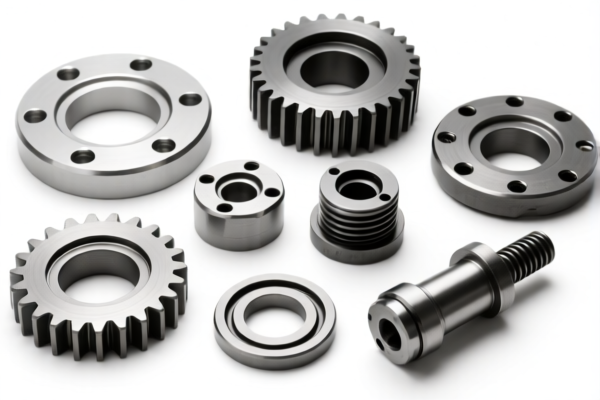
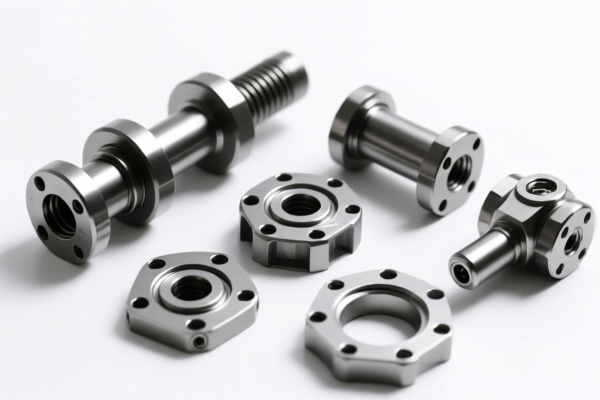
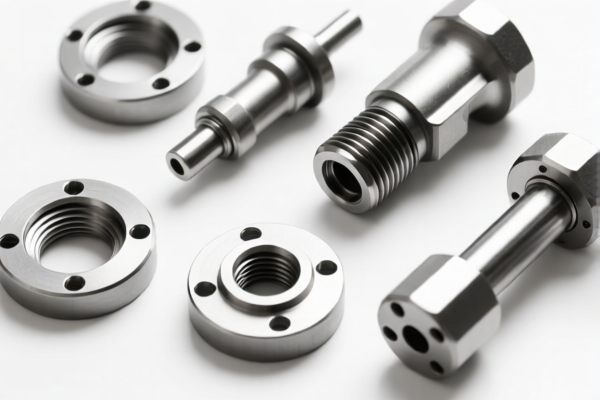
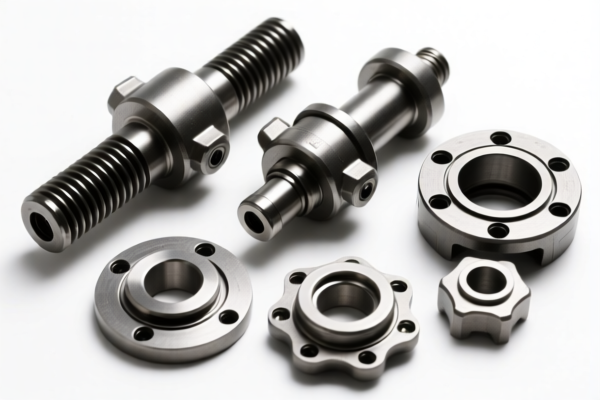
AI Analysis
🩻 X-Ray Equipment Accessories
🌐 HS Code Classification & Tariff Guide | 2026 Updated | Professional Customs Clearance Strategy
📌 One-Stop Reference for Importers & Exporters | High-Tariff Alert!
📦 1. Product Definition & Classification: What Exactly Are "X-Ray Equipment Accessories"?
X-ray equipment accessories are non-primary components used in conjunction with X-ray imaging systems such as medical scanners, industrial inspection devices, and security screening machines. These parts are not the core imaging unit, but essential for operation, safety, or integration.
⚠️ Key Distinction:
- If it's a complete X-ray tube, generator, or detector array → Not an "accessory"
- If it's a support bracket, cable connector, collimator, filter, or mounting component → ✅ Accessory
- If it’s a part of a particle accelerator system or electrical component used in X-ray generation → May fall under 8543.90.88🔍 Critical Note:
The true nature of the part (function, material, integration) determines the HS Code — not just the name.
🧩 2. HS Code Breakdown (2026 Tariff Authority – U.S. Customs)
| HS Code | Product Description | Tax Rate | Applicable Scenario |
|---|---|---|---|
9022.90.60.00 |
Other parts & accessories of X-ray instruments | 35.0% | General X-ray device accessories, no material conflict |
9033.00.90.00 |
Other parts & accessories of X-ray instruments (Chapter 90) | 39.4% | Specific to X-ray instruments, includes electrical/mechanical components |
9022.90.40.00 |
Parts & accessories of X-ray equipment, functionally aligned with X-ray tubes | 35.9% | Functional match to X-ray tube components |
8543.90.88.45 |
Electrical parts, related to particle accelerators, X-ray generation | 35.0% | Component with accelerator physics link, no material conflict |
8543.90.88.85 |
Electrical equipment parts, metal/plastic, used in X-ray systems | 85.0% | High-risk – includes 50% additional tariff on steel, aluminum, copper |
✅ All HS Codes apply to China-origin goods
✅ Effective from Nov 10, 2025 (U.S. tariff regime update)
❗ No de minimis exemption – even small shipments face full tariff
💰 3. Detailed Tariff Breakdown (U.S. 2026 Rules – Full Transparency)
🎯 1. 9022.90.60.00 – X-Ray Equipment Accessories (General)
| Component | Value |
|---|---|
| Base Duty | 0.0% |
| Section 301 (USITC) Additional Duty | +25.0% |
| Section 122 (IEEPA) Emergency Tariff | +10.0% |
| Total Tariff | 35.0% |
| Tax Calculation | CIF × 35.0% |
| De Minimis? | ❌ No (Deny de minimis) |
| Legal Path | IEEPA:9903.01.25 → USITC:9022.90.60.00 → FOOTNOTE:9903.88.01 |
📌 Explanation:
- Applies to non-core X-ray parts like shielding covers, positioning arms, or interface cables
- No material conflict → no extra steel/aluminum surcharge
🎯 2. 9033.00.90.00 – Other X-Ray Instrument Parts & Accessories
| Component | Value |
|---|---|
| Base Duty | 4.4% |
| Section 301 (USITC) Additional Duty | +25.0% |
| Section 122 (IEEPA) Emergency Tariff | +10.0% |
| Total Tariff | 39.4% |
| Tax Calculation | CIF × 39.4% |
| De Minimis? | ❌ No |
| Legal Path | IEEPA:9903.01.24 → USITC:9033.00.90.00 → FOOTNOTE:9903.88.01 |
📌 Explanation:
- Applies to Chapter 90-specific accessories (e.g., collimators, filters, detectors)
- Higher base duty (4.4%) due to precision engineering nature
- Still subject to 25% + 10% emergency tariffs
🎯 3. 9022.90.40.00 – X-Ray Equipment Parts (Functionally Similar to X-Ray Tubes)
| Component | Value |
|---|---|
| Base Duty | 0.9% |
| Section 301 (USITC) Additional Duty | +25.0% |
| Section 122 (IEEPA) Emergency Tariff | +10.0% |
| Total Tariff | 35.9% |
| Tax Calculation | CIF × 35.9% |
| De Minimis? | ❌ No |
| Legal Path | IEEPA:9903.01.25 → USITC:9022.90.40.00 → FOOTNOTE:9903.88.01 |
📌 Explanation:
- Used when part performs similar function to an X-ray tube (e.g., electron emitter, vacuum housing)
- Even if not a tube itself, functional similarity triggers higher scrutiny
🎯 4. 8543.90.88.45 – Electrical Parts Related to Particle Accelerators
| Component | Value |
|---|---|
| Base Duty | 0.0% |
| Section 301 (USITC) Additional Duty | +25.0% |
| Section 122 (IEEPA) Emergency Tariff | +10.0% |
| Total Tariff | 35.0% |
| Tax Calculation | CIF × 35.0% |
| De Minimis? | ❌ No |
| Legal Path | IEEPA:9903.01.25 → USITC:8543.90.88.45 → FOOTNOTE:9903.88.01 |
📌 Explanation:
- Applies to electrical components used in particle accelerators or X-ray generation systems
- No material conflict → no extra metal surcharge
- Common for high-voltage cables, control modules, power regulators
🎯 5. 8543.90.88.85 – Electrical Equipment Parts (Metal/Plastic) – HIGH-RISK!
| Component | Value |
|---|---|
| Base Duty | 0.0% |
| Section 301 (USITC) Additional Duty | +25.0% |
| Section 122 (IEEPA) Emergency Tariff | +10.0% |
| Steel/Aluminum/Copper Surcharge | +50.0% (if material is metal) |
| Total Tariff | 85.0% (if metal) |
| Tax Calculation | CIF × 85.0% (if metal) |
| De Minimis? | ❌ No |
| Legal Path | IEEPA:9903.01.25 → USITC:8543.90.88.85 → FOOTNOTE:9903.88.01 |
📌 Critical Warning:
- If the part is made of steel, aluminum, or copper, +50% surcharge applies
- Even if base code is 35%, metal = 85% total
- Common for brackets, housings, connectors, mounting frames🔥 Real-World Risk:
A plastic bracket → 35%
A steel bracket → 85%
→ Tax difference: 50% – can destroy profit margin
🛠️ 4. Customs Clearance Best Practices (Pro Tips to Avoid Penalties)
✅ 1. Must-Have Documentation
| Document | Required? | Why It Matters |
|---|---|---|
| ✅ Product Specification Sheet | ✔️ | Shows function, material, integration |
| ✅ Circuit/Structural Diagram | ✔️ | Proves it's not a core component |
| ✅ High-Res Product Photos | ✔️ | Clear view of material, labeling, structure |
| ✅ Material Certificate (e.g., steel/aluminum/plastic) | ✔️ | Critical for 8543.90.88.85 |
| ✅ Commercial Invoice | ✔️ | Must state: “X-Ray Equipment Accessory, Not a Core Component” |
| ✅ Certificate of Origin (CO) | ✔️ | Needed for tariff eligibility |
| ✅ Packing List | ✔️ | Shows part vs. full system |
✅ 2.申报技巧(申报口诀)
🔥 “功能看用途,材料定税率,金属要申报,拆分必翻车!”
| Scenario | Correct HS Code | Wrong Approach |
|---|---|---|
| Metal bracket for X-ray table | 8543.90.88.85 + 50% metal surcharge |
Report as 9022.90.60.00 → Underpaid tariff → Penalty |
| Plastic cable holder | 9022.90.60.00 |
Report as 8543.90.88.85 → Overpaid |
| X-ray tube housing (metal) | 9022.90.40.00 |
Misclassified as 8543.90.88.85 → Wrong tariff |
| High-voltage cable | 8543.90.88.45 |
Report as 9033.00.90.00 → Wrong classification |
✅ 3. Special Cases & Risk Mitigation
| Situation | Recommended Action |
|---|---|
| Part is metal but used in non-critical role | Declare material type clearly – avoid surprise surcharge |
| Part is imported with full X-ray system | Do NOT split – risk of "de minimis" violation |
| Custom-designed accessory for hospital | Apply for Advance Ruling (Pre-Ruling) to lock in HS Code |
| Part used in dual-use (civilian/military) | Consult U.S. BIS – may require EAR license |
| Part made in Vietnam/Mexico/Thailand | Apply for IEEPA exemption – possible 0% tariff |
🌍 5. Global Market Comparison (2026)
| Country | Recommended HS Code | Tariff | Certification | Notes |
|---|---|---|---|---|
| 🇺🇸 USA | 9022.90.60.00 / 8543.90.88.85 |
35%–85% | FCC, CE, RoHS | High-risk for metal parts |
| 🇨🇳 China | 9022.90.60.00 |
5% | CCC, RoHS | No extra tariffs |
| 🇪🇺 EU | 9022.90.60.00 |
0% (if CE) | CE, ErP | No 301/122 tariffs |
| 🇦🇺 Australia | 9022.90.60.00 |
5% | RCM | No extra surcharges |
| 🇯🇵 Japan | 9022.90.60.00 |
0% | PSE | No emergency tariffs |
📌 Insight:
- Only the U.S. applies 301 + 122 tariffs
- Only the U.S. imposes 50% metal surcharge
- Best strategy: Source from Vietnam/Mexico to avoid 85% tariff
🚨 6. Common Mistakes & Legal Risks (Avoid These!)
❌ Mistake 1:
Reporting a steel bracket as
9022.90.60.00
👉 Result: Underpaid duty → 85% penalty + interest
❌ Mistake 2:
Splitting a full X-ray system into "accessories"
👉 Result: Each part taxed at 85% → Total tax > 200%
❌ Mistake 3:
Not declaring material type for
8543.90.88.85
👉 Result: Customs assumes metal → 50% surcharge applied retroactively
❌ Mistake 4:
Using “X-ray tube part” in invoice without function proof
👉 Result: Misclassification → refund denial + audit risk
✅ Correct Labeling Example:
“X-Ray Equipment Accessory – Plastic Mounting Bracket, Non-Metallic, for Diagnostic Imaging Table, Model XYZ, CE & RoHS Certified”
🎯 7. Final Verdict: How to Win the Tariff Game
🎯 Golden Rules:
🔹 “Function over name” – what it does matters more than what it’s called
🔹 “Material determines tariff” – steel = 85%, plastic = 35%
🔹 “No de minimis” – even small orders pay full rate
🔹 “Splitting = disaster” – never break down a system
🔹 “Pre-ruling saves money” – apply for HS Code pre-approval
📌 Pro Tip:
✅ Apply for Advance Ruling (USCBP Pre-Ruling) before shipping
✅ Use non-metallic materials when possible (plastic, composite)
✅ Source from Vietnam, Mexico, or Thailand to avoid 85% tariff
✅ Always declare material type in commercial invoice
📣 Act Now!
📞 Contact a U.S. Customs Broker + Tariff Specialist
🚀 Get HS Code Pre-Ruling + Tariff Simulation
💼 Avoid $50K+ in unexpected duties and shipment delays
✨ Your shipment’s success starts with the right HS Code.
💼 One mistake = 50% tax hike. One pre-ruling = 100% confidence.
🔐 Expert Advice:
“In the world of X-ray accessories, material is destiny — and HS Code is your passport.”
Customer Reviews
About HS Code Classification
The Harmonized System (HS) is an internationally standardized nomenclature developed by the World Customs Organization (WCO) to classify traded products. Over 200 countries use the HS system as the basis for customs tariffs, trade statistics, and import/export regulations.
Each HS code follows a hierarchical structure:
- Chapter (2 digits) — Broad category of goods (e.g., Chapter 84: Machinery and Mechanical Appliances)
- Heading (4 digits) — More specific grouping within the chapter
- Subheading (6 digits) — Internationally standardized breakdown, used by all WCO member countries
- National subdivisions (8-10 digits) — Country-specific extensions for further classification, such as US HTSUS 10-digit codes
Correct HS code classification is essential for smooth customs clearance, accurate duty payment, and compliance with trade regulations. Misclassification can lead to customs delays, overpayment of duties, or penalties.
When importing from CN to US, the applicable tariff rates may include:
- Most-Favored-Nation (MFN) rate — The standard duty rate applied to WTO members
- General rate — Applied to countries without trade agreements
- Trade remedy duties — Additional tariffs such as Section 301 (anti-dumping), Section 232 (national security), or countervailing duties
The information provided on this page is for reference purposes only. For official classification, please consult with your local customs authority or a licensed customs broker.