刨花板
CN → US| HS Code | Tariff Rate | Origin | Destination | Doc |
|---|---|---|---|---|
| 4412920700 | 35.0% | CN | US | Official Doc |
| 4410110010 | 35.0% | CN | US | Official Doc |
| 4410110060 | 35.0% | CN | US | Official Doc |
| 4411940040 | 35.0% | CN | US | Official Doc |
| 4411936000 | 35.0% | CN | US | Official Doc |
| 4412910600 | 35.0% | CN | US | Official Doc |
Product Images
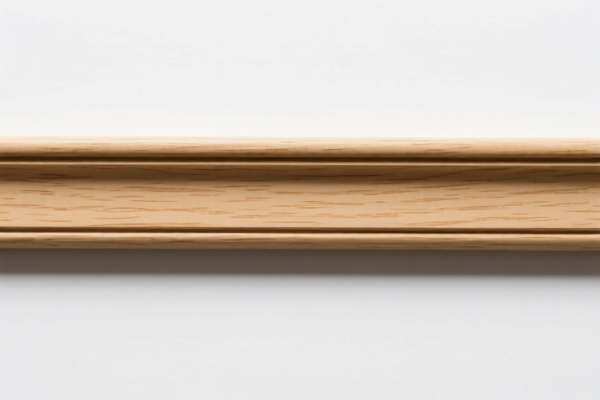
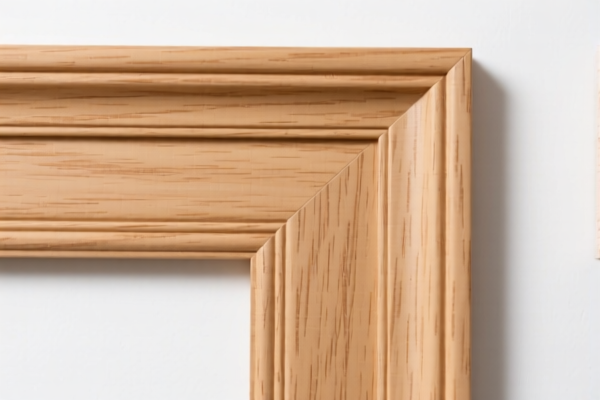
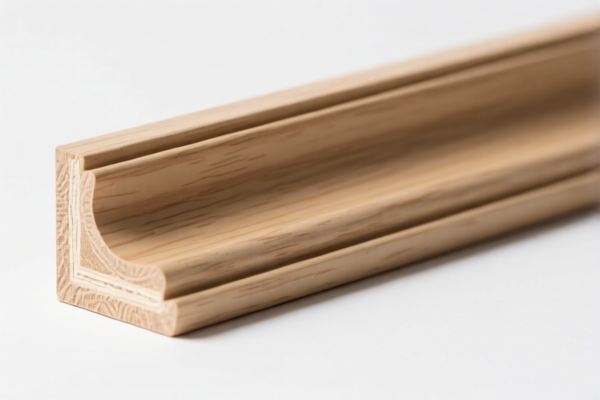
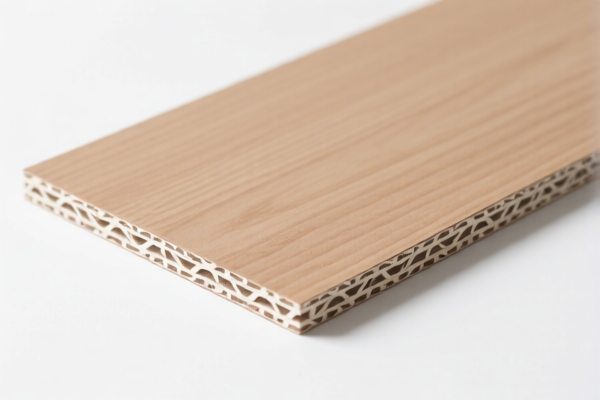
AI Analysis
🪵 Particle Board (刨花板)
🌐 HS Code Reference & Customs Clearance Guide | 2026 Latest Tariff Analysis | Professional Strategy for Wood-Based Panels
📌 I. Product Definition & Classification: Do You Really Know “Particle Board”?
Particle Board (also known as Chipboard) is a man-made wood product made from wood chips, sawmill shavings, or even sawdust, shaped and pressed together with synthetic resin or other suitable adhesives. It is widely used in furniture, flooring, and interior construction.
In international trade, it is often confused with MDF (Medium Density Fiberboard) or Plywood. The key distinction lies in the material structure: * Particle Board: Made of flakes/chips pressed together. * MDF: Made of fibers pressed together. * Plywood: Made of veneers (layers of thin wood) glued together.
⚠️ Key Classification Insight:
- If the product is explicitly named "Particle Board" or "Chipboard" → It typically falls under Chapter 44 (Wood and articles of wood).
- Specific HS codes depend on whether it is a standalone board, part of a multi-layer panel (e.g., with a veneer or melamine face), or classified by density and fiber content.
📦 II. HS Code Classification Details (2026 Latest Tariff Authority Mapping)
Based on the provided data, here are the specific HS Codes mapped to Particle Board, along with their logical justification and tax implications.
| HS Code | Product Description | Logic for Matching | Total Tax Rate |
|---|---|---|---|
4412.92.07.00 |
Veneered Wood Panels / Plywood with Particle Board Layer | ✅ Match Success: The product name explicitly includes "Particle Board" (刨花板). This fits the definition of panels "containing at least one layer of particle board." It is often used for laminated boards or composite panels where particle board is a core layer. | 35.0% |
4410.11.00.10 |
Particle Board (Chipboard) | ✅ Match Success: Direct match. The material (Wood-based) and form (Board) align perfectly with the definition of Particle Board / Oriented Strand Board (OSB) under Heading 4410. This is the most direct classification for pure particle board. | 35.0% |
4410.11.00.60 |
Particle Board (Wooden Particle Board) | ✅ Direct Match: The product name directly matches the material (Wooden Particle Board) and form. This is another specific sub-code for particle boards under Heading 4410. | 35.0% |
4411.94.00.40 |
Other Wood Fiberboard (High Density / Medium Density) | ✅ Match Success: Particle board is technically a type of wood-fiber-based board. While MDF is more common in 4411, particle board can sometimes be classified here if it meets the density and fiber criteria, especially if it lacks specific particle board classification nuances. No material conflict. | 35.0% |
4411.93.60.00 |
Other Wood Fiberboard (Medium Density) | ✅ Match Success: Particle board falls under the broad category of "Wood Fiberboard" in some interpretations of Heading 4411, particularly if classified by density and fiber structure rather than just "chip" structure. | 35.0% |
4412.91.06.00 |
Plywood with Particle Board Core | ✅ Match Success: "Particle Board" (Particle board) is a type of grain board. This code is for plywood that "contains at least one layer of particle board." This applies if the particle board is used as a core layer in a multi-layer plywood structure. | 35.0% |
🔍 Critical Note:
- All listed HS Codes result in a 35.0% Total Tax Rate for US imports from China.
- The distinction between4410(Wood boards, e.g., MDF, Particle Board, OSB) and4412(Plywood, Veneered Panels) is crucial.
- 4410 is for homogeneous boards made of wood chips/fibers.
- 4412 is for layered products (plywood) where particle board is one of the layers.
- Misclassification between these can lead to customs delays, though the tax rate in this specific dataset is identical.
💰 III. 2026 Latest Tariff Rate Breakdown (Including Surcharges & Policy Add-ons)
✅ Applicable Country: United States (US)
✅ Country of Origin: China (CN)
✅ Effective Date: November 10, 2025 (and subsequent imports)
🎯 1. General Tariff Structure for Particle Board (All Listed HS Codes)
| Item | Detail |
|---|---|
| Base Tariff | 0.0% (Ad Valorem) |
| Section 301 Tariff (USITC) | +25.0% (Added under US Trade Law Section 301) |
| IEEPA Tariff (Section 122) | +10.0% (Specific surcharge for Chinese products under IEEPA) |
| Total Tariff Rate | 35.0% |
| Tax Calculation | CIF Value × 35% |
| De Minimis Exemption | ❌ Not Eligible (These goods do not qualify for the $800 de minimis exemption due to high tariff rates and specific exclusions for wood products under Section 301/IEEPA). |
| Legal Path | Base: 44xx.xx.xx → Section 301: Footnote 9903.88.01 → IEEPA: 9903.01.25 |
📌 Explanation:
- "25% Section 301 Tariff": This is the primary additional duty on Chinese wood products to protect US domestic lumber and panel manufacturers.
- "10% IEEPA Tariff": This is an additional surcharge applied to many Chinese goods under the International Emergency Economic Powers Act.
- Total 35%: This is a significant cost factor. Importers must account for this in their landed cost calculations. It is not a low-tariff item.
🛠️ IV. Customs Clearance Practical Advice (Actionable Pitfall Avoidance)
✅ 1. Documentation Checklist (Mandatory)
| Document | Required | Notes |
|---|---|---|
| ✅ Commercial Invoice | ✔️ | Must clearly state "Particle Board," "Chipboard," or "Wood Fiberboard." Avoid vague terms like "Wood Material." |
| ✅ Packing List | ✔️ | Detail weight, dimensions, and quantity. Ensure it matches the invoice. |
| ✅ Certificate of Origin (CO) | ✔️ | Essential to determine country of origin. If not from China, different tariffs may apply. |
| ✅ Product Specification Sheet | ✔️ | Include: Density, thickness, dimensions, adhesive type (e.g., Urea-Formaldehyde), and compliance with CARB/EPA standards. |
| ✅ Fumigation Certificate | ✔️ | Critical for Wood Products. ISPM 15 compliant fumigation is required for wood packaging/materials. |
| ✅ Formal Entry Summary | ✔️ | Accurate HS code classification. |
✅ 2. Classification Strategy (Key Tips)
🔥 “Correct HS is Key, Tax is 35%, Fumigation is Mandatory!”
| Scenario | Correct HS Code | Wrong Practice | Consequence |
|---|---|---|---|
| Pure Particle Board (Unlaminated) | 4410.11.00.10 or 4410.11.00.60 |
Classifying as 4412 (Plywood) |
Potential customs query, though tax may be same. Risk of penalty if misrepresentation is found. |
| Particle Board with Veneer/Laminate Core | 4412.92.07.00 or 4412.91.06.00 |
Classifying as 4410 (Board) |
Misclassification. 4412 is for layered products. |
| MDF (Medium Density Fiberboard) | 4411.94.00.40 or 4411.93.60.00 |
Classifying as Particle Board (4410) |
Different product structure. MDF is fiber-based, not chip-based. |
| Wood Packaging (Pallets) | Not Particle Board | Declaring Particle Board | Different tariff and fumigation rules. |
📌 Important:
- Ensure the description matches the physical structure.
- If it’s a core layer in a plywood sheet, use 4412.
- If it’s a standalone board, use 4410.
✅ 3. Special Considerations
| Issue | Advice |
|---|---|
| Fumigation | Wood products from China must be fumigated according to ISPM 15 standards. Lack of a fumigation certificate will result in rejection or destruction at the port. |
| Formaldehyde Emissions | Ensure compliance with CARB (California Air Resources Board) or EPA TSCA Title VI standards if selling in the US, especially for interior furniture components. Customs may request proof. |
| Section 301 Exclusions | Check if your specific product type had any exclusions in the past. Most wood products are not excluded. |
| Countervailing/Duty | Some wood products may be subject to anti-dumping duties. Verify with a customs broker. |
🌍 V. Global Market Comparison (2026)
| Market | Recommended HS Code | Tariff Rate (China Origin) | Key Requirements | Notes |
|---|---|---|---|---|
| 🇺🇸 USA | 4410.11.00.10 / 4412.92.07.00 |
35% (Base 0% + 25% Sec 301 + 10% IEEPA) | ISPM 15 Fumigation, CARB/EPA Compliance | High tariff barrier. Critical to classify correctly. |
| 🇨🇳 China | 4410.11.00.10 |
~0-5% | N/A | Low import tariff, high domestic production. |
| 🇪🇺 EU | 4410.11.00.00 |
0-6.5% | CE Marking, REACH Compliance | Lower tariffs than US, but strict environmental/chemical regulations. |
| 🇬🇧 UK | 4410.11.00.00 |
0-6.5% | UKCA Marking | Post-Brexit rules apply. |
| 🇨🇦 Canada | 4410.11.00.00 |
0% (if under USMCA, but China origin → MFN) | N/A | MFN rate may be higher than 0% for non-NAFTA goods. |
📌 Conclusion:
- The USA has the highest tariff burden (35%) for Chinese-origin particle board.
- Compliance with fumigation and environmental standards is as important as the HS code classification.
📌 VI. Common Errors & Pitfalls (Lessons Learned)
❌ Error 1: Declaring "Particle Board" but shipping MDF.
👉 Consequence: Customs may classify it as MDF (4411), leading to delays, potential penalties, or re-inspection.
❌ Error 2: Ignoring Fumigation Requirements.
👉 Consequence: Goods held at port, fined, or returned. Wood pests are a major concern.
❌ Error 3: Misclassifying Laminated Panels as pure Particle Board (4410).
👉 Consequence: If the panel has multiple layers (veneer, melamine, plywood), it may be classified under 4412. While the tax rate might be similar in this dataset, the legal description is wrong.
❌ Error 4: Assuming De Minimis applies.
👉 Consequence: Shipments under $800 will still be subject to full tariffs (35%) and processing fees because wood products are generally excluded from the de minimis exemption when under Section 301.
✅ Best Practice:
"Particle Board, 18mm thick, 4x8 feet, Urea-Formaldehyde bonded, CARB Phase 2 Compliant, Fumigated ISPM 15, Made in China."
🎯 VII. Conclusion: Professional Clearance, Cost Control, Risk Mitigation!
🎯 Key Takeaway:
🔹 "Particle Board is 35% Taxed in the US. Fumigation is Mandatory. Classification is Key!"
🔹 "35% is not negotiable for Chinese origin. Plan your pricing accordingly."
📌 Pro Tip:
- If you are importing large volumes, consider Advance Rulings from CBP to confirm the HS Code.
- Explore supply chain diversification (e.g., sourcing from Vietnam or Thailand) if tariffs remain high, as these countries may have more favorable trade terms (though verify current tariffs as rules change).
- Always ensure environmental compliance (CARB/EPA) to avoid additional regulatory hurdles beyond customs.
📣 Immediate Action:
📞 Engage a licensed customs broker.
📄 Prepare all documentation (Invoice, Packing List, CO, Fumigation Certificate).
📊 Calculate landed cost with 35% tariff included.
🚀 Ensure smooth clearance, avoid delays, and maximize profit!
✨ Professional Customs Clearance Starts with Accurate Classification!
💼 Every dollar in tariff is a dollar in cost. Be precise!
Customer Reviews
About HS Code Classification
The Harmonized System (HS) is an internationally standardized nomenclature developed by the World Customs Organization (WCO) to classify traded products. Over 200 countries use the HS system as the basis for customs tariffs, trade statistics, and import/export regulations.
Each HS code follows a hierarchical structure:
- Chapter (2 digits) — Broad category of goods (e.g., Chapter 84: Machinery and Mechanical Appliances)
- Heading (4 digits) — More specific grouping within the chapter
- Subheading (6 digits) — Internationally standardized breakdown, used by all WCO member countries
- National subdivisions (8-10 digits) — Country-specific extensions for further classification, such as US HTSUS 10-digit codes
Correct HS code classification is essential for smooth customs clearance, accurate duty payment, and compliance with trade regulations. Misclassification can lead to customs delays, overpayment of duties, or penalties.
When importing from CN to US, the applicable tariff rates may include:
- Most-Favored-Nation (MFN) rate — The standard duty rate applied to WTO members
- General rate — Applied to countries without trade agreements
- Trade remedy duties — Additional tariffs such as Section 301 (anti-dumping), Section 232 (national security), or countervailing duties
The information provided on this page is for reference purposes only. For official classification, please consult with your local customs authority or a licensed customs broker.