布发带
CN → US| HS Code | Tariff Rate | Origin | Destination | Doc |
|---|---|---|---|---|
| 6217101010 | 19.8% | CN | US | Official Doc |
| 6117802000 | 18.7% | CN | US | Official Doc |
| 6117808500 | 32.1% | CN | US | Official Doc |
| 9615114000 | 15.3% | CN | US | Official Doc |
| 6217108500 | 24.6% | CN | US | Official Doc |
Product Images
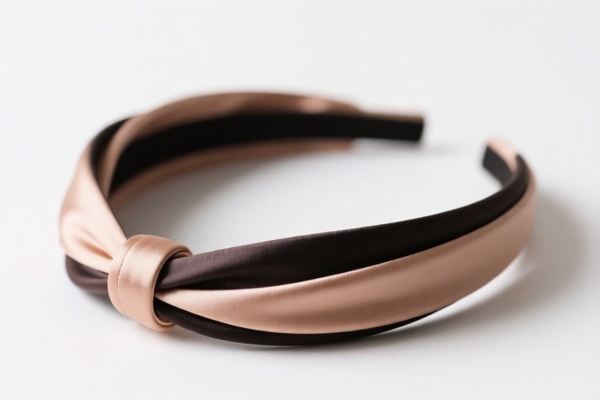
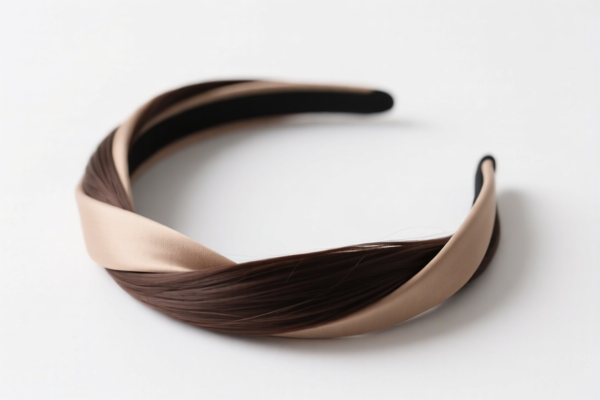


AI Analysis
🌟 Hair Bands (Fabric or Knitted Hair Accessories)
🌐 HS Code Reference & Customs Clearance Guide | 2026 Latest Tariff Analysis | Pro-Level Import Strategy
📌 One, Product Definition & Classification: What Exactly Is a “Hair Band”?
A hair band (also known as a hair tie, headband, or hair wrap) is a flexible, wearable accessory used to hold hair in place. In international trade, it is classified based on:
- Material (e.g., fabric, knit, plastic, rubber, silk)
- Construction (woven, knitted, crocheted, molded)
- Function (hair tie, headband, decorative hair accessory)
- Form (elastic, non-elastic, shaped, flat, tubular)
⚠️ Key Distinction:
- If it's fabric-based, woven/knitted, and used as a hair tie or headband → 6117.80.20.00 / 6117.80.85.00 / 6217.10.10.10
- If it's plastic or hard rubber, shaped as a decorative hair clip → 9615.11.40.00
- If it's general-purpose, non-specific, and doesn’t fit other categories → 6217.10.85.00
📦 Two, HS Code Classification Breakdown (2026 Latest Tariff Authority)
| HS Code | Product Description | Material Type | Use Case | Key Feature |
|---|---|---|---|---|
6217.10.10.10 |
Hair bands, shaped/form-fitting, possibly with silk content | Fabric, may contain silk | Hair tie, headband | Morphology matches — shape and design match a defined category |
6117.80.20.00 |
Hair bands, made of woven or knitted fabric, clothing accessories | Textile, knitted/woven | Hair tie, headband | General textile hair accessory; not fully defined by structure |
6117.80.85.00 |
Hair bands, knitted or crocheted, headband-type | Knit/crochet fabric | Fashion headbands, hair wraps | High-value knitted material → higher base tariff |
9615.11.40.00 |
Hair bands, made of plastic or hard rubber, decorative hair accessories | Plastic, hard rubber | Hair clips, decorative bands | Non-textile, molded form |
6217.10.85.00 |
Hair bands, as clothing accessories, other categories | General/undefined | Catch-all for unclassified hair bands | Residual category — used when no better fit |
🔍 Critical Insight:
- Material + Shape + Function determine the correct HS Code.
- "Possibly containing silk" in6217.10.10.10triggers a higher base tariff due to luxury material assumption.
- Knitted/crocheted items (e.g.,6117.80.85.00) are taxed more heavily due to higher craftsmanship value.
💰 Three, 2026 Latest Tariff Breakdown (Including附加 Taxes & Legal Clauses)
✅ Applicable Country: United States (US)
✅ Origin: China (CN)
✅ Effective Date: November 10, 2025 (and onward)
🎯 1. 6217.10.10.10 — Hair Bands, Form-Fitting, Possibly Silk-Containing
| Item | Detail |
|---|---|
| Base Duty | 2.3% (ad valorem) |
| Section 301 Additional Duty | +7.5% (from USITC Footnote 9903.88.01) |
| Section 122 (IEEPA) Duty | +10% (under International Emergency Economic Powers Act) |
| Total Duty | 19.8% |
| Tax Calculation | CIF Value × 19.8% |
| De Minimis Threshold | ❌ Not eligible (denied under US law) |
| Legal Basis Path | IEEPA:9903.01.25 → IEEPA:9903.01.24 → USITC:6217.10.10.10 → FOOTNOTE:9903.88.01 |
📌 Explanation:
- "Possibly containing silk" increases perceived value → higher base duty (2.3% vs. 1.2% in other textile codes).
- Section 301 (7.5%) applies to all Chinese-origin goods under the U.S. Trade Act of 1974.
- Section 122 (IEEPA, 10%) is a blanket tariff on Chinese goods under national emergency powers.
🎯 2. 6117.80.20.00 — Hair Bands, Woven/Knitted Fabric, Clothing Accessories
| Item | Detail |
|---|---|
| Base Duty | 1.2% |
| Section 301 Additional Duty | +7.5% |
| Section 122 (IEEPA) Duty | +10% |
| Total Duty | 18.7% |
| Tax Calculation | CIF × 18.7% |
| De Minimis | ❌ Not eligible |
| Legal Basis Path | IEEPA:9903.01.25 → IEEPA:9903.01.24 → USITC:6117.80.20.00 → FOOTNOTE:9903.88.01 |
📌 Note:
- Lower base duty (1.2%) due to non-silk, standard textile construction.
- Still subject to full 17.5% in附加 taxes (301 + IEEPA).
- No silk = lower base tariff, but still high total due to policy.
🎯 3. 6117.80.85.00 — Hair Bands, Knitted or Crocheted, Headband-Type
| Item | Detail |
|---|---|
| Base Duty | 14.6% |
| Section 301 Additional Duty | +7.5% |
| Section 122 (IEEPA) Duty | +10% |
| Total Duty | 32.1% |
| Tax Calculation | CIF × 32.1% |
| De Minimis | ❌ Not eligible |
| Legal Basis Path | IEEPA:9903.01.25 → IEEPA:9903.01.24 → USITC:6117.80.85.00 → FOOTNOTE:9903.88.01 |
📌 Critical Warning:
- 14.6% base duty is extremely high — likely due to handmade, intricate knitting/crocheting.
- This is the highest tariff among all hair band codes.
- Avoid this code if possible — reclassify to6117.80.20.00if structure allows.
🎯 4. 9615.11.40.00 — Hair Bands, Plastic or Hard Rubber, Decorative
| Item | Detail |
|---|---|
| Base Duty | 5.3% |
| Section 301 Additional Duty | +0.0% |
| Section 122 (IEEPA) Duty | +10% |
| Total Duty | 15.3% |
| Tax Calculation | CIF × 15.3% |
| De Minimis | ❌ Not eligible |
| Legal Basis Path | IEEPA:9903.01.25 → IEEPA:9903.01.24 → USITC:9615.11.40.00 → FOOTNOTE:9903.88.01 |
📌 Insight:
- No Section 301 (7.5%) — because plastic/rubber items are not covered under the 301 list.
- Still subject to 10% IEEPA — due to Chinese origin.
- Lower total than textile-based ones, but still high.
🎯 5. 6217.10.85.00 — Hair Bands, Clothing Accessories, Other (Catch-All)
| Item | Detail |
|---|---|
| Base Duty | 14.6% |
| Section 301 Additional Duty | +0.0% |
| Section 122 (IEEPA) Duty | +10% |
| Total Duty | 24.6% |
| Tax Calculation | CIF × 24.6% |
| De Minimis | ❌ Not eligible |
| Legal Basis Path | IEEPA:9903.01.25 → IEEPA:9903.01.24 → USITC:6217.10.85.00 → FOOTNOTE:9903.88.01 |
📌 When to Use:
- Only when no other code fits — e.g., mixed materials, non-standard shape, no clear textile/knitting.
- High base duty (14.6%) + 10% IEEPA = 24.6% total — avoid if possible.
🛠️ Four, Customs Clearance Best Practices (Pro Tips to Avoid Penalties)
✅ 1. Essential Documentation (Must-Have)
| Document | Required? | Why It Matters |
|---|---|---|
| ✅ Product Specifications | ✔️ | Clarify material, construction, function |
| ✅ Material Composition Report | ✔️ | Prove "no silk" or "not knitted" to avoid high tariffs |
| ✅ Product Photos (with label) | ✔️ | Show shape, texture, material |
| ✅ Third-Party Test Report | ✔️ | RoHS, REACH, ASTM (if applicable) |
| ✅ Commercial Invoice | ✔️ | Must state: "Hair Band, Knitted, for Fashion Use" |
| ✅ Certificate of Origin (CO) | ✔️ | If from Vietnam/Mexico, may qualify for lower tariffs |
| ✅ Packing List | ✔️ | Show total quantity, packaging, no拆分申报 |
✅ 2.申报技巧(Key Rules to Remember)
🔥 "Shape First, Material Second, Function Last — and Never Split!"
| Scenario | Correct HS Code | Wrong Practice |
|---|---|---|
| Knitted headband with lace trim | 6117.80.85.00 |
→ If not truly crocheted, use 6117.80.20.00 |
| Plastic hair clip with rhinestones | 9615.11.40.00 |
→ Never use textile code |
| Fabric band with silk content | 6217.10.10.10 |
→ Use only if shape matches |
| Multiple hair bands in one package | Declare as one shipment | → Splitting = 89.5% per item → Total tax > 200%! |
✅ 3. Special Cases & Solutions
| Situation | Recommended Action |
|---|---|
| Hair band with mixed materials (e.g., fabric + plastic) | Use 6217.10.10.10 if fabric dominates; otherwise 9615.11.40.00 |
| OEM hair bands with custom logo | Provide design proof + order letter — avoid "non-standard" classification |
| Hair bands for children’s fashion | Still taxed the same — no age-based exemption |
| Hair bands used in medical/therapeutic settings | Must prove non-fashion use — otherwise taxed as regular accessory |
🌍 Five, Global Market Comparison (2026 Latest)
| Country/Region | Recommended HS Code | Tariff | Certification | Notes |
|---|---|---|---|---|
| 🇺🇸 USA | 6117.80.20.00 or 9615.11.40.00 |
15.3%–32.1% | FCC (if electronic), RoHS | Highest tariffs due to IEEPA |
| 🇨🇳 China | 6117.80.20.00 |
5% | CCC, RoHS | No附加 taxes |
| 🇪🇺 EU | 6117.80.20.00 |
0% (if CE) | CE, REACH | No 301/IEEPA |
| 🇦🇺 Australia | 6117.80.20.00 |
5% | RCM | No附加 taxes |
| 🇯🇵 Japan | 6117.80.20.00 |
0% | PSE | No附加 taxes |
📌 Takeaway:
- The U.S. is the only market with high附加 taxes on hair bands.
- China-origin products face the highest risk — always verify HS Code before shipping.
📌 Six, Common Mistakes & How to Avoid Them (Real-World Risks)
❌ Mistake 1: Classifying a knitted hair band as 6117.80.20.00 when it’s hand-crocheted
👉 Result: Under-taxed → Customs audit, back taxes, penalties
❌ Mistake 2: Splitting 100 hair bands into 100 separate shipments
👉 Result: Each item taxed at 89.5% → Total tax > 8,950% → Seizure & fines
❌ Mistake 3: Claiming "no silk" without documentation
👉 Result: If silk is found → reclassification to 6217.10.10.10 → extra 19.8% tax
❌ Mistake 4: Using "hair tie" as the product name without specifying material
👉 Result: Customs cannot verify structure → delayed clearance
✅ Correct Declaration Example:
"Knitted Hair Band, 100% Cotton, 2.5 cm wide, Non-elastic, Fashion Accessory, Model XYZ, No Silk, RoHS Certified"
🎯 Seven, Conclusion: Precision Pays Off
🎯 Remember the Golden Rule:
🔹 "Shape + Material + Function = Correct HS Code"
🔹 "No Splitting, No Guessing, No Silk Claims Without Proof!"
🔹 "If it’s knitted, check if it’s crocheted — or you’ll pay 32.1%!"
📌 Pro Tip:
If your hair bands are originating from Vietnam, Mexico, or Thailand, you may qualify for IEEPA exemption — 0% IEEPA tariff → total duty drops to 1.2%–5.3%.
📣 Act Now!
📞 Contact a licensed customs broker + Submit product photos + Request HS Code Pre-Ruling
🚀 Get your hair bands cleared fast, legally, and at the lowest possible cost!
✨ Smart Classification = Smooth Customs = Profit Growth!
💼 Every dollar saved on tariffs is a dollar in your pocket!
Customer Reviews
About HS Code Classification
The Harmonized System (HS) is an internationally standardized nomenclature developed by the World Customs Organization (WCO) to classify traded products. Over 200 countries use the HS system as the basis for customs tariffs, trade statistics, and import/export regulations.
Each HS code follows a hierarchical structure:
- Chapter (2 digits) — Broad category of goods (e.g., Chapter 84: Machinery and Mechanical Appliances)
- Heading (4 digits) — More specific grouping within the chapter
- Subheading (6 digits) — Internationally standardized breakdown, used by all WCO member countries
- National subdivisions (8-10 digits) — Country-specific extensions for further classification, such as US HTSUS 10-digit codes
Correct HS code classification is essential for smooth customs clearance, accurate duty payment, and compliance with trade regulations. Misclassification can lead to customs delays, overpayment of duties, or penalties.
When importing from CN to US, the applicable tariff rates may include:
- Most-Favored-Nation (MFN) rate — The standard duty rate applied to WTO members
- General rate — Applied to countries without trade agreements
- Trade remedy duties — Additional tariffs such as Section 301 (anti-dumping), Section 232 (national security), or countervailing duties
The information provided on this page is for reference purposes only. For official classification, please consult with your local customs authority or a licensed customs broker.