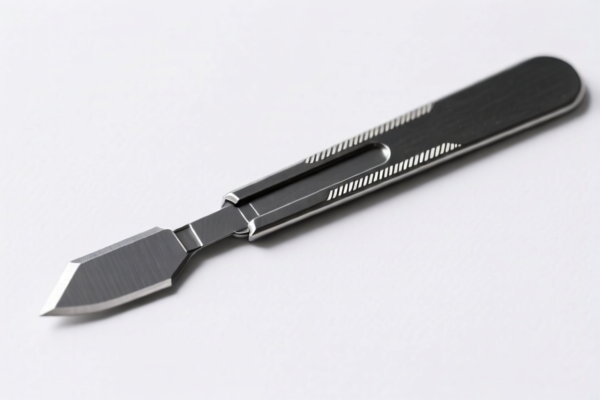
手术刀
CN → US| HS Code | Tariff Rate | Origin | Destination | Doc |
|---|---|---|---|---|
| 9018906000 | 35.0% | CN | US | Official Doc |
| 9018908000 | 10.0% | CN | US | Official Doc |
| 9018907560 | 10.0% | CN | US | Official Doc |
| 9018906000 | 35.0% | CN | US | Official Doc |
| 8456111010 | 38.5% | CN | US | Official Doc |
Product Images


AI Analysis
🩸 Laser Scalpel (Surgical Laser Knife) – HS Code & Tariff Guide 2026 | Comprehensive Customs Clearance Strategy
🌐 HS Code Classification & Duty Breakdown | 2026 Updated Tariff Rules | Expert-Level Import Advice
📌 One Product, Four Possible HS Codes — Know Which One Applies to You!
The laser scalpel is a high-precision medical device used in surgical procedures. However, its classification depends entirely on its intended use, not just its physical form. Misclassification can result in massive tariff overpayments, delays, or even seizure.
⚠️ Critical Insight:
- If used for surgery (medical/therapeutic) → Low tariffs (10%)
- If used for industrial laser processing (e.g., metal cutting) → Extremely high tariffs (38.5%)🔥 The difference? Intended Use.
You must prove how it's used — not just what it is.
🔍 Two Core Use Cases & Their HS Code Mapping (2026 Tariff Authority)
| HS Code | Product Description | Primary Use Case | Tax Rate | Key Legal Basis |
|---|---|---|---|---|
9018.90.60.00 |
Laser surgical knife, used in electrosurgical procedures | Medical/Surgical – for human body tissue incision | 35.0% | USITC + IEEPA |
9018.90.80.00 |
Laser surgical knife, for medical/surgical purposes | Medical/Surgical – general surgical instrument | 10.0% | IEEPA only |
9018.90.75.60 |
Laser surgical knife, used in surgical treatment devices | Medical/Surgical – therapeutic medical equipment | 10.0% | IEEPA only |
8456.11.10.10 |
Laser processing machine for metal/industrial cutting | Industrial Laser Machining – non-medical use | 38.5% | USITC + IEEPA + Base Tariff |
✅ Bottom Line:
- Medical Use? →9018.90.60.00,9018.90.80.00, or9018.90.75.60→ 10%–35%
- Industrial Use? →8456.11.10.10→ 38.5%❗ Do NOT assume your product is medical just because it’s a “laser scalpel.” Intent matters.
💰 2026 Tariff Breakdown: What’s Really in the 35% and 10%?
🎯 1. 9018.90.60.00 – Electrosurgical Laser Scalpel (Medical Use)
| Component | Rate | Legal Basis |
|---|---|---|
| Basic Duty | 0.0% | Standard U.S. tariff |
| Section 301 (USITC) | +25.0% | From the U.S. Trade Representative’s “Section 301” list (China tariffs) |
| IEEPA (Executive Order) | +10.0% | Under the International Emergency Economic Powers Act (IEEPA) for China/HK |
| Total Duty | 35.0% | CIF × 35% |
| De Minimis Exemption? | ❌ No | No 8% de minimis relief applies |
| Legal Path | IEEPA:9903.01.25 → USITC:9018.90.60.00 → FOOTNOTE:9903.88.01 |
📌 Why 35%?
This code is specifically targeted at medical devices used in electrosurgical procedures. Even if it's a laser, if it's used in surgery and matches the "electrosurgical" definition, it triggers both 301 and IEEPA tariffs.
🎯 2. 9018.90.80.00 – General Medical/Surgical Laser Instrument
| Component | Rate | Legal Basis |
|---|---|---|
| Basic Duty | 0.0% | Standard U.S. tariff |
| Section 301 (USITC) | +0.0% | No 301 tariff on this subheading |
| IEEPA (Executive Order) | +10.0% | Applies to all China-origin goods under IEEPA |
| Total Duty | 10.0% | CIF × 10% |
| De Minimis Exemption? | ✅ Yes (if value ≤ $800) | Applies under U.S. de minimis rule |
| Legal Path | IEEPA:9903.01.24 → 9018.90.80.00 |
📌 Why Only 10%?
This code is exempt from Section 301 (25%) but still subject to IEEPA 10%.
✅ Best-case scenario for medical laser scalpels.
🎯 3. 9018.90.75.60 – Laser Surgical Device for Therapeutic Use
| Component | Rate | Legal Basis |
|---|---|---|
| Basic Duty | 0.0% | Standard tariff |
| Section 301 (USITC) | +0.0% | Not subject to 301 tariffs |
| IEEPA (Executive Order) | +10.0% | Applies to China-origin goods |
| Total Duty | 10.0% | CIF × 10% |
| De Minimis Exemption? | ✅ Yes | Applies |
| Legal Path | IEEPA:9903.01.24 → 9018.90.75.60 |
📌 Same as above — 10% total, no 301 tariff, IEEPA applies.
🎯 4. 8456.11.10.10 – Industrial Laser Processing Machine (Non-Medical)
| Component | Rate | Legal Basis |
|---|---|---|
| Basic Duty | 3.5% | Standard U.S. tariff |
| Section 301 (USITC) | +25.0% | Applies to industrial laser machines from China |
| IEEPA (Executive Order) | +10.0% | Applies to China-origin goods |
| Total Duty | 38.5% | CIF × 38.5% |
| De Minimis Exemption? | ❌ No | Not eligible |
| Legal Path | IEEPA:9903.01.25 → USITC:8456.11.10.10 → FOOTNOTE:9903.88.01 |
⚠️ Warning:
If your laser scalpel is used for cutting metal, plastics, or industrial materials, it must be declared under this code — even if it looks like a surgical tool.
❌ Do NOT claim medical use if it's not used in human surgery.
🛠️ Customs Clearance Best Practices (Pro Tips for 2026)
✅ 1. Essential Documentation (Must-Have)
| Document | Required? | Why It Matters |
|---|---|---|
| ✅ Product Manual / Technical Specs | ✔️ | Must state intended use (e.g., “For use in human surgical procedures”) |
| ✅ Clinical Use Case / Medical Device Certification | ✔️ | FDA 510(k), CE Mark, ISO 13485, etc. |
| ✅ Clear Photos (with labels, model number) | ✔️ | Prove it's a medical device, not industrial |
| ✅ Commercial Invoice | ✔️ | Must include intended use and HS Code |
| ✅ Certificate of Origin (CO) | ✔️ | If from China → triggers IEEPA/301 tariffs |
| ✅ Letter of Explanation (LoE) | ✔️ | Explain why it's medical vs. industrial |
✅ 2. 申报技巧 (The 3-Step Rule)
🔥 "Use Case First, Design Second, Name Last!"
| Scenario | Correct HS Code | Wrong Code | Risk |
|---|---|---|---|
| Used in hospital surgery | 9018.90.80.00 or 9018.90.75.60 |
8456.11.10.10 |
38.5% vs 10% → +28.5% tax |
| Used in laser metal cutting shop | 8456.11.10.10 |
9018.90.60.00 |
38.5% vs 35% → +3.5% tax + legal risk |
| No medical proof | 9018.90.60.00 |
9018.90.80.00 |
Risk of tariff reassessment or penalties |
✅ 3. Special Cases & How to Handle Them
| Situation | Recommended Action |
|---|---|
| Dual-use device (can be used medically or industrially) | Declare based on primary use — provide evidence of most frequent application |
| Exported to U.S. from Vietnam/Mexico | Apply for IEEPA exemption — if origin is not China, no IEEPA 10% applies |
| Used in veterinary medicine | Still qualifies as medical/surgical → use 9018.90.80.00 or 9018.90.75.60 |
| Prototype for clinical trials | Apply for non-commercial import — may qualify for duty-free entry |
🌍 Global Market Tariff Comparison (2026)
| Country | Recommended HS Code | Tariff | Certification | Notes |
|---|---|---|---|---|
| 🇺🇸 USA (China origin) | 9018.90.80.00 |
10.0% | FDA, CE | IEEPA applies |
| 🇺🇸 USA (Vietnam/Mexico origin) | 9018.90.80.00 |
0.0% | CE | IEEPA exempt |
| 🇨🇳 China | 9018.90.80.00 |
5% | NMPA | No extra tariffs |
| 🇪🇺 EU | 9018.90.80.00 |
0% | CE | No IEEPA/301 |
| 🇦🇺 Australia | 9018.90.80.00 |
5% | RCM | No extra taxes |
| 🇯🇵 Japan | 9018.90.80.00 |
0% | PSE | No extra tariffs |
📌 Insight:
- China-origin → 10% minimum (IEEPA)
- Vietnam/Mexico origin → 0% if properly documented
- Always verify origin — it’s the key to tariff savings!
🚨 Common Mistakes & How to Avoid Them (Avoid Costly Penalties!)
❌ Mistake 1:
"We use the same laser scalpel in surgery and lab testing."
→ Wrong: Must declare based on primary use. If 90% surgical → use medical code.
❌ Mistake 2:
"Our product looks like a medical device."
→ Wrong: Appearance ≠ Use. If used in metal cutting, it’s8456.11.10.10.
❌ Mistake 3:
"We didn’t include a medical certificate."
→ Wrong: No proof of medical use → default to 38.5%.
❌ Mistake 4:
"We declared it as 'laser cutter' to save money."
→ Wrong: Misrepresentation → penalties, audits, blacklisting.
✅ Correct Way:
"Laser Surgical Scalpel, Model LS-2026, for use in human tissue incision, FDA 510(k) Cleared, CE Marked, Intended for Medical Use"
🎯 Final Verdict: How to Win the Tariff Battle
🔹 If it’s used in surgery → Use
9018.90.80.00or9018.90.75.60→ 10% total
🔹 If it’s used in metal cutting → Use8456.11.10.10→ 38.5% (no escape)
🔹 If from China → IEEPA 10% applies
🔹 If from Vietnam/Mexico → IEEPA 0% → 0% total if medical✅ Pro Tip:
Apply for a pre-ruling (Advance Ruling) with U.S. Customs.
Get official confirmation of your HS Code before shipment — no risk, no surprises.
📣 Act Now: Avoid the 38.5% Trap!
📞 Contact a U.S. Customs Broker + Provide:
- Product photos
- Technical manual
- Intended use statement
- Certificate of Origin🚀 Get your HS Code pre-approved — save thousands, avoid delays, and ship with confidence!
✨ Smart Importing Starts with Smart Classification!
💼 Your product’s duty rate is not set in stone — it’s set by your documentation.
✅ Be precise. Be honest. Be prepared.
🔐 Your laser scalpel isn’t just a tool — it’s a tariff decision. Make it count.
Customer Reviews
About HS Code Classification
The Harmonized System (HS) is an internationally standardized nomenclature developed by the World Customs Organization (WCO) to classify traded products. Over 200 countries use the HS system as the basis for customs tariffs, trade statistics, and import/export regulations.
Each HS code follows a hierarchical structure:
- Chapter (2 digits) — Broad category of goods (e.g., Chapter 84: Machinery and Mechanical Appliances)
- Heading (4 digits) — More specific grouping within the chapter
- Subheading (6 digits) — Internationally standardized breakdown, used by all WCO member countries
- National subdivisions (8-10 digits) — Country-specific extensions for further classification, such as US HTSUS 10-digit codes
Correct HS code classification is essential for smooth customs clearance, accurate duty payment, and compliance with trade regulations. Misclassification can lead to customs delays, overpayment of duties, or penalties.
When importing from CN to US, the applicable tariff rates may include:
- Most-Favored-Nation (MFN) rate — The standard duty rate applied to WTO members
- General rate — Applied to countries without trade agreements
- Trade remedy duties — Additional tariffs such as Section 301 (anti-dumping), Section 232 (national security), or countervailing duties
The information provided on this page is for reference purposes only. For official classification, please consult with your local customs authority or a licensed customs broker.