Wireless Charger
CN → US| HS Code | Tariff Rate | Origin | Destination | Doc |
|---|---|---|---|---|
| 8504409580 | 35.0% | CN | US | Official Doc |
| 8504409540 | 35.0% | CN | US | Official Doc |
| 8543709860 | 37.6% | CN | US | Official Doc |
| 8504407007 | 35.0% | CN | US | Official Doc |
| 8504409520 | 35.0% | CN | US | Official Doc |
Product Images
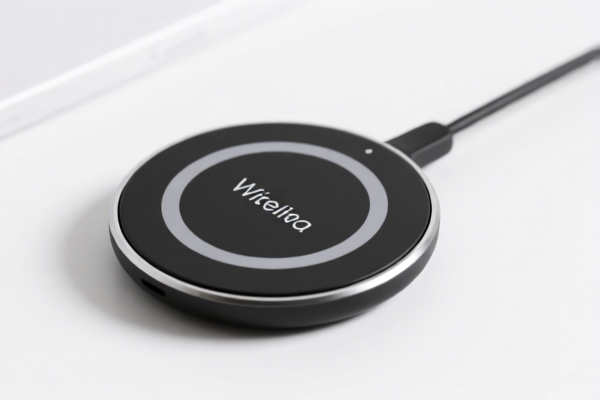
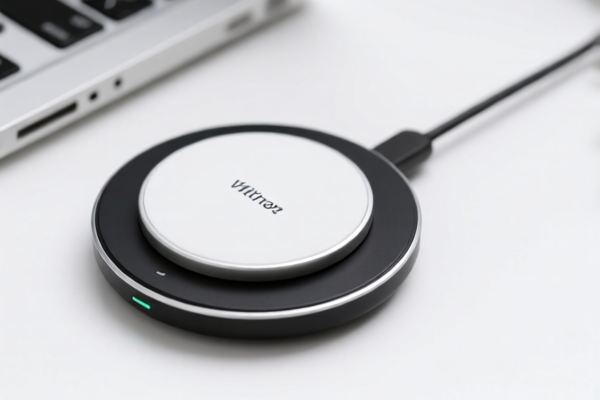
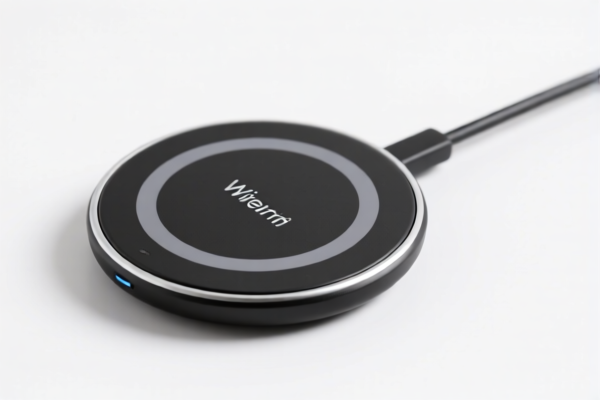
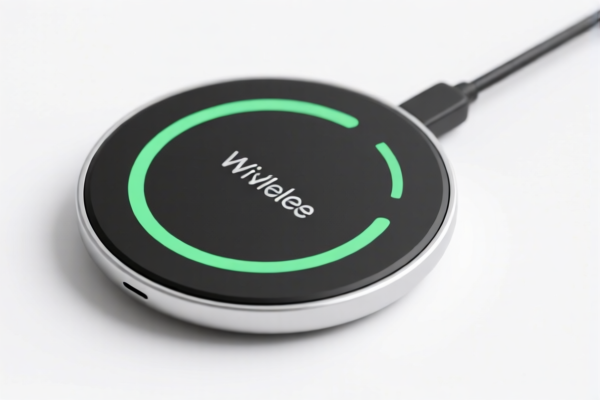
AI Analysis
🔋 Wireless Charger & Power Banks (Power Conversion Equipment)
🌐 HS Code Reference & Customs Clearance Guide | 2026 Latest Tariff Analysis | Professional Clearance Strategy
📌 I. Product Definition & Classification: Do You Know What a "Wireless Charger" Actually Is?
Wireless chargers and portable power banks are essential devices for modern mobile ecosystems, handling electric energy conversion and transmission. In international trade, their classification depends heavily on whether they are viewed as static converters (transformers/rectifiers) or independent functional apparatuses.
Static Converters (Power Supplies/Rectifiers): Devices whose primary function is converting AC to DC or regulating voltage/current, often housing the charging circuitry within a standard power adapter form factor. Independent Apparatuses: Devices classified under "machinery and apparatus" with specific independent functions that do not fit neatly into standard power supply categories, often used as a "catch-all" for complex electronic devices.
⚠️ Key Distinction Point:
- If the device is primarily a power adapter or rectifier used to convert electricity →归类 to 8504.40.xxxxxx (Static Converters).
- If the device is considered a specialized machine or independent apparatus → 归类 to 8543.70.98.60 (Other machinery/apparatus).
- Note: The "Portable Charger" entries in the data are treated similarly to wireless chargers under the "Static Converter" category for tax purposes, indicating a broad interpretation of power conversion equipment.
📦 II. HS Code Classification Details (2026 Latest Tariff Authority Comparison)
Based on the provided data, here are the specific HS Codes for Wireless Chargers and Portable Chargers:
| HS Code | Product Summary | Classification Logic | Total Tax Rate |
|---|---|---|---|
8504.40.95.80 |
Multifunctional Wireless Charger | Static Converter → Other (Not elsewhere specified) | 35.0% |
8504.40.95.40 |
Multifunctional Wireless Charger | Static Converter → Power Supply / Rectifier | 35.0% |
8543.70.98.60 |
Multifunctional Wireless Charger | Independent Functional Apparatus → Other Machinery/Apparatus (Catch-all) | 37.6% |
8504.40.70.07 |
Portable Charger | Static Converter → Other Power Conversion Equipment | 35.0% |
8504.40.95.20 |
Portable Charger | Static Converter → Rectifier / Power Supply | 35.0% |
🔍 Key Insight:
- Most common classification:8504.40.xxxx(Static Converters). This is the standard for most power adapters and wireless charging bases. - Highest Risk/Rate:8543.70.98.60carries a 37.6% total tax rate, which is higher than the standard 35% for converters. This should be avoided if the device can be legitimately classified as a power converter. - Portability vs. Wireless: The data treats "Portable Chargers" (Power Banks) and "Wireless Chargers" similarly under the 8504 category, suggesting they are both viewed as energy conversion devices.
💰 III. 2026 Latest Tariff Rate Breakdown (Including Surtaxes & Policy Add-ons)
✅ Applicable Country: United States (US)
✅ Origin: China (CN)
✅ Effective Date: Based on current 122 Provision and Trade Act surcharges
🎯 1. Standard Classification: 8504.40.xxxxxx (Static Converters)
(Applies to HS Codes: 8504.40.95.80, 8504.40.95.40, 8504.40.70.07, 8504.40.95.20)
| Item | Content |
|---|---|
| Basic Tariff | 0.0% (Most static converters have a low or zero base MFN rate) |
| Section 301 Surtax (Added Tariff) | +25.0% |
| Section 122 Provision Tariff | +10.0% |
| Total Tax Rate | 35.0% |
| Tax Calculation | CIF Value × 35% |
| De Minimis Eligibility | ❌ NO (Highly subject to scrutiny; de minimis is often denied for electronics from China under current trade policies) |
| Legal Basis Path | USITC:8504.40.95.xx → Section 301 Footnote → Section 122 Provision |
📌 Explanation:
- The 25% surtax is a standard Section 301 tariff on Chinese electronics. - The 10% is a specific "122 Provision" tariff, often applied to goods that are vulnerable to transshipment or specific high-import categories. - Total 35% is a significant cost factor. Proper classification within the 8504 group is crucial to ensure you aren't accidentally hit with the higher 8543 rate.
🎯 2. Alternative Classification: 8543.70.98.60 (Independent Apparatus)
| Item | Content |
|---|---|
| Basic Tariff | 2.6% |
| Section 301 Surtax (Added Tariff) | +25.0% |
| Section 122 Provision Tariff | +10.0% |
| Total Tax Rate | 37.6% |
| Tax Calculation | CIF Value × 37.6% |
| De Minimis Eligibility | ❌ NO |
| Legal Basis Path | USITC:8543.70.98.60 → Section 301 Footnote → Section 122 Provision |
📌 Warning:
- This classification is 2.6% more expensive than the standard 8504 classification due to the higher base tariff. - Only use this if the device has a unique function that strictly excludes it from being a "static converter" (e.g., it performs data processing and power conversion in a non-standard way). For standard wireless charging, 8504 is preferred.
🛠️ IV. Customs Clearance Practical Advice (Real-World Pitfall Avoidance Guide)
✅ 1. Required Documentation Checklist (Non-Negotiable)
| Document | Mandatory? | Description |
|---|---|---|
| ✅ Product Specification Sheet | ✔️ | Must include Input/Output Voltage (V/A), Wattage, Frequency, and Interface Type. |
| ✅ Circuit Diagram / Schematic | ✔️ | Critical to prove it is a "Static Converter" (8504) rather than a general "Apparatus" (8543). |
| ✅ Product Photos (Including Nameplate) | ✔️ | Must clearly show Model Number, Brand, Input/Output ratings, and Safety Marks. |
| ✅ Third-Party Test Reports | ✔️ | FCC (for US), CE, RoHS, UL. Without these, clearance will be delayed. |
| ✅ Commercial Invoice | ✔️ | Must explicitly state "Wireless Charger" or "Power Supply Unit" – avoid vague terms like "Electronics." |
| ✅ Certificate of Origin (CO) | ✔️ | Proof of Chinese origin triggers the 35-37.6% tariff. |
| ✅ Packing List | ✔️ | Detail items inside to avoid "missing parts" queries. |
✅ 2. Declaration Tips (Key Mantras)
🔥 "Be Precise: State Power Rating, Avoid Vague Names, Classify as Converter!"
| Scenario | Correct Declaration | Incorrect Practice |
|---|---|---|
| Standard Wireless Charging Pad | 8504.40.95.80 - "Wireless Power Adapter, 15W, AC to DC" |
"Phone Accessory" → Risk of misclassification |
| Portable Power Bank | 8504.40.70.07 or 95.20 - "Portable Battery Charger for Phones" |
"Lithium Battery" → Incorrect if it includes conversion circuitry |
| Complex Smart Charger | 8504.40.95.40 - "Power Supply, Rectifier Type" |
"Multifunctional Device" → Vague, may trigger 8543 review |
| Device with Data Hub | Ensure it's still primarily a power device | If it's primarily a USB Hub with charging, it might be 8517.62 (different tax) |
✅ 3. Special Handling Cases
| Situation | Handling Advice |
|---|---|
| OEM/ODM Products | Provide client order and design specs. Ensure the HS code matches the actual function, not just the brand. |
| Mixed Shipments (Charger + Cable) | Declare the Charger as the primary item. Cables are often negligible but ensure the charger's value is clear. |
| High-Power Wireless Charging (≥50W) | May attract additional scrutiny for "Industrial Use." Ensure documentation supports "Consumer Electronic Use." |
| Compliance Certifications | FCC ID is mandatory for wireless devices in the US. Missing FCC ID = Automatic Hold or Return. |
🌍 V. Global Market Clearance Comparison (2026 Latest)
| Country/Region | Recommended HS Code | Estimated Tariff (China Origin) | Key Certification Requirements | Notes |
|---|---|---|---|---|
| 🇺🇸 United States | 8504.40.xxxx |
35.0% | FCC, UL/ETL | High tariff due to Section 301 + 122. |
| 🇨🇳 China | 8504.40.xxxx |
~0-6% | CCC | Domestic trade has lower barriers. |
| 🇪🇺 European Union | 8504.40.xxxx |
~0% (if under certain thresholds) | CE, RoHS, WEEE | No major trade war tariffs, but strict safety. |
| 🇬🇧 United Kingdom | 8504.40.xxxx |
~4-6% | UKCA, RoHS | Post-Brexit rules apply. |
| 🇯🇵 Japan | 8504.40.xxxx |
~0-5% | PSE, JQA | Stricter electrical safety standards. |
📌 Conclusion:
- The US market is the most challenging due to the 35% total tariff.
- Ensure your supply chain can absorb this cost or consider third-country transshipment (if legal and compliant) or tariff engineering (designing the device to fit a lower-tariff category, if applicable).
📌 VI. Common Errors & Pitfall Guide (Lessons Learned)
❌ Error 1: Declaring as "Electronic Accessory" without a specific HS Code
👉 Consequence: Customs assigns a default code with potentially higher rates or holds shipment for review.
❌ Error 2: Omitting Input/Output Wattage on Invoice
👉 Consequence: Customs cannot determine the correct sub-heading within 8504. Delays of 7-14 days.
❌ Error 3: Using "Lithium Battery" HS Code for a Charger
👉 Consequence: If the device converts power, it's 8504, not 8507. Misclassification leads to penalties and back taxes.
❌ Error 4: Ignoring Section 122 Provision
👉 Consequence: If you assume only 301 (25%) applies, you will underpay by 10%, leading to CBP audits and fines.
✅ Correct Practice:
"Wireless Charger, Model XYZ, 15W, AC Input 100-240V, DC Output 5V/3A, FCC Certified, Made in China"
🎯 VII. Conclusion: Professional Classification, Cost Efficiency, Smooth Clearance!
🎯 Remember the Mantra:
🔹 "Charger = Converter = 8504. Don't let it slip to 8543!"
🔹 "35% is the price of entry for US Electronics. Prepare your budget."
🔹 "FCC ID is not optional. No ID, No Entry."
📌 Pro Tip:
If you are importing high volumes, consider applying for a Section 301 Exclusion if your specific model qualifies (though these are rare and temporary).
For Portable Chargers (Power Banks), ensure they are declared as Power Conversion Units if they include AC-to-DC conversion circuitry, to maintain the 35% rate rather than higher battery-specific rates.
📣 Immediate Action:
📞 Engage a licensed US Customs Broker.
📄 Prepare FCC Reports and Circuit Diagrams.
🚀 Ensure your Commercial Invoice clearly states "Static Converter, Type: Wireless Charger".
✨ Professional clearance starts with accurate classification!
💼 Every percentage point of tariff affects your bottom line. Get it right the first time!
Customer Reviews
About HS Code Classification
The Harmonized System (HS) is an internationally standardized nomenclature developed by the World Customs Organization (WCO) to classify traded products. Over 200 countries use the HS system as the basis for customs tariffs, trade statistics, and import/export regulations.
Each HS code follows a hierarchical structure:
- Chapter (2 digits) — Broad category of goods (e.g., Chapter 84: Machinery and Mechanical Appliances)
- Heading (4 digits) — More specific grouping within the chapter
- Subheading (6 digits) — Internationally standardized breakdown, used by all WCO member countries
- National subdivisions (8-10 digits) — Country-specific extensions for further classification, such as US HTSUS 10-digit codes
Correct HS code classification is essential for smooth customs clearance, accurate duty payment, and compliance with trade regulations. Misclassification can lead to customs delays, overpayment of duties, or penalties.
When importing from CN to US, the applicable tariff rates may include:
- Most-Favored-Nation (MFN) rate — The standard duty rate applied to WTO members
- General rate — Applied to countries without trade agreements
- Trade remedy duties — Additional tariffs such as Section 301 (anti-dumping), Section 232 (national security), or countervailing duties
The information provided on this page is for reference purposes only. For official classification, please consult with your local customs authority or a licensed customs broker.