栅栏
CN → US| HS Code | Tariff Rate | Origin | Destination | Doc |
|---|---|---|---|---|
| 3926909940 | 22.8% | CN | US | Official Doc |
| 7314311000 | 85.0% | CN | US | Official Doc |
| 7314390000 | 85.0% | CN | US | Official Doc |
| 4421917020 | 10.0% | CN | US | Official Doc |
| 4421997020 | 35.0% | CN | US | Official Doc |
Product Images
AI Analysis
🏡 Fences & Barriers (栅栏)
🌐 HS Code Reference & Clearance Guide | 2026 Latest Tariff Analysis | Professional Entry Strategy
📌 I. Product Definition & Classification: Are You Classifying "Fences" Correctly?
Fences, used as fencing components or protective structures, are categorized by material and structural form in international trade. Misclassification leads to severe tax penalties (up to 85%!).
They fall into four main material categories: 1. Plastic Fences: Synthetic material, non-metallic. 2. Metal Fences (Iron/Steel): Grid, mesh, or lattice forms. 3. Wooden Fences: Including poles, rails, and posts. 4. Bamboo Fences: Treated or sawn bamboo poles/posts.
⚠️ Critical Distinction:
- Plastic vs. Wood vs. Metal determines the HS Code chapter entirely.
- Metal Fences (Iron/Steel) are subject to Massive Trade Sanctions (Total Tax up to 85%).
- Wood/Bamboo have lower base rates but high USITC "Section 122" surcharges.
📦 II. Detailed HS Code Classification (2026 Tariff Authority)
| HS Code | Product Description | Material/Type | Applicable Scenario |
|---|---|---|---|
| 3926.90.99.40 | Plastic Fences (Other) | Plastic | Plastic fencing components, protective barriers, non-metallic |
| 7314.31.10.00 | Iron/Steel Grid/Mesh Fences | Iron/Steel | Metal wire mesh, grating, welded wire fencing |
| 7314.39.00.00 | Other Metal Fences (Wire/Mesh) | Iron/Steel | General metal wire fences, lattices, wire barriers |
| 4421.91.70.20 | Bamboo Fences (Posts/Poles) | Bamboo | Sawn bamboo posts, rails, poles, fence columns |
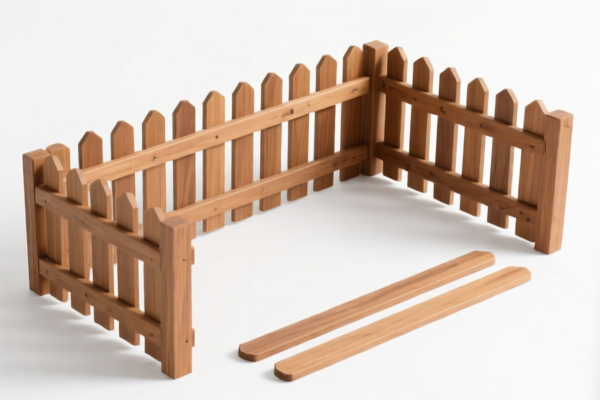
| 4421.99.70.20 | Wooden Fences (Other) | Wood | Wooden fence parts, rails, posts, horizontal bars |
🔍 Key Reminder:
- Metal Fences (7314 series) are heavily targeted by US trade policies. Even with a 0% base duty, the total tax hits 85%.
- Plastic (3926) is the most tax-efficient among high-risk categories but still faces 22.8% total duty.
- Wood/Bamboo (4421) have 0% base duty but face the 10% Section 122 surcharge.
💰 III. 2026 Tariff Rate Breakdown (China to USA)
✅ Applicable Country: United States (US)
✅ Origin: China (CN)
✅ Effective Date: Ongoing (Strict Enforcement)
🎯 1. 3926.90.99.40 —— Plastic Fences (塑料栅栏)
| Item | Details |
|---|---|
| Base Duty Rate | 5.3% |
| Additional Duty (Section 301) | +7.5% |
| Section 122 Duty | +10% |
| Total Tax Rate | 22.8% |
| Tax Calculation | CIF Value × 22.8% |
| De Minimis Exemption | ❌ No (Deemed non-qualifying) |
| Legal Path | 3926.90.99.40 → Section 301 + Section 122 |
📌 Explanation:
- Plastic is the lowest risk category but still subject to the 10% Section 122 tariff (targeting specific non-metallic items) + 301 duties.
🎯 2. 7314.31.10.00 & 7314.39.00.00 —— Iron/Steel Fences (铁/钢栅栏)
| Item | Details |
|---|---|
| Base Duty Rate | 0.0% |
| Additional Duty (Section 301) | +25.0% |
| Section 122 Duty | +10% |
| Steel/Aluminum/Copper Penalty | +50% |
| Total Tax Rate | 85.0% |
| Tax Calculation | CIF Value × 85.0% |
| De Minimis Exemption | ❌ No (Strictly prohibited) |
| Legal Path | 7314... → Section 301 + Section 122 + Steel Penalty |
📌 Explanation:
- DANGER ZONE: This is the highest tax bracket in the dataset.
- Even if base duty is 0%, the 25% (301) + 10% (122) + 50% (Steel Penalty) adds up to 85%.
- These duties apply specifically to Iron/Steel wire mesh and lattice fences.
- Strategy: Avoid shipping metal fences from China to the US unless absolutely necessary; consider alternative markets (EU, SE Asia) or alternative materials.
🎯 3. 4421.91.70.20 —— Bamboo Fences (竹制栅栏)
| Item | Details |
|---|---|
| Base Duty Rate | 0.0% |
| Additional Duty (Section 301) | 0.0% |
| Section 122 Duty | +10.0% |
| Total Tax Rate | 10.0% |
| Tax Calculation | CIF Value × 10.0% |
| De Minimis Exemption | ❌ No |
| Legal Path | 4421.91.70.20 → Section 122 |
📌 Explanation:
- Bamboo is a niche, low-tax option (10%).
- However, it still falls under Section 122 (10% surcharge), so it is not duty-free.
🎯 4. 4421.99.70.20 —— Wooden Fences (木制栅栏)
| Item | Details |
|---|---|
| Base Duty Rate | 0.0% |
| Additional Duty (Section 301) | +25.0% |
| Section 122 Duty | +10.0% |
| Total Tax Rate | 35.0% |
| Tax Calculation | CIF Value × 35.0% |
| De Minimis Exemption | ❌ No |
| Legal Path | 4421.99.70.20 → Section 301 + Section 122 |
📌 Explanation:
- Standard Wooden Fences face a 35% total hit (25% + 10%).
- This is significantly cheaper than metal (85%) but more expensive than bamboo (10%).
🛠️ IV. Practical Clearance Advice (Actionable Strategy)
✅ 1. Material Substitution Strategy (Crucial!)
| Material | Total Tax | Recommendation |
|---|---|---|
| Iron/Steel | 85.0% | ❌ AVOID for US imports unless exempted. Extremely high cost. |
| Plastic | 22.8% | ✅ Best Alternative. Lowest tax among engineered materials. |
| Wood | 35.0% | ⚠️ Moderate. Good for rustic designs, but expensive. |
| Bamboo | 10.0% | 🏆 Lowest Cost. Ideal for eco-friendly/low-budget projects. |
💡 Tip: If your product is metal, consider Plastic or Bamboo equivalents to save ~60% in taxes.
✅ 2. Documentation Checklist
| Document | Requirement | Why? |
|---|---|---|
| Material Composition Cert. | Must specify % of Iron, Steel, Wood, Plastic, or Bamboo | Determines HS Code (73xx vs 44xx vs 39xx). Critical! |
| Product Photos | Clear shots of texture, weave, and assembly | Proves "Mesh" vs "Solid" structure for classification. |
| Commercial Invoice | Must declare "Fence", "Pole", or "Rail" explicitly | Avoids generic terms like "Hardware" which trigger audits. |
| Bill of Lading | Weight & Volume accurate | Required for Section 122 calculation verification. |
| Origin Certificate | Proof of Chinese Origin | Confirms applicability of Section 301/122 tariffs. |
✅ 3. Common Pitfalls to Avoid
| Mistake | Consequence | Solution |
|---|---|---|
| Calling Metal Fences "Wire Mesh" only | Underreporting → 85% Tax + Penalties | Declare exact material: "Iron/Steel Wire Fencing". |
| Mixing Materials (Wood Frame + Metal Mesh) | 海关 may classify as Steel (85%) | Split shipment or declare based on dominant material. |
| Ignoring Section 122 | Missing 10% surcharge → Back Taxes | Always calculate +10% for all items in this list. |
| Using Generic "Fence" Description | Customs delays | Use specific terms: "Bamboo Post", "Plastic Fence Panel". |
🌍 V. Global Market Comparison (Quick Reference)
| Market | HS Code (Metal) | Tax Rate | HS Code (Plastic) | Tax Rate |
|---|---|---|---|---|
| 🇺🇸 USA | 7314... | 85.0% | 3926... | 22.8% |
| 🇪🇺 EU | 7314... | ~5-10% | 3926... | ~6% |
| 🇨🇦 Canada | 7314... | Low | 3926... | Low |
| 🇦🇺 Australia | 7314... | Moderate | 3926... | Low |
📌 Conclusion: The USA is the only major market imposing these extreme penalties on Chinese metal/wood/plastic fences due to Section 301 and Section 122. - Strategy: Consider diversifying manufacturing to Vietnam or Mexico to avoid US tariffs on Metal (7314) and Plastic (3926).
🎯 VI. Final Checklist for Exporters
- Verify Material: Is it 100% Metal? If yes, expect 85% tax.
- Check Section 122: Does it apply? (Yes, for all items in this list).
- Calculate Landed Cost: Base Price + 22.8% (Plastic) or 85% (Metal).
- Pre-Arbitration: Consider applying for a Pre-Classification Ruling from US Customs if the material composition is mixed.
📣 Immediate Action Required:
🚀 If you are shipping Metal Fences (7314), STOP! The 85% tax is a dealbreaker. Switch to Plastic (3926) or Bamboo (4421) to reduce costs by ~60-75%.
📞 Contact your customs broker immediately to review your current Bill of Lading for "Metal Fence" vs "Plastic Fence".
✨ Precision Classification = Profit Protection!
💼 Don't let 85% tax eat your margin!
Customer Reviews
About HS Code Classification
The Harmonized System (HS) is an internationally standardized nomenclature developed by the World Customs Organization (WCO) to classify traded products. Over 200 countries use the HS system as the basis for customs tariffs, trade statistics, and import/export regulations.
Each HS code follows a hierarchical structure:
- Chapter (2 digits) — Broad category of goods (e.g., Chapter 84: Machinery and Mechanical Appliances)
- Heading (4 digits) — More specific grouping within the chapter
- Subheading (6 digits) — Internationally standardized breakdown, used by all WCO member countries
- National subdivisions (8-10 digits) — Country-specific extensions for further classification, such as US HTSUS 10-digit codes
Correct HS code classification is essential for smooth customs clearance, accurate duty payment, and compliance with trade regulations. Misclassification can lead to customs delays, overpayment of duties, or penalties.
When importing from CN to US, the applicable tariff rates may include:
- Most-Favored-Nation (MFN) rate — The standard duty rate applied to WTO members
- General rate — Applied to countries without trade agreements
- Trade remedy duties — Additional tariffs such as Section 301 (anti-dumping), Section 232 (national security), or countervailing duties
The information provided on this page is for reference purposes only. For official classification, please consult with your local customs authority or a licensed customs broker.