气门室盖垫
CN → US| HS Code | Tariff Rate | Origin | Destination | Doc |
|---|---|---|---|---|
| 8409915085 | 37.5% | CN | US | Official Doc |
| 8409919990 | 37.5% | CN | US | Official Doc |
| 8708295160 | 0.0% | CN | US | Official Doc |
| 8708295110 | 0.0% | CN | US | Official Doc |
| 8708295110 | 0.0% | CN | US | Official Doc |
Product Images
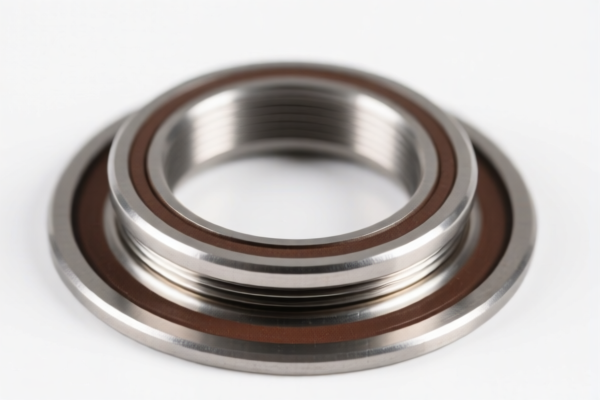
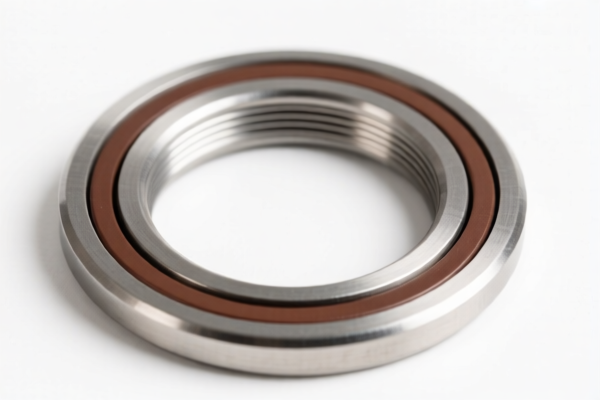
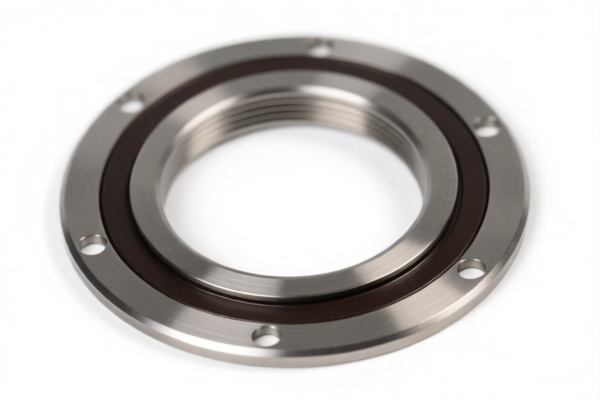
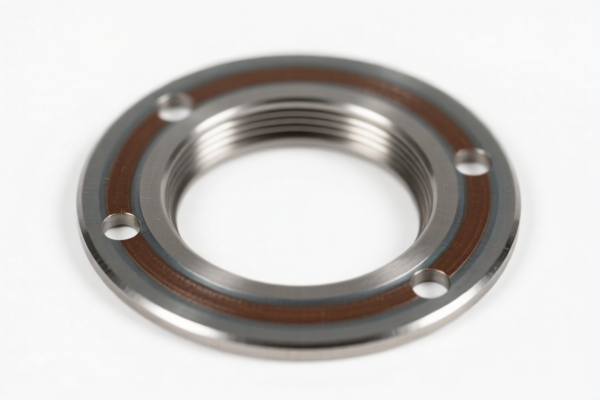
AI Analysis
🔧 Valve Cover Gaskets: The Unsung Heroes of Engine Sealing
🌐 HS Code Reference & Customs Clearance Guide | 2026 Latest Tariff Analysis | Professional Strategy
📌 I. Product Definition & Classification: Do You Really Understand "Valve Cover Gaskets"?
Valve Cover Gaskets are critical sealing components in internal combustion engines, designed to prevent oil leaks between the cylinder head and the valve cover. In international trade, their classification depends heavily on the material composition and functional attribution.
Key Distinctions: - Metal Gaskets: Typically made of steel, aluminum, or copper alloys, often used in high-performance or heavy-duty engines. These align with "other parts of steel, aluminum, or copper articles." - Composite/Metal-Rubber Gaskets: Combining metal carriers with rubber or cork sealing rings. These are often classified under general engine parts or vehicle body parts depending on the primary material and function.
⚠️ Critical Identification Point:
- If the gasket is primarily a structural metal part (e.g., stamped steel) → Consider 8409.91 or 8708.29.51 depending on material.
- If it is a purely sealing composite with no structural role in the engine block → May still fall under 8409.91 as an "engine part," but material-based tariffs apply differently.
📦 II. HS Code Classification Details (2026 Latest Tariff Authority Comparison)
| HS Code | Product Description | Applicable Scenario | Material/Feature | Total Tax Rate |
|---|---|---|---|---|
8409.91.50.85 |
Parts of engines for spark-ignition internal combustion engines; other parts | General metal/composite valve cover gaskets for gasoline engines | Metal/Composite | 37.5% |
8409.91.99.90 |
Other parts and accessories for engines for spark-ignition internal combustion engines | Unspecified composite or metal gaskets not listed elsewhere | Any Engine-Compatible Material | 37.5% |
8708.29.51.60 |
Other parts and accessories of motor vehicles; stamped/pressed metal parts | Steel, Aluminum, or Copper-based valve cover gaskets | Steel/Aluminum/Copper | 2.5% + 85.0% |
8708.29.51.10 |
Other parts and accessories of motor vehicles; stamped/pressed metal parts | Stamped or cast metal/composite valve cover gaskets (non-steel/al/cu) | Non-Steel/Al/Cu Metal | 2.5% + 35.0% |
🔍 Key Reminder:
- HS Code8409.91.xx.xxis used when the product is clearly identified as an engine part without specific material-based subheadings in Chapter 87.
- HS Code8708.29.51.xxis used when the product is classified as a vehicle part made of specific metals (steel, aluminum, copper) or other pressed metal parts.
- Material matters: Steel/Al/Cu gaskets face a higher additional tariff (50% for 122 Clause + 25% Section 301 = 85% total add-on), while other metal/composite gaskets face a lower additional tariff (10% + 25% = 35% total add-on).
💰 III. 2026 Latest Tariff Rate Breakdown (Including Add-ons, Policy Surcharges)
✅ Applicable Country: United States (US)
✅ Origin: China (CN)
✅ Effective Date: From November 10, 2025 (including subsequent imports)
🎯 1. 8409.91.50.85 & 8409.91.99.90 —— Valve Cover Gaskets as Engine Parts
| Item | Content |
|---|---|
| Base Tariff | 2.5% |
| Section 301 Surcharge | +25.0% |
| Section 122 Surcharge | +10.0% |
| Total Tariff | 37.5% |
| Tax Calculation | CIF Value × 37.5% |
| De Minimis Eligibility | ❌ No (deny_de_minimis) |
| Legal Basis Path | USITC:8409.91.50.85 → USITC:8409.91.99.90 → Section 301: Footnote 9903.88.01 → Section 122: IEEPA:9903.01.24 |
📌 Explanation:
- These codes are used when the gasket is classified primarily as an engine component under Chapter 84.
- The 37.5% rate combines the base duty (2.5%) with Section 301 (25%) and Section 122 (10%).
- Note: This rate is material-agnostic within Chapter 84, meaning even if the gasket contains metal, if it’s classified under 8409, the higher 37.5% applies instead of the 85% or 35% from Chapter 87.
🎯 2. 8708.29.51.60 —— Steel/Aluminum/Copper Valve Cover Gaskets
| Item | Content |
|---|---|
| Base Tariff | 2.5% |
| Section 301 Surcharge | +25.0% |
| Section 122 Surcharge (Steel/Al/Cu) | +50.0% |
| Total Tariff | 77.5% (2.5% + 85.0%) |
| Tax Calculation | CIF Value × 77.5% |
| De Minimis Eligibility | ❌ No |
| Legal Basis Path | USITC:8708.29.51.60 → Section 301: Footnote 9903.88.01 → Section 122: IEEPA:9903.01.25 (Steel/Al/Cu) |
📌 Warning:
- This code applies specifically to gaskets made of steel, aluminum, or copper.
- The 85% additional tariff (25% + 50%) is due to the 122 Clause targeting these specific metals.
- This is one of the highest tariff rates for auto parts.
🎯 3. 8708.29.51.10 —— Other Stamped/Cast Metal Gaskets (Non-Steel/Al/Cu)
| Item | Content |
|---|---|
| Base Tariff | 2.5% |
| Section 301 Surcharge | +25.0% |
| Section 122 Surcharge (Other Metals) | +10.0% |
| Total Tariff | 37.5% (2.5% + 35.0%) |
| Tax Calculation | CIF Value × 37.5% |
| De Minimis Eligibility | ❌ No |
| Legal Basis Path | USITC:8708.29.51.10 → Section 301: Footnote 9903.88.01 → Section 122: IEEPA:9903.01.24 (Other) |
📌 Note:
- Applies to gaskets made of non-steel, non-aluminum, non-copper metals (e.g., brass, bronze, or mixed composites with metal carriers).
- The 35% additional tariff is significantly lower than the 85% for steel/Al/Cu.
🛠️ IV. Customs Clearance Practical Advice (Real-World Pitfall Avoidance)
✅ 1. Required Documentation (All are Mandatory)
| Document | Must Provide | Description |
|---|---|---|
| ✅ Product Specification Sheet | ✔️ | Material composition (steel, aluminum, rubber, cork, composite), dimensions, pressure rating |
| ✅ Material Certificate | ✔️ | Proof of metal type (e.g., AISI 304 Stainless Steel, 6061 Aluminum) |
| ✅ Product Photos (with Label) | ✔️ | Clear view of part number, material marking, and packaging |
| ✅ Commercial Invoice | ✔️ | Clearly state "Valve Cover Gasket" and specify material |
| ✅ Packing List | ✔️ | Indicate quantity, weight, and HS Code per item |
| ✅ Origin Certificate (CO) | ✔️ | If non-Chinese origin, to qualify for potential exemptions |
✅ 2. Declaration Tips (Key Mantra)
🔥 “Material Determines Code, Code Determines Tax! Don’t Guess, Verify!”
| Scenario | Correct Declaration | Wrong Action |
|---|---|---|
| Gasket is Steel/Aluminum/Copper | 8708.29.51.60 |
Misdeclare as 8409.91 → Pay 37.5% instead of 77.5%? No, wait — if you misdeclare a high-tariff item as a lower one, you risk penalties. If you misdeclare a low-tariff item as high, you overpay. |
| Gasket is Composite (Metal + Rubber) with no specific metal type | 8409.91.99.90 or 8708.29.51.10 |
Avoid vague terms like "engine part" without material detail |
| Gasket is Purely Rubber/Cork (no metal carrier) | 8409.91.99.90 |
Do not declare as metal part |
| Mixed Pack (e.g., Gasket + Bolts) | Declare separately | Combined declaration leads to incorrect classification and higher tax |
✅ 3. Special Handling Cases
| Case | Handling Advice |
|---|---|
| OEM Custom Gaskets | Provide customer design specs + material test reports to prove classification |
| High-Performance Engines | If used in aircraft or marine engines, may require special import licenses |
| Hybrid Vehicles | Ensure the gasket is compatible with both ICE and EV components; clarify in declaration |
| Used/Refurbished Gaskets | Prohibited for import into the US without special approval; new parts only |
🌍 V. Global Market Comparison (2026 Latest)
| Country/Region | Recommended HS Code | Tariff | Certification | Notes |
|---|---|---|---|---|
| 🇺🇸 USA | 8708.29.51.60 (if Steel/Al/Cu) |
77.5% | None | Highest tariff for metal gaskets |
| 🇺🇸 USA | 8409.91.99.90 (if Composite) |
37.5% | None | Lower rate for non-specific metal gaskets |
| 🇨🇳 China | 8409.91.99.90 |
5% | CCC (if applicable) | No additional tariffs |
| 🇪🇺 EU | 8409.91.99.90 |
0% | CE (if automotive) | No additional tariffs |
| 🇯🇵 Japan | 8409.91.99.90 |
0% | PSE (if electronic) | No additional tariffs |
📌 Conclusion:
- USA is the only major market with significant additional tariffs on Chinese auto parts.
- Material identification is critical: Steel/Al/Cu gaskets face 77.5%, while other materials face 37.5% or 35% depending on classification.
- Recommendation: Consider supply chain diversification (e.g., sourcing from Vietnam, Mexico) to avoid high tariffs.
📌 VI. Common Mistakes & Pitfall Avoidance (Lessons Learned)
❌ Mistake 1: Declaring a steel gasket as "engine part" (8409.91) to avoid the 122 Clause
👉 Consequence: Customs audit reveals true material → Back taxes + penalties + seizure.
❌ Mistake 2: Using vague terms like "gasket" without specifying material
👉 Consequence: Customs assigns default higher rate → Overpayment of 40%+.
❌ Mistake 3: Combining gaskets with bolts or other parts in one HS Code
👉 Consequence: Incorrect classification → Delayed clearance + inspection fees.
❌ Mistake 4: Assuming all gaskets are the same
👉 Consequence: Steel gaskets taxed at 77.5%, rubber at 37.5% → Huge cost difference.
✅ Correct Practice:
“Valve Cover Gasket, Steel Carrier with Rubber Seal, Part No. XYZ, Material: AISI 304 Stainless Steel + NBR Rubber, For Gasoline Engine, Model ABC”
🎯 VII. Conclusion: Precision Classification Saves Money!
🎯 Remember the Mantra:
🔹 “Material First, Code Second, Tax Third!”
🔹 “Steel/Al/Cu = 77.5%, Other = 35-37.5%, Rubber = 37.5%!”
🔹 “Declare accurately, or pay the price!”
📌 Pro Tip:
If your valve cover gaskets are sourced from Vietnam, Mexico, or Thailand, you may qualify for IEEPA Exemptions or lower tariffs.
Consider Advance Rulings with U.S. Customs and Border Protection (CBP) to confirm classification before shipment.
📣 Immediate Action:
📞 Contact a professional customs broker + Provide material specs + Apply for HS Code Pre-Ruling
🚀 Ensure smooth clearance, reduce costs, and maximize profits!
✨ Professional Clearance Starts with Accurate Classification!
💼 Every Cent Counts in Global Trade!
Customer Reviews
About HS Code Classification
The Harmonized System (HS) is an internationally standardized nomenclature developed by the World Customs Organization (WCO) to classify traded products. Over 200 countries use the HS system as the basis for customs tariffs, trade statistics, and import/export regulations.
Each HS code follows a hierarchical structure:
- Chapter (2 digits) — Broad category of goods (e.g., Chapter 84: Machinery and Mechanical Appliances)
- Heading (4 digits) — More specific grouping within the chapter
- Subheading (6 digits) — Internationally standardized breakdown, used by all WCO member countries
- National subdivisions (8-10 digits) — Country-specific extensions for further classification, such as US HTSUS 10-digit codes
Correct HS code classification is essential for smooth customs clearance, accurate duty payment, and compliance with trade regulations. Misclassification can lead to customs delays, overpayment of duties, or penalties.
When importing from CN to US, the applicable tariff rates may include:
- Most-Favored-Nation (MFN) rate — The standard duty rate applied to WTO members
- General rate — Applied to countries without trade agreements
- Trade remedy duties — Additional tariffs such as Section 301 (anti-dumping), Section 232 (national security), or countervailing duties
The information provided on this page is for reference purposes only. For official classification, please consult with your local customs authority or a licensed customs broker.