气门芯
CN → US| HS Code | Tariff Rate | Origin | Destination | Doc |
|---|---|---|---|---|
| 8714998000 | 27.5% | CN | US | Official Doc |
| 8714100050 | 17.5% | CN | US | Official Doc |
| 4016935050 | 37.5% | CN | US | Official Doc |
| 4016991500 | 20.2% | CN | US | Official Doc |
Product Images
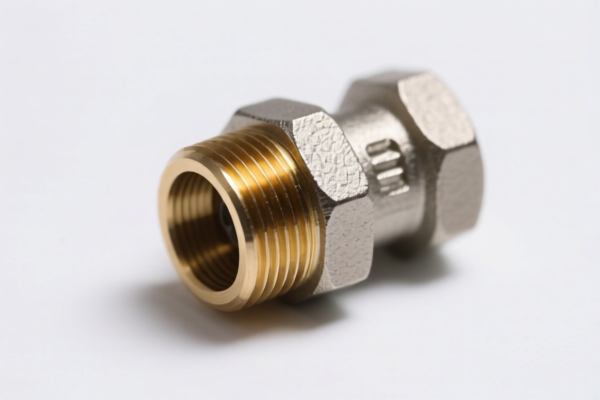
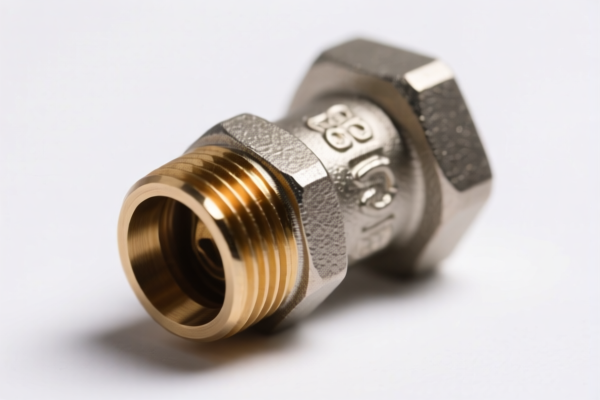
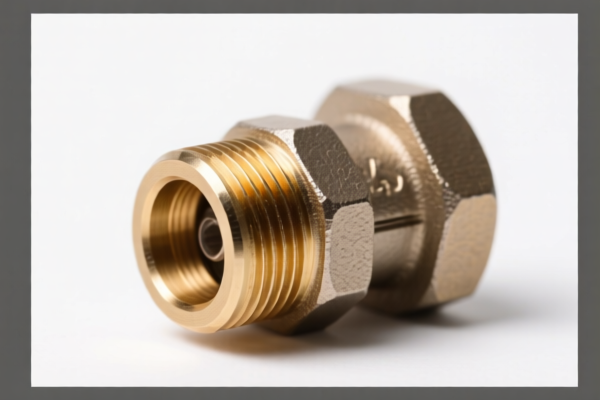
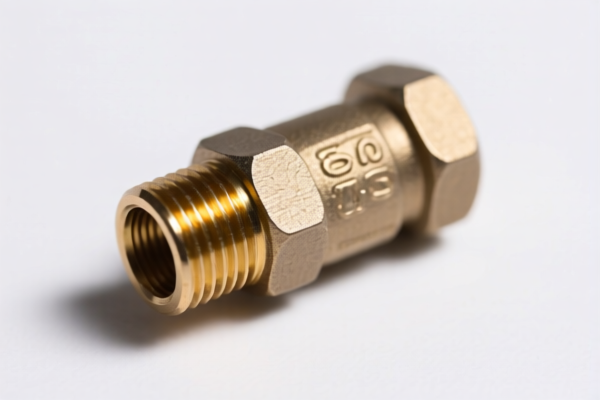
AI Analysis
🎈 Valve Cores (Air Valve Cores for Tires/Wheels)
🌐 HS Code Reference & Customs Clearance Guide | 2026 Latest Tariff Analysis | Professional Clearance Strategy
📌 I. Product Definition & Classification: Do You Truly Understand "Valve Cores"?
Valve cores are the critical internal components of tire valves, responsible for inflating and deflating tires while maintaining air pressure. In international trade, their classification heavily depends on material composition and specific application (e.g., whether they are classified as general rubber seals or specific vehicle parts).
Rubber Seals/Caps: Made primarily of rubber, functioning as sealing elements. Vehicle Parts: Specifically identified as components for motorcycles or bicycles (e.g., valve stem assemblies or cores).
⚠️ Key Distinction Point:
- If classified as general rubber products (seals, plugs, caps) → Likely falls under Chapter 40.
- If classified as specific parts for vehicles (motorcycles/bicycles) → Likely falls under Chapter 87.
📦 II. HS Code Classification Details (2026 Latest Tariff Authority Comparison)
Based on the provided data, here are the four possible HS codes for Valve Cores, along with their explanations and tax implications:
| HS Code | Product Description | Classification Logic | Total Tax Rate (China to US) |
|---|---|---|---|
4016.99.15.00 |
Rubber Seals/Caps | Made of rubber; functions as a cover/sealing element. Fits the description of "rubber products: covers, seals, plugs." | 20.2% |
4016.93.50.50 |
Vulcanized Rubber Seals | Material is vulcanized rubber; category is sealing parts. Fits "other vulcanized rubber products: other seals." | 37.5% |
8714.10.00.50 |
Motorcycle Parts (Rubber/Metal) | Classified as a component of motorcycle tire/wheel assemblies. Belongs to "other parts and accessories," material can be metal or rubber. | 17.5% |
8714.99.80.00 |
Vehicle Parts (General) | Classified as a spare part for vehicles (e.g., bicycle/motorcycle tires). Fits "vehicle parts and accessories," no material conflict. | 27.5% |
🔍 Key Reminder:
- Rubber-specific codes (40xx) are used if the product is primarily defined by its material (rubber seal).
- Vehicle-specific codes (87xx) are used if the product is explicitly identified as a part for a specific vehicle type (motorcycle/bicycle).
- Tariff Impact: The difference between the lowest (17.5%) and highest (37.5%) rate is significant. Choosing the wrong code can lead to overpayment or customs penalties.
💰 III. 2026 Latest Tariff Rate Breakdown (Including Surtaxes, Policy Add-ons)
✅ Applicable Country: United States (US)
✅ Origin: China (CN)
✅ Effective Date: 2025 November 10 onwards (including subsequent imports)
🎯 1. 4016.99.15.00 —— Rubber Seals/Caps (General Rubber Product)
| Item | Detail |
|---|---|
| Base Tariff | 2.7% (Ad Valorem) |
| Section 301 Surcharge | +7.5% |
| 122 Clause Tariff | +10.0% |
| Total Rate | 20.2% |
| Tax Calculation | CIF Value × 20.2% |
| De Minimis Eligibility | ❌ No (Denied) |
| Legal Basis Path | Base: 2.7% → Section 301: 7.5% → 122 Clause: 10% |
📌 Explanation:
- This code applies when the valve core is treated as a general rubber sealing product.
- The "122 Clause" refers to specific US trade enforcement measures against Chinese rubber goods.
- Lower tax burden compared to other rubber classifications if accurately declared as general seals.
🎯 2. 4016.93.50.50 —— Vulcanized Rubber Seals (Specific Rubber Product)
| Item | Detail |
|---|---|
| Base Tariff | 2.5% |
| Section 301 Surcharge | +25.0% |
| 122 Clause Tariff | +10.0% |
| Total Rate | 37.5% |
| Tax Calculation | CIF Value × 37.5% |
| De Minimis Eligibility | ❌ No (Denied) |
| Legal Basis Path | Base: 2.5% → Section 301: 25.0% → 122 Clause: 10% |
📌 Warning:
- This code applies when the product is strictly classified as "other vulcanized rubber products" without specific vehicle part designation.
- The Section 301 surcharge is significantly higher (25%) for this sub-category, making it the most expensive rubber-related option.
- Avoid this code unless the product is explicitly a non-standard, generic vulcanized rubber seal not fitting other specific descriptions.
🎯 3. 8714.10.00.50 —— Motorcycle Parts (Rubber/Metal Components)
| Item | Detail |
|---|---|
| Base Tariff | 0.0% |
| Section 301 Surcharge | +7.5% |
| 122 Clause Tariff | +10.0% |
| Total Rate | 17.5% |
| Tax Calculation | CIF Value × 17.5% |
| De Minimis Eligibility | ❌ No (Denied) |
| Legal Basis Path | Base: 0.0% → Section 301: 7.5% → 122 Clause: 10% |
📌 Optimal Choice for Motorcycles:
- If the valve core is specifically used for motorcycles and can be proven as a "part of motorcycle tire/wheel assembly," this code offers the lowest total tax rate (17.5%).
- Base tariff is 0%, which is a significant advantage.
- Requirement: Must provide evidence that the part is specifically for motorcycles (e.g., OEM parts list, packaging stating "For Motorcycle Use").
🎯 4. 8714.99.80.00 —— Vehicle Parts (General/Other Vehicles)
| Item | Detail |
|---|---|
| Base Tariff | 10.0% |
| Section 301 Surcharge | +7.5% |
| 122 Clause Tariff | +10.0% |
| Total Rate | 27.5% |
| Tax Calculation | CIF Value × 27.5% |
| De Minimis Eligibility | ❌ No (Denied) |
| Legal Basis Path | Base: 10.0% → Section 301: 7.5% → 122 Clause: 10% |
📌 General Vehicle Parts:
- Applies if the valve core is for bicycles, cars, or other vehicles not specifically covered under motorcycle parts.
- Higher base tariff (10%) makes it more expensive than motorcycle-specific parts.
- Use this if the product is a general-purpose valve core not limited to motorcycles.
🛠️ IV. Customs Clearance Practical Advice (Real-World Pitfall Avoidance)
✅ 1. Document Checklist (Essential)
| Document | Required | Description |
|---|---|---|
| ✅ Product Spec Sheet | ✔️ | Details material (rubber type), size, valve stem type (Schrader/Presta), application (motorcycle/bicycle). |
| ✅ Material Certificate | ✔️ | Proves rubber composition (vulcanized/non-vulcanized) for Chapter 40 vs. 87 distinction. |
| ✅ Product Photos | ✔️ | Clear images showing the valve core, packaging, and any branding indicating vehicle type. |
| ✅ Commercial Invoice | ✔️ | Must specify "Valve Core for Motorcycle/Bicycle" or "Rubber Seal Part" accurately. |
| ✅ Packing List | ✔️ | Clarifies if valve cores are sold separately or as part of a wheel assembly. |
| ✅ OEM Authorization | ✔️ | If claiming 8714.10.00.50, provide evidence of being an OEM part for motorcycles. |
✅ 2. Declaration Tips (Critical Mnemonics)
🔥 "Material Defines Chapter 40, Vehicle Defines Chapter 87. Specificity Saves Money!"
| Scenario | Correct Declaration | Wrong Practice |
|---|---|---|
| Generic Rubber Valve Core | 4016.99.15.00 (20.2%) |
Misdeclare as vehicle part → Risk of penalty |
| Motorcycle-Specific Core | 8714.10.00.50 (17.5%) |
Declare as generic rubber → Miss tax saving |
| Bicycle/Car Core | 8714.99.80.00 (27.5%) |
Declare as motorcycle part → Customs rejection |
| High-End Vulcanized Seal | 4016.93.50.50 (37.5%) |
Only if no other classification fits |
✅ 3. Special Handling Cases
| Case | Recommendation |
|---|---|
| OEM Motorcycle Parts | Provide dealer agreement or OEM part number to justify 8714.10.00.50. |
| Mixed Packaging | If valve cores are packed with tubes or rims, declare as a set only if functionally complete; otherwise, split declaration. |
| Non-Rubber Materials | If valve core has significant metal components, consult if 7318 (metal fasteners) applies, but rubber seals usually stay in 4016 or 8714. |
| De Minimis Exemption | ❌ Not Eligible for any of these codes under current 122/Section 301 rules. Plan for full duty payment. |
🌍 V. Global Market Clearance Comparison (2026 Latest)
| Country/Region | Recommended HS Code | Tariff (China Origin) | Certification | Notes |
|---|---|---|---|---|
| 🇺🇸 USA | 8714.10.00.50 (Motorcycle) |
17.5% | N/A | Lowest duty if motorcycle-specific. |
| 🇺🇸 USA | 4016.99.15.00 (Rubber Seal) |
20.2% | N/A | Safe for general rubber products. |
| 🇨🇳 China | 4016.99.15.00 |
7.5% | N/A | Lower base rate for imports into China. |
| 🇪🇺 EU | 4016.99 |
0% (if under quota) | CE | Check for REACH compliance. |
| 🇦🇺 Australia | 8714.99 |
5% | N/A | Generally lower duties for vehicle parts. |
📌 Conclusion:
- USA is the most complex market due to Section 301 and 122 Clause surcharges.
- Motorcycle-specific classification (8714.10.00.50) offers the lowest duty (17.5%) in the US.
- General rubber classification (4016.99.15.00) is a safe fallback (20.2%) but higher than motorcycle parts.
- Avoid4016.93.50.50(37.5%) unless necessary, as it has the highest surcharge.
📌 VI. Common Errors & Pitfall Guide (Lessons Learned)
❌ Error 1: Declaring all valve cores as "Rubber Seals" (4016) when they are clearly motorcycle OEM parts.
👉 Consequence: Pay 20.2% instead of 17.5%. Missed savings of 2.7%.
❌ Error 2: Declaring generic valve cores as "Motorcycle Parts" (8714.10.00.50) without proof.
👉 Consequence: Customs may reject, impose 37.5% (rubber rate), or apply penalties for misclassification.
❌ Error 3: Not separating valve cores from tubeless rims in declaration.
👉 Consequence: If declared as a "wheel assembly," the entire kit may be taxed at a different rate, causing confusion. Declare separately.
❌ Error 4: Ignoring the "122 Clause" surcharge.
👉 Consequence: Underestimating landed cost by 10%. Budget accurately.
✅ Correct Practice:
"Valve Core, Rubber, for Motorcycle Tires, Schrader Type, Model VC-100, OEM Part #12345"
🎯 VII. Conclusion: Professional Declaration, Cost Efficiency!
🎯 Remember the Mantra:
🔹 "Motorcycle = 17.5%, General Rubber = 20.2%, Other Rubber = 37.5%, Vehicle Parts = 27.5%."
🔹 "Specificity Saves Money, Proof Prevents Penalties."
📌 Pro Tip:
If your valve cores are originally from Vietnam, Thailand, or Malaysia, you may qualify for lower or zero tariffs under FTAs (e.g., CPTPP, ASEAN).
Recommend Advance Ruling for high-volume shipments to confirm HS code stability.
📣 Immediate Action:
📞 Contact a licensed customs broker + Provide OEM documentation + Apply for HS Code Advance Ruling
🚀 Let your valve cores clear smoothly, reduce costs, and boost profits!
✨ Professional clearance starts with accurate classification!
💼 Every cent of your cost deserves precise calculation!
Customer Reviews
About HS Code Classification
The Harmonized System (HS) is an internationally standardized nomenclature developed by the World Customs Organization (WCO) to classify traded products. Over 200 countries use the HS system as the basis for customs tariffs, trade statistics, and import/export regulations.
Each HS code follows a hierarchical structure:
- Chapter (2 digits) — Broad category of goods (e.g., Chapter 84: Machinery and Mechanical Appliances)
- Heading (4 digits) — More specific grouping within the chapter
- Subheading (6 digits) — Internationally standardized breakdown, used by all WCO member countries
- National subdivisions (8-10 digits) — Country-specific extensions for further classification, such as US HTSUS 10-digit codes
Correct HS code classification is essential for smooth customs clearance, accurate duty payment, and compliance with trade regulations. Misclassification can lead to customs delays, overpayment of duties, or penalties.
When importing from CN to US, the applicable tariff rates may include:
- Most-Favored-Nation (MFN) rate — The standard duty rate applied to WTO members
- General rate — Applied to countries without trade agreements
- Trade remedy duties — Additional tariffs such as Section 301 (anti-dumping), Section 232 (national security), or countervailing duties
The information provided on this page is for reference purposes only. For official classification, please consult with your local customs authority or a licensed customs broker.