点火开关
CN → US| HS Code | Tariff Rate | Origin | Destination | Doc |
|---|---|---|---|---|
| 8536509031 | 35.0% | CN | US | Official Doc |
| 8536509050 | 35.0% | CN | US | Official Doc |
| 8535300080 | 37.7% | CN | US | Official Doc |
| 9032896085 | 36.7% | CN | US | Official Doc |
| 8536509065 | 35.0% | CN | US | Official Doc |
Product Images
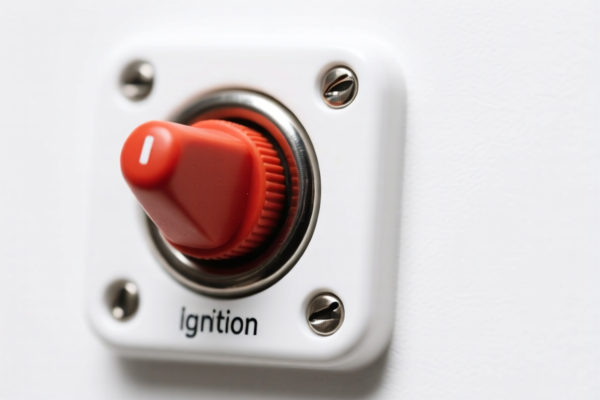
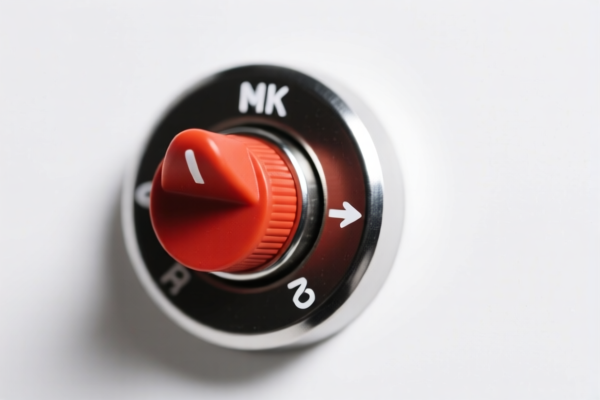
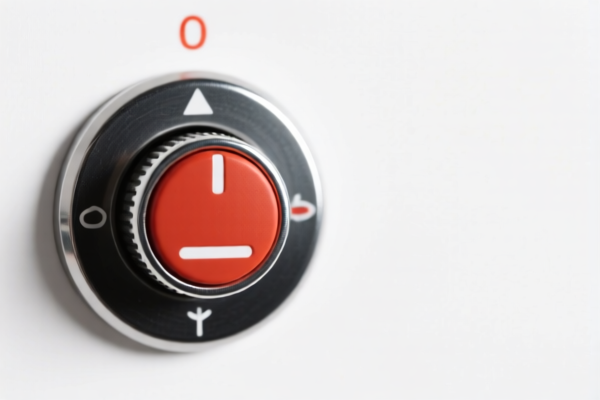
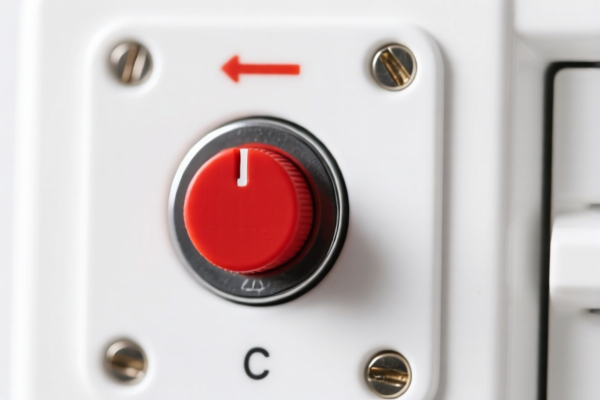
AI Analysis
🔑 Ignition Switch (点火开关)
🌐 HS Code Reference & Customs Clearance Guide | 2026 Latest Tariff Analysis | Professional Entry Strategy
📌 1. Product Definition & Classification: Do You Really Know an “Ignition Switch”?
An Ignition Switch is a critical component in automotive, motorcycle, and small engine applications. It acts as the main control hub, managing power distribution to the starter motor, fuel system, and electrical accessories. In international trade, it is primarily classified under Chapter 85 (Electrical machinery and equipment), specifically as electric switches.
⚠️ Key Distinction Point:
- Is it a voltage ≤ 1,000V general-purpose switch? → Likely 8536.50
- Is it a circuit protection device (e.g., integrated fuse/circuit breaker)? → Likely 8535.30
- Is it part of an automatic control system (e.g., electronic keyless entry module)? → Likely 9032.89
📦 2. HS Code Classification Details (2026 Latest Tariff Authority Comparison)
Based on the provided data, here are the five potential HS Codes for Ignition Switches, along with their specific applicability and tax implications.
| HS Code | Product Description | Applicability Logic | Total Tax Rate (China Origin → US) |
|---|---|---|---|
| 8536.50.90.31 | Switch, general electrical category | No obvious conflict; standard electrical switch classification | 35.0% |
| 8536.50.90.50 | Switch, tends to be a Slide Switch | Specifically categorized as a slide-type or rotary mechanical switch | 35.0% |
| 8535.30.00.80 | Switch, for switching or protecting circuits | Fits "Other" category under Circuit Breakers or protection devices | 37.7% |
| 9032.89.60.85 | Switch, component of Automatic Regulating/Control Apparatus | Electronic/Smart ignition systems with automatic regulation features | 36.7% |
| 8536.50.90.65 | Switch, Voltage ≤ 1,000V, Other Category | "Catch-all" logic for standard low-voltage switches not specified elsewhere | 35.0% |
🔍 Key Insight:
- The majority of standard mechanical ignition switches fall under 8536.50.90 (35.0% tax).
- Electronic/Smart Ignition Systems may be classified under 9032.89.60 (36.7% tax) if they involve automatic control logic.
- If the switch includes circuit protection functions (like a built-in fuse), it might be classified under 8535.30.00 (37.7% tax).
💰 3. 2026 Latest Tariff Rate Breakdown (Including Surtaxes & Policy Add-ons)
✅ Applicable Country: United States (US)
✅ Origin: China (CN)
✅ Effective Date: Post-2025 Tariff Structure
🎯 1. 8536.50.90.31 & 8536.50.90.50 & 8536.50.90.65 – Standard Electrical Switches
| Item | Detail |
|---|---|
| Base Tariff Rate | 0.0% |
| Section 301 Surcharge | +25.0% |
| Section 122 Tariff | +10.0% |
| Total Tax Rate | 35.0% |
| Tax Calculation | CIF Value × 35% |
| De Minimis Eligibility | ❌ Not Eligible (High surtax rates disqualify de minimis entry) |
| Legal Basis Path | Section 301: 9903.88.01 → Section 122: IEEPA → USITC: 8536.50.90 |
📌 Explanation:
- These codes represent standard electrical switches.
- The 35% total tax is composed of 25% Section 301 + 10% Section 122 (on top of 0% base).
- High-risk category: Even with 0% base tariff, the combined surtaxes make it expensive to import.
🎯 2. 8535.30.00.80 – Circuit Protection Switches
| Item | Detail |
|---|---|
| Base Tariff Rate | 2.7% |
| Section 301 Surcharge | +25.0% |
| Section 122 Tariff | +10.0% |
| Total Tax Rate | 37.7% |
| Tax Calculation | CIF Value × 37.7% |
| De Minimis Eligibility | ❌ Not Eligible |
| Legal Basis Path | Section 301: 9903.88.01 → Section 122: IEEPA → USITC: 8535.30.00 |
📌 Explanation:
- Applies if the ignition switch integrates circuit-breaking/fusing capabilities.
- Highest tax rate among the options due to the 2.7% base tariff.
🎯 3. 9032.89.60.85 – Automatic Control System Component
| Item | Detail |
|---|---|
| Base Tariff Rate | 1.7% |
| Section 301 Surcharge | +25.0% |
| Section 122 Tariff | +10.0% |
| Total Tax Rate | 36.7% |
| Tax Calculation | CIF Value × 36.7% |
| De Minimis Eligibility | ❌ Not Eligible |
| Legal Basis Path | Section 301: 9903.88.01 → Section 122: IEEPA → USITC: 9032.89.60 |
📌 Explanation:
- Applies to electronic ignition systems, keyless entry modules, or smart switches with automatic regulation features.
- Slightly lower base tariff (1.7%) but still subject to full surtaxes.
🛠️ 4. Customs Clearance Practical Advice (Avoid Pitfalls)
✅ 1. Documentation Checklist (Must-Haves)
| Document | Required | Notes |
|---|---|---|
| ✅ Product Specification Sheet | ✔️ | Must clearly state voltage, current, switch type (mechanical/electronic), and application |
| ✅ Circuit Diagram/Structure Photo | ✔️ | Critical to distinguish between 8536 (Switch) and 9032 (Control Device) |
| ✅ Commercial Invoice | ✔️ | Accurate description: "Automotive Ignition Switch, 12V DC, Mechanical/Electronic" |
| ✅ Packaging List | ✔️ | Ensure no mixed HS Codes in one shipment |
| ✅ Certifications | ✔️ | DOT, SAE, or ISO 26262 (if automotive grade) |
✅ 2. Declaration Strategy (Key Tips)
🔥 Golden Rule: "Accurate Description, Precise Code, Avoid Ambiguity!"
| Scenario | Correct HS Code | Wrong Code | Consequence |
|---|---|---|---|
| Standard Mechanical Ignition Switch | 8536.50.90.31 or 8536.50.90.65 |
9032.89.60.85 |
Overpayment or audit flag |
| Smart/Ignition Control Module | 9032.89.60.85 |
8536.50.90.50 |
Misclassification penalty |
| Switch with Integrated Fuse | 8535.30.00.80 |
8536.50.90.31 |
Base tariff error (2.7% vs 0%) |
| Slide-type Rotary Switch | 8536.50.90.50 |
8536.50.90.65 |
Minor risk, but specificity is better |
✅ 3. Special Cases
| Case | Handling Advice |
|---|---|
| OEM Ignition Switches | Provide OEM contract + technical drawings to justify classification |
| Keyless Entry/Smart Ignition | Emphasize "automatic control" features to support 9032.89.60.85 |
| Mixed Shipment (Switches + Wiring) | Declare separately; wiring may have different HS code |
| Samples for Testing | Still subject to tariffs; de minimis does NOT apply due to surtaxes |
🌍 5. Global Market Comparison (2026)
| Country/Region | Recommended HS Code | Tariff (China Origin) | Notes |
|---|---|---|---|
| 🇺🇸 USA | 8536.50.90.31 |
35.0% | High surtaxes apply |
| 🇨🇳 China | 8536.50.90.31 |
0% | No additional surtaxes |
| 🇪🇺 EU | 8536.50.90.31 |
0% | No Section 301/122 equivalents |
| 🇯🇵 Japan | 8536.50.90.31 |
0% | No additional surtaxes |
📌 Conclusion:
- USA is the only market with significant surtaxes (35-37.7%) for ignition switches.
- EU, Japan, and China have 0% base tariffs and no additional surcharges, making them more cost-effective for imports.
- Supply Chain Strategy: Consider sourcing ignition switches from Vietnam, Mexico, or Thailand to avoid US surtaxes (if applicable under FTAA/USMCA or other agreements).
📌 6. Common Mistakes & Pitfalls
❌ Mistake 1: Declaring an Ignition Switch as "Auto Part" (8708)
👉 Consequence: Incorrect classification → Delayed clearance or penalty. Ignition switches are electrical components, not mechanical parts.
❌ Mistake 2: Ignoring the Electrical vs. Electronic distinction
👉 Consequence: Mechanical switches go to 8536, Electronic controls to 9032. Misclassification leads to wrong tax rates.
❌ Mistake 3: Assuming De Minimis applies
👉 Consequence: De minimis is NOT available for goods subject to Section 301/122 surtaxes. All shipments are taxed.
❌ Mistake 4: Vague Description ("Switch")
👉 Consequence: Customs may assign higher default rates or flag for inspection. Always specify "Automotive Ignition Switch, 12V".
✅ Correct Description Example:
"Automotive Ignition Switch, 12V DC, Mechanical Rotary Type, Model XYZ, Voltage ≤ 1,000V, For Passenger Cars"
🎯 7. Conclusion: Precision Saves Money!
🎯 Remember This Rule:
🔹 "Mechanical = 8536 (35%), Electronic = 9032 (36.7%), Protected = 8535 (37.7%)"
🔹 "No De Minimis! Every Shipment Taxed!"
📌 Pro Tip:
If your ignition switches are originating from Vietnam, Mexico, or Thailand, you may avoid US surtaxes.
Apply for Pre-Ruling from US Customs (CBP) to confirm HS Code before shipment.
📣 Immediate Action:
📞 Contact a licensed customs broker + Provide technical specs + Request CBP Pre-Ruling
🚀 Ensure smooth clearance, avoid penalties, and protect your margins!
✨ Professional clearance starts with accurate classification!
💼 Every percentage point matters in your bottom line!
Customer Reviews
About HS Code Classification
The Harmonized System (HS) is an internationally standardized nomenclature developed by the World Customs Organization (WCO) to classify traded products. Over 200 countries use the HS system as the basis for customs tariffs, trade statistics, and import/export regulations.
Each HS code follows a hierarchical structure:
- Chapter (2 digits) — Broad category of goods (e.g., Chapter 84: Machinery and Mechanical Appliances)
- Heading (4 digits) — More specific grouping within the chapter
- Subheading (6 digits) — Internationally standardized breakdown, used by all WCO member countries
- National subdivisions (8-10 digits) — Country-specific extensions for further classification, such as US HTSUS 10-digit codes
Correct HS code classification is essential for smooth customs clearance, accurate duty payment, and compliance with trade regulations. Misclassification can lead to customs delays, overpayment of duties, or penalties.
When importing from CN to US, the applicable tariff rates may include:
- Most-Favored-Nation (MFN) rate — The standard duty rate applied to WTO members
- General rate — Applied to countries without trade agreements
- Trade remedy duties — Additional tariffs such as Section 301 (anti-dumping), Section 232 (national security), or countervailing duties
The information provided on this page is for reference purposes only. For official classification, please consult with your local customs authority or a licensed customs broker.