种植带
CN → USProduct Images
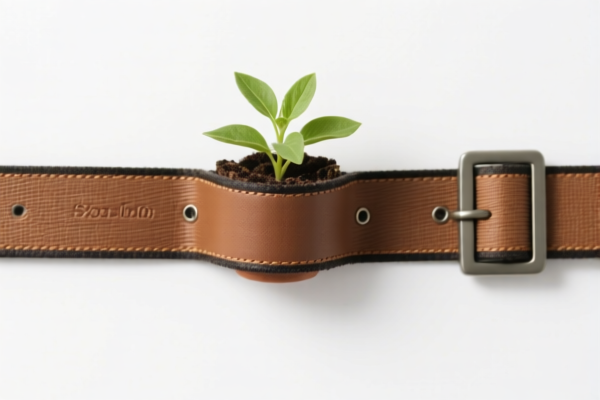
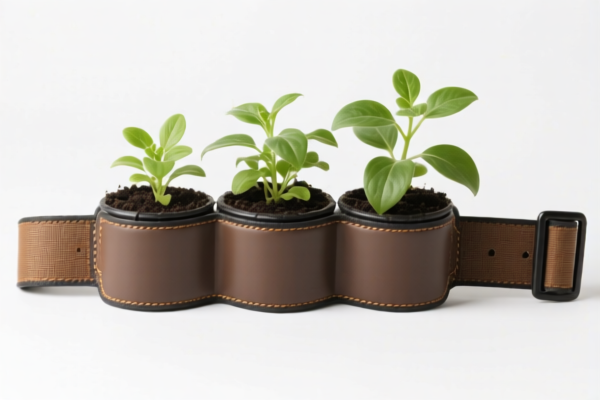
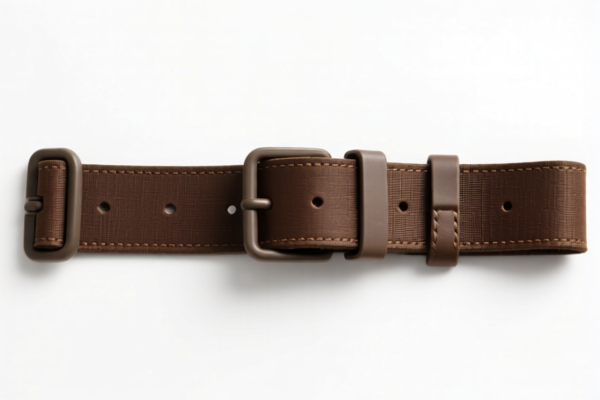
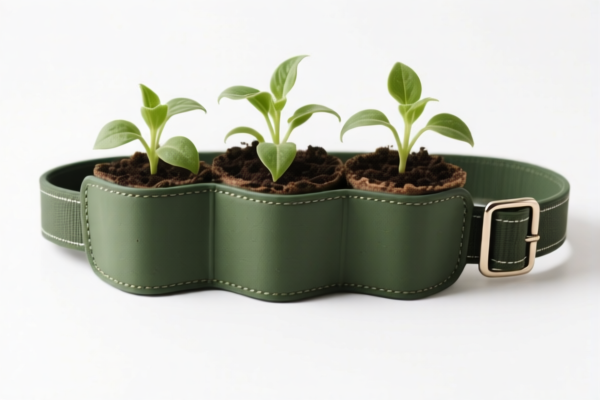
AI Analysis
Based on the provided <DATA>, the term "种植带" (which translates to "Planting Belts," "Seedling Belts," or broadly "Agricultural Belts/Straps") needs to be mapped to the most appropriate HS Code based on its material and function.
In the context of the provided dataset, there are two relevant categories:
1. Agricultural Machinery Parts: Specifically Seeders, Planters, and Transplanters (HS Code 8432.39.00.90 and 8432.31.00.90).
2. Plastic Articles: Specifically Belting and belts, for machinery made of plastic (HS Code 3926.90.60.90).
"种植带" is most accurately interpreted as a plastic belt or strip used in agricultural machinery (e.g., seed delivery belts, mulching belts, or conveyor belts for seedlings). Therefore, it falls under Plastic Articles.
Here is the Wiki-style guide for "种植带" (Planting Belts / Agricultural Plastic Belts):
🌾 Planting Belts (Agricultural Plastic Belts / Seed Delivery Strips)
🌐 HS Code Reference & Customs Clearance Guide | 2026 Latest Tariff Analysis | Professional Strategy
📌 I. Product Definition & Classification: What exactly is a "Planting Belt"?
"Planting Belts" (种植带) in international trade typically refer to plastic belts, strips, or webs used in agricultural machinery for: - Seed metering/delivery (conveying seeds from hopper to soil); - Transplanting mechanisms (holding or moving seedlings); - Mulching or film handling in planting equipment.
These are not mechanical parts of the engine, nor are they finished agricultural tools. They are articles of plastic classified under Heading 3926.
⚠️ Key Distinction:
- If the item is a complete seeder/planting machine part that is integral to the seeding mechanism (e.g., a seed metering roller), it may fall under Chapter 84 (Agricultural Machinery).
- If it is a plastic belt/strap/web used within the machinery or as a separate accessory, it falls under Chapter 39 (Plastics).
For "种植带" (Planting Belts), the standard classification is as a plastic article.
📦 II. HS Code Classification Details (2026 Latest Tariff Authority Match)
Based on the provided <DATA>, the most relevant HS Code is:
| HS Code | Product Description | Application Scenario | Material |
|---|---|---|---|
3926.90.60.90 |
Other articles of plastics: Belting and belts, for machinery: Other Other | Plastic planting belts, seed delivery straps, conveyor belts for seedlings, mulch handling straps | ✅ Plastic (Polypropylene/Polyethylene) |
8432.39.00.90 |
Agricultural Machinery: Seeders, Planters, Transplanters - Other Seeders | Complete machines or major mechanical components like seed plates/hoppers | ❌ Not applicable (this is for machines, not belts) |
8432.31.00.90 |
Agricultural Machinery: No-till direct seeders, planters, transplanters - Seeders | Complete machines for no-till planting | ❌ Not applicable |
4823.90.86.20 |
Shoe covers (booties) of paper | Paper-based shoe covers | ❌ Wrong material |
4823.90.80.00 |
Gaskets, washers, and other seals of paper | Paper-based seals | ❌ Wrong material |
3926.90.99.87 |
Rigid tubes or pipes for electrical conduit | Rigid plastic pipes | ❌ Wrong form factor |
🔍 Critical Note:
- "种植带" is classified as "Belting and belts, for machinery" under3926.90.60.90.
- Do not confuse it with paper-based items (4823...) or rigid pipes (3926.90.99.87).
- If the "belt" is made of paper, it would fall under4823.90.86.20(if used as shoe covers, which is unlikely) or other paper articles, but standard agricultural "planting belts" are plastic.
💰 III. 2026 Latest Tariff Rate Breakdown (Including Additional Taxes)
✅ Applicable Country: United States (US)
✅ Origin: China (CN)
✅ Effective Date: November 10, 2025 (and subsequent imports)
🎯 1. 3926.90.60.90 —— Plastic Belting and Belts for Machinery
| Item | Content |
|---|---|
| Base Tariff | 0.0% (ad valorem) |
| USITC Additional Tariff | 0.0% (No Section 301 surcharge for this specific subheading in the provided data) |
| IEEPA Additional Tariff | 0.0% (No IEEPA surcharge applied to this item in the provided data) |
| Total Tax Rate | 0.0% |
| Tax Calculation | CIF Value × 0% = $0 |
| De Minimis Eligibility | ✅ Yes (If value < $800, may enter under de minimis rule, but full declaration required for commercial shipments) |
| Legal Basis Path | USITC:3926.90.60.90 → No Additional Footnotes for Surcharge |
📌 Explanation:
- This is a zero-tax item under the current provided dataset.
- Unlike electronics or steel, plastic belts for agricultural use are not subject to the 25% Section 301 tariffs in this specific classification.
- Benefit: Significant cost advantage compared to other plastic articles (e.g.,3926.90.99.87at 12.8%).
🛠️ IV. Customs Clearance Practical Advice (Avoid Pitfalls)
✅ 1. Required Documentation Checklist
| Document | Must Provide | Description |
|---|---|---|
| ✅ Product Specification Sheet | ✔️ | Material (e.g., PP, PE), thickness, width, length, tensile strength |
| ✅ Product Photos | ✔️ | Clear images of the belt/strap, including any markings or packaging |
| ✅ Commercial Invoice | ✔️ | Clearly state: "Plastic Belts for Agricultural Planting Machinery, HS 3926.90.60.90" |
| ✅ Packing List | ✔️ | Weight, dimensions, quantity per carton |
| ✅ Origin Certificate | ❌ (Optional) | Not required for 0% rate, but useful for record-keeping |
| ✅ Material Safety Data Sheet (MSDS) | ❌ (If applicable) | If the plastic contains additives, may be requested |
✅ 2. Declaration Tips (Key Mantra)
🔥 “Material Clear, Function Specific, HS Precise, Tariff Zero!”
| Scenario | Correct Declaration | Incorrect Practice |
|---|---|---|
| Plastic planting belt | 3926.90.60.90 |
Misclassified as 3926.90.99.87 → 12.8% tax |
| Paper-based mulch strip | 4823.90.86.20 (if shoe covers) or other paper code |
Misclassified as plastic → Confusion |
| Complete seeder machine | 8432.39.00.90 |
Listing as "parts" → 25% tax |
| Plastic conduit pipes | 3926.90.99.87 |
Mixing with belts → Wrong HS |
📌 Critical Reminder:
- Ensure the description explicitly states "Plastic Belting for Machinery" or "Agricultural Planting Belts".
- Avoid vague terms like "Strap" or "Band" without material specification.
- If the belt is reusable and mechanical, emphasize "Belting for Machinery."
✅ 3. Special Cases
| Scenario | Handling Advice |
|---|---|
| OEM Custom Belts | Provide customer design specs to prove they are "for machinery" and not general-purpose |
| Biodegradable Plastic Belts | Still classified under 3926.90.60.90 unless specifically exempted (check with CBP) |
| Mixed Containers (Plants + Belts) | Declare separately; belts are 0%, plants may have phytosanitary requirements |
| Paper-Based Planting Strips | If made of cellulose, verify if it falls under 4823.90.86.20 (0% base + 25% = 25%) or other paper codes |
🌍 V. Global Market Comparison (2026 Latest)
| Country/Region | Recommended HS Code | Tariff Rate | Certification Requirements | Notes |
|---|---|---|---|---|
| 🇺🇸 USA | 3926.90.60.90 |
0.0% | None (Plastic) | Zero duty advantage |
| 🇨🇳 China | 3926.90.60.90 |
5.0% | None | Base rate 5% |
| 🇪🇺 EU | 3926.90.99 |
4.5% | REACH | Standard EU duty |
| 🇦🇺 Australia | 3926.90.60 |
5.0% | None | Base rate 5% |
| 🇯🇵 Japan | 3926.90.60 |
5.0% | JIS | Base rate 5% |
📌 Conclusion:
- USA offers the best tariff advantage (0%) for plastic planting belts under3926.90.60.90.
- EU and Australia impose standard duties (~4.5%-5%).
- China is the manufacturing hub with 5% base rate for exports.
📌 VI. Common Mistakes & Pitfalls (Lessons Learned)
❌ Mistake 1: Classifying plastic planting belts as 3926.90.99.87 (Rigid Tubes/Pipes)
👉 Consequence: 12.8% tax instead of 0% → Loss of $12.80 per $100 value.
❌ Mistake 2: Declaring as 8432.39.00.90 (Seeding Machinery Parts)
👉 Consequence: 25% tax → Loss of $25.00 per $100 value.
❌ Mistake 3: Using vague description "Plastic Strip"
👉 Consequence: CBP may reclassify to highest duty rate → Delays + Penalties.
✅ Correct Practice:
"Plastic Belting for Agricultural Planting Machinery, Material: Polypropylene, Width: 50mm, Thickness: 2mm, HS Code: 3926.90.60.90"
🎯 VII. Conclusion: Professional Declaration, Cost Optimization!
🎯 Remember the Mantra:
🔹 "Plastic Belt = 3926.90.60.90 = 0% Tax!"
🔹 "Don't call it a pipe, don't call it a machine part!"
🔹 "Accuracy saves money, Vagueness costs profits!"
📌 Pro Tip:
If your planting belts are made of biodegradable materials, ensure you have certification to avoid disputes with customs.
For large volumes, consider applying for a Customs Binding Ruling to lock in the 0% rate.
📣 Immediate Action:
📞 Verify material composition with supplier
📄 Prepare precise description: "Plastic Belts for Planting Machinery"
🚀 Ship with confidence under 0% tariff!
✨ Professional Customs Clearance Starts with Accurate Classification!
💼 Every percent saved is pure profit!
Customer Reviews
About HS Code Classification
The Harmonized System (HS) is an internationally standardized nomenclature developed by the World Customs Organization (WCO) to classify traded products. Over 200 countries use the HS system as the basis for customs tariffs, trade statistics, and import/export regulations.
Each HS code follows a hierarchical structure:
- Chapter (2 digits) — Broad category of goods (e.g., Chapter 84: Machinery and Mechanical Appliances)
- Heading (4 digits) — More specific grouping within the chapter
- Subheading (6 digits) — Internationally standardized breakdown, used by all WCO member countries
- National subdivisions (8-10 digits) — Country-specific extensions for further classification, such as US HTSUS 10-digit codes
Correct HS code classification is essential for smooth customs clearance, accurate duty payment, and compliance with trade regulations. Misclassification can lead to customs delays, overpayment of duties, or penalties.
When importing from CN to US, the applicable tariff rates may include:
- Most-Favored-Nation (MFN) rate — The standard duty rate applied to WTO members
- General rate — Applied to countries without trade agreements
- Trade remedy duties — Additional tariffs such as Section 301 (anti-dumping), Section 232 (national security), or countervailing duties
The information provided on this page is for reference purposes only. For official classification, please consult with your local customs authority or a licensed customs broker.