Bamboo Serving Tray
CN → US| HS Code | Tariff Rate | Origin | Destination | Doc |
|---|---|---|---|---|
| 4419110000 | 13.2% | CN | US | Official Doc |
| 4419199000 | 13.2% | CN | US | Official Doc |
| 9403820030 | 35.0% | CN | US | Official Doc |
| 9403820015 | 35.0% | CN | US | Official Doc |
| 4602110900 | 45.0% | CN | US | Official Doc |
Product Images
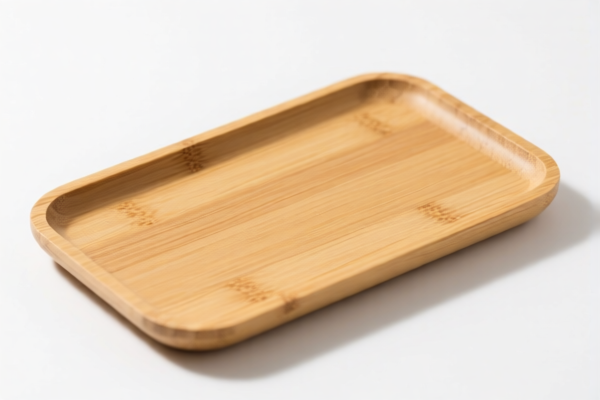
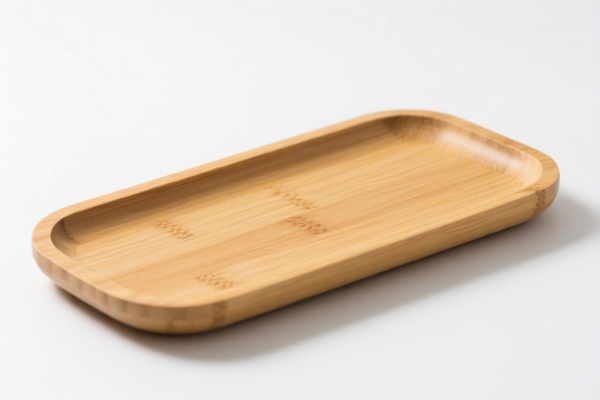
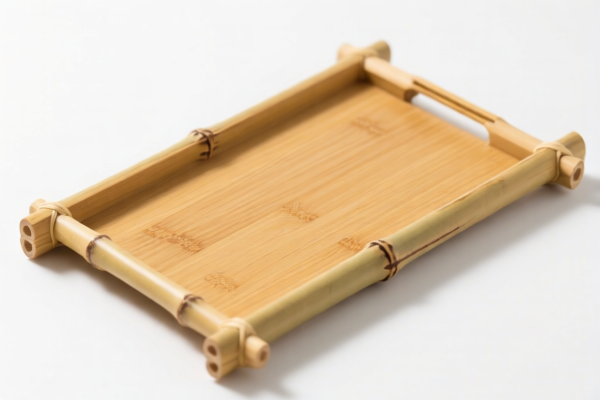
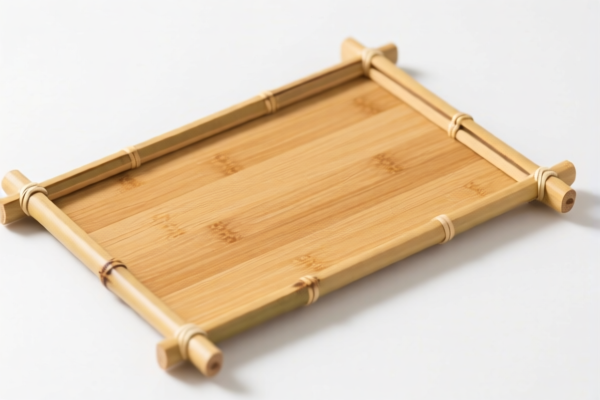
AI Analysis
🎋 Bamboo Serving Tray (竹制餐具及厨房用具,类似板类)
🌐 HS Code Reference & Customs Clearance Guide | 2026 Latest Tariff Analysis | Professional Strategy for Bamboo Products
📌 I. Product Definition & Classification: Do You Really Understand "Bamboo Trays"?
A Bamboo Serving Tray is a versatile household item used for transporting food, drinks, or decorative items. In international trade, its classification depends heavily on its function and construction. Unlike generic "bamboo products," serving trays fall strictly under Chapter 44 (Wood and Articles of Wood; Charcoal), specifically as cutlery and kitchenware.
Key Distinction:
Kitchenware/Tableware (HS 4419): Items primarily used for eating, serving, or food preparation (e.g., trays, plates, bowls, chopsticks).
Furniture (HS 9403): Items used for sitting, sleeping, or storage (e.g., bamboo chairs, tables, cabinets).
Woven Goods (HS 4602)*: Items made by weaving bamboo strips into basket-like structures (e.g., baskets, mats, bags).
⚠️ Critical Classification Rule:
- If the tray is designed for serving food/drink → HS 4419
- If the tray is part of a furniture piece (e.g., a coffee table top) → HS 9403
- If the tray is a woven basket-like container → HS 4602
📦 II. HS Code Classification Details (2026 Latest Tariff Authority Comparison)
| HS Code | Product Description | Applicable Scenario | Tariff Rate (China Origin → US) |
|---|---|---|---|
4419.11.00.00 |
Tableware and Kitchenware of Bamboo, in Slab Form | Flat bamboo trays, solid bamboo serving boards, slab-style trays | 13.2% |
4419.19.90.00 |
Other Tableware and Kitchenware of Bamboo | Non-slab shaped bamboo trays, curved trays, composite bamboo trays | 13.2% |
9403.82.00.30 |
Other Furniture of Bamboo | Bamboo trays used as table tops, shelves, or furniture components | 35.0% |
9403.82.00.15 |
Other Household Furniture of Bamboo | Bamboo serving trays integrated into furniture units (e.g., side tables) | 35.0% |
4602.11.09.00 |
Bamboo Baskets and Woven Articles | Woven bamboo trays, basket-style serving trays, mat-like containers | 45.0% |
🔍 Key Reminder:
- Most standard "Bamboo Serving Trays" fall under4419.11.00.00or4419.19.90.00(13.2% total).
- Do NOT misclassify a simple serving tray as "Furniture" (35%) or "Woven Basket" (45%).
- If the tray is flat and slab-like, use4419.11.00.00.
- If it is curved or complex shape, use4419.19.90.00.
💰 III. 2026 Latest Tariff Rate Breakdown (Including Surtaxes & Policy Add-ons)
✅ Applicable Country: United States (US)
✅ Origin: China (CN)
✅ Effective Date: From 2025-11-10 onwards (including subsequent imports)
🎯 1. 4419.11.00.00 & 4419.19.90.00 —— Bamboo Tableware/Kitchenware (Serving Trays)
| Item | Details |
|---|---|
| Base Duty Rate | 3.2% (Ad Valorem) |
| USITC Surtax (Section 301) | +25.0% (From USITC Footnote 9903.88.01) |
| IEEPA Surtax (Section 122) | +10.0% (For China/HK products, from 2025-11-10) |
| Total Effective Rate | 13.2% |
| Tax Calculation | CIF Value × 13.2% |
| De Minimis Eligibility | ❌ No (deny_de_minimis) |
| Legal Basis Path | IEEPA:9903.01.25 → IEEPA:9903.01.24 → USITC:4419.11.00.00 → FOOTNOTE:9903.88.01 |
📌 Explanation:
- Base 3.2%: Standard MFN tariff for bamboo tableware.
- Section 301 Surcharge 25%: Standard additional tariff on Chinese goods under US Trade Act Section 301.
- Section 122 IEEPA Surcharge 10%: New additional tariff under the International Emergency Economic Powers Act, effective Nov 2025.
- Total 13.2%: This is the final landed duty cost. It is moderate compared to furniture or woven goods.
🎯 2. 9403.82.00.30 & 9403.82.00.15 —— Bamboo Furniture (If Misclassified)
| Item | Details |
|---|---|
| Base Duty Rate | 0.0% |
| USITC Surtax (Section 301) | +25.0% |
| IEEPA Surtax (Section 122) | +10.0% |
| Total Effective Rate | 35.0% |
| Tax Calculation | CIF Value × 35.0% |
| De Minimis Eligibility | ❌ No |
📌 Warning: If a serving tray is mistakenly declared as "Furniture" (e.g., "Bamboo Shelf"), the tariff jumps from 13.2% to 35.0%. Avoid this!
🎯 3. 4602.11.09.00 —— Woven Bamboo Baskets (If Misclassified)
| Item | Details |
|---|---|
| Base Duty Rate | 10.0% |
| USITC Surtax (Section 301) | +25.0% |
| IEEPA Surtax (Section 122) | +10.0% |
| Total Effective Rate | 45.0% |
| Tax Calculation | CIF Value × 45.0% |
| De Minimis Eligibility | ❌ No |
📌 Warning: If a flat serving tray is mistakenly declared as a "Woven Basket," the tariff skyrockets to 45.0%. Avoid this!
🛠️ IV. Customs Clearance Practical Advice (Combat Pitfall Guide)
✅ 1. Required Documentation Checklist (Missing Any = Delay)
| Document | Mandatory | Notes |
|---|---|---|
| ✅ Product Specifications | ✔️ | Include dimensions, material (100% bamboo vs. composite), weight |
| ✅ Product Photos | ✔️ | Clear images of the tray, showing it is flat/serving-oriented, not woven or furniture-like |
| ✅ Commercial Invoice | ✔️ | Clearly state "Bamboo Serving Tray" or "Bamboo Tableware" |
| ✅ Packing List | ✔️ | List net/gross weights, quantity per carton |
| ✅ Certificate of Origin | ✔️ | To verify China origin (if applicable for any future exemptions) |
| ✅ FSC Certification | Optional | If claiming sustainable sourcing, may help with retailer requirements |
✅ 2. Declaration Tips (Key Mantra)
🔥 "Flat is Kitchen, Woven is Basket, Furniture is High Rate!"
| Scenario | Correct Declaration | Incorrect Practice |
|---|---|---|
| Flat Bamboo Tray | 4419.11.00.00 - "Bamboo Tableware, Slab Form" |
Call it "Bamboo Basket" → 45% |
| Curved/Complex Tray | 4419.19.90.00 - "Other Bamboo Kitchenware" |
Call it "Furniture Part" → 35% |
| Woven Bamboo Tray | 4602.11.09.00 - "Bamboo Woven Basket" |
Call it "Kitchenware" → 45% (correct rate but wrong code if not kitchenware) |
| Bamboo Coffee Table Top | 9403.82.00.30 - "Other Bamboo Furniture" |
Call it "Tray" → 13.2% (Underpay tax, risk penalty) |
📌 Note:
- Use precise terms: "Bamboo Serving Tray," "Bamboo Platter," "Bamboo Cutting Board"
- Avoid vague terms like "Bamboo Product," "Bamboo Item," or "Bamboo Basket" unless it is truly woven.
✅ 3. Special Cases Handling
| Scenario | Handling Advice |
|---|---|
| Bamboo + Wood Composite | If >50% bamboo by value, still HS 4419. If >50% other wood, may shift to HS 4420/4421. Check composition. |
| Bamboo with Metal Handles | Still HS 4419 if bamboo is the primary material. Declare as "Bamboo Tray with Metal Accents." |
| Bamboo Tray Set (with Bowls) | Declare as a set. If trays are primary, use HS 4419 for the whole set. |
| OEM Custom Trays | Provide design specs to prove it is "tableware" not "furniture." |
🌍 V. Global Market Clearance Comparison (2026 Latest)
| Country/Region | Recommended HS Code | Tariff | Certification | Notes |
|---|---|---|---|---|
| 🇺🇸 USA | 4419.11.00.00 / 4419.19.90.00 |
13.2% | None specific | High scrutiny on bamboo origin |
| 🇪🇺 EU | HS 4601/4602 (depending on structure) | 0-6.5% | FSC (optional) | Lower tariffs, focus on sustainability |
| 🇨🇳 China | HS 4419.11 | 0-5% | None | Export-focused |
| 🇬🇧 UK | HS 4419.11 | 2-5% | None | Post-Brexit rules apply |
| 🇯🇵 Japan | HS 4419.11 | 0-8% | None | Strict phytosanitary rules |
📌 Conclusion:
- USA has the most complex tariff structure due to Section 301 and Section 122.
- EU and Japan offer lower or zero tariffs but may have stricter sustainability/phytosanitary requirements.
- Always declare as "Tableware/Kitchenware" (HS 4419) for standard serving trays to avoid higher furniture/basket rates.
📌 VI. Common Errors & Pitfalls (Blood Lessons)
❌ Mistake 1: Declaring a flat bamboo tray as "Bamboo Basket" (HS 4602)
👉 Consequence: Tariff jumps from 13.2% to 45% → Overpay by 31.8%!
❌ Mistake 2: Declaring a bamboo serving tray as "Furniture" (HS 9403)
👉 Consequence: Tariff jumps from 13.2% to 35% → Overpay by 21.8%!
❌ Mistake 3: Vague description "Bamboo Product"
👉 Consequence: Customs may inspect, delay clearance, or assign worst-case rate → Delays & Demurrage Fees!
❌ Mistake 4: Ignoring Section 122 (IEEPA 10%)
👉 Consequence: Underpayment of duties after Nov 2025 → Back Taxes & Penalties!
✅ Correct Practice:
"Bamboo Serving Tray, 12x8 inches, Solid Bamboo, Flat Design, for Table Service"
🎯 VII. Conclusion: Precise Declaration, Cost Control, Smooth Clearance!
🎯 Remember the Mantra:
🔹 "Flat is Kitchen (13.2%), Woven is Basket (45%), Furniture is High (35%)."
🔹 "HS Code is Life, Tariff Difference is Cost, Declare Step by Step."
📌 Pro Tip:
If your bamboo products are sourced from Vietnam, Thailand, or Indonesia, you may qualify for IEEPA Exemptions or lower tariffs under USMCA/ASEAN agreements.
Recommendation: Apply for an Advance Ruling (Pre-classification) from US Customs and Border Protection (CBP) to confirm the HS Code before shipment.
📣 Take Action Now:
📞 Contact a professional customs broker + Provide product photos + Apply for HS Code Pre-classification
🚀 Let your bamboo trays clear customs smoothly, export efficiently, and double your profits!
✨ Professional Clearance Starts with Accurate Classification!
💼 Every cent of your cost deserves precise calculation!
Customer Reviews
About HS Code Classification
The Harmonized System (HS) is an internationally standardized nomenclature developed by the World Customs Organization (WCO) to classify traded products. Over 200 countries use the HS system as the basis for customs tariffs, trade statistics, and import/export regulations.
Each HS code follows a hierarchical structure:
- Chapter (2 digits) — Broad category of goods (e.g., Chapter 84: Machinery and Mechanical Appliances)
- Heading (4 digits) — More specific grouping within the chapter
- Subheading (6 digits) — Internationally standardized breakdown, used by all WCO member countries
- National subdivisions (8-10 digits) — Country-specific extensions for further classification, such as US HTSUS 10-digit codes
Correct HS code classification is essential for smooth customs clearance, accurate duty payment, and compliance with trade regulations. Misclassification can lead to customs delays, overpayment of duties, or penalties.
When importing from CN to US, the applicable tariff rates may include:
- Most-Favored-Nation (MFN) rate — The standard duty rate applied to WTO members
- General rate — Applied to countries without trade agreements
- Trade remedy duties — Additional tariffs such as Section 301 (anti-dumping), Section 232 (national security), or countervailing duties
The information provided on this page is for reference purposes only. For official classification, please consult with your local customs authority or a licensed customs broker.