2W Attenuator
CN → US| HS编码 | 关税税率 | 原产国 | 目的国 | 文档 |
|---|---|---|---|---|
| 8543709810 | 37.6% | CN | US | 官方文档 |
| 8542390090 | 60.0% | CN | US | 官方文档 |
| 8543709860 | 37.6% | CN | US | 官方文档 |
| 8542390020 | 60.0% | CN | US | 官方文档 |
商品图片
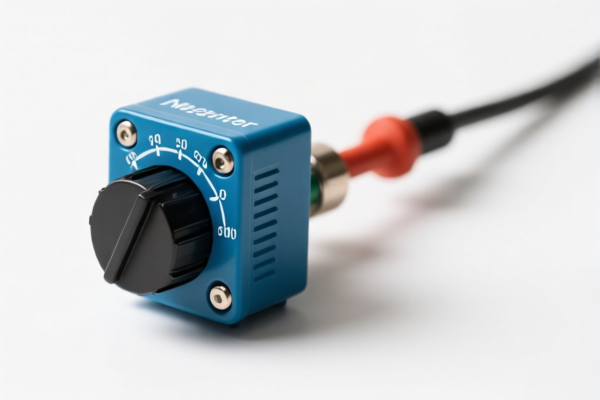
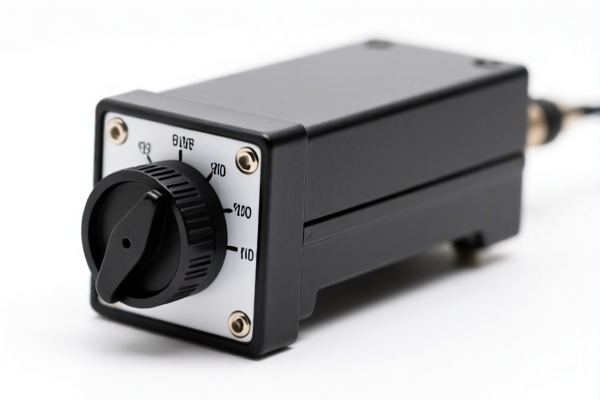
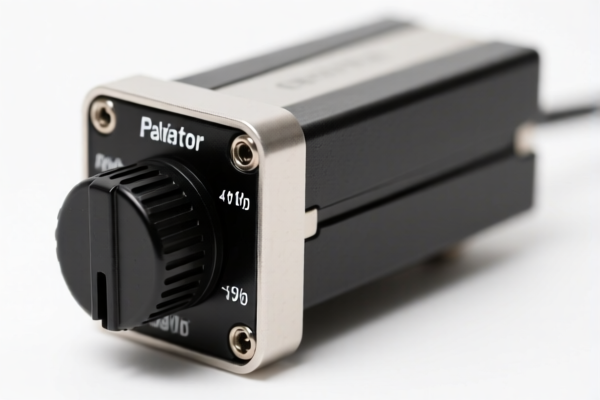

AI分析
⚡ 2W Attenuator (Electrical Signal Processing Device)
🌐 HS Code Reference & Customs Clearance Guide | 2026 Latest Tariff Analysis | Professional Clearance Strategy
📌 I. Product Definition & Classification: Do You Really Understand a "2W Attenuator"?
A 2W Attenuator is an electrical component used to reduce the power of a signal in an electrical circuit, telecommunication network, or test setup without significantly distorting its waveform. In international trade, its classification depends heavily on whether it is viewed as a standalone device or as an integrated electronic component.
Two Main Classification Paths: 1. Electrical Signal Processing Apparatus (Standalone Device): Classified as a machine or apparatus with specific functions (often similar to amplifiers). 2. Electronic Component/Integrated Circuit: Classified as an active/passive circuit component within electronic integrated circuits.
⚠️ Key Distinction Point:
- If the product is a standalone unit (e.g., a box with input/output connectors, labeled as a signal processor) → Classify under 8543.70.98.x.
- If the product is a micro-component (e.g., SMD resistors, ICs, or bare chips used within larger assemblies) → Classify under 8542.39.00.x.
📦 II. HS Code Classification Details (2026 Latest Tariff Authority Comparison)
Based on the provided data, here are the four specific HS codes and their rationales:
| HS Code | Product Description & Logic | Total Tax Rate | Classification Logic |
|---|---|---|---|
8543.70.98.10 |
Electrical Signal Processing Apparatus | 37.6% | Matches with electrical signal processing devices having independent functions (categorized similarly to amplifiers). |
8542.39.00.90 |
Electronic Component (IC Type) | 60.0% | Matches with electronic elements, specifically non-specific active/passive circuit components within electronic integrated circuits. |
8543.70.98.60 |
Electronic Signal Processing Device | 37.6% | Matches with "other machines and apparatus," composed of electronic components for signal processing. |
8542.39.00.20 |
Electronic Component (Circuit Function) | 60.0% | Matches with electronic components under "other categories" of electronic integrated circuits, focusing on circuit function logic. |
🔍 Critical Reminder:
- High Tax Warning: The "Electronic Component" path (8542.39.00.xx) carries a significantly higher total tax rate (60.0%) due to heavy supplementary tariffs.
- Optimal Path: The "Signal Processing Apparatus" path (8543.70.98.xx) offers a lower total tax rate (37.6%) and is often more suitable for standalone attenuator units.
- Do Not Mix: Ensure your product documentation clearly defines whether it is a "device/apparatus" or a "component/IC" to avoid customs delays.
💰 III. 2026 Latest Tariff Rate Breakdown (Detailed Tariff Clauses)
✅ Applicable Country: United States (US)
✅ Origin: China (CN)
✅ Effective Time: 2025/2026 Current Rates
🎯 1. Path A: 8543.70.98.10 & 8543.70.98.60 (Signal Processing Apparatus)
| Item | Detail |
|---|---|
| Base Tariff | 2.6% (Ad Valorem) |
| Supplementary Tariff (Section 301) | +25.0% |
| 122 Clause Tariff | +10.0% |
| Total Effective Tax Rate | 37.6% |
| Tax Calculation | CIF Value × 37.6% |
| De Minimis Eligibility | ❌ Not Applicable (High value components typically excluded) |
| Legal Basis Path | Base Duty → Section 301 Footnote → 122 Clause Clause |
📌 Explanation:
- The 2.6% base duty applies to general electrical machines and apparatus.
- The +25% is the standard Section 301 tariff on Chinese goods in this category.
- The +10% is the additional "122 Clause" tariff, often applied to specific electrical components or signal processing devices.
- Total 37.6% is high but significantly better than the 60% alternative.
🎯 2. Path B: 8542.39.00.90 & 8542.39.00.20 (Electronic Components/ICs)
| Item | Detail |
|---|---|
| Base Tariff | 0.0% (Ad Valorem) |
| Supplementary Tariff (Section 301) | +50.0% |
| 122 Clause Tariff | +10.0% |
| Total Effective Tax Rate | 60.0% |
| Tax Calculation | CIF Value × 60.0% |
| De Minimis Eligibility | ❌ Not Applicable |
| Legal Basis Path | Base Duty → Section 301 Footnote (Higher Category) → 122 Clause Clause |
📌 Explanation:
- The 0.0% base duty might look attractive, but the Section 301 tariff jumps to +50% for certain electronic components/ICs.
- The +10% 122 Clause tariff still applies.
- Total 60.0% makes this classification extremely expensive.
- Strategic Advice: Only use this code if the product is strictly a micro-component/IC and not a standalone device. Misclassifying a standalone attenuator here can lead to audits and penalties.
🛠️ IV. Customs Clearance Practical Advice (Real-World Pitfall Guide)
✅ 1. Documentation Checklist (Non-Negotiable)
| Document | Required? | Purpose |
|---|---|---|
| ✅ Product Specification Sheet | ✔️ | Must specify: Power handling (2W), Impedance (50Ω), Frequency range, Connector type (N, SMA, etc.). |
| ✅ Circuit Diagram / Block Diagram | ✔️ | Critical to prove if it’s a "standalone device" (8543) or "internal component" (8542). |
| ✅ Product Photos (with Labels) | ✔️ | Show model number, wattage rating, and connector types. |
| ✅ Commercial Invoice | ✔️ | Clearly state: "Electrical Attenuator, 2W, Signal Processing Device" or "Electronic Circuit Component". |
| ✅ Country of Origin Certificate | ✔️ | Required for Section 301 and 122 Clause assessments. |
| ✅ Packing List | ✔️ | Detail contents to ensure no mixed HS codes in one shipment. |
✅ 2. Declaration Tips (Key Mantra)
🔥 "Device vs. Component: Define Clearly to Avoid 60% Tax!"
| Scenario | Correct Declaration | Wrong Action |
|---|---|---|
| Standalone Attenuator (Box with connectors) | 8543.70.98.10 or .60 |
Report as "Resistor" or "IC" → 60% Tax |
| SMD/Chip Attenuator (Bare component for PCB) | 8542.39.00.90 or .20 |
Report as "Device" → Unnecessary audit |
| Attenuator + Cable Assembly | Separate the attenuator (8543) from cable (8544) |
Lump sum declaration → Risk of misclassification |
✅ 3. Special Case Handling
| Situation | Recommendation |
|---|---|
| OEM Custom Attenuators | Provide design specs to prove it’s a "custom signal processing device" under 8543. |
| High-Frequency (>10GHz) Attenuators | Ensure frequency specs are clear; may fall under specialized 8543 categories. |
| Mixed Shipment (Components + Devices) | Separate shipments or line items! Do not mix 8543 and 8542 items in one HS Code declaration. |
🌍 V. Global Market Comparison (2026)
| Country/Region | Recommended HS Code | Est. Total Tax | Notes |
|---|---|---|---|
| 🇺🇸 USA | 8543.70.98.10 |
37.6% | Best option for standalone units. Avoid 8542 path. |
| 🇨🇳 China | 8543.70.98.10 |
~37-40% | Import duties may vary; check current FTA/RECIPs. |
| 🇪🇺 EU | 8543.70.90 |
~3.7% | No Section 301/122 Clause tariffs. Much lower cost. |
| 🇬🇧 UK | 8543.70.90 |
~3.7% | Post-Brexit rules apply; generally lower than US. |
📌 Conclusion:
- USA is the most challenging market due to the 37.6% effective rate for signal processing devices.
- EU/UK markets are significantly cheaper (~3.7%) for the same product.
- Strategic Shift: Consider sourcing or final assembly in non-China countries (e.g., Vietnam, Malaysia) if exporting to the US to mitigate 301/122 tariffs.
📌 VI. Common Errors & Pitfalls (Lessons Learned)
❌ Error 1: Classifying a standalone attenuator as a "Resistor" under Chapter 8542.
👉 Consequence: Tax rate jumps from 37.6% to 60%. Customs may also flag for misdeclaration.
❌ Error 2: Failing to declare Wattage (2W) in the description.
👉 Consequence: Customs cannot verify the classification logic. Result: Delay, inspection, or forced higher-rate classification.
❌ Error 3: Mixing "Signal Processing Device" and "Electronic Component" in one HS code.
👉 Consequence: Audit risk. Each item must match its specific HS code rationale.
✅ Correct Declaration Example:
"Electrical Signal Processing Device, Attenuator, 2W Power Rating, 50 Ohm Impedance, Model XYZ, Made in China"
(HS Code: 8543.70.98.10)
🎯 VII. Conclusion: Precision Classification Saves Money!
🎯 Remember the Mantra:
🔹 "Device = 8543 = 37.6%"
🔹 "Component/IC = 8542 = 60.0%"
🔹 "Declare Wattage, Declare Function, Avoid the 60% Trap!"
📌 Pro Tip:
If your product is a purely passive component (no active power supply, no signal generation/amplification logic), you might argue for 8543. However, if it is integrated into an IC form factor, 8542 applies. Always consult a customs broker with product photos to lock in the 37.6% rate.
📣 Immediate Action:
📞 Contact your customs broker with product specs.
📄 Request an Advance Ruling if shipping high volumes to the US.
🚀 Save 22.4% in taxes by choosing the correct HS Code!
✨ Professional Clearance Starts with Accurate Classification!
💼 Every 1% of tax saved is pure profit!
用户评价
关于 HS 编码归类
协调制度(HS)是由世界海关组织(WCO)制定的国际贸易商品分类标准。全球 200 多个国家采用 HS 系统作为海关关税、贸易统计和进出口监管的基础。
每个 HS 编码遵循以下层级结构:
- 章(2 位)——商品大类(例如:第 84 章:机器和机械设备)
- 品目(4 位)——章内的更具体分类
- 子目(6 位)——国际通用细分,所有 WCO 成员国统一使用
- 本国细分(8-10 位)——各国自行扩展的细分编码,如美国 HTSUS 10 位编码
正确的 HS 编码归类对于顺利通关、准确缴纳关税和遵守贸易法规至关重要。错误归类可能导致海关延误、多缴关税或罚款。
从CN进口到US时,适用的关税税率可能包括:
- 最惠国(MFN)税率——适用于 WTO 成员国的标准关税税率
- 普通税率——适用于无贸易协定国家
- 贸易救济关税——附加关税,如 301 条款(反倾销)、232 条款(国家安全)或反补贴税
本页内容仅供参考。如需正式归类,请咨询当地海关或持牌报关代理。