2W Attenuator
CN → US| HS Code | Tariff Rate | Origin | Destination | Doc |
|---|---|---|---|---|
| 8543709810 | 37.6% | CN | US | Official Doc |
| 8542390090 | 60.0% | CN | US | Official Doc |
| 8543709860 | 37.6% | CN | US | Official Doc |
| 8542390020 | 60.0% | CN | US | Official Doc |
Product Images
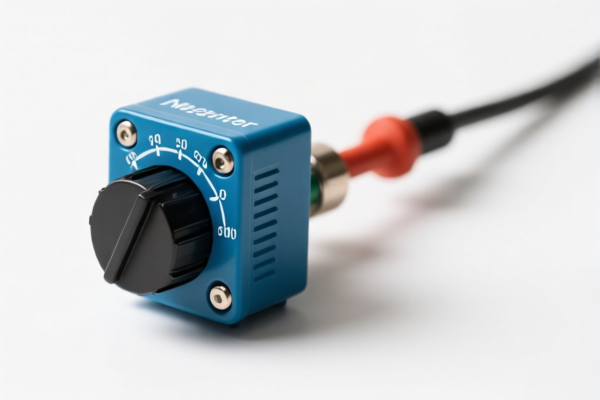
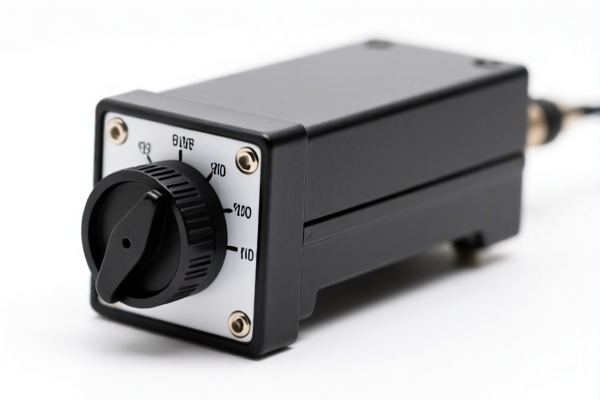
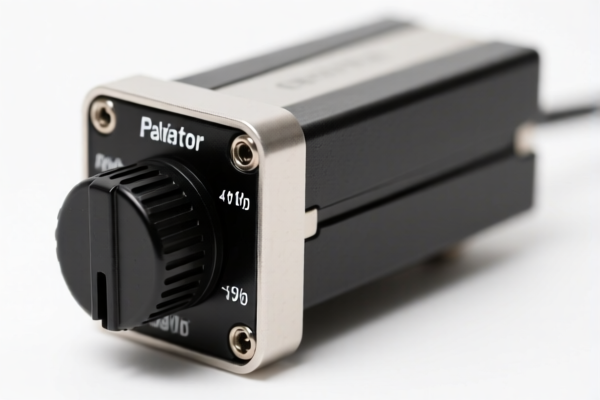

AI Analysis
⚡ 2W Attenuator (Electrical Signal Processing Device)
🌐 HS Code Reference & Customs Clearance Guide | 2026 Latest Tariff Analysis | Professional Clearance Strategy
📌 I. Product Definition & Classification: Do You Really Understand a "2W Attenuator"?
A 2W Attenuator is an electrical component used to reduce the power of a signal in an electrical circuit, telecommunication network, or test setup without significantly distorting its waveform. In international trade, its classification depends heavily on whether it is viewed as a standalone device or as an integrated electronic component.
Two Main Classification Paths: 1. Electrical Signal Processing Apparatus (Standalone Device): Classified as a machine or apparatus with specific functions (often similar to amplifiers). 2. Electronic Component/Integrated Circuit: Classified as an active/passive circuit component within electronic integrated circuits.
⚠️ Key Distinction Point:
- If the product is a standalone unit (e.g., a box with input/output connectors, labeled as a signal processor) → Classify under 8543.70.98.x.
- If the product is a micro-component (e.g., SMD resistors, ICs, or bare chips used within larger assemblies) → Classify under 8542.39.00.x.
📦 II. HS Code Classification Details (2026 Latest Tariff Authority Comparison)
Based on the provided data, here are the four specific HS codes and their rationales:
| HS Code | Product Description & Logic | Total Tax Rate | Classification Logic |
|---|---|---|---|
8543.70.98.10 |
Electrical Signal Processing Apparatus | 37.6% | Matches with electrical signal processing devices having independent functions (categorized similarly to amplifiers). |
8542.39.00.90 |
Electronic Component (IC Type) | 60.0% | Matches with electronic elements, specifically non-specific active/passive circuit components within electronic integrated circuits. |
8543.70.98.60 |
Electronic Signal Processing Device | 37.6% | Matches with "other machines and apparatus," composed of electronic components for signal processing. |
8542.39.00.20 |
Electronic Component (Circuit Function) | 60.0% | Matches with electronic components under "other categories" of electronic integrated circuits, focusing on circuit function logic. |
🔍 Critical Reminder:
- High Tax Warning: The "Electronic Component" path (8542.39.00.xx) carries a significantly higher total tax rate (60.0%) due to heavy supplementary tariffs.
- Optimal Path: The "Signal Processing Apparatus" path (8543.70.98.xx) offers a lower total tax rate (37.6%) and is often more suitable for standalone attenuator units.
- Do Not Mix: Ensure your product documentation clearly defines whether it is a "device/apparatus" or a "component/IC" to avoid customs delays.
💰 III. 2026 Latest Tariff Rate Breakdown (Detailed Tariff Clauses)
✅ Applicable Country: United States (US)
✅ Origin: China (CN)
✅ Effective Time: 2025/2026 Current Rates
🎯 1. Path A: 8543.70.98.10 & 8543.70.98.60 (Signal Processing Apparatus)
| Item | Detail |
|---|---|
| Base Tariff | 2.6% (Ad Valorem) |
| Supplementary Tariff (Section 301) | +25.0% |
| 122 Clause Tariff | +10.0% |
| Total Effective Tax Rate | 37.6% |
| Tax Calculation | CIF Value × 37.6% |
| De Minimis Eligibility | ❌ Not Applicable (High value components typically excluded) |
| Legal Basis Path | Base Duty → Section 301 Footnote → 122 Clause Clause |
📌 Explanation:
- The 2.6% base duty applies to general electrical machines and apparatus.
- The +25% is the standard Section 301 tariff on Chinese goods in this category.
- The +10% is the additional "122 Clause" tariff, often applied to specific electrical components or signal processing devices.
- Total 37.6% is high but significantly better than the 60% alternative.
🎯 2. Path B: 8542.39.00.90 & 8542.39.00.20 (Electronic Components/ICs)
| Item | Detail |
|---|---|
| Base Tariff | 0.0% (Ad Valorem) |
| Supplementary Tariff (Section 301) | +50.0% |
| 122 Clause Tariff | +10.0% |
| Total Effective Tax Rate | 60.0% |
| Tax Calculation | CIF Value × 60.0% |
| De Minimis Eligibility | ❌ Not Applicable |
| Legal Basis Path | Base Duty → Section 301 Footnote (Higher Category) → 122 Clause Clause |
📌 Explanation:
- The 0.0% base duty might look attractive, but the Section 301 tariff jumps to +50% for certain electronic components/ICs.
- The +10% 122 Clause tariff still applies.
- Total 60.0% makes this classification extremely expensive.
- Strategic Advice: Only use this code if the product is strictly a micro-component/IC and not a standalone device. Misclassifying a standalone attenuator here can lead to audits and penalties.
🛠️ IV. Customs Clearance Practical Advice (Real-World Pitfall Guide)
✅ 1. Documentation Checklist (Non-Negotiable)
| Document | Required? | Purpose |
|---|---|---|
| ✅ Product Specification Sheet | ✔️ | Must specify: Power handling (2W), Impedance (50Ω), Frequency range, Connector type (N, SMA, etc.). |
| ✅ Circuit Diagram / Block Diagram | ✔️ | Critical to prove if it’s a "standalone device" (8543) or "internal component" (8542). |
| ✅ Product Photos (with Labels) | ✔️ | Show model number, wattage rating, and connector types. |
| ✅ Commercial Invoice | ✔️ | Clearly state: "Electrical Attenuator, 2W, Signal Processing Device" or "Electronic Circuit Component". |
| ✅ Country of Origin Certificate | ✔️ | Required for Section 301 and 122 Clause assessments. |
| ✅ Packing List | ✔️ | Detail contents to ensure no mixed HS codes in one shipment. |
✅ 2. Declaration Tips (Key Mantra)
🔥 "Device vs. Component: Define Clearly to Avoid 60% Tax!"
| Scenario | Correct Declaration | Wrong Action |
|---|---|---|
| Standalone Attenuator (Box with connectors) | 8543.70.98.10 or .60 |
Report as "Resistor" or "IC" → 60% Tax |
| SMD/Chip Attenuator (Bare component for PCB) | 8542.39.00.90 or .20 |
Report as "Device" → Unnecessary audit |
| Attenuator + Cable Assembly | Separate the attenuator (8543) from cable (8544) |
Lump sum declaration → Risk of misclassification |
✅ 3. Special Case Handling
| Situation | Recommendation |
|---|---|
| OEM Custom Attenuators | Provide design specs to prove it’s a "custom signal processing device" under 8543. |
| High-Frequency (>10GHz) Attenuators | Ensure frequency specs are clear; may fall under specialized 8543 categories. |
| Mixed Shipment (Components + Devices) | Separate shipments or line items! Do not mix 8543 and 8542 items in one HS Code declaration. |
🌍 V. Global Market Comparison (2026)
| Country/Region | Recommended HS Code | Est. Total Tax | Notes |
|---|---|---|---|
| 🇺🇸 USA | 8543.70.98.10 |
37.6% | Best option for standalone units. Avoid 8542 path. |
| 🇨🇳 China | 8543.70.98.10 |
~37-40% | Import duties may vary; check current FTA/RECIPs. |
| 🇪🇺 EU | 8543.70.90 |
~3.7% | No Section 301/122 Clause tariffs. Much lower cost. |
| 🇬🇧 UK | 8543.70.90 |
~3.7% | Post-Brexit rules apply; generally lower than US. |
📌 Conclusion:
- USA is the most challenging market due to the 37.6% effective rate for signal processing devices.
- EU/UK markets are significantly cheaper (~3.7%) for the same product.
- Strategic Shift: Consider sourcing or final assembly in non-China countries (e.g., Vietnam, Malaysia) if exporting to the US to mitigate 301/122 tariffs.
📌 VI. Common Errors & Pitfalls (Lessons Learned)
❌ Error 1: Classifying a standalone attenuator as a "Resistor" under Chapter 8542.
👉 Consequence: Tax rate jumps from 37.6% to 60%. Customs may also flag for misdeclaration.
❌ Error 2: Failing to declare Wattage (2W) in the description.
👉 Consequence: Customs cannot verify the classification logic. Result: Delay, inspection, or forced higher-rate classification.
❌ Error 3: Mixing "Signal Processing Device" and "Electronic Component" in one HS code.
👉 Consequence: Audit risk. Each item must match its specific HS code rationale.
✅ Correct Declaration Example:
"Electrical Signal Processing Device, Attenuator, 2W Power Rating, 50 Ohm Impedance, Model XYZ, Made in China"
(HS Code: 8543.70.98.10)
🎯 VII. Conclusion: Precision Classification Saves Money!
🎯 Remember the Mantra:
🔹 "Device = 8543 = 37.6%"
🔹 "Component/IC = 8542 = 60.0%"
🔹 "Declare Wattage, Declare Function, Avoid the 60% Trap!"
📌 Pro Tip:
If your product is a purely passive component (no active power supply, no signal generation/amplification logic), you might argue for 8543. However, if it is integrated into an IC form factor, 8542 applies. Always consult a customs broker with product photos to lock in the 37.6% rate.
📣 Immediate Action:
📞 Contact your customs broker with product specs.
📄 Request an Advance Ruling if shipping high volumes to the US.
🚀 Save 22.4% in taxes by choosing the correct HS Code!
✨ Professional Clearance Starts with Accurate Classification!
💼 Every 1% of tax saved is pure profit!
Customer Reviews
About HS Code Classification
The Harmonized System (HS) is an internationally standardized nomenclature developed by the World Customs Organization (WCO) to classify traded products. Over 200 countries use the HS system as the basis for customs tariffs, trade statistics, and import/export regulations.
Each HS code follows a hierarchical structure:
- Chapter (2 digits) — Broad category of goods (e.g., Chapter 84: Machinery and Mechanical Appliances)
- Heading (4 digits) — More specific grouping within the chapter
- Subheading (6 digits) — Internationally standardized breakdown, used by all WCO member countries
- National subdivisions (8-10 digits) — Country-specific extensions for further classification, such as US HTSUS 10-digit codes
Correct HS code classification is essential for smooth customs clearance, accurate duty payment, and compliance with trade regulations. Misclassification can lead to customs delays, overpayment of duties, or penalties.
When importing from CN to US, the applicable tariff rates may include:
- Most-Favored-Nation (MFN) rate — The standard duty rate applied to WTO members
- General rate — Applied to countries without trade agreements
- Trade remedy duties — Additional tariffs such as Section 301 (anti-dumping), Section 232 (national security), or countervailing duties
The information provided on this page is for reference purposes only. For official classification, please consult with your local customs authority or a licensed customs broker.